 Sarasota Siding
 Allura Isn't a Bad Product — It's Just Not the One We Put on Sarasota Homes
Every so often a homeowner in Sarasota or elsewhere in Sarasota County asks us to quote Allura fiber cement siding instead of James Hardie. It's a fair question. Allura is a real fiber cement product, manufactured in the United States, and it's been on the market for decades under a few different names, including its earlier identity as Cemplank. It is not vinyl, it is not a bargain composite, and it is not a product we're going to sit here and trash. Fiber cement as a category — cement, sand, and cellulose fiber cured into a dense, non-combustible board — is the right material family for Gulf Coast exteriors. Allura belongs to that family.
But "the right family" and "the product we install" are two different things. We standardized on James Hardie years ago and we've stayed there, and this page is our honest explanation of why, using Allura as the specific comparison point. If you're shopping siding for a home near Siesta Key, downtown Sarasota, or anywhere inland toward Fruitville and Bee Ridge, this is the kind of decision that's worth fifteen minutes of reading before you sign anything.
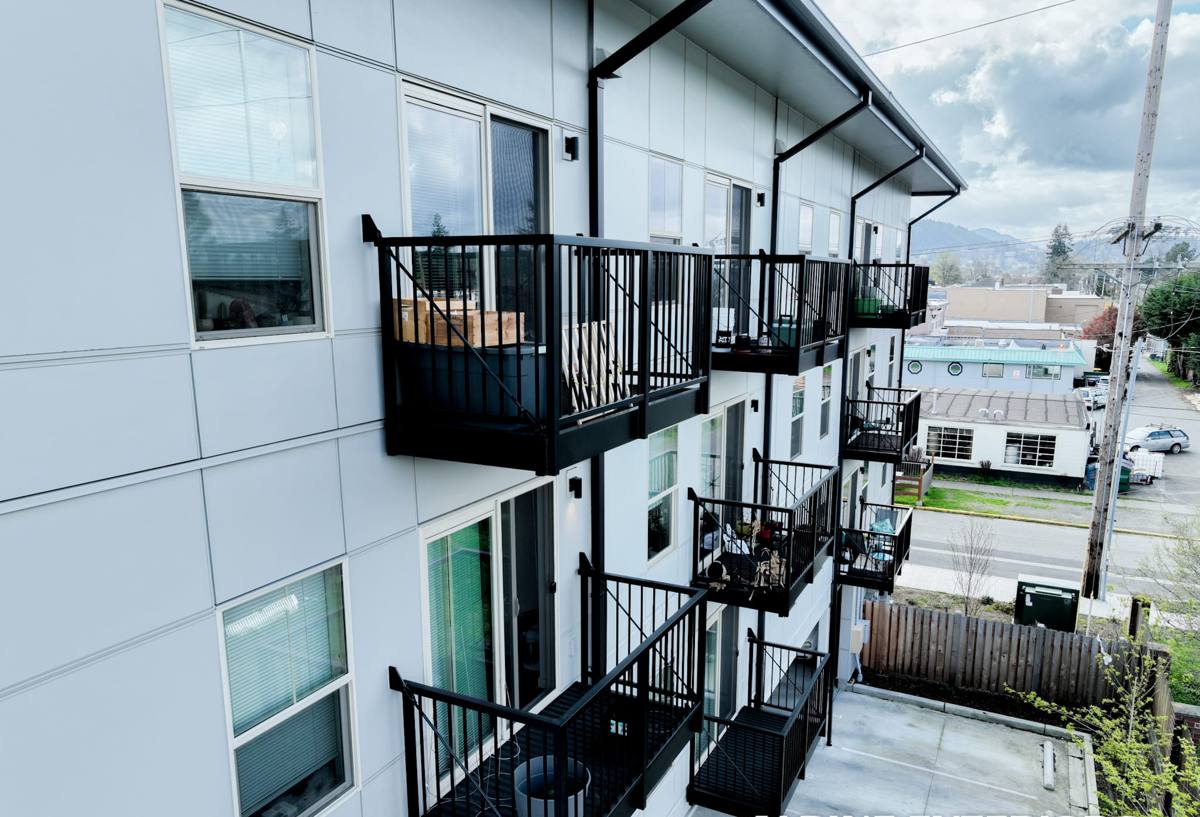
What Allura Gets Right
To be fair to the product: Allura fiber cement shares the same basic chemistry as James Hardie. It's manufactured with an autoclave curing process, it carries Miami-Dade NOA (Notice of Acceptance) approval on many of its profiles, which matters in Florida's High-Velocity Hurricane Zone testing lineage, and it's available in lap, shake, and panel styles that look similar to Hardie's lineup on a spec sheet. It resists fire, doesn't rot, and doesn't feed termites — all the core reasons fiber cement replaced wood siding in the first place. For a homeowner comparing it only against vinyl or wood, Allura would be a step up.
Where things diverge is in the details that don't show up on a brochure: climate engineering specific to humid coastal regions, factory finish process and warranty structure, and the depth of the installer network and manufacturer support behind the product in this part of Florida.
Manufacturing and Market Presence
James Hardie is the market leader in the U.S. fiber cement category by a wide margin, and that scale matters in ways beyond brand recognition. It funds dedicated engineering for regional climate zones, a dense network of trained installers, and a distribution and support system that's well established in Southwest Florida. Allura is a smaller player. That doesn't make the board itself defective, but it does mean less local density of trained crews, less regional-specific product engineering, and a thinner track record of long-term performance data in a hurricane-and-humidity climate like ours.
The Climate-Engineering Gap
This is the part that actually matters for a house in Sarasota County. James Hardie makes a specific product line — HZ10 — engineered for hot, humid, high-moisture climates like ours, with a formulation tuned to resist the freeze-thaw non-issue we don't have but also the moisture-cycling issue we very much do have: humidity swings, wind-driven rain, and near-constant exposure to salt-laden air off the Gulf. Hardie splits its HZ5 and HZ10 formulations by climate zone specifically because fiber cement doesn't behave identically everywhere, and Sarasota sits squarely in HZ10 territory.
Allura doesn't offer that same climate-zone split in its core product engineering. That's not a hypothetical difference — Sarasota siding takes a beating that inland Georgia or Ohio siding never sees:
- Hurricane-force wind gusts that drive rain sideways into every seam and joint
- Near year-round intense UV exposure that breaks down poorly-formulated finishes faster than most of the country ever experiences
- Salt air drifting off Sarasota Bay and the Gulf that accelerates corrosion of fasteners and trim if the system isn't detailed correctly
- Long humid stretches where anything but a well-sealed board stays damp longer than it should
A product engineered with our specific conditions in mind is a meaningfully different bet than a product engineered as one national formulation.
Factory Finish and Color Warranty
Both Allura and Hardie offer factory-applied finishes rather than relying entirely on field-applied paint, and that's the correct approach for fiber cement in general — a factory finish cures under controlled conditions and bonds to the board more consistently than anything sprayed on a jobsite. Where they differ is in the specifics of that finish system and what stands behind it.
Hardie's ColorPlus finish is a multi-coat, baked-on finish process backed by a dedicated finish warranty covering fade and chipping, separate from the base product warranty. It's been through more cycles of real-world field performance review and refinement than Allura's comparable finish line has, simply because Hardie has more installed square footage in circulation, in more climates, over more years, to learn from. In UV-heavy environments like ours, finish performance is not a minor cosmetic detail — it's the difference between siding that still looks good in year twelve and siding that's chalking and needs repainting.
Warranty Structure Side by Side
| Factor | James Hardie | Allura |
|---|---|---|
| Base product warranty | Long-term, non-prorated, transferable to one subsequent owner | Long-term warranty offered, terms and transferability vary by product line |
| Factory finish warranty | Separate ColorPlus finish warranty covering fade/chip | Finish warranty exists but with a shorter track record of field validation |
| Climate-specific formulation | HZ5 / HZ10 zone-engineered products | Single national formulation approach |
| Regional installer density (SW Florida) | Deep, well-established network | Thinner, less consistently trained network |
| Miami-Dade NOA approval | Yes, across most siding profiles | Yes, on many profiles |
None of this means Allura fails outright. It means that when we compare the full package — formulation, finish, warranty backing, and support — Hardie comes out ahead for the specific conditions a Sarasota home faces, and by enough of a margin that we don't see a reason to install both products and split our expertise.
Installation Sensitivity Is the Real Risk
Fiber cement siding of any brand is only as good as its installation. This is true of Hardie too — it's not a Hardie-versus-Allura issue so much as a category-wide reality that gets glossed over in sales conversations. Fiber cement needs correct fastener spacing, proper clearance from grade and roofline, correctly sealed butt joints, and flashing details that account for wind-driven rain, not just vertical rainfall. Get those details wrong on any fiber cement product and you'll see moisture intrusion, paint failure, or board cupping regardless of brand.
Where this connects back to our decision: because we've built our entire installation process, crew training, and detailing standards around one product system, we know Hardie's spec sheet cold — every clearance requirement, every fastener schedule, every flashing detail specific to their panels and lap profiles. Running two parallel systems means either diluting that expertise or maintaining two full sets of installation standards. We chose to go deep on one product rather than shallow on two.
What Correct Fiber Cement Installation Requires, Regardless of Brand
- Minimum clearance from the ground, roofline, and horizontal surfaces to prevent standing moisture
- Correct fastener type, spacing, and depth — over-driven or under-driven fasteners are the single most common failure point
- Properly sealed and shimmed butt joints, not just butted board-to-board
- Weather-resistant barrier and flashing integrated correctly at every window, door, and penetration
- Field-cut edges primed or sealed before installation, especially in a humid climate
Cost Difference: What's Actually Behind It
Allura is often positioned as a slightly lower-cost alternative to Hardie, and material pricing can run somewhat below Hardie depending on the profile and market. That price gap isn't nothing, but it's worth understanding what it does and doesn't reflect. It's not evidence that Allura is a corner-cutting product — the base fiber cement chemistry is comparable. It largely reflects brand scale, distribution costs, and marketing spend rather than a difference in raw material quality.
What it doesn't buy back is the climate-specific engineering, the deeper factory-finish track record, or the density of trained installers in the Sarasota market. For a homeowner weighing a full siding replacement — a project meant to last decades, not one that gets redone on a five-year cycle — we think the smarter place to spend is on the system with the strongest formulation match for our climate and the strongest support behind it, not the smallest short-term line-item savings.
Why We Standardized on James Hardie
We made a deliberate choice years ago to install one fiber cement system rather than offer a menu of comparable-but-different products. James Hardie won that decision for a specific combination of reasons that matter in Sarasota County: a product line engineered specifically for hot, humid, high-UV climates (HZ10), a factory finish system with a long field-performance record in exactly this kind of exposure, a strong and transferable warranty structure, non-combustible construction that matters given how much sun and heat this siding sits under every day, and a local installer and support network deep enough that parts, profiles, and technical backup are never a scramble.
That's not us saying Allura is unsafe or defective. It's us saying that after weighing the climate engineering, the finish warranty depth, and the installed track record specific to conditions like wind-driven rain, salt air, and constant UV, one product came out ahead — and we decided to build our entire installation practice, crew training, and warranty backing around that one system rather than spread our expertise thin across several.
What This Means for Your Project
If you're comparing quotes and one contractor is offering Allura at a lower price point, that's not automatically a red flag — it may simply be a different, defensible material choice. But ask specifically about climate-zone formulation, finish warranty terms, and how many linear feet of that product the crew has actually installed in Sarasota's conditions. Those answers tell you more than the price difference does.
We install James Hardie exclusively because we've concluded it's the stronger match for what this coastline does to a house year after year. If you'd like to talk through your specific project, siding condition, or budget, we're glad to walk the exterior with you and put together a free, no-pressure estimate.