 Sarasota Siding
 Downtown Sarasota's Exterior Challenge Is Different From Most of the Country
Homes in and around Downtown Sarasota sit at the intersection of a few punishing environmental factors that most siding products were never engineered to survive together. There's the salt air rolling in off Sarasota Bay and the Gulf, which accelerates corrosion and breaks down cheaper building materials faster than homeowners expect. There's the UV load — Sarasota gets close to year-round intense sun exposure, which chalks and fades paint finishes on a timeline that catches a lot of people off guard. And there's the wind: Sarasota County sits squarely in a hurricane-prone stretch of the Gulf Coast, which means siding has to hold up not just to steady wind-driven rain but to the kind of gusts that turn loose material into a projectile.
None of these factors is exotic on its own. Plenty of coastal markets deal with salt air, or UV, or wind. What makes Sarasota — and Downtown Sarasota specifically, with its mix of older bungalow-style homes, mid-century construction, and newer infill builds — a tougher test is that all three hit at once, continuously, for most of the year. A siding product that's fine in a drier or cooler climate can fail here in ways it never would elsewhere.
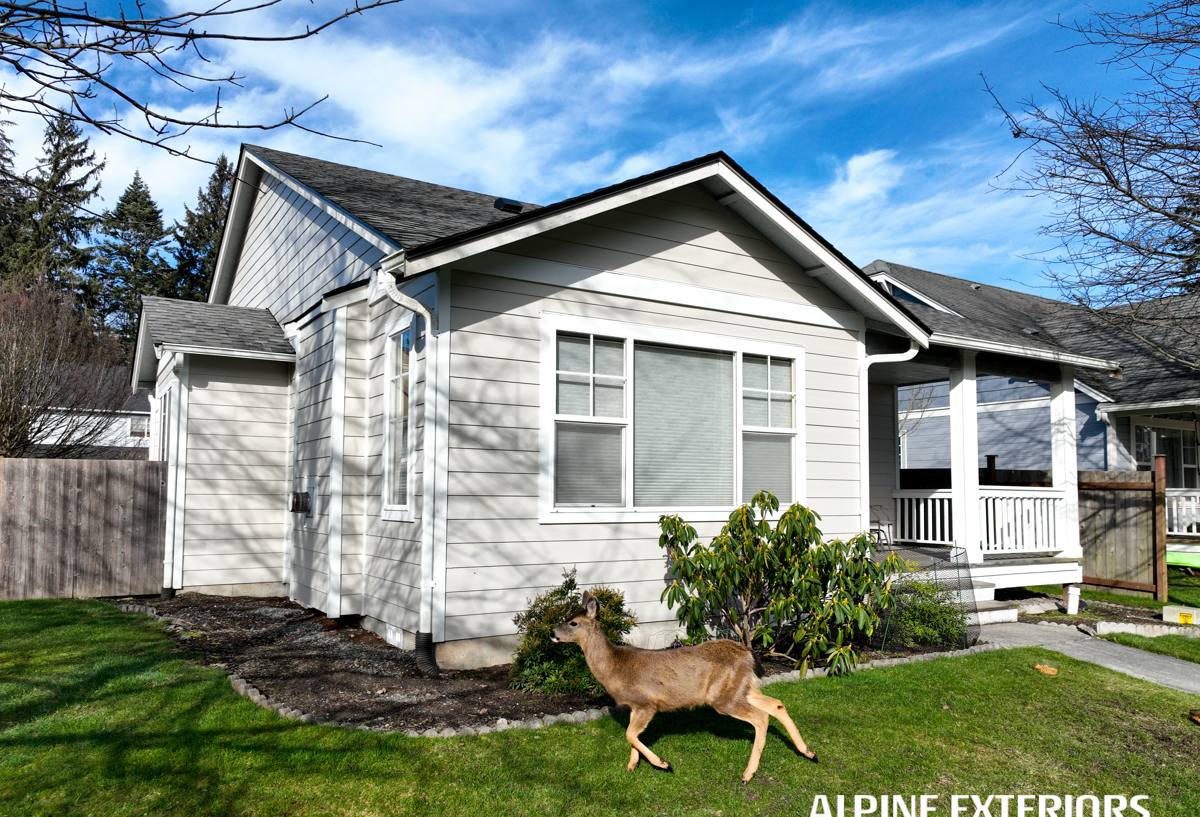
What We See on Downtown Sarasota Homes
Walking a property in this part of Sarasota, a few patterns show up again and again:
- Sun-facing walls (typically south and west exposures) with visibly faded or chalking paint years before the rest of the house
- Caulk joints and trim seams that have dried out and cracked, letting moisture behind the siding
- Soft or delaminating siding at ground level and around downspouts, where wind-driven rain and irrigation overspray keep the material wet longer than it should be
- Corrosion on fasteners, flashing, and hardware that wasn't rated for a salt-air environment
- Older homes with siding systems that were never designed for Florida humidity in the first place — installed decades ago under different code and different expectations
These aren't signs of neglect. They're the predictable result of ordinary siding materials doing their best in an environment that's harder on exteriors than most of the country ever experiences.
Why We Standardized on James Hardie Fiber Cement
We install one siding product on Sarasota homes: James Hardie fiber cement. That's a deliberate decision, not a limitation of what we're capable of installing. After years of servicing and replacing siding across this climate, fiber cement is the only material we're willing to put our name behind for a Gulf Coast home.
Non-Combustible Material
Fiber cement is cement-based, not wood-based, which means it doesn't feed a fire the way wood, engineered wood, or some composite products can. That matters for insurance conversations and for straightforward peace of mind in a region where wildfire and structure-fire risk both exist.
Built for Moisture, Not Just Resistant to It
James Hardie's HZ5 product line is specifically engineered for high-humidity, storm-prone climates like ours. It resists swelling, cracking, and moisture intrusion far better than wood-based composites, which can absorb water at cut edges and along seams and slowly deteriorate from the inside out — often without visible warning until the damage is advanced.
A Factory Finish That Actually Holds Up to Florida Sun
ColorPlus technology bakes the color onto the board in a factory setting, under controlled conditions, rather than relying on field-applied paint. That finish is formulated to resist the kind of UV fading and chalking that hits site-painted siding on Sarasota's sun-facing walls within just a few years. It also means touch-up and repaint cycles are dramatically less frequent.
Backed by a Real Warranty
James Hardie backs its products with a strong, transferable limited warranty — which matters both for a homeowner planning to stay long-term and for resale value, since a transferable warranty is something a buyer's inspector will actually notice.
What We Don't Install, and Why That's the Point
We don't install vinyl siding, LP SmartSide or other engineered wood products, Cemplank, Allura, or primed spruce or cedar siding. That's not a knock on every homeowner who has one of these products on their house today — plenty of them perform fine for a while, especially outside of harsh coastal climates. But we won't install them ourselves, for reasons specific to what Sarasota's climate does to a home over time.
| Material | Where It Struggles Locally |
|---|---|
| Vinyl siding | Can warp or distort under sustained intense heat and direct sun exposure; more vulnerable to cracking from wind-borne debris in storms |
| Engineered wood (LP SmartSide and similar) | Wood-based core is susceptible to moisture absorption at cut edges and seams in a humid, wind-driven-rain climate |
| Primed spruce or cedar | Natural wood requires an aggressive, ongoing maintenance schedule to fend off rot and insect damage in Florida humidity |
| Cemplank / Allura (other fiber cement brands) | Similar base material to Hardie, but we've standardized on Hardie specifically for its HZ5 climate engineering, factory finish system, and warranty structure |
The honest version of this is simple: every one of those products gets something right — cost, weight, installation speed, or a particular look. But we'd rather stand behind one system we trust completely in this climate than install several products with trade-offs we'd have to explain away later when a homeowner calls with a problem.
How the Siding Process Works for a Downtown Sarasota Home
1. On-Site Assessment
We walk the exterior, check the current siding condition, look at moisture points around windows, doors, and roof lines, and talk through what's actually driving the need for new siding — whether that's storm damage, age, or ongoing maintenance fatigue.
2. Product and Profile Selection
James Hardie comes in multiple siding profiles — lap siding, board and batten, shingle-style panels — and a range of ColorPlus finishes. We help match a profile and color to the home's architecture, whether it's a Downtown Sarasota bungalow, a mid-century single-story, or a newer build.
3. Prep and Moisture Management
Correct installation starts before a single board goes up. That means proper house wrap or weather-resistant barrier, correctly flashed windows and doors, and attention to the details that keep water from getting behind the siding in the first place — this is where a lot of siding failures actually originate, regardless of the material.
4. Installation to Manufacturer Spec
James Hardie publishes specific fastening, clearance, and joint-treatment requirements for coastal and high-wind climates. Installing to spec is what keeps the product warranty valid and what actually gives you the wind and moisture performance the material is rated for — a poorly installed premium product can still fail early.
5. Final Walkthrough
We review the completed work with the homeowner, confirm caulking, trim, and paint-matched details are finished correctly, and make sure everything is documented for warranty purposes.
Beyond Siding: Roofing, Windows, and Decks
Siding rarely fails in isolation on a Sarasota home — it's usually one piece of an exterior envelope that's all facing the same sun, salt, and wind. We also handle roofing, window replacement, and deck work, which lets us look at a property holistically rather than patching one component while ignoring a roofline or window seal that's contributing to the same moisture problems. A new roof with poor flashing at the wall line can undermine even correctly installed siding, and old windows can be a bigger source of leaks and energy loss than the siding itself.
What Local Installation Actually Means
Working in Sarasota County specifically means understanding the wind-load and flashing details that get inspected here, not applying a generic national installation approach. It means knowing which orientations on a given lot take the worst of the afternoon sun, and which sides need the most attention to fastener corrosion resistance because they catch salt-laden air off the water. A crew that installs across a wide range of climates has to generalize; a crew that works this specific stretch of the Gulf Coast every week doesn't have to guess.
A Practical Checklist Before You Choose a Siding Contractor
- Ask what material they install and why — and be wary of a contractor who installs "whatever you want" without a stated standard
- Confirm they're licensed and insured to work in Sarasota County
- Ask specifically how they handle moisture barrier and flashing detail, not just the visible siding
- Get the manufacturer warranty terms in writing, including whether it's transferable
- Ask how they fasten and finish siding for wind-load requirements in a coastal zone
- Request references or examples of similar work in the immediate area, not just general portfolio photos
Cost Factors to Expect
Every home is different, but a few factors consistently move the price of a siding project in this area: the total square footage and complexity of the exterior (dormers, multiple stories, and lots of corners add labor), the condition of the substrate underneath the old siding (rot repair adds cost but is not optional), the siding profile chosen, and how much trim and detail work is involved. We provide a specific, itemized estimate after an on-site assessment rather than a ballpark over the phone, because guessing at Florida-specific prep work rarely serves anyone well.
Getting Started
If your Downtown Sarasota home's siding is showing sun fade, soft spots, cracked caulk lines, or you're simply planning ahead of hurricane season, we're happy to take a look. We offer free, no-pressure estimates — you'll get a straightforward read on the condition of your current exterior and what James Hardie fiber cement would look like on your specific home, with no obligation to move forward. Use the form below to get started.