 Sarasota Siding
 Siding on a Barrier Island Is a Different Job
Siesta Key sits out on the Gulf, separated from the mainland by Sarasota Bay, and that location changes what a home's exterior is up against every single day. Homes here don't just deal with Florida heat and humidity like the rest of Sarasota County — they take on salt-laden air blowing straight off the Gulf, near-constant UV exposure with almost no seasonal break, and the full force of wind-driven rain whenever a storm system tracks through. A siding material that performs fine ten miles inland can fail early on the Key simply because the environment is more aggressive.
We approach barrier island homes differently than a typical mainland job. The install sequence, the fastener choices, the flashing details around windows and doors — all of it gets extra attention because there's less room for error this close to saltwater. We handle siding, roofing, windows, and decks for homeowners across Sarasota, and on Siesta Key specifically, siding is often the first exterior component to show wear because it's the largest surface area exposed to sun and salt around the clock.
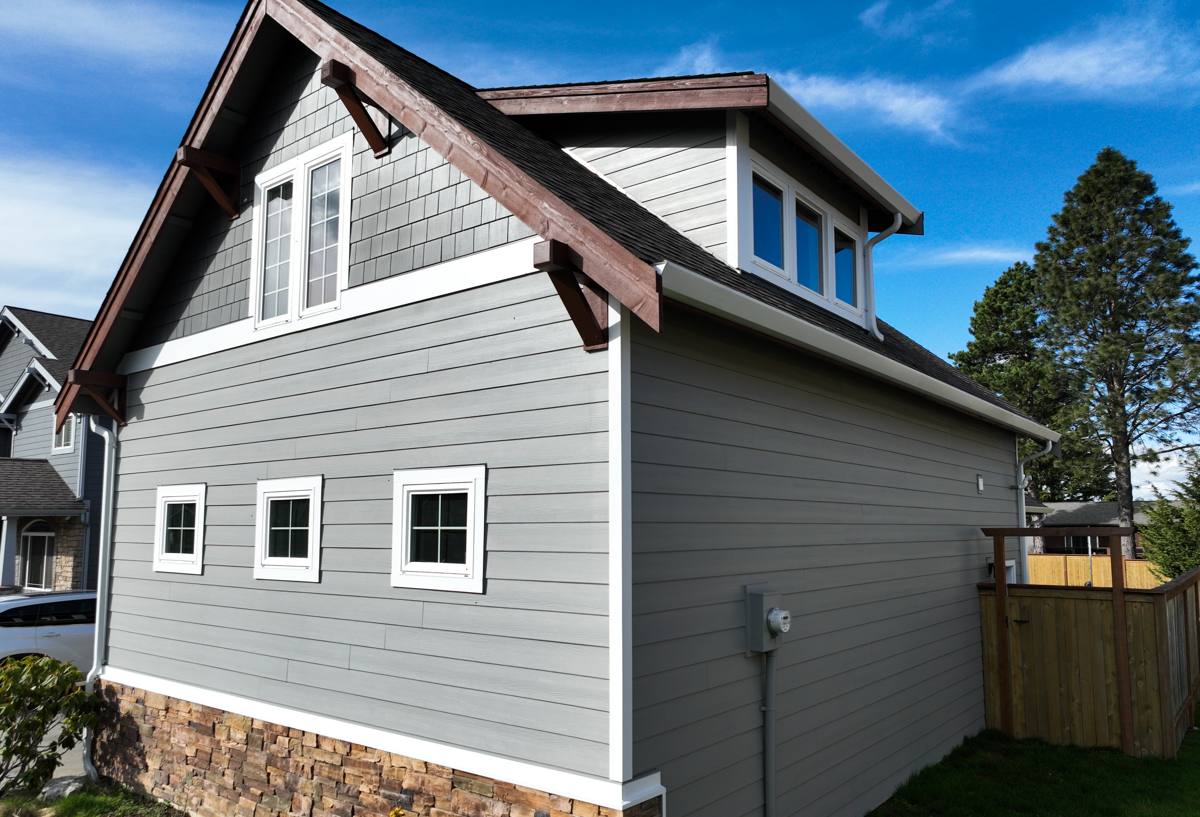
What Siesta Key's Climate Actually Does to a House
Salt Air and Corrosion
Airborne salt doesn't just affect the siding surface — it works on fasteners, trim, and any metal component on the exterior. Over years, salt exposure accelerates corrosion in lower-grade fasteners and can cause staining or pitting on materials that aren't rated for coastal use. This is one of the biggest reasons material choice and installation hardware matter more on the Key than they would a few miles east.
Year-Round UV Load
Sarasota gets strong sun exposure most of the year, and on Siesta Key there's often less tree canopy shading homes than you'd find in older mainland neighborhoods, especially on newer or open lots. Constant UV breaks down pigments and resins in lower-quality siding and paint finishes, leading to fading, chalking, and eventually cracking as the material dries out and loses flexibility.
Wind-Driven Rain and Hurricane Exposure
Being on the Gulf side means Siesta Key is directly exposed during tropical storms and hurricanes, both to sustained wind loads and to rain that gets driven horizontally into wall assemblies rather than just falling straight down. Siding that isn't installed with tight, correct flashing and a sound water-management plan behind it will let moisture in during exactly those events — often without visible signs until rot or mold shows up months later.
Humidity and Moisture Cycling
Between the bay on one side and the Gulf on the other, humidity on Siesta Key rarely lets up. Materials that absorb and release moisture repeatedly — swelling, drying, swelling again — are more prone to warping, delamination, and rot than materials engineered to resist water absorption in the first place.
Why We Standardized on James Hardie Fiber Cement
We install James Hardie fiber cement siding exclusively. We don't install vinyl, LP SmartSide, Cemplank, Allura, or primed wood products like spruce or cedar. That's not a marketing position — it's a standard we set after weighing how each category of material actually holds up in a coastal Florida climate over the long run, not just in a showroom.
Non-Combustible Composition
Fiber cement is primarily sand, cement, and cellulose fiber. It doesn't burn, which matters for insurance considerations and simple peace of mind, and it's a meaningfully different risk profile than wood-based or wood-fiber composite siding products.
Engineered for Humid, Salt-Exposed Climates
Hardie's HZ5 product line is specifically engineered for high-humidity, moisture-prone regions like ours. It resists moisture absorption far better than wood-based alternatives, which is directly relevant to a barrier island environment where humidity and salt air are constant rather than occasional.
Factory-Applied ColorPlus Finish
ColorPlus finish is baked on in a controlled factory environment rather than field-applied after installation. That process gives it better UV and fade resistance than a job-site paint job, which matters enormously somewhere with as much year-round sun exposure as Siesta Key gets.
Transferable Warranty Backing
Hardie backs its siding with a strong, transferable limited warranty. For homeowners who may eventually sell — not uncommon on the Key given the mix of full-time residents and seasonal or investment owners — that transferability is a real asset at resale, not just a manufacturer talking point.
How Alternative Materials Hold Up on the Key — Honestly
Every siding material has a reasonable case for it somewhere. Here's how the alternatives actually compare on a barrier island specifically, not in general terms.
| Material | Coastal/Salt Performance | UV/Fade Behavior | Moisture Behavior |
|---|---|---|---|
| Vinyl siding | Can warp or become brittle under intense heat and UV cycling | Fades and chalks over time; color is through the material but still degrades | Doesn't absorb moisture, but panels can loosen or gap during high wind events if not installed to exact spec |
| LP SmartSide (wood strand) | Wood-based; more vulnerable to salt-driven moisture cycling than fiber cement | Requires factory or field-applied coating that needs maintenance over time | Engineered wood strand is moisture-resistant but not moisture-proof; edge sealing is critical |
| Primed spruce/cedar | Natural wood is the most vulnerable to salt air and coastal humidity of any option here | Needs regular repainting/resealing to hold color and protect the surface | Highest risk of swelling, cupping, and rot without disciplined maintenance |
| James Hardie fiber cement | Engineered HZ5 line built for humid, coastal climates | ColorPlus factory finish resists UV fade significantly better than field-applied paint | Cement composition resists moisture absorption far better than wood-based products |
None of this means the other materials are junk — vinyl and engineered wood siding have legitimate uses in the right climate and budget. But for a barrier island property facing salt air, intense sun, and hurricane exposure every year, we don't think they hold up as well over a 20-30 year ownership horizon, and we'd rather stand behind one material we trust completely than install several we have reservations about.
What Correct Installation Looks Like on Siesta Key
Material quality only gets you halfway there. The installation details are what actually keep water out of the wall assembly during a tropical storm, and they're where a lot of coastal siding failures actually originate — not from the siding itself, but from shortcuts in the details around it.
- Corrosion-resistant fasteners rated for coastal/marine exposure, not standard-grade hardware
- Correct nailing pattern and fastener spacing per Hardie's published installation specifications
- Proper house wrap and water-resistive barrier behind the siding, lapped correctly to shed water downward
- Flashing integrated correctly at every window, door, and roofline penetration
- Adequate gap and sealant at butt joints and trim to allow for expansion without trapping moisture
- Bottom clearance from grade, decks, and roof lines maintained per code and manufacturer spec
Any one of these done wrong can undermine an otherwise good material. This is why we treat installation as seriously as material selection — a Hardie board installed poorly performs worse than we're comfortable with, and it's the install crew's job to make sure that never happens on a home we put our name on.
Roofing, Windows, and Decks in the Same Coastal Environment
Siding rarely fails in isolation on a barrier island home — the same salt air, UV, and wind-driven rain affecting the walls are working on the roof, windows, and any exterior deck structure at the same time. A roof with compromised flashing can send water down behind siding that's otherwise sound. Windows with degraded seals let wind-driven rain in around the frame regardless of how good the siding job is. And decks exposed to the same salt and moisture cycle need materials and fasteners suited to that environment, just like the siding does.
Because we handle all four — siding, roofing, windows, and decks — we look at a Siesta Key home's exterior as one connected system rather than a set of separate projects. That matters most exactly where these components meet: flashing transitions, window-to-siding junctions, and roof-to-wall intersections are where coastal homes most often develop hidden moisture problems.
Working With a Local Crew on the Key
Siesta Key has its own particular installation logistics — narrow lots, limited staging space in some areas, and the general realities of working on a barrier island where access and material delivery take more planning than a mainland job. A crew that regularly works the Sarasota area understands those logistics going in, rather than figuring them out on-site.
Local familiarity also means understanding how Sarasota County's permitting and wind-load requirements apply to exterior work here, and building the installation to hold up specifically against what this stretch of Gulf coastline sees each hurricane season — not a generic specification pulled from a different climate zone.
Maintenance Expectations for Coastal Homes
Even the right material benefits from basic upkeep in a salt-air environment. A rinse of the exterior periodically to remove salt deposits, prompt attention to any caulking or sealant that starts to fail, and a visual check after major storms for loosened trim or fastener issues will go a long way. Hardie siding with ColorPlus finish needs far less attention than a painted wood product, but "less maintenance" isn't "no maintenance" — especially this close to the Gulf.
If you own a home on Siesta Key and want a straight answer about what your siding, roofing, windows, or deck actually need given this environment, we're happy to take a look and walk you through it. Reach out for a free, no-pressure estimate — there's no obligation, and you'll get an honest read on your home's exterior from a crew that works this coastline regularly.