 Sarasota Siding
 One Product Line, On Purpose
Homeowners ask us this constantly: why does a siding contractor turn down jobs where the customer wants vinyl, or LP SmartSide, or a cheaper fiber cement alternative? The answer is simple. We install James Hardie fiber cement siding exclusively because it's the one product we can put on a Sarasota County home and stand behind for the long haul, in the specific conditions this coast throws at a house. This isn't a sales pitch dressed up as an article. It's an explanation of the trade-offs we weighed before we made that call, and why we think it's the right one for anyone building or re-siding here.
Sarasota isn't a gentle climate for exterior materials. Hurricane-force wind events are a matter of when, not if. UV exposure runs high nearly every month of the year, which degrades paint, plastics, and unprotected wood faster than most of the country experiences. Add wind-driven rain that gets forced sideways into every seam and joint, plus salt air rolling in off the Gulf that accelerates corrosion and finish breakdown, and you have a proving ground that separates products that look good on a spec sheet from products that hold up on an actual house.
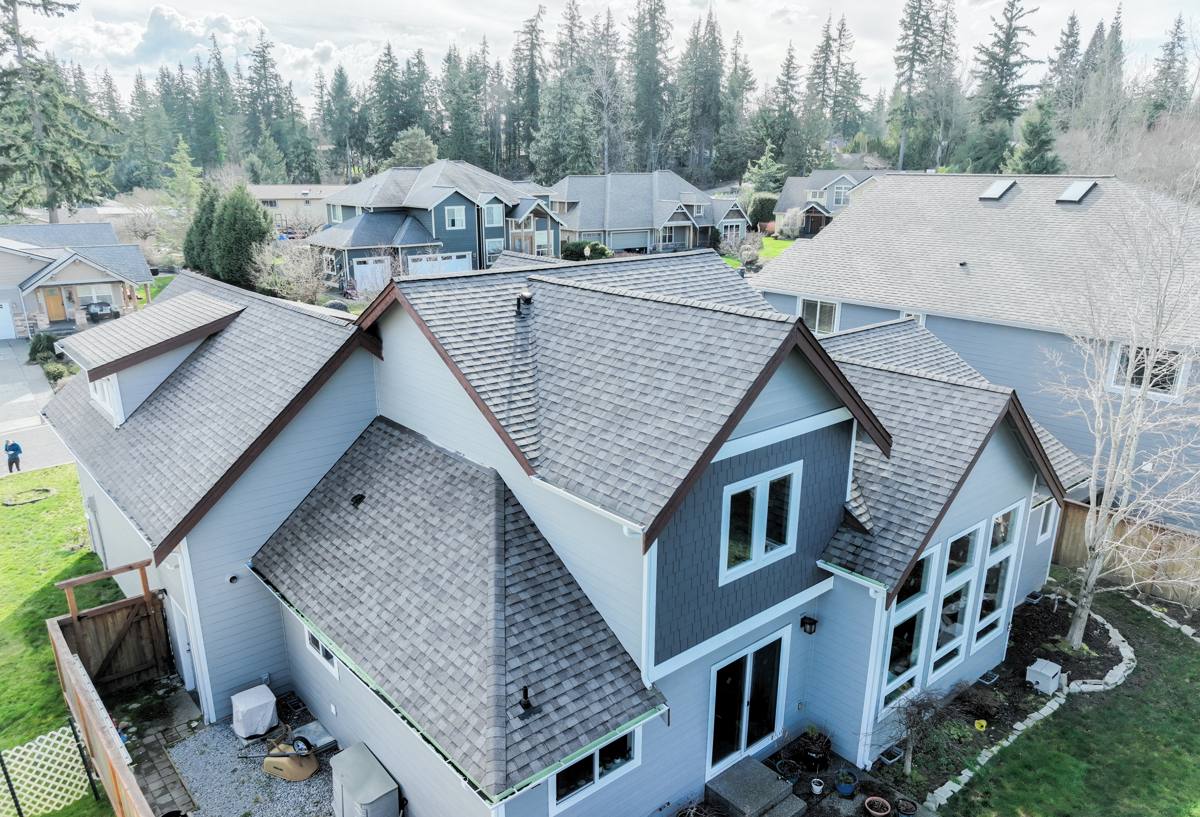
What James Hardie Actually Is
James Hardie fiber cement siding is made from a blend of Portland cement, sand, and cellulose fiber, cured into a dense, stable board. It is not plastic (like vinyl), and it is not wood or wood-derived (like LP SmartSide or primed spruce). That distinction matters more than most marketing materials let on, because the failure modes of a material determine how it behaves after ten or fifteen years of coastal weather, not just how it looks on installation day.
Key physical properties
- Non-combustible — fiber cement does not support flame spread, which matters for insurance conversations and wildfire-adjacent construction codes alike.
- Dimensionally stable across humidity swings — it doesn't swell, cup, or warp the way wood-based products can when they take on moisture.
- Dense enough to resist wind-driven debris and hold paint/finish far longer than vinyl or engineered wood.
- Engineered specifically for humid climates in Hardie's HZ5 product line, which is what we specify for this region.
The HZ5 Climate Engineering
James Hardie makes region-specific formulations, and this matters more here than almost anywhere else in the country. The HZ5 line is engineered for hot, humid, high-moisture climates — the Gulf Coast, the Southeast, and similar zones where a siding product spends most of the year dealing with heat and humidity rather than freeze-thaw cycles. HZ10 products, by contrast, are formulated for colder, drier northern climates. Installing the wrong regional formulation is one of the quieter mistakes we see in siding jobs that didn't hold up — the board itself may have been a reasonable product, just the wrong version of it for Sarasota County's climate.
We specify HZ5 on every job here, full stop. It's part of why "James Hardie" as a brand name doesn't actually tell you everything — the region-specific engineering underneath the brand is what does the real work in a coastal climate.
ColorPlus Technology: The Finish Is the Product
A huge share of siding failures aren't failures of the substrate — they're failures of the paint. Job-site-applied paint on any siding material, fiber cement included, is baked, rolled, or sprayed on-site under whatever weather and humidity conditions exist that day, then left to cure in place. James Hardie's ColorPlus finish is applied and cured in a factory under controlled conditions, then baked on in multiple coats with UV-resistant resins.
In a market with Sarasota's UV load, that difference shows up years before it would in a milder climate. Factory-cured finishes hold color and resist fading, chalking, and peeling substantially longer than field-applied paint, and touch-up products are formulated to match the factory color rather than a generic tinting match. It's a meaningful part of why we don't treat "siding" and "paint job" as two separate purchases — with ColorPlus, they're engineered together.
Color and style options
Hardie's ColorPlus palette includes dozens of factory colors across their lap siding, board-and-batten, shingle, and panel product lines, plus a range of textures (cedar-grain, smooth) that let a home read as traditional coastal, modern coastal, or Florida vernacular depending on the profile chosen. Primed boards for field painting are also available for homeowners who want a custom color outside the ColorPlus palette, though we walk every customer through the maintenance trade-off of that choice before they commit.
Why We Don't Install the Alternatives
We get asked about vinyl, LP SmartSide, Cemplank, Allura, and primed wood siding regularly. Each has a legitimate use case somewhere. Here's our honest read on why none of them are what we put on a home in this county.
Vinyl siding
Vinyl is inexpensive and lightweight, and in mild climates it performs adequately for its cost. In a hurricane-exposed coastal zone, its wind-load ratings are lower than fiber cement's, it can become brittle and crack after years of intense UV exposure, and it visibly warps or melts when exposed to concentrated heat sources. It also can't be painted a darker color without risking heat-related warping, which limits design flexibility on a lot of the deeper, more current color palettes homeowners want today.
LP SmartSide and primed wood or spruce
These are engineered or solid wood products, and wood-based sidings share a common vulnerability: moisture intrusion at cut edges, fastener penetrations, and seams can lead to swelling, delamination, or rot over time, especially in a climate where humidity rarely lets up and wind-driven rain finds every gap. Manufacturers have improved edge-sealing and treatments over the years, but the fundamental material is still wood fiber, and wood fiber's relationship with sustained coastal humidity is not one we're willing to bet a homeowner's investment on.
Cemplank and Allura
These are legitimate fiber cement competitors to James Hardie, and the base material science is similar. Where we see the real difference is in finish technology and regional product engineering — the factory-cured ColorPlus system and the HZ5 formulation are James Hardie-specific, along with a transferable warranty structure we've found more straightforward for homeowners at resale. Standardizing on one manufacturer also lets our crews specialize deeply in one installation system's flashing, fastening, and joint details rather than splitting expertise across several product lines.
Comparing the Options Side by Side
| Material | Wind/impact resistance | Moisture behavior | Finish durability | Fire rating |
|---|---|---|---|---|
| James Hardie (HZ5, ColorPlus) | High | Dimensionally stable, doesn't rot | Factory-cured, long-lasting | Non-combustible |
| Vinyl | Moderate | Doesn't rot, but can crack/warp | Fades and chalks with UV | Combustible |
| LP SmartSide / primed wood | Moderate | Vulnerable at cut edges/seams | Field-applied paint, shorter life | Combustible |
| Other fiber cement (Cemplank, Allura) | High | Similar to Hardie's base material | Varies by finish system used | Non-combustible |
This table isn't meant to declare every alternative "bad" — it's meant to show where the real differences sit. For a Sarasota home taking direct hits from wind, rain, and sun most of the year, the combination of columns matters more than any single one.
What Correct Installation Actually Involves
James Hardie siding is only as good as its installation. A huge share of siding complaints that get blamed on "the product" are actually installation errors — wrong fastener spacing, missing or incorrect flashing at windows and doors, siding installed too close to the ground or roofline, or caulking used in place of proper flashing details. We install to James Hardie's published installation specifications, not to whatever's fastest for the crew, because a warranty claim on improperly installed siding is denied regardless of how good the board itself is.
What to expect from a correct James Hardie install
- Proper weather-resistive barrier and flashing integration at every penetration, window, and door.
- Manufacturer-specified fastener type, spacing, and embedment depth.
- Minimum clearance maintained between siding and grade, roofing, and decking surfaces.
- Correct joint treatment and caulking only where specified — not as a substitute for flashing.
- HZ5-rated boards and ColorPlus factory finish specified for this climate zone, not a generic or mismatched product run.
Warranty and Long-Term Value
James Hardie backs its fiber cement products with a limited transferable warranty, and ColorPlus finishes carry their own separate finish warranty covering fading and peeling. The transferability matters in a market like Sarasota, where homes change hands regularly — a documented, manufacturer-backed warranty is a real asset at resale, not just paperwork. We keep records of every installation so a homeowner (or a future buyer) has what they need if a warranty question ever comes up.
The Bottom Line for Sarasota Homeowners
We didn't standardize on one manufacturer because it's simpler for us, though it is. We did it because after years of installing and repairing siding in this county, fiber cement — specifically James Hardie's HZ5 line with ColorPlus finish, installed to spec — is the product we're willing to put our name behind against Sarasota's wind, sun, salt, and rain. Other products have real strengths and real customers for whom they make sense. They're just not what goes on a house we install.
If you're weighing a re-side or new construction siding decision, we're happy to walk your specific home, talk through what's driving your current siding's wear, and give you a straightforward, no-pressure estimate for a James Hardie system built for this climate.