 Sarasota Siding
 Two Very Different Materials, One Big Decision
If you're re-siding a home in Sarasota County, you've probably narrowed it down to two realistic options: vinyl siding or James Hardie fiber cement. Both are legitimate, widely used products. Both have been installed on thousands of Gulf Coast homes. But they behave very differently once they're up against a Sarasota summer, a wind-driven rainstorm, or a direct hurricane threat — and the differences matter more here than they do in a mild inland climate.
This page is not a takedown of vinyl siding. It's a straight comparison of how each material performs, what it costs over time, and why our company made the decision years ago to install fiber cement exclusively. We think homeowners deserve the real trade-offs, not a sales pitch.
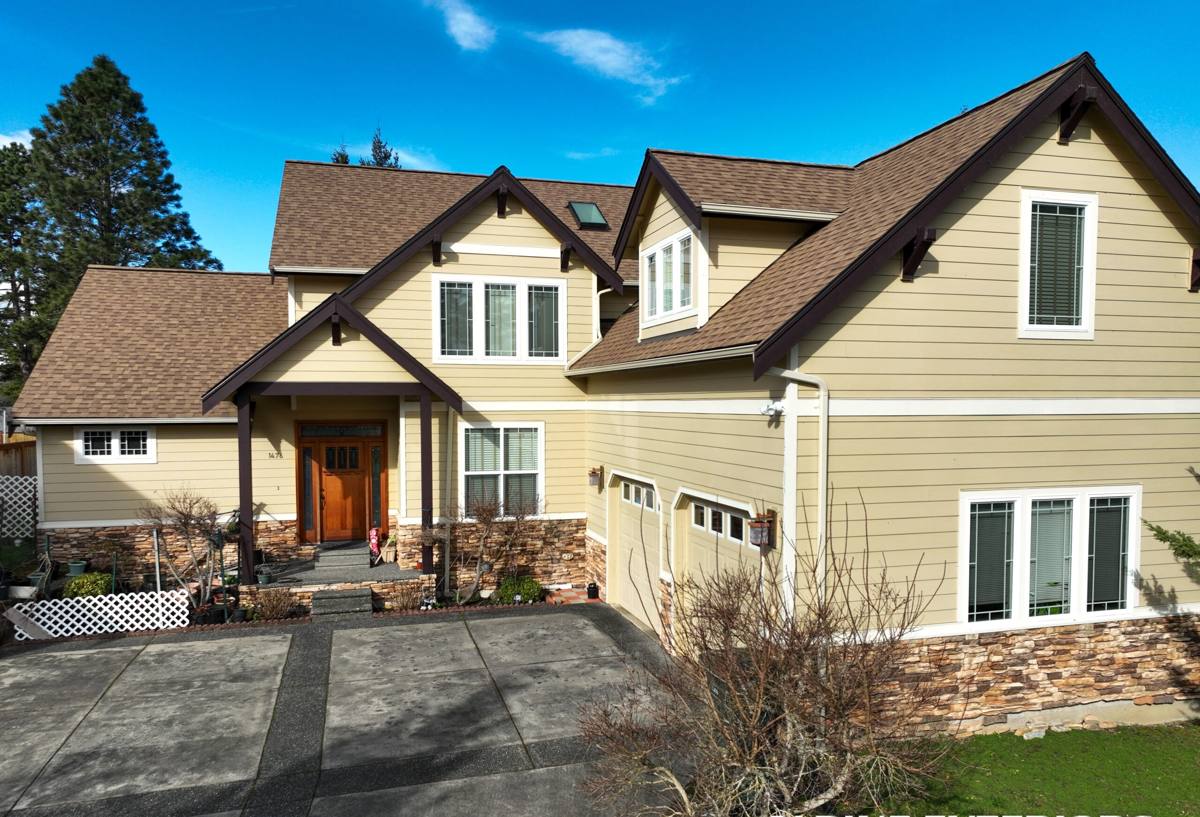
What Each Material Actually Is
Vinyl Siding
Vinyl siding is an extruded PVC plastic panel, usually installed over house wrap and sheathing. It's lightweight, relatively inexpensive, and quick to install. Color is baked into the plastic itself rather than painted on, which is genuinely one of its strengths — scratches don't reveal a different color underneath.
James Hardie Fiber Cement
Fiber cement is a composite of Portland cement, sand, and cellulose fiber, cured into rigid boards or panels. It's heavier, denser, and non-combustible. James Hardie also builds regional formulations — their HZ5 product line is engineered specifically for hot, humid, high-moisture climates like Florida's, with additives intended to resist moisture-related warping and cracking that generic fiber cement can be prone to in the wrong climate zone.
How They Hold Up in Sarasota's Climate
Sarasota County sits on the Gulf Coast, which means siding here deals with a combination most inland U.S. homes never face at the same time: sustained high heat and UV exposure nine months a year, tropical downpours with wind-driven rain that gets forced sideways into seams and laps, salt-laden air that accelerates corrosion and material fatigue, and the real possibility of hurricane-force wind loads during storm season.
Heat and UV
Vinyl is a plastic, and plastic softens with heat and degrades with prolonged UV exposure. Over years in direct Florida sun, vinyl panels can fade, and in some cases warp or distort — especially on south- and west-facing walls that take the most direct sun. Fiber cement doesn't soften in heat, and its factory-applied ColorPlus finish is baked on and UV-cured specifically to resist fading far longer than field-applied paint.
Wind-Driven Rain
Vinyl siding is installed with a "hung," slightly loose fit by design — it needs room to expand and contract with temperature swings, which means its laps are not a tight, sealed system. In a normal rain that's a non-issue. In the kind of horizontal, wind-driven rain that comes with a tropical system, water can be pushed up and behind panels. Fiber cement is installed with tighter tolerances and correctly detailed flashing, and the board itself doesn't rely on loose-fit joints to manage water the same way.
Wind Resistance
Vinyl siding is rated for wind resistance, but the rating is tied to the thickness of the panel and how well it's fastened — thinner, budget-grade vinyl performs noticeably worse than premium-grade in a wind event, and older or improperly fastened vinyl is one of the more common things we see torn off houses after a storm. Fiber cement is heavier and, when installed to Hardie's fastening schedule, holds up to significantly higher wind loads.
Salt Air
Being close to Sarasota Bay and the Gulf means airborne salt settles on every exterior surface. Salt doesn't degrade either material's core chemistry, but it does accelerate wear on fasteners, trim, and caulk joints regardless of what siding is on the wall. The difference shows up in how the siding itself ages around that wear — vinyl's surface can chalk and become brittle faster in salt-humid air, while fiber cement's factory finish holds its integrity longer.
Side-by-Side Comparison
| Factor | Vinyl Siding | James Hardie Fiber Cement |
|---|---|---|
| Material | Extruded PVC plastic | Cement, sand, cellulose fiber |
| Fire behavior | Combustible plastic | Non-combustible |
| Impact resistance | Can crack or shatter in cold, dents easily | Resists dents and impact damage well |
| UV/fade resistance | Fades and can chalk over time | Baked-on ColorPlus finish resists fading |
| Wind performance | Rated, but thickness-dependent | Higher wind-load rating when installed to spec |
| Moisture behavior | Loose-fit panels, relies on drainage plane | Tight-tolerance install with sealed detailing |
| Typical lifespan | 15-25 years | 30-50 years with proper install |
| Upfront cost | Lower | Higher |
| Warranty | Varies by manufacturer, often prorated | Non-prorated, transferable manufacturer warranty |
The Cost Conversation, Honestly
Vinyl is cheaper to buy and install — that's simply true, and we won't pretend otherwise. If budget is the only factor, vinyl will win on day one. The honest question isn't which one costs less to install; it's which one costs less over the 20-30 years you'll actually own the home.
- Replacement cycle: Vinyl in a coastal climate often needs replacement or significant repair well before fiber cement does, meaning a second full siding job within the ownership window.
- Repair costs after storms: Wind-damaged vinyl panels are commonly replaced in sections, but matching faded panels years later is difficult since color batches shift over time.
- Repainting: Fiber cement with a factory ColorPlus finish is not meant to need repainting for well over a decade; field-painted siding of any kind needs more frequent attention in this climate.
- Resale perception: Fiber cement siding is broadly recognized by buyers and appraisers as a premium, durable exterior — that recognition has real value at resale.
We're not going to invent a dollar figure for "lifetime savings" — every home and project is different. But when a homeowner asks us to run the math on their specific project, the long-run numbers are part of that estimate conversation.
Why We Only Install James Hardie
We get asked regularly why we don't offer vinyl as an option, given that it's what a lot of Sarasota homes already have. The honest answer: we've made a professional decision to standardize on one product system we can install to spec, warranty with confidence, and stand behind for the long haul in this specific climate.
James Hardie's HZ5 line was engineered for exactly the conditions Sarasota throws at a house — heat, humidity, and storms. The ColorPlus finish removes the recurring paint-and-fade cycle. It's non-combustible, which matters during dry-season brush fire risk as much as anything. And Hardie backs it with a real, transferable, non-prorated warranty, which tells you the manufacturer has confidence in the product's actual field performance, not just its marketing.
Installing two different siding systems well requires two different skill sets, two different fastening schedules, and two different sets of manufacturer specs. We chose to go deep on one system rather than spread our crews thin across several. That's why fiber cement is the only siding we put on homes.
What Correct Installation Actually Involves
Whichever material a homeowner chooses, installation quality matters as much as the material itself — a poorly installed premium product will underperform a well-installed budget one. For fiber cement specifically, correct installation includes:
- Proper starter strip and flashing at every horizontal joint and penetration
- Manufacturer-specified fastener type, spacing, and embedment depth
- Correct clearance from grade, roofline, and other flatwork to prevent wicking moisture
- Rain screen or drainage plane behind the siding, not just direct-to-sheathing installation
- Caulking only where Hardie's install guide calls for it — not as a substitute for proper flashing
This is also where a lot of "fiber cement had problems" stories actually originate — not from the material, but from a crew that treated it like vinyl and skipped the flashing and clearance details that make fiber cement perform for decades instead of years.
Questions Worth Asking Before You Decide
Before committing to a material, it's worth asking any contractor you're considering:
- What wind rating does this specific product carry, and is that rating for the panel or the fastening system?
- What does the manufacturer warranty actually cover, and is it prorated?
- Who installs it — is the crew factory-trained or certified on this specific product?
- What does the maintenance schedule look like over 10, 20, and 30 years?
- How does this material perform specifically in a Gulf Coast, hurricane-zone climate — not just "in general"?
Get a Straight Answer for Your Home
Every home in Sarasota County is a little different — sun exposure, wind exposure, age of the structure, and what's currently on the walls all factor into the right recommendation. If you'd like an honest, no-pressure look at your specific home and a real estimate for James Hardie fiber cement siding, we're happy to walk the property with you and lay out the options plainly. Use the form below to request a free estimate.