 Sarasota Siding
 Two Solid Products, One Climate That Doesn't Forgive Mistakes
If you've spent any time researching siding for a home in Sarasota County, you've probably run into both James Hardie fiber cement and LP SmartSide engineered wood siding. Both are legitimate, well-engineered building products with real manufacturer backing. Neither is a scam or a shortcut material. So when a homeowner asks us why we only install one of them, the honest answer isn't "the other one is bad" — it's that the two products are built around different core materials, and one of those materials holds up better, with less maintenance, against what Sarasota actually throws at a house year after year.
We install exclusively James Hardie fiber cement siding. This page explains what engineered wood does well, where it runs into trouble along the Gulf Coast, and why we drew a line and stayed on one side of it.
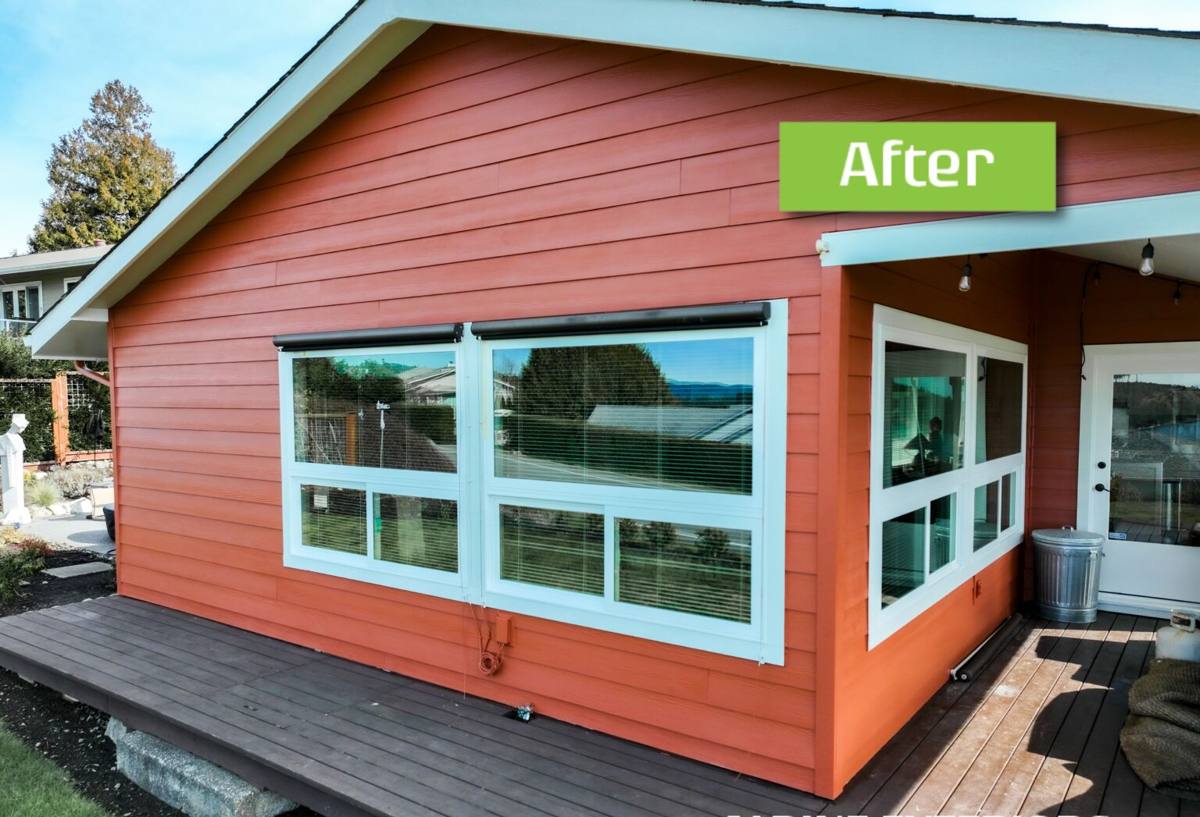
What Engineered Wood Siding Gets Right
LP SmartSide and similar engineered wood products are made from wood strands bonded with resins and waxes, then treated with a zinc-borate preservative and coated with a factory finish. Compared to old-fashioned solid wood siding, that's a real improvement. Engineered wood is lighter than fiber cement, which can make it faster and less physically demanding to install. It also holds a nail or screw the way carpenters expect wood to, and it can be cut and shaped with standard woodworking tools without the silica dust that comes with cutting fiber cement.
For builders working in drier, more moderate climates, engineered wood siding has a legitimate track record. It's a wood-based product doing a good job of behaving less like wood.
The Catch: It's Still Wood at Its Core
The zinc-borate treatment and resin binders raise the bar for moisture resistance, but the base material is still organic wood fiber. Wood fiber's fundamental relationship with sustained moisture doesn't change just because it's been engineered — it still swells, and the failure mode is still fungal decay if water gets past the finish and stays there.
Where That Matters in a Sarasota Climate
This is the part of the comparison that's specific to where the house sits, not a generic pros-and-cons list. Sarasota County isn't a moderate climate for exterior materials. A few things stack on top of each other here that don't show up together in most of the country:
- Wind-driven rain. Storms here don't just drop rain — they push it sideways into laps, seams, and butt joints under pressure, forcing water into spots that stay dry in a normal downpour elsewhere.
- Sustained humidity. Even outside of storm season, our air holds enough moisture most months that wood-based products get little of the extended dry-out time they'd get inland or up north.
- Intense, near year-round UV. Factory finishes and field-applied caulking both break down faster under Florida sun, and a compromised finish is exactly what lets moisture start working on the wood fiber underneath.
- Salt air. Coastal and near-coastal homes deal with airborne salt that accelerates the breakdown of fasteners, trim, and finish coatings faster than it would inland.
- Hurricane-force wind events. Beyond the constant weathering, this county sits in a path where a direct storm hit is a real possibility, not a hypothetical — and wind uplift and flying debris test every seam and fastener at once.
Any one of these on its own is manageable. All of them layered together, for months at a stretch, is a tougher environment than most engineered wood products were originally proven in. The manufacturer's own installation instructions typically call for tighter caulking schedules, careful end-cut sealing, and diligent maintenance specifically because they know moisture intrusion is the failure point to manage.
Why Fiber Cement Behaves Differently
James Hardie siding is made from Portland cement, sand, and cellulose fibers, cured into a rigid, dimensionally stable board. There's no wood fiber in the finished product for moisture to penetrate and swell. That single material difference changes the whole risk profile:
- It doesn't rot, and it's not a food source for termites or fungal decay.
- It's non-combustible, which matters for insurance conversations as much as safety.
- It holds its dimensions in humidity swings, so seams and caulk lines stay tighter longer.
- The ColorPlus factory finish is baked on and warranted separately from the substrate, so the color layer isn't relying on a field-applied coat to be the only thing standing between the weather and the core material.
James Hardie also builds region-specific product lines — its HZ5 formulation, for example, is engineered for markets exactly like ours: high humidity, wide temperature swings, and moisture exposure. That's not marketing fluff; it reflects a different design target than a product engineered primarily for drier regions.
Installation Sensitivity: The Material Isn't the Whole Story
We'll be straight with you: both of these products can fail early if they're installed wrong. Fiber cement that's nailed too tight, missing the required clearances, or caulked incorrectly at butt joints will develop problems. Engineered wood installed without following the manufacturer's moisture-management details will develop problems faster. Installation quality matters enormously either way — but the consequence of a mistake is different. A caulking failure on fiber cement usually shows up as a cosmetic or localized repair. The same failure on wood-based siding sets decay in motion that can spread through the panel before anyone notices, since the damage happens from the inside out.
Because we only install one product, our crews build deep, repeated familiarity with James Hardie's fastening patterns, clearances, and flashing details rather than switching installation logic between multiple systems from job to job.
Comparing the Two Side by Side
| Factor | James Hardie Fiber Cement | Engineered Wood (e.g., LP SmartSide) |
|---|---|---|
| Core material | Cement, sand, cellulose fiber | Wood strands with resin/zinc-borate treatment |
| Moisture failure mode | Localized, generally repairable | Can lead to internal decay if water is trapped |
| Combustibility | Non-combustible | Combustible (wood-based) |
| Finish system | Factory-baked ColorPlus, separately warranted | Factory or field-applied coatings |
| Weight / handling | Heavier, more rigid | Lighter, easier to handle |
| Sensitivity to install quality | High — but errors are usually cosmetic | High — errors risk moisture intrusion into the core |
| Typical warranty | Long-term, transferable, non-prorated in many cases | Varies by product line, often prorated over time |
Cost Over the Life of the Siding, Not Just the Install
Engineered wood siding often carries a lower material cost up front, and in some markets that's the deciding factor. But the fairer comparison isn't the invoice for installation day — it's the maintenance and repair burden over 15, 20, or 30 years in a climate like this one. Recaulking schedules, spot repairs at panel ends and seams, and finish touch-ups add real cost and real labor over time, especially on a home taking direct sun and salt exposure most of the year. Fiber cement isn't maintenance-free either, but the maintenance is lighter: periodic inspection, caulk upkeep at joints, and repainting on a longer cycle than a wood-based product typically needs.
When we walk a homeowner through the numbers, we're honest that the up-front price gap is real. What we push back on is treating that number as the whole cost story.
Warranty Structure Is Part of the Decision
Warranty terms differ by manufacturer and by specific product line, and we'd encourage you to read the current warranty documentation for any product you're considering rather than take a contractor's word for it. In general, fiber cement warranties from established manufacturers tend to be long-dated and transferable to a new owner if you sell the home, which matters in a market like Sarasota's where resale is common. Engineered wood warranties vary more by product and often step down in coverage over time. Ask for the actual warranty document, not a summary, before you decide.
Why We Standardized on One Product
We don't install LP SmartSide, vinyl, primed spruce, cedar, or any fiber cement brand other than James Hardie. That's a deliberate business decision, not an accident of what we happen to stock. Standardizing lets our crews specialize in one installation system, order one set of trim and accessory components that are proven to work together, and stand behind one warranty structure we understand completely. For a coastal Florida climate with hurricane exposure, intense UV, and salt air working on a house every single day, we've concluded fiber cement is the material that holds up with the least ongoing intervention from the homeowner. That's the side we chose, and it's the only siding system we put our name behind.
Questions to Ask Before You Choose a Siding Material
- What does the manufacturer's warranty actually say about moisture-related failures, and is it transferable if you sell the home?
- What is the manufacturer's recommended maintenance schedule, and does the contractor plan to follow it?
- Is the product line specifically engineered for high-humidity, coastal, or hurricane-exposed regions?
- Has the installer worked with this exact product enough times to know its clearance and fastening requirements cold?
- What happens to the finish coating over 10-15 years of Florida UV exposure, and who is responsible for touch-ups?
- Is the product rated non-combustible, and does that affect your homeowner's insurance premium?
If you're weighing siding options for a home in Sarasota or elsewhere in Sarasota County, we're glad to walk through what we see holding up and what tends to need attention sooner, with no pressure either way. A free estimate gives you real numbers for your specific house, not a generic price range — use the form below to get one started.