 Sarasota Siding
 Building a Deck That Actually Holds Up in Bradenton
Bradenton sits just north of Sarasota along the same stretch of Gulf Coast, which means it takes the same beating: long stretches of intense sun, sudden downpours, salt-laden air blowing in off the water, and the real possibility of hurricane-force winds every storm season. A deck built here isn't a weekend backyard project — it's an outdoor structure that has to survive conditions most inland decking products were never designed for. We build custom decks specifically for this environment, not a generic deck dropped into a Florida yard and hoped for the best.
A lot of deck failures we get called out to inspect weren't built badly on the surface — they were built with the wrong assumptions. Fasteners that looked fine going in but corroded from the inside out. Framing spaced for a mild climate instead of wind-driven rain and humidity swings. Decking boards chosen for looks in a showroom instead of how they hold up under Bradenton's UV load. Getting a deck right here starts with respecting the climate, not fighting it after the fact.
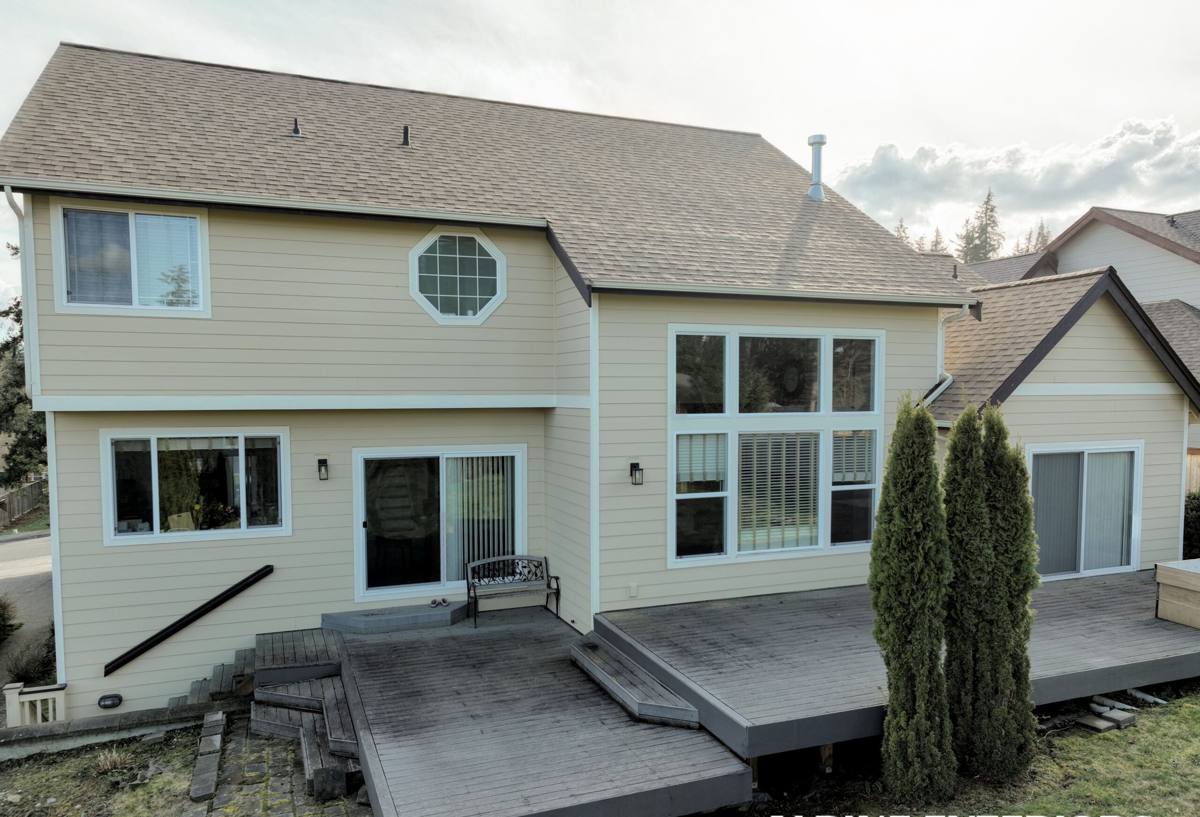
What Bradenton's Climate Actually Does to a Deck
UV and Heat
Florida gets more direct sun exposure over the course of a year than almost anywhere else in the country. On a deck, that means constant UV bombardment on top surfaces, plus heat cycling as boards go from scorching afternoon sun to cooler, damp nights. Cheap composite decking and untreated wood both fade, chalk, or crack faster here than the manufacturer's national warranty language usually implies.
Wind-Driven Rain and Humidity
Rain in this part of Florida rarely falls straight down. Storms push it sideways, driving water into fastener holes, board gaps, and ledger connections that would stay dry in a calmer climate. Combined with year-round humidity, that moisture doesn't fully dry out between storms — which is exactly the condition that causes wood rot, mold growth, and slow fastener corrosion if the deck wasn't built with drainage and material choice in mind from the start.
Salt Air
Bradenton and the surrounding Sarasota County coastline sit close enough to the Gulf that salt carried in the air settles on everything outdoors, including decks well back from the water. Salt accelerates corrosion in any metal hardware that isn't rated for it — screws, joist hangers, bolts, railing brackets. A deck built with standard hardware instead of coastal-rated fasteners can start showing rust streaks and weakening connections years before it should.
Hurricane-Force Wind
Decks attached to the house — and especially elevated decks or those supporting roof structures like pergolas — need to be framed and anchored to handle real wind load, not just support foot traffic. Ledger board attachment, post anchoring, and railing post connections are where we see the most corner-cutting on decks that weren't built by a crew used to coastal wind requirements.
Choosing the Right Decking Material for This Area
There's no single "best" decking material — there's the right material for your budget, how you'll use the deck, and how much upkeep you're willing to do. Here's how the common options actually perform in a Manatee/Sarasota coastal climate:
| Material | UV/Sun Performance | Moisture & Salt Air Behavior | Maintenance |
|---|---|---|---|
| Pressure-treated pine | Fades and can splinter without regular sealing | Prone to warping and rot if end grain and fasteners aren't protected | Needs re-sealing every 1–2 years in this climate |
| Tropical hardwoods (e.g. ipe-type species) | Very good; naturally dense and UV-resistant | Excellent moisture resistance; heavy, stable board | Occasional oiling to maintain color; low structural upkeep |
| Capped composite decking | Good; capped products resist fading better than uncapped composite | Doesn't rot, but board-end sealing and proper ventilation still matter | Low; periodic cleaning only |
| Uncapped/older-generation composite | Can chalk and fade faster under intense Florida UV | More susceptible to moisture absorption at cut ends | Moderate; requires cleaning to prevent mildew staining |
We don't push one product on every homeowner. We'll walk through what you actually want out of the deck — low maintenance versus natural wood look, budget, how much direct sun the space gets — and tell you honestly which material fits, including the trade-offs.
A Note on Cost Ranges
Custom deck pricing depends heavily on size, height off grade, framing complexity, decking material, and railing style, so we don't quote firm numbers without seeing the site. In general terms, a simple pressure-treated deck sits at the lower end of the cost spectrum, composite decking runs in the middle, and premium hardwoods or elaborate multi-level designs with built-in features land at the higher end. We'll give you a real, itemized number after a site visit — not a guess.
Framing: Where a Coastal Deck Is Won or Lost
The decking boards are what you see and walk on, but the framing underneath is what determines whether the deck is still solid in ten years. For Bradenton-area decks, that means:
- Ledger board attachment engineered for wind and moisture, not just fastened to the rim joist and caulked
- Joist hangers and structural connectors rated for coastal/high-corrosion environments, not standard galvanized
- Post footings sized and set to local frost-free, high-water-table soil conditions
- Proper flashing at the ledger to keep wind-driven rain from tracking behind the house's siding or sheathing
- Airflow and drainage gaps built into the framing so trapped moisture has somewhere to go
- Fastener spacing and framing sized to current Florida Building Code wind requirements for this region
None of this is visible once the deck boards go down, which is exactly why it matters who builds it. A deck can look finished and photograph well while having framing shortcuts that only show up as soft spots, rust bleed, or movement a few years later.
Railings and Hardware: The Corrosion Point Everyone Underestimates
Railing posts, brackets, and fasteners take the most direct exposure to salt air of any part of a deck, and they're structural — a railing failure is a safety issue, not just a cosmetic one. We spec stainless or coated hardware rated for coastal exposure on every custom deck we build in this area, and we pay attention to how railing posts are anchored into the framing, since that connection point is where most railing failures start. If a contractor quotes you standard interior-grade hardware for an outdoor coastal deck to save a few dollars, that's a maintenance bill waiting to happen.
How Our Custom Deck Process Works
1. Site Visit and Design Conversation
We look at your yard, your home's structure, sun exposure, and how you actually plan to use the space — dining, grilling, a pool deck extension, a quiet spot to sit in the evening. Design decisions get made around real use, not just a floor plan.
2. Material and Layout Selection
We walk through decking material options with honest pros and cons for your budget and maintenance preference, plus railing style, stair placement, and any built-ins like benches or planters.
3. Permitting
Deck construction in Manatee and Sarasota County requires permitting, and elevated or attached decks go through structural review. We handle the permit process and build to code from the start — this isn't a step we skip to save time, because it's also what protects you when you sell the house later.
4. Framing and Structural Build
This is where coastal-rated hardware, proper ledger attachment, and correct footing depth all get done right, since it's the part of the deck nobody sees again once it's covered.
5. Decking, Railing, and Finish Work
Final decking installation, railing, stairs, and any trim or lighting get completed and inspected before we walk the finished deck with you.
6. Final Walkthrough
We go over care and maintenance specific to whatever material you chose, so you know what upkeep — if any — is actually needed.
Maintenance That Fits This Climate
Whatever material you choose, a few habits go a long way in Bradenton's climate: rinsing off salt residue and pollen buildup periodically, keeping gutters and nearby drainage clear so water doesn't pool near footings, and doing a yearly check of railing connections and fastener heads for early rust staining. Wood decks need re-sealing on a regular schedule to hold up against the UV load here; composite and capped products need far less, but board-end sealing and keeping debris out of drainage gaps still matters.
Why Hire a Crew That Already Works the Bradenton Area
A contractor who works Manatee and Sarasota County regularly already knows the local permitting process, the wind and flood requirements that apply here, and which materials and hardware actually hold up under this specific combination of sun, salt, and storm exposure. That's different from a crew that mostly builds decks inland and treats a coastal job as a one-off — the framing, fastener, and drainage details that matter most here are exactly the ones that get missed by someone who doesn't build in this climate day to day.
What to Look For in a Deck Contractor Here
- Licensed and insured to do structural work in Manatee and Sarasota County
- Willing to explain material trade-offs honestly instead of upselling the most expensive option
- Uses coastal-rated fasteners and connectors as standard, not an upcharge
- Pulls permits and builds to current Florida Building Code wind requirements
- Can show you framing details, not just finished photos
- Gives you a written, itemized estimate before work starts
If you're planning a new deck or replacing one that didn't hold up, we're happy to walk your property, talk through material options honestly, and give you a straightforward, no-pressure estimate. There's a form below to get started.