 Sarasota Siding
 Decks in Downtown Sarasota Work Harder Than Most
A deck in Downtown Sarasota isn't just outdoor furniture attached to a house — it's a structure that spends every day fighting the same climate that makes this part of Sarasota County so appealing to live in. The bay breeze that carries salt air inland accelerates corrosion on fasteners and hardware. Intense, near year-round UV breaks down wood fibers, fades finishes, and dries out sealants faster than in most parts of the country. Summer thunderstorms drive rain sideways into ledger boards and railing posts, and when a hurricane or tropical system pushes through, wind uplift tests every connection point on the structure. None of this is unique to any one deck, but it adds up differently on a 15-year-old wood deck near downtown than it would on a similar structure inland.
We repair decks throughout Downtown Sarasota on everything from older bungalow-style homes to newer construction near the bayfront, and the failure patterns are consistent enough that we can usually tell what's wrong before we even get a ladder out. The goal of this page is to walk through what we actually find, what a correct repair looks like, and why a crew that already understands this specific stretch of Sarasota County tends to do a better job than one working from a generic playbook.
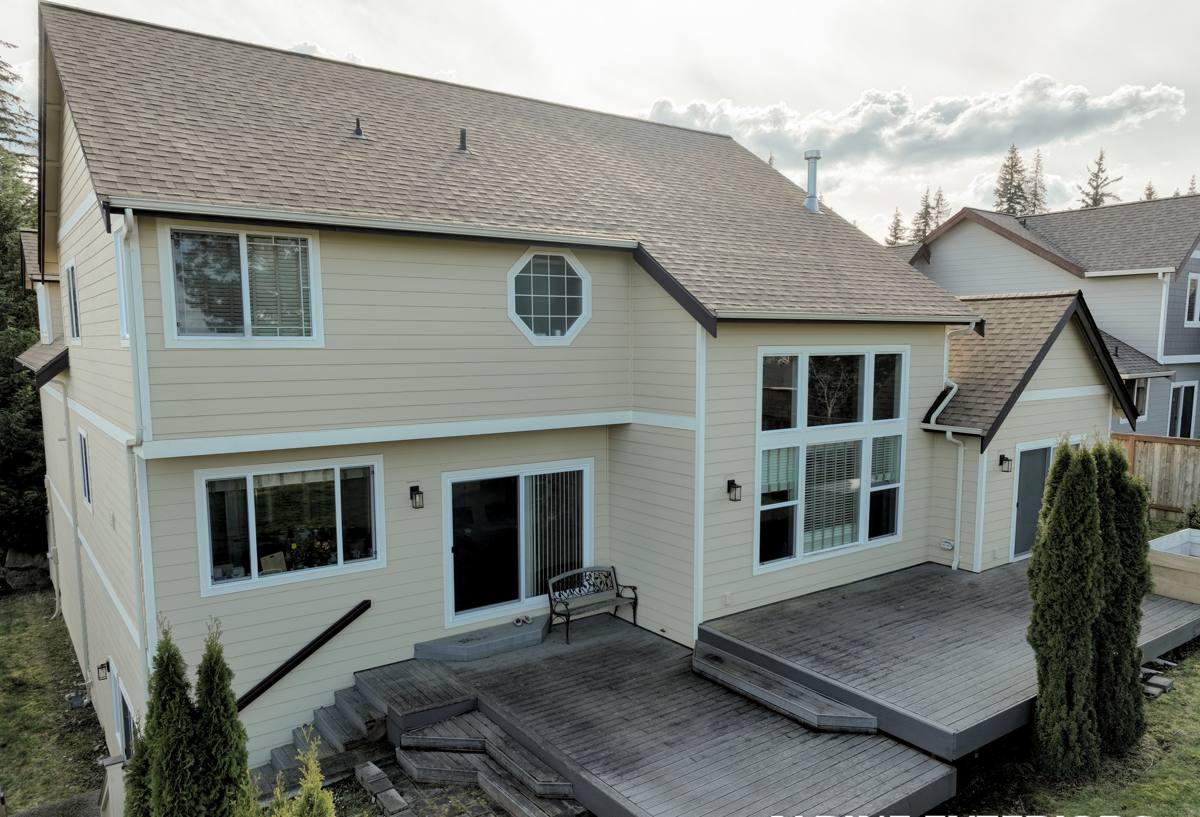
The Deck Problems We See Most Often Locally
Ledger Board and Rim Joist Rot
The ledger board — where the deck attaches to the house — is the single most common failure point we find. If it wasn't flashed correctly when installed, or the flashing has failed over time, wind-driven rain gets behind it and soaks the framing from the inside out. By the time you see soft wood or staining on the fascia, the rot has usually been progressing for a while.
Fastener and Hardware Corrosion
Salt air doesn't need to be right on the water to do damage — it travels well inland, and Downtown Sarasota gets a steady dose of it. Standard galvanized screws, nails, and joist hangers corrode faster here than manufacturers' national warranties often assume. We regularly find rust streaks bleeding out of deck boards, weakened joist hanger connections, and railing hardware that's seized or crumbling.
Sun-Damaged and Checked Decking Boards
Constant UV exposure dries out wood decking, causing cupping, cracking (checking), and splintering. On composite decking, prolonged sun exposure combined with heat can accelerate fading and, on older or lower-grade products, surface degradation. Boards that look cosmetically rough are often still structurally fine — but it's worth having someone confirm that rather than assume.
Loose or Unsafe Railings and Guardrails
Railing posts see constant wind load, and if they weren't through-bolted into solid framing to begin with, they loosen over time. This is the deck problem most likely to actually hurt someone, and it's one of the most common repair calls we get.
Substructure Movement
Undersized or under-braced footings, joists spaced too far apart, or missing lateral bracing can all lead to a deck that feels bouncy or sways under load. This is a structural issue, not a cosmetic one, and it needs to be corrected at the framing level.
Repair or Replace? How We Make That Call
Not every deck problem means starting over, and not every deck is worth patching. We look at the framing first, since that determines everything else. If the ledger, joists, and posts are structurally sound and the problems are limited to surface boards, railings, or isolated rot, targeted repair is usually the right call. If the framing itself is compromised in multiple places, repair costs start to approach replacement costs without buying you a fresh structure with current fasteners and flashing.
| Factor | Leans Toward Repair | Leans Toward Replacement |
|---|---|---|
| Framing condition | Solid, isolated soft spots | Rot or corrosion in multiple structural members |
| Ledger board | Intact, properly flashed | Unflashed or rotted where it meets the house |
| Age of structure | Under 12-15 years, built to code | Older, pre-dates current fastening/flashing standards |
| Extent of damage | Localized (a few boards, one railing section) | Widespread across decking, framing, and railings |
| Footings | Stable, no visible settling | Shifted, undersized, or showing movement |
When a deck is a borderline case, we'd rather tell you honestly that a repair is a short-term fix than sell you one that doesn't hold up through the next storm season.
What a Proper Deck Repair Actually Involves
A repair that only replaces what's visibly damaged often misses the cause of the damage. Our approach starts with figuring out why a section failed, not just patching the symptom.
Structural Inspection First
Before any boards come off, we check the ledger connection, joist hangers, post bases, and any areas where water has clearly been sitting. Probing suspect wood with an awl tells us how far rot has actually spread versus where it's just surface staining.
Correcting the Water Path, Not Just the Symptom
If a ledger board failed because of missing or improperly lapped flashing, replacing the board without fixing the flashing just resets the clock on the same failure. Proper ledger flashing — installed so water sheds away from the house rather than behind the board — is non-negotiable on any repair we do that touches that area.
Hardware Upgrades for the Coastal Environment
Where budget allows, we prefer stainless steel or heavy-duty coated fasteners and hardware rated for coastal/salt-air exposure over standard galvanized products, particularly for joist hangers, structural screws, and railing bolts. It costs more upfront and pays for itself in years before you're dealing with corrosion again.
Code-Correct Railings
Guardrail height, baluster spacing, and post attachment methods are dictated by the Florida Building Code as adopted locally, and railings are one of the areas most often installed incorrectly on older or DIY decks. Any railing work we do gets brought up to current code, not just re-secured in whatever configuration was there before.
Our Deck Repair Process
- On-site inspection of framing, ledger, hardware, decking, and railings, with photos of anything hidden from normal view.
- Honest assessment of what's failing structurally versus what's cosmetic, and a repair-or-replace recommendation.
- Written scope covering exactly what's being replaced, what hardware and fasteners will be used, and whether flashing or waterproofing work is included.
- Permit pulled through the appropriate local building department when the scope requires it — structural repairs and most railing replacements do.
- Repair work performed, including any needed flashing corrections, framing sistering or replacement, and fastener upgrades.
- Final walk-through so you can see and understand what was fixed and why.
Material Choices for a Sarasota Deck
What we recommend for repair materials depends on what's already there, your budget, and how much long-term maintenance you're willing to take on.
| Material | Strengths in This Climate | Trade-Offs |
|---|---|---|
| Pressure-treated pine | Affordable, widely available, easy to match to existing decking | Needs regular sealing; more prone to checking under constant UV |
| Cedar | Naturally rot-resistant, attractive grain | Softer wood, still needs periodic sealing in this climate |
| Tropical hardwoods (e.g., ipe) | Very dense, excellent rot and insect resistance | Higher material cost, heavier, requires specific fasteners |
| Composite decking | Low maintenance, resists rot and insects | Higher upfront cost; quality varies significantly by product line |
We're upfront when a product isn't a good fit for a given repair — for example, mixing composite decking onto framing that wasn't designed for its weight and spacing requirements, or using a hardwood that needs pre-drilling on a repair where matching existing fastener patterns matters more than maximizing lifespan.
Permits and Local Code Considerations
Deck work in and around Downtown Sarasota typically falls under the jurisdiction of either the City of Sarasota or Sarasota County building department, depending on the exact location of the property. Structural repairs — anything touching framing, footings, or the ledger connection — generally require a permit, as does most railing replacement work. The Florida Building Code's wind load provisions are stricter here than in much of the country, which affects fastening schedules, hardware ratings, and railing attachment methods. Skipping the permit process on structural work isn't just a compliance issue; it can also complicate insurance claims and resale if the work isn't documented and inspected.
Keeping a Repaired Deck in Good Shape
Once a deck is repaired correctly, a little seasonal attention goes a long way toward avoiding a repeat of the same problems.
- Inspect the ledger board area and any flashing at least once a year, ideally before hurricane season.
- Reseal or restain wood decking on a schedule appropriate to the product — UV exposure here typically shortens the interval compared to less sunny climates.
- Check railing posts and hardware for looseness or corrosion, especially after major storms.
- Clear debris from between deck boards to prevent moisture from being trapped against the wood.
- Rinse salt residue off hardware and railings periodically, particularly on decks closer to the water.
- Address soft spots, popped fasteners, or cracked boards promptly rather than waiting for them to spread.
Why Local Experience Matters for This Kind of Repair
A contractor who only occasionally works in coastal Florida might default to standard hardware, standard flashing details, and standard maintenance assumptions — all of which fall short here. We work on decks throughout Downtown Sarasota regularly enough to know which failure patterns show up on which types of homes, what the local building departments expect for permitting, and which materials actually hold up against this combination of salt air, UV, and storm exposure rather than just performing well on paper. That local familiarity is the difference between a repair that looks fine at handoff and one that's still solid five hurricane seasons later.
Get an Honest Look at Your Deck
If your deck has soft spots, loose railings, corroded hardware, or you're just not sure whether it needs a repair or something more involved, we're happy to take a look. Fill out the form below for a free, no-pressure estimate — we'll tell you plainly what we find and what it would take to fix it right.