 Sarasota Siding
 Ellenton's Climate Is Hard on Siding — Here's Why
Ellenton sits in the stretch of Gulf Coast between Tampa Bay and Sarasota, and that location comes with a specific set of demands on a home's exterior. Storm systems moving through bring hurricane-force gusts and wind-driven rain that gets forced sideways into seams, laps, and trim joints that lesser siding simply isn't built to resist. Between storms, the sun does its own damage — Florida's UV load is among the most intense in the country, and it bakes color and flexibility out of cheaper claddings year after year. Add in the salt-laden air that drifts inland off the Gulf, and you have a combination that accelerates corrosion on fasteners and trim, and breaks down materials that aren't engineered for a coastal climate.
None of this is unique to any one street or subdivision in Ellenton — it's the reality for the whole Sarasota-Bradenton region. But it means the siding decision homeowners here make is different from what works in a drier, milder climate. Products that perform fine in the Midwest or the mountain West can fail early here. That's the lens we bring to every Ellenton project: not "what siding looks good," but "what siding actually holds up under this specific combination of wind, UV, rain, and salt."
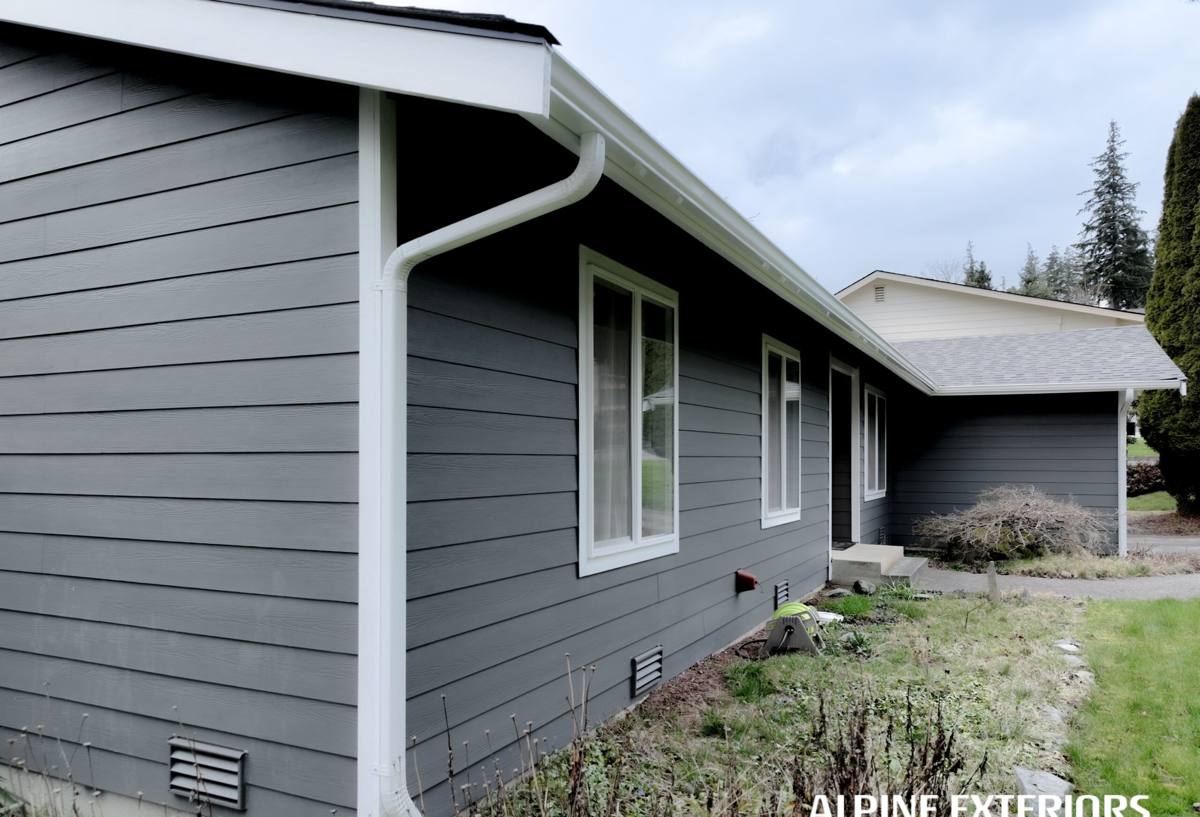
Why We Install Only James Hardie Fiber Cement
We made a deliberate decision years ago to install James Hardie fiber cement exclusively, and we turn down installs of vinyl, LP SmartSide, Cemplank, Allura, and primed wood products like spruce or cedar. That's not a marketing position — it's a professional standard built around what actually survives Gulf Coast weather without constant homeowner intervention.
What the Alternatives Get Right — and Where They Fall Short Here
Vinyl siding is inexpensive and easy to install, and in mild climates it does an adequate job. In a hurricane-exposed coastal market, vinyl's weak point is heat and wind tolerance — it can warp under sustained sun exposure and is more prone to cracking or blowing off in high wind events than a heavier, engineered material. LP SmartSide and similar wood-strand products perform reasonably in drier regions, but they're an engineered wood product at their core, which means sustained humidity and wind-driven rain intrusion at damaged or unsealed edges can lead to swelling and deterioration over time. Primed cedar or spruce siding is a real, traditional product with genuine appeal, but raw wood requires disciplined, recurring maintenance — repainting, resealing, and prompt repair of any moisture entry point — that most homeowners underestimate until the wood has already started to fail.
Cemplank and Allura are themselves fiber cement products and share Hardie's core material chemistry. Our decision to standardize on Hardie specifically comes down to their factory-applied ColorPlus finish, the depth of their climate-engineered HZ product lines, and a warranty and support structure we've found to be the most consistent to stand behind over a 30-plus year service life. We'd rather install one product exceptionally well than juggle several and dilute our expertise across all of them.
What Fiber Cement Gets Right for This Region
- Non-combustible core — relevant for insurance considerations and general fire safety
- Engineered specifically for high-humidity, high-UV, coastal wind exposure
- Holds paint and factory finish far longer than wood under intense Florida sun
- Dense enough to resist wind-driven debris impact better than lightweight claddings
- Doesn't rot, and isn't a food source for termites or wood-boring insects
What Correct Fiber Cement Installation Actually Involves
Fiber cement is only as good as its installation. A huge share of the siding problems we get called out to inspect in this region trace back not to the material, but to shortcuts taken during the original install. Getting it right in a hurricane-exposed, salt-air environment means:
Water Management Comes First
Before a single plank goes up, the wall needs a correctly lapped weather-resistant barrier, properly integrated window and door flashing, and kick-out flashing wherever a roofline meets a wall. Fiber cement is durable, but if water gets behind it and has nowhere to drain, you'll get rot in the sheathing and framing regardless of how good the siding itself is.
Fastening and Clearances
James Hardie publishes specific fastener spacing, fastener type, and minimum clearance requirements — siding-to-grade, siding-to-roofline, siding-to-deck — that exist specifically for wind and moisture performance. In a coastal, hurricane-exposed market, we don't treat these as suggestions. Under-fastened siding is one of the most common causes of panels failing in high wind, and it's largely preventable with correct installation practice.
Fastener and Trim Material Selection
Salt air accelerates corrosion on the wrong fastener type. Using corrosion-resistant fasteners and compatible trim materials matters more here than it would inland, and it's an easy detail to get wrong if a crew isn't used to coastal installs.
Choosing the Right Hardie Product Line for Ellenton
James Hardie makes climate-specific product formulations, and for this part of Florida, the HZ5 line is engineered for the moisture and humidity exposure typical of the Gulf Coast and Southeast. Beyond the base product, homeowners choose between a few common profiles and finish options:
| Product | Best For | Key Benefit |
|---|---|---|
| HardiePlank lap siding | Most single-family homes | Traditional look, most common profile, wide color range |
| HardieShingle | Accent areas, gables, coastal cottage styles | Textured, dimensional look without wood upkeep |
| HardiePanel | Modern or board-and-batten styles | Clean vertical lines, distinct architectural statement |
| HardieTrim | Corners, window and door surrounds, fascia | Matches siding durability at high-wear trim points |
Most homeowners also choose ColorPlus factory-applied finish over field-applied paint. It's baked on under controlled conditions, resists UV fade better than site-applied paint, and is backed by its own finish warranty — a meaningful advantage in a climate where the sun is working against paint every day of the year.
Our Process, Start to Finish
- On-site assessment — we inspect existing siding, sheathing, and any moisture damage, and walk the whole exterior with you
- Product and profile selection — matching Hardie product line, profile, and ColorPlus color to your home and any HOA requirements
- Detailed written estimate — scope, materials, and timeline, no vague allowances
- Tear-off and substrate check — old siding removed, sheathing inspected and repaired where needed before anything new goes up
- Weather barrier and flashing installation — the water management layer that determines long-term performance
- Siding installation to manufacturer spec — correct fastener spacing, clearances, and trim detailing throughout
- Final walkthrough — we go over the finished work with you before calling the job complete
What Drives Cost on a Fiber Cement Project
| Factor | Why It Matters |
|---|---|
| Home size and wall complexity | More corners, gables, and dormers mean more cutting, trim work, and labor time |
| Extent of substrate repair needed | Rotted sheathing found during tear-off must be replaced before new siding goes on |
| Product line and profile chosen | Lap, shingle, and panel styles carry different material and labor costs |
| Trim and accent detailing | Board-and-batten accents, window surrounds, and custom trim add labor |
| Access and site conditions | Tight lot lines, fencing, or landscaping can add time to staging and cleanup |
We don't publish blanket per-square-foot pricing because these factors genuinely change the number from one Ellenton home to the next — which is why we walk every property in person before quoting.
Signs Your Ellenton Home May Need New Siding
- Visible cracking, warping, or buckling panels, especially on sun-exposed elevations
- Soft spots or discoloration near the bottom courses or below windows, a sign of moisture intrusion
- Paint that's chalking, peeling, or fading unevenly despite regular upkeep
- Gaps opening up at seams, corners, or trim joints after storm seasons
- Rising energy bills that track with failing insulation behind the siding
- Visible fastener corrosion or staining running down the siding face
Maintaining Fiber Cement Siding in This Climate
Fiber cement is low-maintenance, not no-maintenance. A yearly rinse to clear off salt residue and organic buildup, prompt caulking touch-ups at trim joints, and an annual walk-around after hurricane season to check for wind or debris damage will keep a correctly installed system performing for decades. Catching a small gap or a loose piece of trim early is far cheaper than dealing with hidden moisture damage a year or two later.
Why Local Experience in Ellenton Matters
A crew that regularly works the Sarasota-Bradenton area already understands the county permitting process, the wind-load and code requirements that apply to exterior work here, and the specific coastal-weathering issues that show up on homes in this climate. That familiarity shows up in the details — the flashing choices, the fastener selection, the way clearances are handled around decks and grade — that separate a fiber cement install that lasts thirty years from one that starts showing problems in five.
If you're planning a siding project in Ellenton, we're happy to walk your home, answer questions honestly, and give you a straightforward, no-pressure estimate — use the form below to get started.