 Sarasota Siding
 Lakewood Ranch is one of the newer, fast-growing communities in the Sarasota/Bradenton area, spanning parts of Sarasota and Manatee counties, and that relative newness changes what "energy-efficient windows" means here compared to an older neighborhood closer to downtown Sarasota. Most Lakewood Ranch homes already have windows — the question isn't usually whether a house has windows that work, it's whether the windows a builder installed to hit a price point are actually doing their job against a Florida cooling bill that runs nearly year-round. Energy-efficient window work in this area is rarely a rescue job. It's a comfort and cost problem: closing the gap between what a builder-grade window does and what a properly specified, properly installed one can do for the life of the house.
Why Energy Performance Matters More in a Newer Community Like This
Builders selecting windows for a large development are usually optimizing for a spec sheet and a construction budget across hundreds of homes, not for how a specific elevation of a specific house will perform against the afternoon sun. That's a reasonable thing for a builder to do, but it means a lot of Lakewood Ranch homes have windows that meet code and look fine, without being particularly good at the one thing that matters most for a Florida utility bill: keeping solar heat out of the house. On top of that, many floor plans in planned communities are oriented for lot layout and street design rather than sun exposure, so it's common to find a great room or kitchen with a large west- or south-facing window package that takes on significant heat gain every afternoon regardless of how the rest of the house is built.
In a climate where air conditioning runs most of the year rather than a few peak weeks, even a modest efficiency gap on the wrong elevation adds up fast. That's the practical reason energy-efficient window upgrades pencil out here in a way they might not in a milder climate — the return isn't seasonal, it's constant.
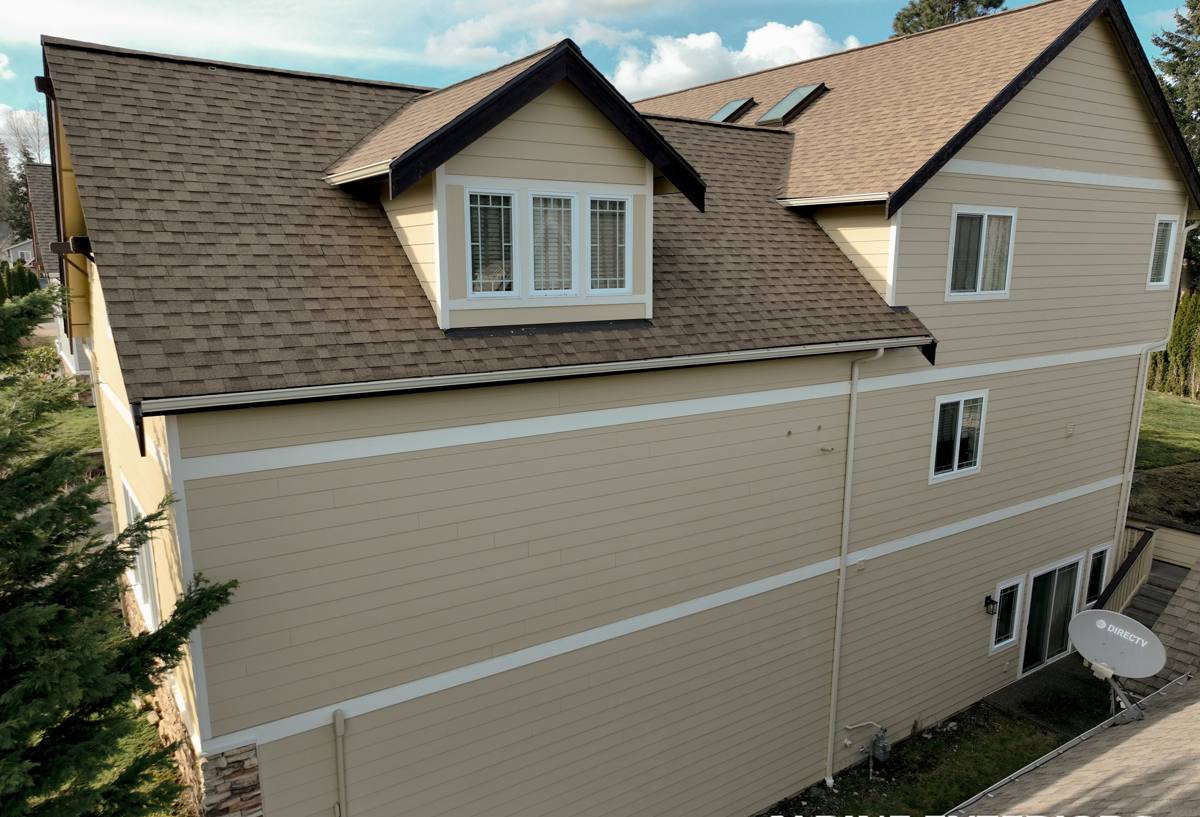
What This Climate Does to Windows in Lakewood Ranch
Sarasota County sits in a wind-borne debris zone, and hurricane-force wind events put real pressure on window assemblies and the seals around them, whether or not a storm ever makes direct landfall nearby. Intense, near-constant UV exposure works on window components year-round, breaking down lesser weatherstripping, sealants, and vinyl formulations faster than a more temperate climate would. Wind-driven rain during summer storms and tropical systems tests flashing and drainage details repeatedly, not just once a year. And while Lakewood Ranch sits further inland than the barrier islands and immediate Gulf front, salt air still travels on sea breezes and settles on hardware and glass over time — it's a slower process than a beachfront property sees, but it isn't absent.
Why Energy Performance Suffers First
A window usually loses its energy performance well before it fails outright. Seal failure between insulated glass panes lets the gas fill that improves insulation escape, which shows up as fogging between the panes and a measurable drop in performance. UV breaks down weatherstripping and lets conditioned air leak around the sash long before the frame itself looks damaged. And a window with a poor solar heat gain rating on a sun-facing wall simply lets in more heat than it should, forcing the air conditioning to compensate every single day. None of that requires a dramatic failure to show up — it usually just shows up as a power bill that's higher than it should be for the size of the house.
What Actually Makes a Window Energy-Efficient in This Climate
"Energy-efficient" isn't a single feature — it's a combination of ratings and construction details, and which ones matter most shifts depending on climate. In Florida, cooling load dominates over heating load almost every month of the year, so the solar heat gain coefficient (SHGC) — how much solar heat a window lets through — usually matters as much or more than the U-factor, which measures overall heat transfer. Low-E coatings are engineered to block a large share of solar heat while still letting visible light through, so the room doesn't feel dark just because the glass is doing its job. Argon or krypton gas fill between panes improves insulation over a plain air gap, and warm-edge spacers reduce heat transfer at the edge of the glass, where standard aluminum spacers used to create a weak point.
Frame material affects performance too, particularly in this climate's heat and humidity.
| Frame Material | How It Performs Here |
|---|---|
| Vinyl | Good insulator, resists moisture and corrosion well in humid, salt-influenced air, widely available in impact-rated configurations |
| Fiberglass | Very stable in heat, resists warping and UV degradation, generally the strongest long-term performer for large or sun-exposed openings |
| Aluminum | Strong and slim-profile, but conducts heat readily unless thermally broken, and is more prone to corrosion near salt-influenced air over time |
| Wood or wood-clad | Good insulator, but requires more upkeep in Florida's humidity and sun unless the exterior cladding is well protected |
Reading the Label
Every legitimate energy-efficient window carries an NFRC label listing its U-factor, SHGC, and visible transmittance. Those numbers should be matched to the specific wall they're going on, not treated as one-size-fits-all for the whole house — a west-facing great room window and a shaded north-facing bedroom window don't need the same SHGC target, and treating them the same usually means overpaying on one side of the house and underperforming on the other.
Common Window Situations We See in Lakewood Ranch
- Builder-grade upgrades — replacing original construction windows that met code but were never selected for real energy performance
- HOA-compliant matching — upgrading windows while keeping the frame color, grille pattern, and profile consistent with community architectural guidelines
- Lanai and Florida room conversions — larger glass openings that need both impact compliance and a serious solar heat gain strategy
- West- and south-facing great rooms — homes with large sun-exposed glass packages driving disproportionate cooling costs
- Aging original windows nearing end of seal life — units original to the home starting to show fogging or drafts as seals age out
- Additions and renovations — new openings that need to match the performance and appearance of existing windows on the house
What a Correct Job Involves
Assessment and Orientation Planning
We evaluate each elevation of the house separately rather than specifying one window package for the whole home. A west-facing wall with afternoon sun exposure has different priorities than a shaded, north-facing wall, and treating them the same is one of the most common ways an otherwise good window purchase underperforms.
Product Selection
Once we know the exposure for each wall, we match SHGC and U-factor targets, confirm the impact rating required for the specific location, and select a frame material suited to Florida heat and humidity rather than defaulting to whatever is cheapest to stock.
Installation and Flashing
A high-performance window installed with a poor seal or a rushed flashing detail will underperform its own rating — air infiltration around the frame undermines the glass package no matter how good the label looks. We detail flashing and sealant work to the specific opening, not a generic template, since that's what actually determines whether the efficiency numbers hold up over time.
HOA and Architectural Review
Many Lakewood Ranch villages have HOA architectural guidelines covering exterior frame color, grille patterns, and window profile, and those requirements can affect which energy-efficient products are actually approved for a given home. We factor that into product selection up front so a homeowner isn't stuck choosing between an efficient window and an HOA-compliant one.
Quick Checklist Before You Order
- Ask for SHGC and U-factor recommendations specific to each elevation of your home, not one number for the whole house
- Confirm the impact rating required for your specific location and check it against the proposed product
- Check your HOA's architectural guidelines for approved frame colors and grille patterns before finalizing a product
- Ask how the installer plans to flash and seal each opening, not just what product they're selling
- Get the window unit warranty and the installation labor warranty spelled out separately
- Get a realistic lead time in writing, especially for impact-rated, made-to-order units
Costs and Trade-Offs
| Factor | What Changes the Price |
|---|---|
| Glass package and coatings | Low-E coatings, gas fill, and warm-edge spacers add cost but are usually where the real efficiency gain comes from |
| Impact rating required | Wind-borne debris code requirements for your specific location affect what structural rating the unit needs to carry |
| Frame material | Fiberglass and quality vinyl typically cost more upfront than basic aluminum but hold performance longer in this climate |
| Orientation-specific glass | West- and south-facing walls often justify a higher-spec glass package than shaded elevations of the same house |
| Number of openings | A whole-house or whole-elevation project typically has better per-unit economics than replacing one window at a time |
Why Hiring a Crew That Already Works Lakewood Ranch Matters
A window's NFRC label tells you how it performs in a lab, not how it will perform on your specific wall in Sarasota County's heat, humidity, and storm exposure. A crew that already works in this community isn't guessing at which villages have specific HOA color and grille requirements, what impact rating a given location typically needs, or how a west-facing great room here tends to perform with one glass package versus another. That familiarity shows up in the decisions that actually matter — which elevation gets the higher-spec glass, how a flashing detail gets sequenced for wind-driven rain, and whether the paperwork for an HOA architectural review gets handled correctly the first time instead of causing a delay.
We work in Lakewood Ranch and the surrounding Sarasota County area regularly, so the recommendations we make are based on how windows actually perform on homes like yours, not a generic answer that applies anywhere in the state.
Ready When You Are
If your windows are original to the house, your cooling bills feel high for the size of your home, or you're planning a renovation and want a straight answer on what will actually perform well on your specific walls, it's worth having someone assess the house before you start comparing products. We offer free, no-pressure estimates for energy-efficient window projects in Lakewood Ranch — use the form below to get a time on the schedule.