 Sarasota Siding
 Composite Decking in Gulf Gate Estates: Built for the Way This Neighborhood Actually Lives Outside
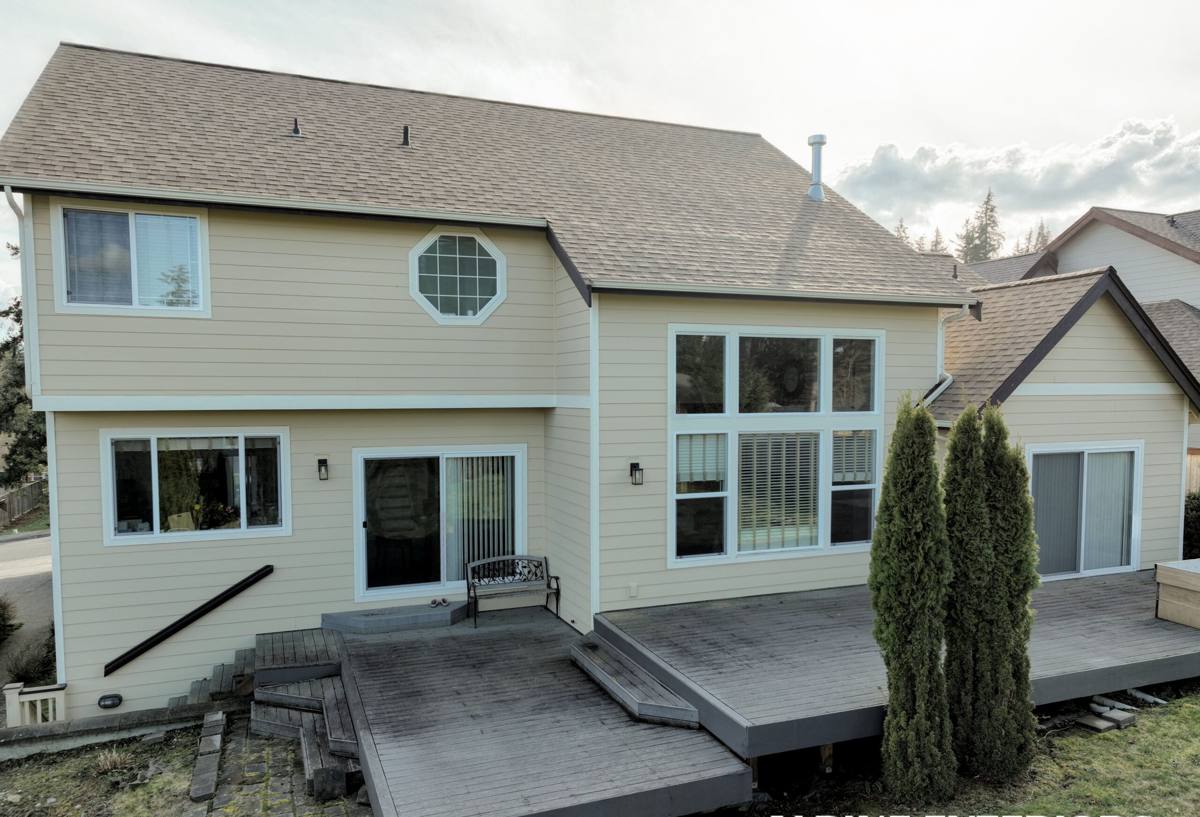
Gulf Gate Estates sits close enough to the water that salt air is part of daily life, and far enough inland that most homes still rely on mature tree canopy for shade rather than open Gulf breeze. That combination — humidity, salt, dappled sun, and afternoon storm cells rolling in most of the summer — is exactly the environment composite decking was engineered to handle better than wood. But "composite decking" covers a wide range of products and installation quality, and the difference between a deck that looks good for fifteen years and one that starts showing problems in three usually comes down to what's under the boards, not the boards themselves.
This page is about composite decking specifically for Gulf Gate Estates properties — what the local climate demands, what a correctly built deck involves from the substructure up, and why hiring a crew that already understands this pocket of Sarasota County matters more than most homeowners expect.
What Sarasota County's Climate Does to a Deck
Every deck material in this region faces the same four stressors, just in different combinations depending on how exposed the site is:
- UV exposure — Florida sun is intense nearly year-round. Wood grays and splinters under it; lower-grade composites can fade or chalk if the cap layer isn't formulated for this UV load.
- Wind-driven rain — Summer storms don't just fall straight down here; wind pushes water sideways and under boards, into fastener holes, and against ledger connections. Drainage and fastening details matter as much as the decking surface.
- Salt air — Even set back from the coast, Gulf Gate Estates gets enough salt-laden air to accelerate corrosion on the wrong hardware. This shows up as rust streaks and loosened fasteners long before the decking itself fails.
- Hurricane-force wind events — Sarasota County sits squarely in the path of tropical systems. A deck attached with the wrong ledger flashing or undersized fasteners is a weak point during a real wind event, not just a cosmetic risk.
None of these are exotic problems — they're the normal cost of building outdoors in this part of Florida. A deck designed around them lasts decades. One that ignores them fails in the specific, predictable ways described below.
Why This Matters More for Composite Than People Assume
A common misconception is that composite decking is maintenance-free and therefore installation-proof. It isn't. The composite boards resist rot and splintering far better than wood, but the framing underneath, the fasteners holding everything together, and the ventilation beneath the deck all still have to be built correctly for this climate. Composite decking installed over an under-ventilated frame in a humid coastal county can trap moisture at the substructure level even while the boards themselves look fine on top.
What a Correct Composite Deck Build Involves
1. Substructure First
The framing is where most long-term problems start. In this climate, that means pressure-treated or coated framing lumber rated for ground contact where applicable, proper joist spacing for the specific composite product (composite spans differently than wood and manufacturers publish exact spec tables — ignoring them voids warranties and causes bounce or sagging), and hardware sized for actual Florida wind loads, not the minimum code allows in drier regions.
2. Ledger Attachment and Flashing
Where the deck attaches to the house is the single most common failure point in humid climates. Correct flashing keeps wind-driven rain from working its way behind the ledger board and into the house structure. This is invisible once the deck is finished, which is exactly why it has to be done right the first time — it's not something you can inspect or fix later without tearing the deck apart.
3. Fastening Hardware
Stainless steel or coated, corrosion-rated fasteners are non-negotiable this close to salt air. Standard galvanized hardware can start showing rust bleed through composite boards within a few seasons in coastal Southwest Florida conditions. This is a small cost difference at build time and a visible, permanent problem if skipped.
4. Ventilation Beneath the Deck
Low-clearance decks and skirted decks need real airflow underneath. Without it, humidity sits trapped against the framing, and even rot-resistant composite decking won't stop the wood substructure from breaking down over time.
5. Board Fastening and Gapping
Composite boards expand and contract with heat more than most homeowners expect. Correct gapping between boards accounts for this movement and for drainage during heavy rain. Boards installed too tight can buckle; boards gapped too wide collect debris and look unfinished.
Comparing Decking Approaches for a Gulf Gate Estates Home
| Factor | Wood Decking | Standard Composite | High-Cap Composite |
|---|---|---|---|
| UV/fade resistance | Grays and weathers without regular refinishing | Good, cap layer quality varies by brand | Best fade resistance, engineered cap layer |
| Moisture/humidity behavior | Prone to swelling, splintering, rot without upkeep | Resists moisture damage in the board itself | Same, plus better scratch/stain resistance |
| Maintenance | Annual sealing/staining recommended | Occasional cleaning | Occasional cleaning |
| Upfront cost | Lowest material cost | Mid-range | Higher material cost |
| Long-term cost | Highest, due to ongoing refinishing labor | Lower over 15-20 years | Lowest over 15-20 years |
| Best fit | Budget-limited, shaded, low-traffic areas | Most Gulf Gate Estates homes | Full-sun exposure, pool decks, high-use areas |
We'll walk through which tier makes sense for your specific yard's sun exposure, tree cover, and how the space will actually be used — a shaded deck under mature oaks has different priorities than an open, full-sun rear yard closer to a canal or open lot.
Our Process for a Gulf Gate Estates Deck Project
- On-site assessment — We look at sun exposure, drainage patterns, existing structure (if replacing a deck), and any HOA or setback considerations specific to the property.
- Design and material selection — Board profile, color, and railing system chosen based on how the space is used and the home's sun/shade exposure.
- Permitting — Sarasota County and applicable municipal permitting is pulled before work starts. This isn't optional for structural decking work, and skipping it creates real problems at resale.
- Demolition (if applicable) — Old decking and, if needed, compromised framing removed and hauled off.
- Framing and structural work — Built to current wind load requirements with corrosion-rated hardware throughout.
- Decking installation — Boards installed to manufacturer spec for spacing, fastening, and expansion gaps.
- Final walkthrough — We go over the finished deck with you before calling the job done, not after.
Why a Locally Established Crew Matters Here
Gulf Gate Estates isn't a generic Florida subdivision — it has its own mix of lot sizes, mature tree cover, and proximity to water that changes how a deck should be framed and finished. A crew that already works this specific area knows which permitting office to deal with, understands the typical soil and drainage conditions in this part of Sarasota County, and has already worked through the hardware and flashing decisions that matter for salt air exposure this close to the coast. That's different from a crew that installs decks broadly across Florida and treats every job the same way.
It also matters after the sale. A local contractor is the one who answers the phone if a board needs attention two years later, not a name that installed once and moved on to the next county.
Signs Your Current Deck Needs Attention
- Soft spots, bounce, or visible sagging when walking across the deck
- Rust streaking around fastener heads
- Boards pulling away from the ledger or house connection
- Persistent moisture or mildew smell from underneath the deck
- Visible gaps opening up between boards that weren't there originally
- Railing posts that feel loose or move under light pressure
Any of these are worth a professional look before hurricane season, not after storm damage has already made the problem worse.
What Homeowners Often Get Wrong About Composite Decking Cost
Composite decking typically costs more upfront than pressure-treated wood, and less over a 15-20 year ownership period once you factor in the sealing, staining, and board replacement wood decks usually need in this climate. The real cost variable isn't composite versus wood — it's the quality of the substructure, hardware, and flashing work underneath, which is invisible in a quote that only lists "decking installed" without detail. We'll break down exactly what's included in any estimate so you're comparing like-for-like, not just a bottom-line number.
If you're considering a new deck or need an honest look at an existing one in Gulf Gate Estates, we're happy to come take a look. There's no pressure and no cost for the estimate — just a straight assessment of what your home actually needs. Use the form below to get started.