 Sarasota Siding
 Siding Built for Lakewood Ranch's Climate, Not Just Its Curb Appeal
Lakewood Ranch sits inland from the Gulf, spanning the Sarasota and Manatee County line, and it's one of the fastest-growing planned communities in the region. That growth means a lot of homes going up quickly, and a lot of exterior products getting chosen on price or looks rather than on how they'll hold up. Being set back from the immediate coastline doesn't exempt a home here from Florida's exterior punishment. Hurricane-force winds still move through the area, wind-driven rain still gets forced sideways into wall assemblies during storms, and the sun works on a house year-round, not just in summer. Salt air travels further inland than most homeowners assume, especially during and after tropical systems, and it settles on every exterior surface it reaches.
Siding in Sarasota County has to do more than look good on install day. It has to keep doing its job through decade after decade of UV exposure, humidity swings, storm seasons, and the kind of driving rain that finds every gap in a wall system. That's the standard we install to, and it's why we're selective about what goes on a house in the first place.
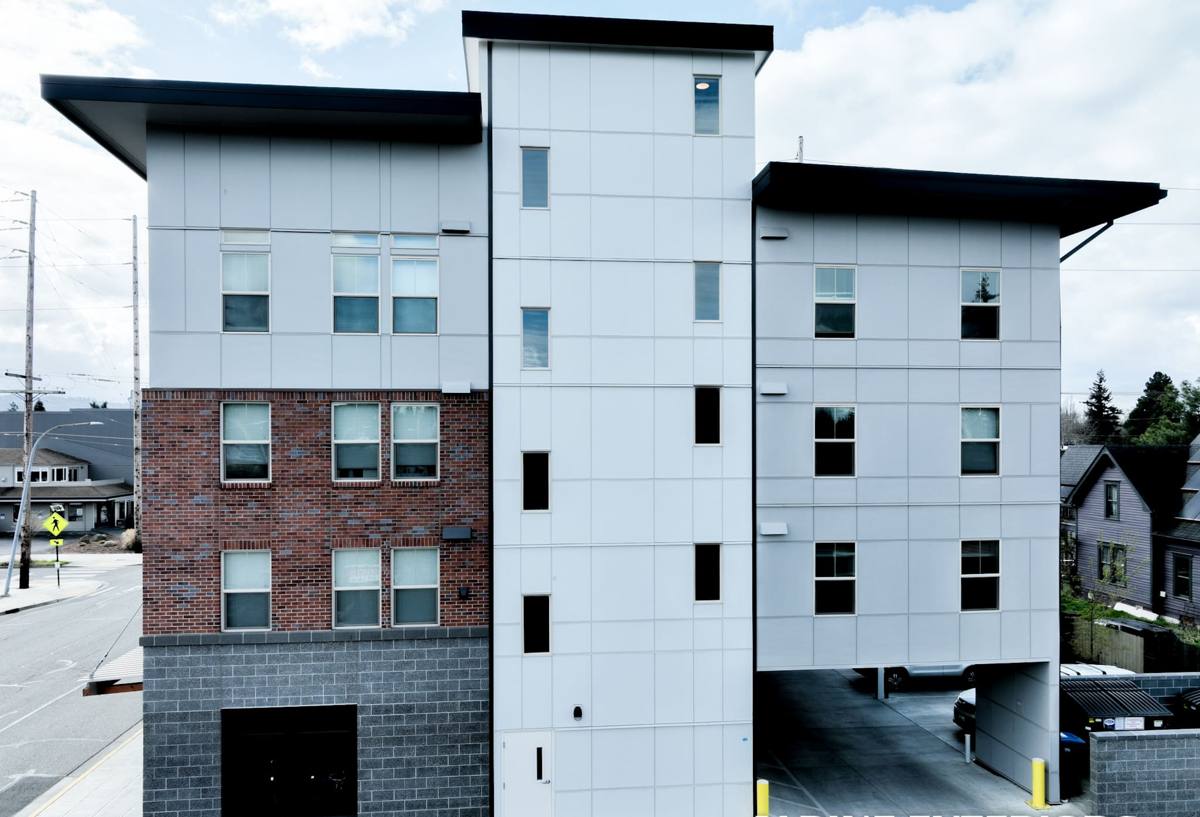
What Fiber Cement Actually Has to Do on a Home Here
Fiber cement siding is a mix of cement, sand, and cellulose fiber, pressed and cured into planks and panels. Done right, it gives a home a material that doesn't rot, doesn't feed insects, doesn't warp in humidity, and won't ignite from an ember landing on it — a real consideration during Florida's dry stretches and with wildfire smoke drifting in from time to time. But "fiber cement" as a category covers products of very different quality, and the installation matters as much as the material itself.
A siding product that isn't engineered for Florida's humidity and heat cycling can still crack, cup, or fail at the joints faster than it should. And even a well-engineered product installed without proper flashing, clearances, and fastening will let water behind the wall — which in this climate turns into a mold and sheathing problem fast, not a slow one.
The James Hardie System We Install
We install James Hardie fiber cement exclusively, and specifically the HZ10 product line engineered for high-humidity, high-UV climates like Florida's Gulf Coast. On a Lakewood Ranch home, that typically means:
- HardiePlank lap siding — the primary wall covering on most homes, available in several plank widths and textures
- HardiePanel vertical siding — used for accent walls, gables, or a board-and-batten look
- HardieTrim — fascia, corner boards, and window/door trim that won't rot or attract termites the way wood trim does
- ColorPlus Technology finish — a factory-baked finish that resists Florida's UV fade far better than field-applied paint, backed by its own finish warranty
Every plank in the HZ10 line is manufactured with Florida's specific combination of moisture and heat cycling in mind, which is a meaningfully different product than a generic fiber cement board made for a drier or milder climate zone.
Why We Standardize on One Manufacturer
We don't install LP SmartSide, vinyl siding, Cemplank, Allura, primed spruce, or cedar. That's a deliberate standard, not a lack of options. Vinyl softens and warps under sustained Gulf Coast heat and can crack in a hard freeze snap, and it isn't rated for the wind speeds Sarasota County design pressures call for in the same way engineered fiber cement is. Primed spruce and cedar look good going up, but wood siding on a Florida exterior means an ongoing cycle of repainting, caulk maintenance, and vulnerability to moisture and wood-boring insects that fiber cement simply doesn't have. Other fiber cement brands may perform reasonably, but we've chosen to standardize on one manufacturer, one installation spec, and one warranty structure so every crew member knows the system cold and every homeowner gets the same accountability if something needs attention later. That consistency is worth more to us than offering five different siding options and mastering none of them.
What Correct Installation Actually Involves
Fiber cement siding fails prematurely almost never because of the board itself — it fails because of installation shortcuts. On every job we follow the manufacturer's fastening, flashing, and clearance specifications, because deviating from them isn't just a quality issue, it can void the product warranty outright. That includes:
Moisture management behind the siding
Proper house wrap or weather-resistive barrier, correctly lapped and taped, with flashing at every window, door, and penetration so wind-driven rain has a drainage path instead of a way into the wall cavity.
Fastening and joints
Corrosion-resistant fasteners driven at the manufacturer-specified pattern and depth, with properly spaced joints and gapping to allow for the board's natural expansion and contraction through Florida's humidity and temperature swings.
Clearances
Minimum clearance from grade, roofing, and decking surfaces so the bottom edge of the siding isn't sitting in standing water or trapped moisture after a heavy rain event.
Caulking and sealant
Sealant only where the manufacturer calls for it, using compatible products — over-caulking traps moisture just as badly as under-caulking lets it in.
Our Process, Start to Finish
We keep the process straightforward so you know what's happening at each stage:
- On-site inspection of the existing siding, sheathing, and trim to identify any hidden rot or moisture damage before a number gets written down
- Measurement and a written estimate covering material, labor, and any sheathing repair that's needed
- Product and color selection from the HardiePlank and ColorPlus lineup
- Removal of the old siding and repair of any compromised sheathing or framing found underneath
- Installation of house wrap, flashing, and the Hardie system to manufacturer specification
- Final walkthrough and cleanup before we consider the job done
We don't cover up a sheathing problem with new siding on top of it — if we find rot or water damage during tear-off, we tell you before we proceed, not after.
What Drives the Cost of a Siding Job
Every home is different, but the main cost factors on a Lakewood Ranch project are fairly consistent:
| Factor | Why It Matters |
|---|---|
| Home size and story count | More surface area and second-story access both add labor time |
| Condition of existing sheathing | Rot or water damage found during tear-off requires repair before new siding goes on |
| Trim and architectural detail | Gables, dormers, and multiple trim profiles take more time than a simple rectangular wall |
| Siding profile and finish | Plank width, texture, and ColorPlus color selection affect material cost |
| Removal and disposal | Tear-off and haul-away of old siding is priced separately from new material and install |
We give a written estimate that breaks these out so you can see exactly what you're paying for, rather than a single lump number.
Signs a Lakewood Ranch Home Needs Siding Attention
Siding problems in this climate tend to show up gradually, then get expensive fast once moisture gets behind the wall. Watch for:
- Visible cracking, warping, or buckling in the current siding
- Soft or spongy spots when you press on the wall near the base
- Paint that's peeling or bubbling on the siding or nearby trim
- Persistent mold, mildew, or discoloration that returns after cleaning
- Rising energy bills that suggest the wall assembly is no longer keeping conditioned air in
- Visible gaps, missing caulk, or loose boards after a storm
Any one of these is worth a professional look before the next hurricane season adds wind-driven rain to the mix.
Why Hiring a Crew That Already Works Lakewood Ranch Matters
Lakewood Ranch's HOA-governed neighborhoods often have specific exterior guidelines on color palettes and material approval, and a crew that regularly works in the community already knows how to navigate that process instead of causing delays partway through your project. Permitting also runs through either Sarasota County or Manatee County depending on exactly where a property sits, and wind load and fastening requirements are tied to the same coastal design pressures that apply across this part of the Gulf Coast. A contractor who installs here regularly isn't guessing at any of that — it's routine. That familiarity translates into fewer surprises, a smoother permitting process, and an installation done to the standard this climate actually demands.
If your home in Lakewood Ranch needs new siding or you're planning ahead of the next storm season, we're happy to walk the exterior with you and give you a straightforward, no-pressure estimate — just fill out the form below.