 Sarasota Siding
 Deck Building for Laurel Park Homes
Laurel Park is one of Sarasota's older, walkable neighborhoods, and the homes here reflect it — a mix of bungalows, mid-century houses, and newer infill construction, many sitting on lots with mature tree canopy and close proximity to downtown and the bay. A deck in this setting has to do double duty: it needs to look right next to a historic or classic Florida home, and it needs to survive a genuinely hard climate. Sarasota County sees hurricane-force wind events, wind-driven rain that gets pushed sideways into fasteners and end grain, intense UV exposure nearly year-round, and salt-laden air drifting in off the Gulf. That combination is harder on outdoor structures than most homeowners realize until they've watched a poorly built deck fail in five or six years instead of twenty.
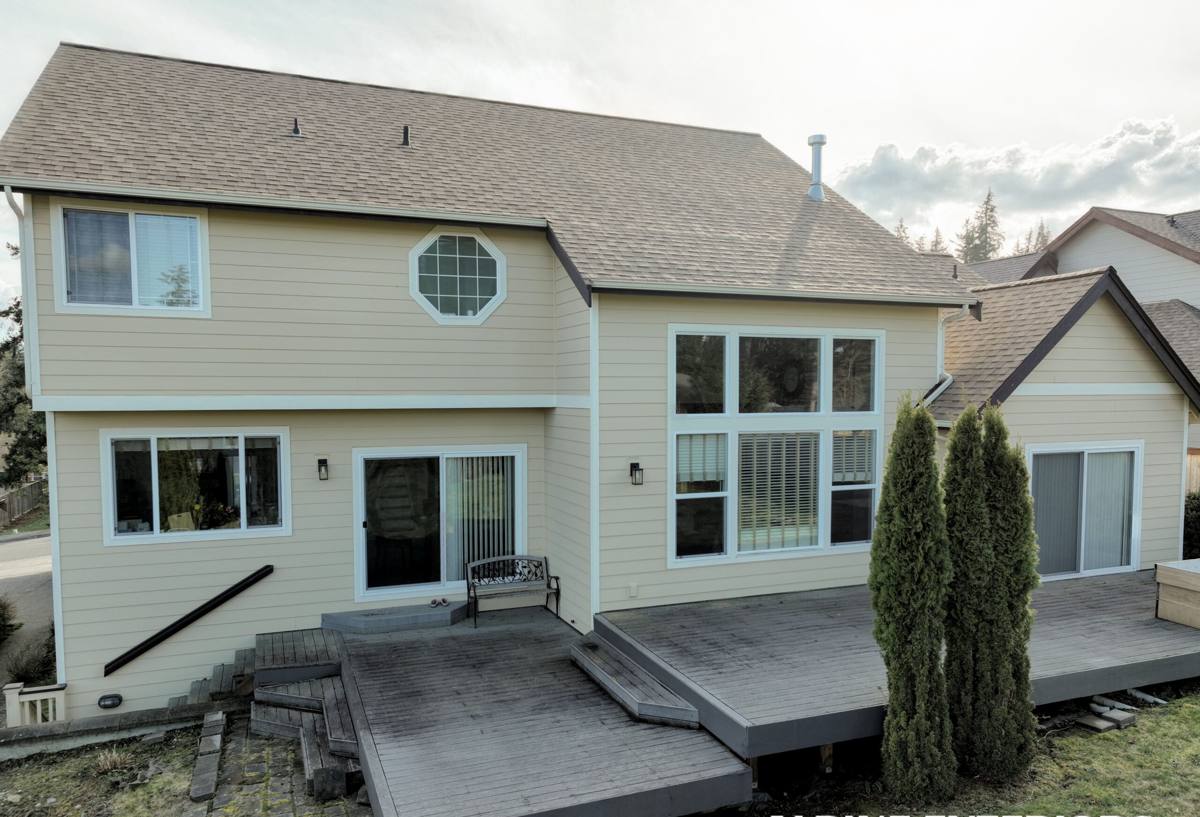
This page covers what a properly built deck for a Laurel Park property actually requires — material choices, structural details, our process, and the maintenance reality — so you know what to ask for and what to expect, whether you're planning a small entry deck or a full backyard living space.
What Laurel Park's Climate Does to a Deck
It helps to understand the specific failure modes before talking about solutions, because every decision below traces back to one of these four stressors.
Wind
Sarasota County's building code requires structures to be engineered for high wind loads, and a deck is not exempt just because it's "outdoors." Railings, ledger connections, and post bases all need to resist uplift and lateral load, not just support the weight of people standing on the deck. A deck that was framed like it's in a low-wind state will show it first at the railing posts and the ledger-to-house connection — the two places most likely to work loose in sustained wind.
UV exposure
Florida sun breaks down the surface fibers of wood and degrades many finishes faster than manufacturers' national warranty language assumes, since that language is often written around a more moderate climate. Composite decking fades and can chalk over time depending on the product line; wood grays and checks. UV is also what dries out and embrittles sealants and gasket materials at fastener heads and flashing seams.
Wind-driven rain
Rain in Sarasota rarely falls straight down during the events that matter. Wind pushes it sideways into end grain, under board edges, and into any gap around a ledger board or post base that isn't properly flashed. Standing water and trapped moisture — not rain exposure itself — are what actually rot framing and corrode fasteners.
Salt air
Laurel Park isn't right on the water, but it's close enough to the bay that salt-laden air is a real factor, especially for anything metal. Standard zinc-coated fasteners and hardware corrode faster here than in an inland climate, which is why fastener spec matters as much as board spec.
Material Choices That Make Sense Here
There's no single "best" decking material — the right choice depends on your budget, how much upkeep you want to do, and the look you're after. Here's how the common options actually perform under Sarasota conditions.
| Material | How it holds up locally | Maintenance | Typical lifespan |
|---|---|---|---|
| Pressure-treated pine | Affordable and strong when detailed correctly, but needs consistent sealing to resist UV checking and moisture cycling | Reseal every 1-2 years | 10-15 years with upkeep |
| Composite (capped) | Resists rot and insect damage well; quality varies a lot by product line, so we stick with lines that have a solid track record in hot, humid climates | Periodic cleaning, no sealing | 20-25+ years |
| Tropical hardwood (ipe, similar) | Naturally dense and rot-resistant, handles UV better than softwoods, but is heavier and requires precise fastening | Oil periodically or let gray naturally | 25+ years |
| Uncapped composite/PVC blends | Lower upfront cost than capped composite, but more prone to surface fading and staining in intense sun | Cleaning, occasional treatment | 15-20 years |
We're honest with clients about trade-offs rather than pushing one product. Composite costs more up front and saves on maintenance; wood costs less up front and asks more of you over time. Both are legitimate choices for a Laurel Park property — it's about matching the material to how you actually want to spend your weekends.
Fasteners and Hardware
This is the detail that gets skipped most often, and it's the one that determines whether a deck ages gracefully or starts showing rust streaks and loose connections within a couple of years. For this climate, we use stainless steel or high-grade coated fasteners rated for coastal exposure, along with corrosion-resistant post bases, joist hangers, and structural screws. Cheaper galvanized hardware may meet code minimums, but in salt-influenced air it corrodes visibly faster, and a corroded fastener is a weak point exactly where the deck needs strength most — at structural connections.
Structural Details That Matter Most
A deck that looks finished on top can still be under-built underneath. The parts that determine whether it survives a real wind event are mostly invisible once construction is done, which is exactly why they need to be right the first time.
Ledger attachment and flashing
Where the deck attaches to the house is the single most common failure point we see on older decks in this area. It needs proper flashing to keep wind-driven rain from tracking behind the siding and into the house framing, plus lag bolts or through-bolts sized and spaced for the actual load — not just toe-nailed or lightly screwed to the rim joist.
Post bases and footings
Sarasota's soil and water table mean footing depth and post-base connections need to be done to code, with post bases that keep wood off standing water and resist uplift in wind. A post that's just set in a bag of concrete with no mechanical anchor is a liability in a wind event.
Railings
Railings take direct wind load and need connections engineered to resist lateral push, not just decorative attachment. This is also a code compliance area — height, baluster spacing, and load capacity all have specific requirements.
Joist spacing and decking fastening pattern
Tighter joist spacing and a correct fastening pattern reduce board movement, which in turn reduces the gap-and-cup issues that show up after a few Florida summers of expansion and contraction.
Our Process for a Laurel Park Deck Project
- On-site assessment. We look at your lot, existing structure (if replacing a deck), drainage, tree canopy, and how the space will actually be used before recommending anything.
- Material and layout conversation. We walk through the options above in plain terms — budget, maintenance appetite, and how the deck should sit with your home's style.
- Permitting. Decks in Sarasota County typically require a permit, and we handle that process, including making sure the structural details meet current wind-load requirements for this area.
- Framing and structural work. This is where the ledger flashing, post bases, footings, and fastener spec described above get built in correctly — not as an upsell, but as the baseline standard we build to.
- Decking, railing, and finish work. Final surface installation, railing attachment, and any stairs or built-in features.
- Final walkthrough. We go over care and maintenance specific to the material you chose, so you know what upkeep to expect and when.
Why Local Experience Matters for This Job
A deck built to a generic national spec sheet isn't necessarily built for Sarasota County's wind requirements, humidity, or the salt air this close to the coast. Crews that work Laurel Park and the surrounding Sarasota neighborhoods regularly already know which fastener grades hold up here, which ledger-flashing details actually keep water out under wind-driven rain, and what the county permitting office expects to see on plans. That familiarity shows up less in the sales pitch and more in the parts of the deck you never look at again after it's built — the ones that either quietly do their job for two decades or quietly fail in year six.
It also matters for scheduling and problem-solving. A crew that's worked in Laurel Park before generally has a realistic sense of typical lot access, tree root considerations, and how close construction can get to property lines, which cuts down on surprises mid-project.
Signs an Existing Deck Needs Attention
If you're not building new but wondering whether your current deck needs repair or replacement, these are the warning signs worth taking seriously:
- Soft or spongy spots underfoot, especially near the house or stair landings
- Rust streaking around fastener heads or visibly corroded hardware
- Gaps or separation where the deck meets the house (ledger area)
- Railings that flex or feel loose when leaned on
- Boards that are significantly cupped, splitting, or delaminating (for composite)
- Visible daylight or gaps around post bases at ground level
- A deck built more than 15-20 years ago that has never been structurally inspected
Any one of these is worth a look before it becomes a safety issue rather than just a cosmetic one.
Maintenance Reality by Material
Whatever material you choose, a little planned maintenance goes a long way in this climate. Wood decks need resealing on a regular schedule to keep UV and moisture from getting into the grain — skipping a cycle or two is usually when checking and graying accelerate. Composite decks need less intervention but still benefit from periodic cleaning to prevent mildew and staining in Florida's humidity, and it's worth checking fastener heads and railing connections annually regardless of decking material, since hardware is often the first thing to show wear even when the visible surface still looks fine.
Getting Started
Whether you're planning a new deck for a Laurel Park home or need an honest assessment of one that's aging, we're happy to come take a look. If you'd like a free, no-pressure estimate, fill out the form below and we'll set up a time to walk the site with you.