 Sarasota Siding
 Why Longboat Key's Exposure Changes the Siding Equation
Longboat Key sits out on a barrier island between the Gulf of Mexico and Sarasota Bay, which means every exterior surface on these homes takes a harder hit than siding installed a few miles inland. Wind loads run higher this close to open water, salt-laden air corrodes fasteners and finishes faster, UV exposure is relentless nearly year-round, and wind-driven rain during summer storms and hurricane season gets forced sideways into seams, laps, and trim joints that a calmer inland home would never test. Siding here isn't just a cosmetic choice — it's a weather system, and it has to be engineered and installed like one.
That's the lens we bring to every Longboat Key project. The product has to be rated for it, and the installation has to respect every detail the manufacturer specifies, because on this island there's very little margin for a shortcut to hide in.
Why We Standardized on James Hardie for Coastal Work
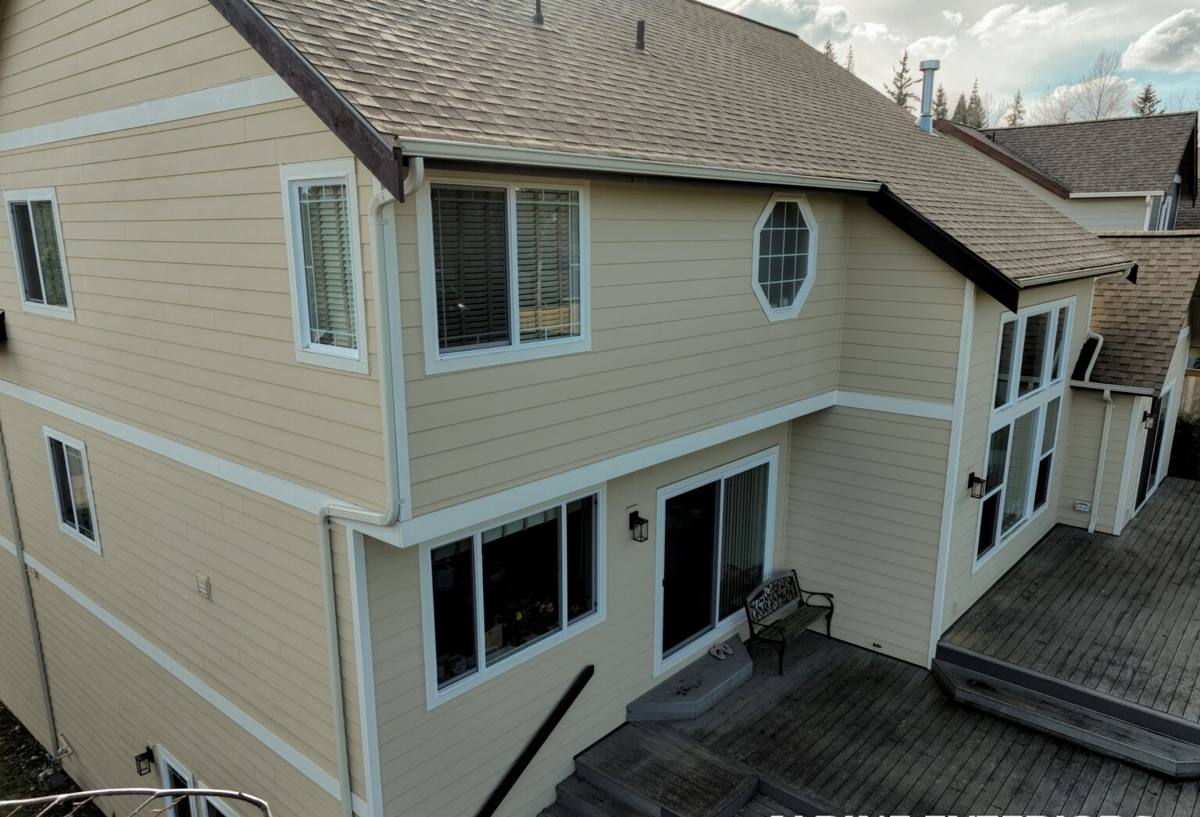
We install James Hardie fiber cement siding exclusively. We don't offer vinyl, LP SmartSide, Cemplank, Allura, or primed wood siding, and on a barrier island property that's not a marketing position — it's a practical one. Fiber cement doesn't warp in heat, doesn't become brittle and crack under wind-borne debris the way vinyl can, and it's non-combustible, which matters to insurers and to homeowners alike.
How Fiber Cement Handles Wind-Driven Rain
Hardie's HZ5 product line is engineered specifically for hot, humid, storm-exposed climates like ours. The board density and moisture resistance are built for a coastline where rain doesn't fall straight down — it gets pushed under laps and around trim by sustained wind. Combined with correct flashing and lap spacing, that engineering is what keeps water out of the wall assembly instead of behind it.
Salt Air and Long-Term Finish Performance
Salt air is hard on any exterior material, but it's especially hard on paint and on metal fasteners. Hardie's factory-applied ColorPlus finish is baked on under controlled conditions and backed by its own finish warranty, which holds up far better against salt exposure and UV fading than field-applied paint. We pair it with fasteners rated for coastal, corrosion-prone environments — a detail that's easy to skip and expensive to regret five years later when streaking and rust spotting start showing through the finish.
James Hardie Product Lines That Fit Longboat Key Homes
Not every Hardie product is the right fit for every house, and part of doing this job right is matching the product line to the home's style and exposure.
| Product | Best Fit | Why It Works Here |
|---|---|---|
| HardiePlank Lap Siding | Traditional and coastal-style homes | Most common choice on the island; wide range of widths and textures, HZ5 engineered |
| HardiePanel Vertical Siding | Modern, coastal-contemporary designs | Clean vertical lines popular on newer Longboat Key builds; fewer horizontal laps for water to test |
| HardieShingle Siding | Accent gables, dormers, Key West-style homes | Authentic shingle look without the maintenance burden of wood shakes in salt air |
| HardieTrim Boards | Fascia, corners, window and door surrounds | Matches the plank system dimensionally and resists the rot that plagues wood trim near the water |
What a Correct Installation Actually Involves
James Hardie siding performs the way it's engineered to only when it's installed to the manufacturer's written specification. On a wind- and moisture-exposed island property, every one of these details is doing real work, not just checking a box.
Manufacturer Spec Meets Local Code
Hardie publishes exact requirements for fastener type, spacing, and penetration depth, minimum clearance above roof lines and hardscape, and lap and joint treatment — and those requirements get more exacting in HVHZ (high-velocity hurricane zone) and coastal wind-exposure areas like Longboat Key. Some Longboat Key addresses fall under Manatee County jurisdiction rather than Sarasota County, so permitting and inspection requirements can differ slightly depending on exactly where the property sits — it's worth confirming with the local building department before work starts.
The Details That Separate a Correct Job from a Fast One
- Weather-resistive barrier installed and lapped correctly before the first board goes up
- Rigid flashing at every window, door, and roof-to-wall transition, not caulk used as a substitute
- Correct nail or screw pattern, driven flush but not overdriven, at every stud
- Proper clearance between siding and roofing, decks, and grade to prevent wicking
- Butt joints and corners treated per Hardie spec so they stay sealed under repeated wind-driven rain
- Caulking only at the joints Hardie specifies — not as a catch-all for framing gaps
Skip any one of these and the siding can still look right for a year or two. The problems that show up later — trapped moisture, streaking at fasteners, boards separating at corners — almost always trace back to one of these steps being rushed.
How Our Process Works on Longboat Key Projects
Every barrier island home has its own quirks, so we start with a walk-around assessment rather than a generic quote. We look at current siding condition, any moisture intrusion at trim or window returns, existing flashing, and how exposed each elevation is to prevailing wind and salt spray — a Gulf-facing wall and a bay-facing wall on the same house can weather very differently.
From there, tear-off includes checking the sheathing underneath for hidden rot or moisture damage before anything new goes on, because covering a compromised substrate with new siding just hides the problem. We install the weather barrier, flashing, and Hardie system to full manufacturer spec, and we walk the finished job with the homeowner before we call it done. Getting on and off the island with equipment and material staging takes more planning than a mainland job, which is one more reason we schedule Longboat Key work with a crew and timeline built around it, not squeezed between other projects.
What Longboat Key Siding Projects Typically Cost
Every home is different, but these are the factors that actually move the number on a Longboat Key job.
| Factor | Why It Matters |
|---|---|
| Home size and elevation complexity | More linear footage, corners, and gables mean more labor and trim work |
| Substrate condition | Rotted sheathing or hidden moisture damage found during tear-off adds repair scope |
| Product line and profile | Plank, panel, and shingle systems have different material and labor costs |
| Trim and detail work | Window surrounds, corner boards, and fascia add finish-carpentry time |
| Site access and logistics | Barrier island staging, permitting, and material delivery take more coordination than a mainland job |
We give honest, itemized numbers based on the actual condition of the house rather than a flat per-square-foot rule of thumb, because on an older coastal home the substrate condition often matters more than the siding itself.
Why a Crew That Already Works Longboat Key Matters
Barrier island work has logistics that inland jobs don't. Bridge access and seasonal traffic affect scheduling, some Longboat Key communities have architectural review or HOA approval requirements for exterior changes, and material staging space on a beachfront lot is often tighter than a typical suburban property. A crew that already works this island knows to plan for these things up front instead of discovering them mid-project.
There's also a wind-exposure judgment call on every barrier island house: how much clearance to leave at a lower roofline, how a corner detail on a Gulf-facing wall should be treated differently than the same detail on a sheltered side. That's not something you get right by reading a spec sheet cold — it comes from having installed Hardie siding on enough Longboat Key and coastal Sarasota homes to know where this specific environment tends to find weaknesses.
Maintaining Hardie Siding in a Salt-Air Environment
James Hardie siding is low-maintenance compared to wood or vinyl, but "low-maintenance" doesn't mean "no maintenance," especially this close to the water. A simple seasonal routine keeps the finish and the wall assembly performing the way it was engineered to.
- Rinse salt residue off the siding periodically, especially on Gulf-facing elevations, with a garden hose — avoid high-pressure washing that can force water behind laps
- Inspect caulking at trim joints and penetrations once a year and re-caulk any that's cracked or pulling away
- Check fastener heads periodically for early rust staining, which can signal a fastener that isn't rated for coastal exposure
- Keep landscaping and irrigation heads from spraying directly on the siding, which accelerates staining and mineral buildup
- Have flashing and clearances checked after any major storm, not just after visible damage appears
If you're weighing a siding replacement on a Longboat Key home, we're glad to walk the property, explain what we're seeing, and put together a straightforward, no-pressure estimate — just fill out the form below to get started.