 Sarasota Siding
 Building a Deck That Actually Holds Up in Osprey
Osprey sits along the Intracoastal Waterway between Sarasota and Venice, close enough to open water that salt air, humidity, and wind are part of daily life for anyone building outdoors here. A deck built with the same specs you'd use in a drier, inland climate will show its age fast in this environment — loose fasteners, cupped boards, rusted hardware, and railings that wobble within a couple of years. A deck built for Sarasota County's actual conditions holds its finish, its structure, and its value a lot longer.
This page covers what a Osprey deck project should include from the ground up: framing, fastener choice, decking material trade-offs, permitting, and the parts of the build that are easy to skip if a crew doesn't work this coastline regularly.
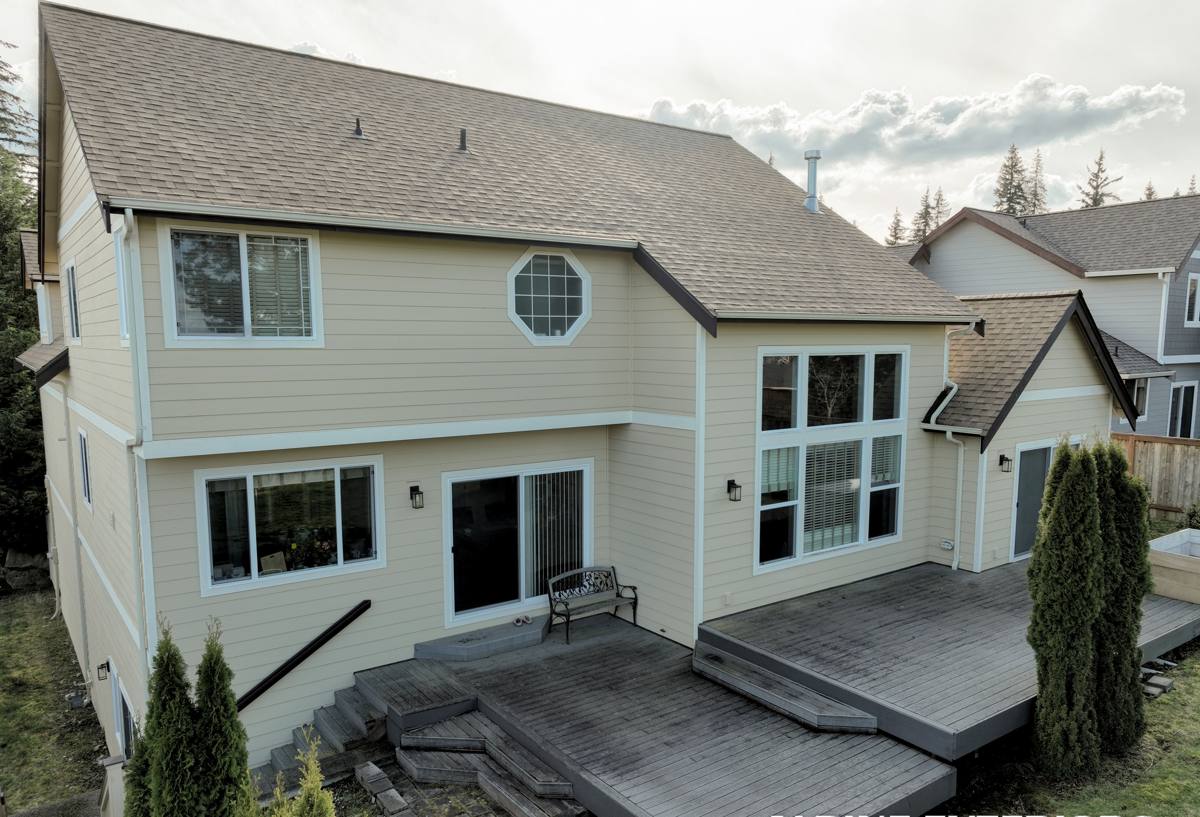
What Osprey's Climate Does to a Deck
Four things drive almost every deck problem we get called out to fix in this area, and they're all present here in some combination year-round:
- Salt air — even a few miles from the water, airborne salt accelerates corrosion on fasteners, brackets, and any exposed metal hardware.
- Intense, sustained UV — Florida sun breaks down wood fibers, fades finishes, and dries out sealants faster than most decking product warranties assume.
- Wind-driven rain — afternoon storms don't fall straight down here; rain gets pushed sideways into ledger connections, joist hangers, and any gap that isn't properly flashed.
- Hurricane-force wind loads — a deck attached to the house has to resist uplift and lateral load during named storms, not just support foot traffic on a calm day.
None of these are exotic problems — they're just constant, and a deck that's engineered and fastened correctly the first time deals with all four without extra maintenance drama.
Why This Matters More for Attached Decks
A deck that ties into the house at a ledger board is only as good as that connection. Wind-driven rain finds its way behind a poorly flashed ledger, and once moisture gets into the rim joist or sill plate, you're no longer looking at a deck repair — you're looking at structural repair to the house itself. This is the single most common failure point we see on older decks in coastal Sarasota County neighborhoods, and it's entirely preventable with correct flashing and standoff hardware at the time of build.
Framing and Structure: The Part That Doesn't Show
Everything visible on a deck — the boards, the railing, the stairs — sits on a frame that has to be sized and fastened correctly for Florida's wind zone requirements. Sarasota County permitting follows the Florida Building Code, which sets specific requirements for footing depth, post spacing, beam sizing, and connector hardware based on the load the structure needs to carry.
| Component | What a correct build uses | What causes early failure |
|---|---|---|
| Footings | Poured concrete footings sized and set to local frost/soil requirements, engineered for uplift resistance | Undersized or shallow footings that shift in sandy or saturated soil |
| Ledger connection | Through-bolted with structural screws, self-adhered flashing membrane, and a standoff gap for drainage | Nailed ledgers with no flashing, trapping moisture against the house |
| Joist hangers & hardware | Stainless steel or heavy hot-dip galvanized (G185) rated for coastal/ACQ lumber contact | Standard galvanized hardware that corrodes and stains within a few seasons |
| Fasteners | Stainless steel or coated deck screws matched to the decking material's manufacturer specs | Mismatched or bargain fasteners that react with treated lumber and streak the boards |
| Post-to-beam connections | Mechanical connectors rated for uplift, not just toe-nailing | Toe-nailed connections that loosen under wind load over time |
Every one of these choices is a place where a lower bid can quietly cut corners. The framing is the one part of the deck nobody sees after the decking goes down, which is exactly why it's the part most worth getting right the first time.
Choosing a Decking Material for This Climate
There's no single "correct" decking material — it's a trade-off between upfront cost, maintenance commitment, and how the material behaves in heat, humidity, and salt air. We'll walk through the honest pros and cons for your specific situation, but here's the general shape of the decision:
Pressure-Treated Wood
The lowest upfront cost and a familiar, natural look. It requires real upkeep in this climate — annual or biannual sealing to keep UV and moisture from cupping and checking the boards, and periodic hardware inspection since treated lumber is more corrosive to fasteners than composite. Skipping maintenance is what gives wood decking a bad reputation; wood that's actually sealed on schedule holds up fine.
Composite Decking
Composite boards resist fading, staining, and moisture absorption far better than wood, and they don't need annual sealing. The trade-off is a higher upfront cost and a plastic-adjacent look and feel that some homeowners don't love, plus the boards do get hot underfoot in direct summer sun — worth thinking about for a pool deck or west-facing area.
PVC / Capped Polymer Decking
Fully synthetic, no wood content, and the most resistant option to moisture and insect issues. It's the highest cost per square foot of the common options, and installation is less forgiving of shortcuts — gapping, fastening pattern, and substructure spacing all need to follow the manufacturer's spec closely or the warranty is at risk. We install what the manufacturer's install guide calls for, not what's fastest.
Our Deck Building Process
- On-site assessment — we look at the attachment point (if any), grading and drainage under the deck footprint, sun/shade exposure, and how the space will actually be used.
- Design and material selection — we walk through decking material, railing style, and layout options honestly, including what each one costs to maintain over the years, not just to build.
- Permitting — we handle the Sarasota County permit application and inspections. Attached decks, elevated decks, and anything near a setback line typically require a permit; we won't skip this step even if a homeowner offers to.
- Framing — footings, posts, beams, and joists built to Florida Building Code wind and load requirements, with corrosion-resistant hardware throughout.
- Flashing and waterproofing — ledger board flashing, post base standoffs, and any transitions where the deck meets the house are sealed against wind-driven rain before decking goes down.
- Decking, railing, and finish work — installed to the manufacturer's spacing and fastening specs so warranty coverage stays intact.
- Final walkthrough and inspection sign-off — we go over care and maintenance expectations for the specific material installed.
Permitting and Code in Sarasota County
Osprey falls under Sarasota County's building department, and most deck projects — especially anything attached to the house or elevated more than a step or two off grade — need a permit and inspection. Requirements touch footing depth, railing height and baluster spacing (a common inspection fail point on DIY and unpermitted builds), and structural connections rated for the local wind zone. Skipping the permit doesn't just risk a stop-work order; it can also become a real problem at resale, when an unpermitted structure shows up in a home inspection or county records search. We pull the permit, schedule the inspections, and build to pass them the first time.
Why a Crew That Works Osprey Regularly Makes a Difference
A contractor who builds decks across a wide range of climates has to relearn Gulf Coast conditions on your project. A crew that already works Sarasota County and the surrounding coastal communities isn't guessing at footing depth, hardware grade, or flashing detail for this environment — it's just how we build every deck we put up here. That familiarity shows up in things like:
- Knowing which fastener and hardware grades actually hold up to local salt air, not just what's rated "exterior" in general.
- Understanding how Sarasota County's permitting and inspection process runs, so projects don't stall waiting on paperwork surprises.
- Recognizing early warning signs on existing decks — soft spots near ledgers, rust streaking, hardware corrosion — from having seen the same failure patterns on other homes nearby.
- Sizing footings and framing for wind resistance appropriate to a coastal-adjacent property, not a generic inland spec.
A Quick Pre-Project Checklist
- Confirm whether your project needs a Sarasota County permit (most attached or elevated decks do).
- Decide on decking material based on maintenance tolerance, not just upfront price.
- Ask any contractor what fastener and hardware grade they use — this is a fair, specific question that tells you a lot.
- Ask how the ledger connection (if attached to the house) will be flashed.
- Get the scope, materials, and timeline in writing before work starts.
Maintaining a Deck After It's Built
Even the right materials and framing benefit from basic upkeep in this climate. Wood decking needs periodic sealing on a schedule, not "when it starts looking rough." Composite and PVC need occasional washing to keep salt residue and organic buildup from dulling the surface, and all decking benefits from a yearly check of railing connections and any visible hardware for early rust or looseness. None of this is heavy work, but skipping it is how a well-built deck turns into a five-year problem instead of a twenty-year asset.
Get a Straight Answer for Your Property
Every lot in Osprey is a little different — some sit closer to the water, some have more direct sun exposure, some already have an existing structure we're tying into. If you'd like a straightforward look at what a deck project would involve on your specific property, we're happy to come take a look. Fill out the form below for a free, no-pressure estimate.