 Sarasota Siding
 Why Palmer Ranch Homes Need Siding Built for This Climate
Palmer Ranch sits inland enough from the Gulf to feel like a break from the barrier islands, but the climate math doesn't change much. Homes here still take the same punishment as the rest of Sarasota County: hurricane-force winds during the season, intense year-round UV that never really lets up, wind-driven rain that gets pushed sideways into wall assemblies, and salt-laden air that travels farther inland than most homeowners assume. Add Florida's humidity, which keeps moisture pressed against exterior walls for most of the year, and you have an environment that is genuinely hard on building materials.
Siding in this part of Sarasota County isn't just a look. It's the first line of defense for the wall assembly behind it, and it has to perform through repeated wet-dry cycles, sun exposure that degrades cheaper materials from the outside in, and wind loads that Sarasota County's building code takes seriously. That's the lens we bring to every Palmer Ranch project: not "what looks good," but "what will still be doing its job in fifteen years."
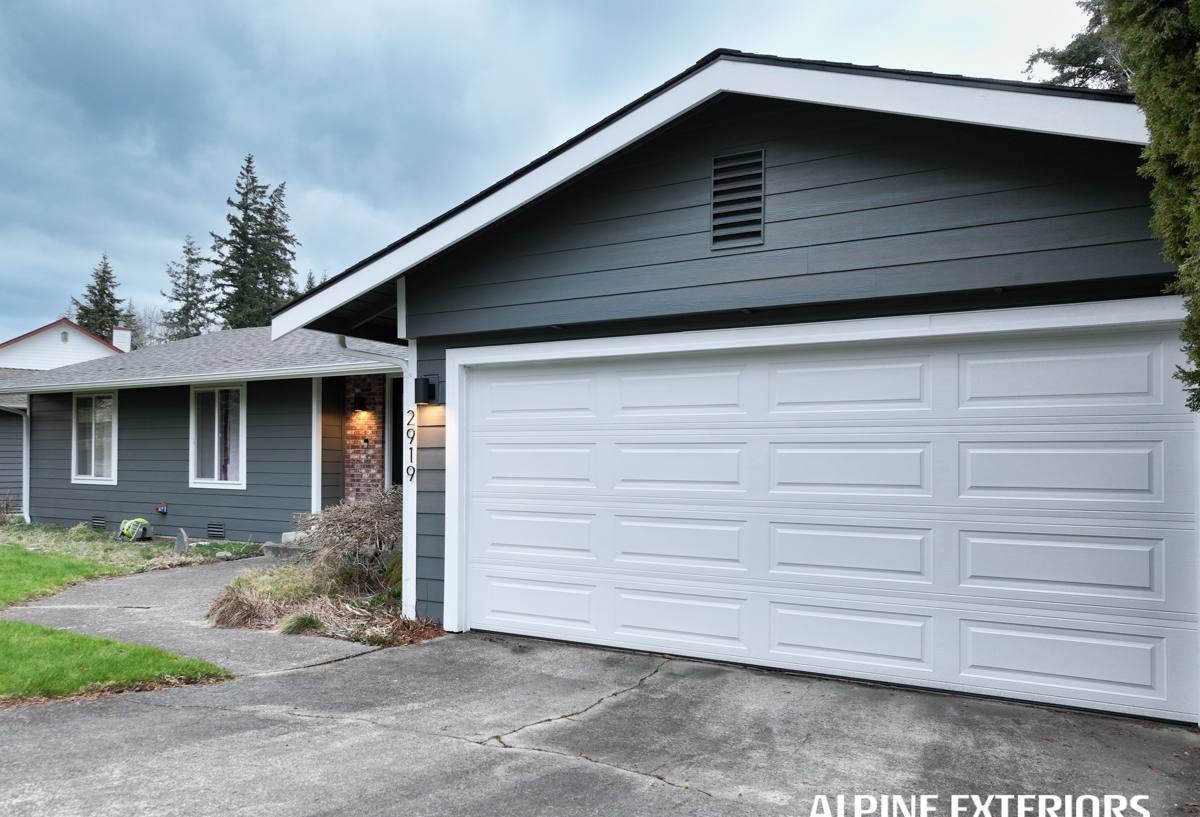
What Correct James Hardie Installation Involves
James Hardie fiber cement is only as good as the installation behind it. A huge share of the siding problems we get called out to inspect in the Sarasota area trace back to installation shortcuts, not the product itself. Doing it right on a Palmer Ranch home means following James Hardie's published fastening, clearance, and flashing specifications to the letter, not "close enough."
Fastening and Clearances That Matter in Wind-Driven Rain
Correct fastener spacing and type are what keep panels attached through gust loads, and correct clearances are what keep wind-driven rain from finding a way behind the boards. That includes minimum gaps at the foundation, roofline, and any place siding meets a different material — deck ledger boards, driveway grade, roof-to-wall transitions. Skip these clearances and you've built a spot where water sits against the material every time a storm blows through sideways, which happens often here.
Flashing, Caulking, and Moisture Management
Flashing at windows, doors, and horizontal joints does the real work of keeping water out of the wall cavity. Caulking has its place, but it's a secondary defense, not a substitute for proper flashing detail. We treat every penetration — hose bibs, light fixtures, vents — as a spot that needs deliberate water management, because in a humid, storm-prone climate, small gaps compound into real moisture problems over a few seasons.
Why We Standardize on James Hardie's Climate-Engineered Formulation
James Hardie engineers its fiber cement differently depending on climate zone, and Florida falls into the warmer, more humid zone the company builds specifically for — accounting for the moisture load, pest pressure, and heat that Gulf Coast homes deal with. That's a meaningful distinction from siding products built to a single, generic formulation regardless of where they end up. For a Palmer Ranch home, that climate-specific engineering is the difference between a product that was designed with our humidity in mind and one that simply has to tolerate it.
Fiber cement itself is also non-combustible, which matters in a state where lightning-driven brush fires and electrical events are a real, if occasional, risk. It doesn't provide the fuel that some other siding materials do, and it holds its shape and fastening integrity in heat that can soften or warp less robust products.
ColorPlus Technology and Sarasota's Relentless UV
Sun exposure in Sarasota County is close to a year-round condition, and UV is one of the fastest ways to age exterior siding — fading color, chalking the surface, and in some materials, causing warping or cracking as the material expands and contracts under heat. James Hardie's ColorPlus finish is baked on in a factory-controlled process and backed by a finish warranty that's meaningfully stronger than field-applied paint. For a Palmer Ranch home, that means less repainting, more consistent color over the years, and a finish that was actually engineered to hold up under sun exposure like ours, not general-purpose exterior paint applied on site.
Matching Palmer Ranch's Architectural and HOA Standards
Palmer Ranch is a large, master-planned area with a mix of home styles, and like most communities of its kind in this part of Florida, many sections carry HOA or deed-restriction guidelines on exterior materials, colors, and appearance. Before we start any project here, we build in time to confirm what's required: approved color palettes, trim details, or documentation the HOA wants to see before work begins. Fiber cement's wide color and profile range — lap siding, shingle-style panels, vertical board-and-batten, trim — gives us the flexibility to match what a specific section of Palmer Ranch expects without cutting corners on the material underneath.
James Hardie vs. Other Siding Options for This Climate
We only install James Hardie, but homeowners deserve to understand why, especially when comparing quotes that include other materials. Here's an honest look at how the common alternatives stack up against our climate's specific demands.
| Material | How It Handles Heat, UV & Humidity | Moisture & Storm Behavior | Long-Term Consideration |
|---|---|---|---|
| James Hardie fiber cement | Climate-engineered formulation, factory-baked ColorPlus finish resists fading | Non-combustible, dimensionally stable, holds up to wind-driven rain when installed to spec | Strong transferable warranty; proven track record in Gulf Coast climates |
| Vinyl siding | Can soften, warp, or discolor under sustained heat and direct sun | Can be pulled loose or cracked in high wind events; seams are a moisture entry point | Lower upfront cost, but shorter realistic service life in this climate |
| LP SmartSide (engineered wood) | Sensitive to moisture intrusion if seams or cuts aren't sealed correctly | Wood-based core can swell or degrade if water gets behind it | Installation quality is unusually critical to long-term performance |
| Primed spruce / cedar | Natural wood movement under heat and humidity cycles | Requires diligent maintenance to resist rot and moisture damage | Highest ongoing maintenance burden of the options above |
Every material on that list has a legitimate place somewhere in the country. Our position, after years of working exteriors in coastal Southwest Florida conditions, is that fiber cement's combination of moisture stability, fire resistance, and finish durability makes it the material we're willing to put our name behind here.
Our Process for a Palmer Ranch Siding Project
- Site assessment: we walk the home, check the existing wall assembly and any moisture damage, and measure for material takeoff.
- HOA and permitting check: we confirm any Palmer Ranch community guidelines and pull the required Sarasota County permits before work starts.
- Product and color selection: we walk through James Hardie's lap, shingle, and panel options and ColorPlus palette against your home's style and any HOA constraints.
- Tear-off and substrate check: old siding comes off and we inspect sheathing and framing underneath for hidden moisture or rot before anything new goes up.
- Weather barrier and flashing: house wrap and flashing go in first, with careful attention to windows, doors, and every penetration point.
- Installation to Hardie spec: correct fastener type, spacing, and clearances at every edge, joint, and transition.
- Final inspection and walkthrough: we check clearances, caulking, and finish quality with you before calling the job done.
What to Look for When Hiring a Siding Contractor in This Area
- Ask whether the crew that shows up is the crew that's actually trained on James Hardie's fastening and clearance specifications — not a subcontractor unfamiliar with the product.
- Ask how they handle flashing at windows, doors, and roof-to-wall transitions specifically, not just "we caulk everything."
- Confirm they'll pull the required Sarasota County permit rather than skip it.
- Ask if they've worked in your specific Palmer Ranch section before and understand its HOA process.
- Get manufacturer warranty terms in writing, not just a verbal assurance.
- Ask what happens if hidden rot or moisture damage is found once old siding comes off — a vague answer here is a red flag.
Maintaining James Hardie Siding in a Gulf Coast Climate
Fiber cement is low-maintenance compared to wood or vinyl, but "low-maintenance" isn't "no-maintenance," especially with salt air in the mix. A simple annual rinse-down removes salt residue and airborne grime before it builds up, and it's worth a quick visual check after major storms for any impact damage, loose caulking, or gaps that opened up at trim and penetrations. Caught early, these are quick fixes. Left alone through a few rainy seasons, they can let moisture into places it doesn't belong.
Cost Factors for a Palmer Ranch Siding Project
| Factor | Why It Moves the Price |
|---|---|
| Home size and wall complexity | More square footage and more corners, gables, or dormers mean more material and labor time |
| Siding profile selected | Lap, shingle-style, and vertical board-and-batten carry different material and labor costs |
| Substrate condition | Rot or moisture damage found under old siding adds repair scope before new siding goes up |
| Trim and detail work | Corner boards, window trim, and custom accents add labor beyond flat wall coverage |
| HOA-driven specifications | Approved color or profile requirements can narrow material choices and affect ordering |
We don't publish blanket per-square-foot pricing because these factors genuinely change the number from one Palmer Ranch home to the next — a same-size home with straightforward walls and one with lots of architectural detail are two different jobs. A site visit gets you an accurate number.
Ready to Talk About Your Palmer Ranch Home?
If your siding is showing its age, or you're planning ahead of the next storm season, we're happy to take a look and walk you through what a correctly installed James Hardie system would mean for your specific home. There's no pressure and no obligation — just a straightforward estimate from a crew that installs this product, and only this product, throughout the Sarasota area. Use the form below to get started.