 Sarasota Siding
 Composite Decking Built for Rosemary District's Downtown Climate
Rosemary District sits close enough to downtown Sarasota and the bay that homeowners feel the coastal climate every day, even without waterfront footage. New infill construction sits next to older renovated homes throughout the neighborhood, and outdoor living space — porches, balconies, small rear decks — is one of the main ways residents extend their square footage in a walkable, densifying part of the city. Whatever the size of the project, the deck has to survive Sarasota County's combination of intense year-round UV, wind-driven rain, salt-laden air moving in off the Gulf, and the occasional hurricane-force wind event. Composite decking, installed correctly, handles all of that better than most alternatives. Installed poorly, it fails in the same ways any material fails — fastener corrosion, moisture trapped under boards, movement that opens gaps and loosens rails.
This page is specific to composite decking work in Rosemary District. It covers what the local climate demands from the material and the installation, what a correct job actually involves, how our process works from estimate to final walkthrough, and why it matters to hire a crew that already works this part of Sarasota rather than one commuting in from outside the county.
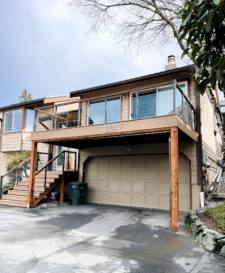
Why Rosemary District's Conditions Matter for Deck Material Choice
Composite decking is a blend of wood fiber and plastic, capped or coated on most quality products with a protective outer layer. That combination gives it a real advantage over solid wood in a climate like ours, but only if the product and the installation account for a few specific stresses.
UV and Heat
Sarasota gets strong, direct sun most of the year. Cheaper composite boards without a proper cap can fade, chalk, or soften under sustained UV exposure. Capped composite resists fading far better and stays more dimensionally stable when the surface temperature climbs on a July afternoon.
Salt Air
Rosemary District isn't beachfront, but it's close enough to the bay that salt-laden air reaches every exterior surface over time. Salt accelerates corrosion in fasteners and hardware. This is one of the most overlooked failure points in decking work — a great board fastened with the wrong screws will still show rust streaks and loosening connections within a couple of years.
Wind-Driven Rain and Moisture
Afternoon storms here don't just fall straight down — wind pushes rain sideways and under structures. Decking needs proper drainage, spacing, and substructure ventilation so water doesn't sit against the underside of boards or pool around post bases. Composite resists moisture absorption better than wood, but the substructure underneath it (typically still wood or treated lumber) is just as vulnerable to rot as it would be under any other decking material if it isn't protected.
Hurricane-Force Wind
Deck railings, stair stringers, and ledger board attachments all need to meet wind-load and structural requirements for our area. A deck that looks fine day-to-day can still be under-attached for storm-force wind uplift and lateral load if it wasn't engineered and fastened to current code.
What a Correct Composite Deck Installation Involves
A composite deck is only as good as what's underneath it and how it's fastened. The visible boards get most of the attention, but the substructure, hardware, and drainage details are what determine whether the deck is still solid in ten years.
Substructure and Framing
Joists, beams, and posts need to be sized correctly for the span and load, set with proper spacing for the composite product being used (composite typically requires tighter joist spacing than solid wood, especially on diagonal patterns), and protected from ground and moisture contact.
Ledger Attachment
Where a deck attaches to the house, the ledger board connection is one of the most safety-critical parts of the entire structure. It needs correct flashing to keep water from getting behind it and correct fastening to resist both gravity load and lateral pull-away forces in high wind.
Fasteners and Hardware
In a salt-air environment, stainless steel or coated, corrosion-rated fasteners and structural hardware aren't optional upgrades — they're what keeps connections from failing early. Mixing incompatible metals or using standard exterior-grade screws in this environment shortens the life of the whole structure.
Board Installation
Composite boards need correct gapping for thermal expansion, proper end-to-end and edge support, and hidden or color-matched fastening depending on the product line. Picture-framing the perimeter, mitering corners cleanly, and keeping board lines straight over a long run all take experience — composite doesn't forgive sloppy layout the way it sometimes gets credit for.
Rails, Stairs, and Code Compliance
Railing height, baluster spacing, and stair geometry need to meet current building code, and in most cases a permit and inspection are part of the job. This isn't a formality — it's what protects you if the deck is ever inspected during a home sale or insurance review.
Our Process, Start to Finish
- Site visit and honest assessment — We look at the existing structure (if there is one), ledger condition, drainage, and sun/shade exposure specific to your property.
- Material and layout discussion — We walk through composite product options, color and finish, and layout tradeoffs based on your home's style and how you'll use the space.
- Written estimate — Scope, materials, and price laid out clearly before any work starts. No vague allowances.
- Permitting — We handle the permit and code requirements applicable to Sarasota County so the project is inspected and legitimate, not something that surfaces as a problem at resale.
- Demo and structural work — Removal of any failing existing deck, framing repair or new substructure build, ledger flashing and attachment.
- Composite installation — Board layout, fastening, rail and stair build-out.
- Final walkthrough — We go over the finished deck with you, confirm everything is tight and clean, and answer maintenance questions before we consider the job done.
Composite vs. Other Decking Materials for This Climate
| Material | UV / Fade Resistance | Salt Air Durability | Maintenance | Typical Lifespan Here |
|---|---|---|---|---|
| Capped Composite | Strong with quality cap | Good with correct fasteners | Low — periodic cleaning | 25–30+ years |
| Uncapped Composite | Moderate, fades over time | Fair | Low-moderate | 15–20 years |
| Pressure-Treated Wood | Weak, grays and splinters | Poor without diligent sealing | High — annual sealing/staining | 10–15 years |
| Tropical Hardwood | Good, but needs oiling | Good | High — regular oiling | 20–25 years |
We install composite as our standard recommendation for most Rosemary District projects because it balances upfront cost, low maintenance, and real durability against our specific climate stresses. Wood decking isn't wrong for every homeowner — some prefer the look and are willing to keep up with sealing — but we're honest that it demands far more upkeep here than it would in a drier climate, and that upkeep is the tradeoff you're accepting, not a flaw we're hiding.
What Drives Cost on a Composite Deck Project
Every project is different, but the same handful of factors move the price up or down on almost every job we quote in this neighborhood.
- Deck size and shape — square footage, plus complexity like curves, multiple levels, or picture-framing.
- Substructure condition — whether existing framing can be reused or needs full replacement.
- Height and access — elevated decks and stairs require more structural work and railing.
- Composite product tier — capped vs. uncapped, and the manufacturer's warranty and color line.
- Site access — tight lots and infill construction common in Rosemary District can affect material staging and equipment access.
- Permitting scope — larger or elevated structures typically involve more inspection steps.
We give you real numbers from an actual site visit rather than a phone estimate, because guessing on any of the above leads to change orders later — something we try hard to avoid.
Maintenance: What Composite Actually Needs Here
One of the real selling points of composite is how little it asks of you compared to wood, but "low maintenance" doesn't mean zero. In this climate, a few habits keep the deck performing for its full lifespan:
- Rinse or sweep off salt residue and organic debris (leaves, pollen) regularly rather than letting it sit.
- Clean mildew or algae spots with mild soap and water — a shaded, humid deck can develop surface growth faster than an open sunny one.
- Check railing and stair connections periodically for looseness, especially after a major storm.
- Keep gutters and downspouts near the deck clear so runoff isn't dumping extra water onto the structure.
- Inspect fastener heads and hardware yearly for early signs of corrosion, particularly if the deck faces open exposure toward the bay.
Why Hiring a Crew That Already Works Rosemary District Matters
Rosemary District's mix of new construction and older renovated homes means every project has a different starting point — a brand-new build with clean structural bones, or an older home where the existing outdoor structure needs to be evaluated honestly before anything new goes on top of it. A crew that regularly works this part of Sarasota knows the county's permitting process, understands how tight infill lots affect staging and access, and has already seen how the local combination of sun, salt, and storm exposure treats different composite products over time. That local track record matters more than a national installer's brochure — we're not guessing at what holds up here, we're building on what we've already seen work and fail in this exact climate.
Signs an Existing Deck Needs Attention
If you already have a deck in Rosemary District and you're not sure whether it needs repair or full replacement, a few warning signs are worth acting on before they get worse:
- Soft, spongy, or visibly sagging boards
- Rust streaking around fastener heads or hardware
- Loose or wobbly railings and stair stringers
- Gaps that have widened unevenly between boards
- Visible rot or discoloration at the ledger board or post bases
- Standing water that doesn't drain after rain
Any of these are worth a professional look before the next hurricane season tests the structure under real load.
If you're weighing a new composite deck or need an honest read on an existing one in Rosemary District, we're glad to come take a look. The estimate is free, there's no pressure to move forward, and you'll get a straight answer about what your project actually needs — just fill out the form below to get started.