 Sarasota Siding
 Downtown Sarasota Puts Siding to the Test
Downtown Sarasota homes sit close to the water, close to each other, and under some of the most punishing sun exposure in the state. That combination — salt-laden air off Sarasota Bay, hurricane-force wind gusts during storm season, and near-constant UV load the other eleven months — wears through exterior materials faster than in most inland markets. A siding job that would hold up fine in a shaded, low-humidity climate can fail within a few years here if it isn't installed with this specific environment in mind.
We install siding across Sarasota County, but Downtown Sarasota gets its own conversation. Lots tend to be tighter, homes range from older bungalows to newer infill construction, and many properties are close enough to the bay that wind-driven rain and salt exposure are a daily reality rather than an occasional storm event. Getting the installation right here isn't about using a fancier product — it's about respecting the details that generic installation crews skip.
What Local Homes Actually Need From Their Siding
Wind Resistance That Doesn't Rely on Luck
Sarasota isn't in Florida's official High-Velocity Hurricane Zone, but it's close enough that wind design pressures are still serious business. Siding here needs to be rated for the wind loads the local building code requires, and — just as important — it needs to be fastened correctly. A product with a strong wind rating on paper is only as good as the installation behind it. Loose nailing patterns, missed studs, or skipped starter strips turn a well-rated product into a liability during the next named storm.
Moisture Management, Not Just Water Resistance
Wind-driven rain during Sarasota's summer storm season doesn't just hit siding — it drives moisture sideways, under laps, and into any gap the installer left. The siding itself is only one layer of the system. The weather-resistive barrier behind it, the flashing details around windows and doors, and the drainage plane all matter as much as the visible panel or plank on the wall.
UV and Color Stability
Downtown Sarasota gets long, direct sun exposure for most of the year. Paint-grade siding and field-applied finishes chalk, fade, and break down noticeably faster under that kind of UV load. Whatever goes on the home needs a finish system engineered to hold color and integrity under sustained Florida sun — not just look good on installation day.
Salt Air Corrosion
Proximity to Sarasota Bay means airborne salt settles on every exterior surface, including fasteners, flashing, and trim. Materials and hardware that aren't suited for a coastal-adjacent environment corrode faster, and corroding fasteners behind siding is a slow, hidden problem that eventually shows up as staining, streaking, or loosened panels.
Why We Install Only James Hardie Fiber Cement
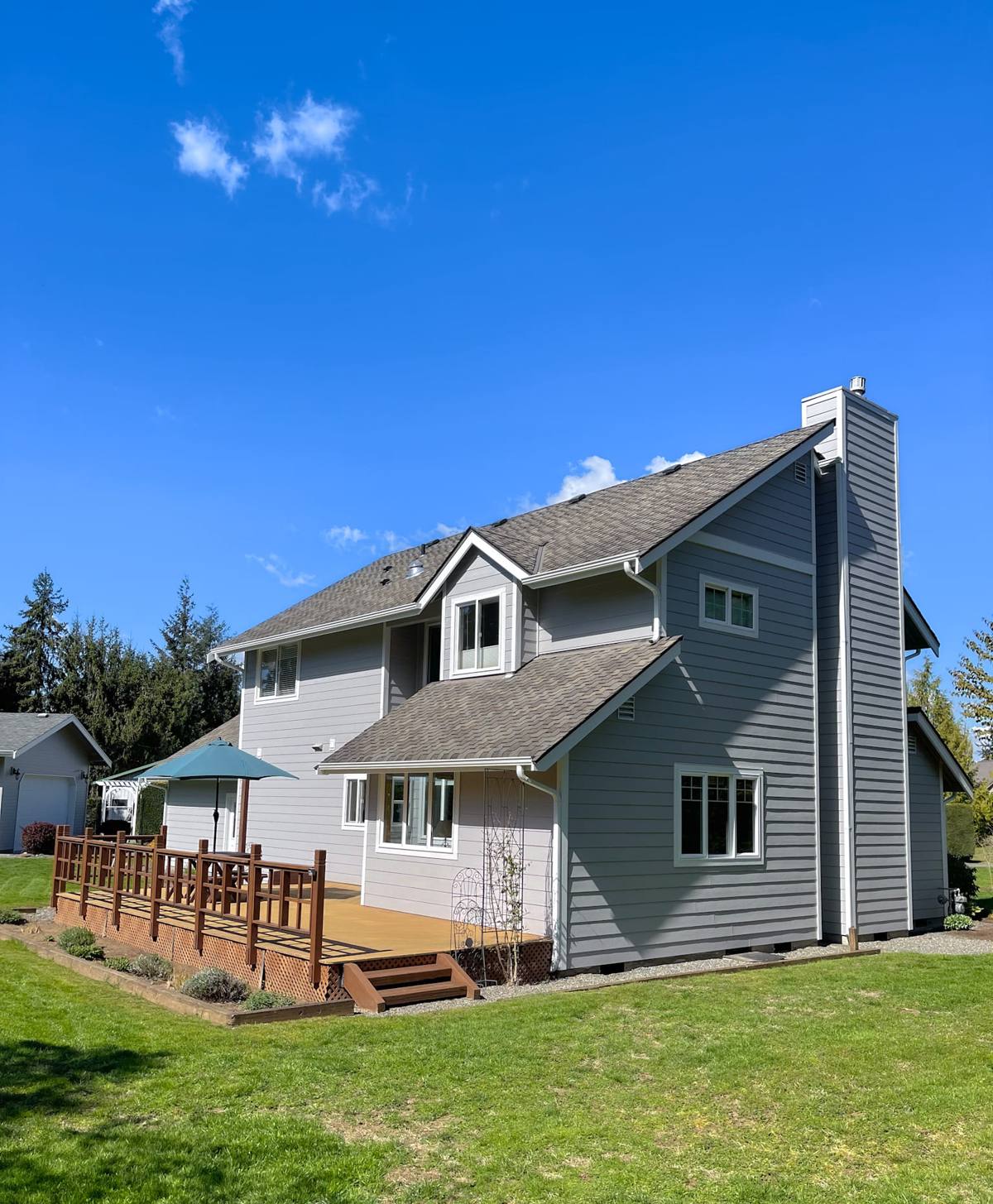
We made a deliberate decision to install James Hardie fiber cement siding exclusively, and we don't deviate from that for Downtown Sarasota jobs or any other. Fiber cement is non-combustible, which matters on tightly spaced lots. It's engineered specifically for high-humidity, high-UV climates through Hardie's HZ5 product line, which is formulated for the wind, moisture, and heat conditions the Gulf Coast sees. And the ColorPlus factory finish process bakes color into the product under controlled conditions, which holds up to UV exposure far better than a finish applied on-site in the field.
We don't install vinyl, LP SmartSide, Cemplank, Allura, or primed wood siding, and we're upfront about why. Vinyl can warp and become brittle under intense heat and UV cycling. Engineered wood products are more sensitive to sustained moisture exposure than fiber cement. Other fiber cement brands may be reasonable products, but we've standardized our crews, our fastening specs, and our warranty backing entirely around Hardie so that every job we do is one we know inside and out — no guessing, no mixed systems, no gaps in training.
What a Correct Installation Actually Involves
The difference between siding that lasts and siding that fails early almost never comes down to the product itself — it comes down to what happens behind the panels before the first piece ever goes up.
- Removal of old siding and inspection of the sheathing underneath for rot, soft spots, or prior water damage
- Repair or replacement of any compromised sheathing before moving forward
- Installation of a continuous, properly lapped weather-resistive barrier
- Correct flashing at every window, door, and penetration, integrated with the barrier — not just caulked over
- Proper starter strip installation so the first course sits at the correct angle and height
- Manufacturer-specified fastener type, spacing, and embedment depth, driven into framing rather than just sheathing
- Correct clearances from grade, roofing, and other transitions to prevent trapped moisture
- Field-cut edges sealed per manufacturer specification
- Final inspection of caulking, trim, and joints before the job is called complete
Skipping or rushing any one of these steps doesn't usually cause an immediate, visible problem. It shows up two, five, or ten years later as a leak, a soft spot, or premature paint failure — and by then it's a repair job instead of a punch-list item.
Our Process for a Downtown Sarasota Installation
| Stage | What Happens |
|---|---|
| Assessment | On-site walkthrough of the home's current siding, sheathing condition, and any known moisture or wind-exposure trouble spots |
| Proposal | Scope, product line and profile selection, color, and timeline laid out clearly before any work begins |
| Permitting | Permit pulled through Sarasota County or the City of Sarasota as required for the scope of work |
| Tear-off & sheathing check | Old siding removed, sheathing inspected and repaired as needed |
| Barrier & flashing | Weather-resistive barrier and flashing installed and integrated before any siding goes up |
| Installation | James Hardie siding installed to manufacturer fastening and clearance specifications |
| Final walkthrough | Trim, caulking, and joints inspected with the homeowner before the job is signed off |
Permitting and Local Code Considerations
Siding installation in Sarasota County typically requires a permit, and inspections check that fastening, flashing, and wind-rated assembly requirements are being met — not just that the siding looks finished from the street. Because Downtown Sarasota sits close enough to the coast that wind design pressures are taken seriously in the local code, this isn't a step worth skipping or rushing. A crew that regularly pulls permits and works with local inspectors in this area knows what they're going to check and builds the job to pass the first time, rather than treating inspection as an afterthought.
Cost Factors for Downtown Sarasota Siding Projects
Every home is different, and we don't quote pricing without seeing the property, but the factors that move the number are consistent from job to job.
| Factor | Why It Matters |
|---|---|
| Sheathing condition | Rot or moisture damage found during tear-off requires repair before new siding can go on |
| Home size and complexity | More corners, dormers, and trim details mean more labor and material cutting |
| Siding profile chosen | Lap, shingle, and panel profiles within the Hardie line carry different material and labor costs |
| Access and lot constraints | Tighter Downtown Sarasota lots can affect staging, scaffolding, and disposal logistics |
| Trim and accent work | Additional trim boards, batten details, or accent siding add scope beyond field siding |
Why Hiring a Crew That Already Works This Area Matters
A contractor who regularly works Downtown Sarasota has already dealt with the permitting process here, understands the wind and moisture realities specific to properties near the bay, and has a track record of installs that have actually been through a few Florida summers and storm seasons. That's different from a crew that treats every job as a first encounter with the local climate. Familiarity with the area shows up in small decisions — how flashing is detailed around an older window, how clearances are handled on a tight lot, how a job is sequenced around Sarasota's rainy season — that add up to a longer-lasting result.
It also matters for warranty follow-through. A local crew that stands behind its own work and is easy to reach if a question comes up years down the road is worth more than the lowest bid from an out-of-area installer who may not be around, or easy to find, later.
Maintaining Your Siding After Installation
- Rinse siding periodically to remove salt residue, especially on sides facing the bay
- Inspect caulking at trim and joints annually and have gaps resealed before they widen
- Keep irrigation heads and sprinklers from spraying directly on siding, which accelerates staining
- Trim vegetation back from walls to maintain airflow and reduce trapped moisture
- After major storms, walk the exterior to check for loose panels, damaged trim, or fastener issues
James Hardie siding installed correctly is a low-maintenance system, but "low-maintenance" doesn't mean "no attention needed" — a little periodic care goes a long way toward getting the full lifespan out of the investment.
Get a Straightforward Estimate
If you're weighing a siding project for a home in Downtown Sarasota, we're happy to walk the property, look at the current condition, and give you a straightforward assessment of what it would take to do the job right. Use the form below to request a free, no-pressure estimate.