 Sarasota Siding
 Why Palmer Ranch Siding Has to Work Harder Than It Looks
Palmer Ranch homes sit inland from Sarasota's beaches, but that distance doesn't buy much protection. The same Gulf Coast weather that batters the barrier islands still reaches this part of Sarasota County: hurricane-force winds during storm season, wind-driven rain that gets pushed sideways into every seam and joint, and near-constant UV exposure that most siding products simply weren't built to handle year after year. Add in salt air that travels farther inland than most homeowners assume, and you have a climate that quietly tests the weak points of an exterior wall system every single day, not just during named storms.
That combination is why siding installation in Palmer Ranch isn't a job where shortcuts show up gradually over a decade. In this climate, a poorly fastened panel, a skipped moisture barrier, or an under-caulked joint tends to become a visible problem within a few seasons, not years. The siding on a Palmer Ranch home has one job: keep water, wind, and sun off the structure behind it, without becoming a maintenance project of its own.
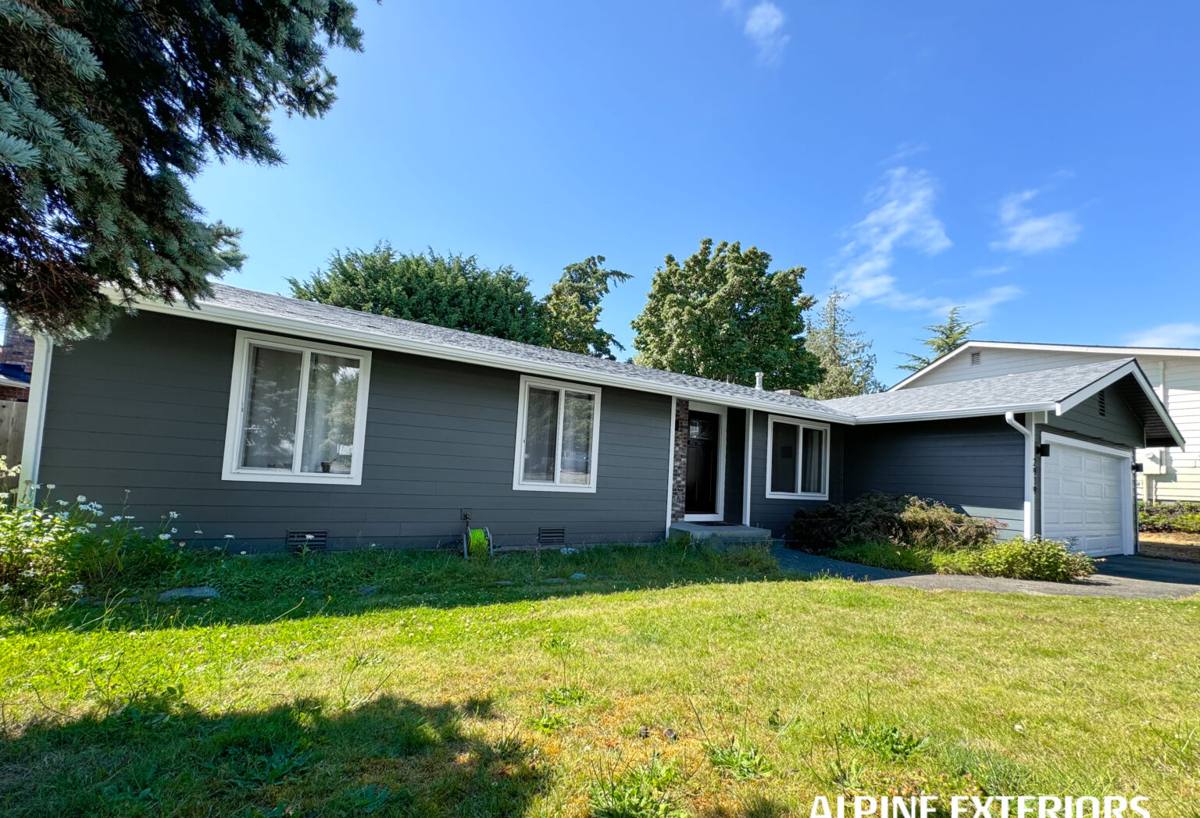
What Correct Siding Installation Actually Involves
"Siding installation" sounds like one task, but it's really a stack of smaller details that all have to be right at the same time. Get one wrong and the rest don't matter much.
The Water Management System Behind the Panels
Before a single piece of visible siding goes up, there has to be a correctly lapped weather-resistant barrier, properly integrated flashing around every window, door, and penetration, and a drainage plane that lets any water that does get behind the siding find its way back out instead of sitting against the sheathing. This layer is invisible once the job is done, which is exactly why it's the part corner-cutting crews skip first.
Fastening, Spacing, and Fastener Selection
Fiber cement siding has specific nailing patterns, fastener spacing, and butt-joint requirements that change depending on wind exposure. In a wind zone like ours, using the wrong fastener spacing or the wrong fastener type isn't a cosmetic mistake, it's a structural one that shows up the next time a tropical system rolls through.
Joints, Caulking, and Trim Details
Every seam, corner, and trim transition is a potential entry point for water. Correct installation means factory-mitered or properly caulked joints, the right sealant for a fiber cement product, and trim details that shed water instead of trapping it.
Our Palmer Ranch Installation Process
We run the same disciplined process on every Palmer Ranch project, whether it's a full re-side or a section replacement after storm or moisture damage.
- On-site assessment — we inspect the existing siding, sheathing, and trim to identify hidden moisture damage before any work starts, not after we've already removed the old siding.
- Tear-off and substrate check — old siding comes off in sections so we can verify the sheathing underneath is sound and dry before covering it back up.
- Weather barrier and flashing installation — this is the layer that actually keeps water out, and it's installed to manufacturer and code specification, not eyeballed.
- James Hardie panel installation — installed to the fastening, spacing, and clearance specs required for our wind zone, with attention to butt joints and trim integration.
- Caulking, touch-up, and final inspection — every joint and seam gets checked, and we walk the job with the homeowner before calling it finished.
Why We Install Only James Hardie Fiber Cement
We made a deliberate decision to install one siding system, James Hardie fiber cement, and nothing else. Not vinyl, not LP SmartSide or other engineered wood products, not primed spruce or cedar. That's a narrower offering than most contractors advertise, and it's intentional.
Vinyl siding is affordable and easy to install, but it's a petroleum-based product that softens in extreme heat, can crack in cooler snaps, and isn't rated to withstand the same wind loads as fiber cement without specific reinforcement. In direct, intense Florida sun over many years, color fade and warping are common complaints. Engineered wood products like LP SmartSide perform reasonably well in drier climates, but wood-based cores are inherently more vulnerable to moisture intrusion, and in a humid, storm-exposed environment like Sarasota County, that's the exact failure mode you don't want to gamble on. Primed wood siding requires the most ongoing maintenance of all, with repainting and caulking on a recurring cycle just to keep moisture out.
James Hardie fiber cement is non-combustible, engineered specifically for high-humidity, high-UV, storm-prone climates through its HZ10 product line, and finished at the factory with ColorPlus technology, a baked-on finish that resists fading and chipping far better than field-applied paint. It's not the cheapest material on the market, and we don't pretend otherwise. It's the one we're willing to put our name behind for the climate our customers actually live in.
How the Options Compare
| Material | Wind & Impact Resistance | Moisture Behavior | Maintenance | Typical Finish Life |
|---|---|---|---|---|
| James Hardie fiber cement | Engineered for high wind zones; HZ10 line built for hurricane-prone regions | Non-combustible, dimensionally stable, resists moisture-driven warping | Occasional cleaning; factory finish reduces repainting need | Factory ColorPlus finish backed by a long transferable warranty |
| Vinyl siding | Can crack, warp, or blow off in high winds without specific rated installation | Doesn't rot, but seams and panels can allow water behind the wall | Low, but fading and brittleness increase over time in intense sun | Color is molded-in but fades; no refinishing option |
| LP SmartSide / engineered wood | Reasonable when installed correctly, more sensitive to impact damage | Wood-based core is vulnerable to prolonged moisture exposure | Moderate; caulking and edge sealing need regular attention | Factory finish available, but core material carries more long-term risk in humid climates |
| Primed wood (spruce/cedar) | Lowest of the group; natural wood flexes and can split | Most moisture-sensitive option; prone to rot without diligent upkeep | Highest; repainting and caulking on a recurring cycle | Depends entirely on maintenance schedule |
Cost Factors for Siding Installation in Palmer Ranch
Every Palmer Ranch home is different, so we don't quote sight unseen, but these are the variables that actually move the price on a real job.
| Factor | Why It Matters |
|---|---|
| Home size and wall complexity | More linear footage, corners, and dormers mean more cutting, fitting, and labor time |
| Condition of the substrate | Hidden sheathing damage found during tear-off has to be repaired before new siding goes on |
| Siding profile chosen | HardiePlank lap siding, HardiePanel vertical siding, and shake-style profiles carry different material and labor costs |
| Trim and accent work | Window and door trim, corner boards, and soffit details add labor beyond the flat wall area |
| Access and site conditions | Landscaping, fencing, second-story sections, or tight lot lines can affect staging and labor time |
Signs Your Palmer Ranch Home Needs New Siding
Siding problems in this climate rarely announce themselves as one dramatic failure. They usually show up as a handful of small signs that add up.
- Panels that look warped, buckled, or no longer sit flat against the wall
- Paint that's peeling, bubbling, or chalking heavily when touched
- Soft or spongy spots when you press on the siding, a sign of moisture behind it
- Visible gaps at seams, corners, or around windows and doors
- Recurring mold, mildew, or dark streaking that comes back soon after cleaning
- A noticeable rise in cooling costs with no other explanation
- Siding that's more than 20-25 years old, especially wood-based or vinyl products nearing the end of their service life
Any one of these on its own might be minor. Two or three together usually mean the siding system as a whole is no longer doing its job.
Why Hiring a Crew That Already Works in Palmer Ranch Matters
Siding installation isn't just a product decision, it's an installation decision, and installation quality is where most siding failures actually originate, not the material itself. A crew that regularly works in Palmer Ranch and the surrounding Sarasota area already understands the local wind zone requirements, the permitting process through the county, and the moisture and UV conditions the siding will face for the next several decades. That familiarity shows up in the details: fastener schedules matched to actual wind exposure, flashing details sized for wind-driven rain rather than a gentler climate's rulebook, and a finished job that doesn't need revisiting after the first serious storm season.
It also means a contractor who's had to answer for their own work locally. Correct installation only pays off if it's checked, documented, and stands behind a warranty that actually means something when it's needed.
After Installation: What Upkeep Actually Looks Like
One of the real advantages of a correctly installed James Hardie system is how little it asks of you afterward. There's no repainting cycle to keep up with thanks to the factory ColorPlus finish, no repeated caulking just to keep water out, and no seasonal warping to watch for. Periodic rinsing to clear salt residue and pollen, and a visual check after major storms, is genuinely most of what's needed. That's a meaningful difference from wood-based or vinyl products that ask for ongoing attention just to hold their line.
If your Palmer Ranch home's siding is showing its age, or you're planning ahead of the next storm season, we're happy to take a look and talk through what a correct installation involves for your specific home. Use the form below to request a free, no-pressure estimate.