 Sarasota Siding
 Building Decks for Southside Village's Older Florida Homes
Southside Village sits close enough to Sarasota Bay that salt air, humidity, and afternoon storms are simply part of daily life. Homes here range from mid-century bungalows to newer infill builds, and a lot of them were never built with an outdoor living space that matches how people actually use their yards today. When homeowners in this part of Sarasota come to us for a custom deck, the conversation usually starts with wanting more usable outdoor space — but the real work is designing and building something that will hold up to the specific punishment this coastal pocket of Sarasota County dishes out year-round.
A deck built to a generic national spec, using materials and fastener choices meant for a drier, milder climate, will show problems here faster than almost anywhere else in the state. That's the gap we focus on closing.
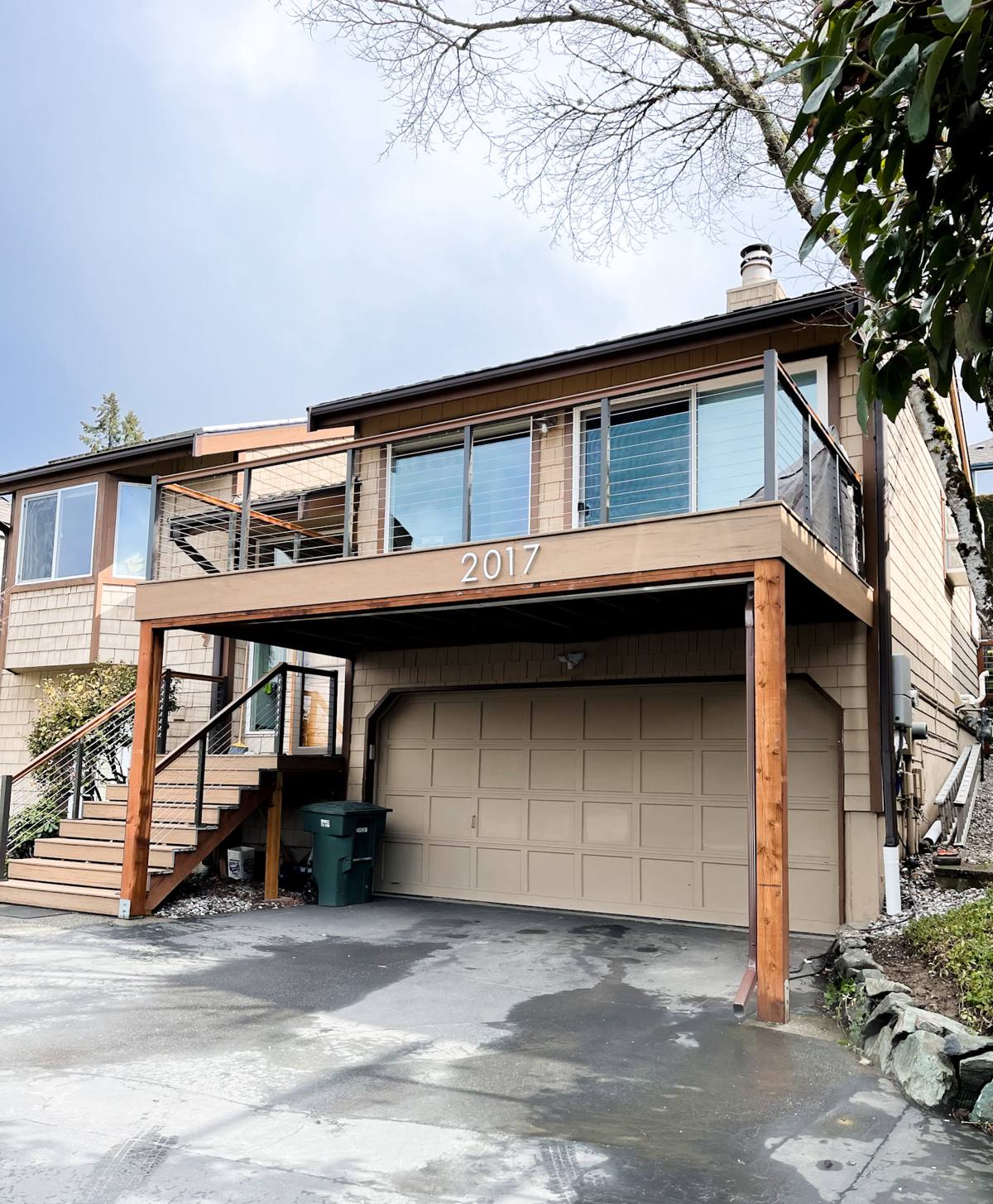
What Sarasota's Climate Actually Does to a Deck
It helps to be specific about the forces at play, because they don't all attack a deck the same way.
- Salt air corrosion — Southside Village's proximity to the bay means airborne salt settles on everything, including fasteners, brackets, and any exposed metal hardware. Standard hot-dip galvanized hardware degrades faster here than inland; it needs to be rated for coastal or marine-grade exposure.
- Intense, year-round UV — Sarasota gets strong sun nearly every month of the year, not just in summer. UV breaks down wood fibers, dries out sealants, and fades composite decking's color layer over time if the product wasn't chosen with UV stability in mind.
- Wind-driven rain — Afternoon storms in this area don't fall straight down. Wind pushes rain sideways into ledger connections, under railings, and into any gap where water can collect instead of shedding off.
- Hurricane-force wind loads — Even outside of a named storm, Gulf Coast wind events put lateral and uplift stress on a deck structure that inland decks rarely see. Ledger attachment, post anchoring, and railing post connections all need to be engineered for that load, not just for looks.
None of these forces are dramatic on their own. What they do is compound — a fastener that's a little undersized, a ledger flashed with the wrong detail, a board gap that's too tight — and two or three years later you've got soft spots, rust streaks, or a railing post that's started to wiggle.
What a Correctly Built Deck Looks Like Here
Structure and Framing
The framing is where most of a deck's long-term performance is decided, and it's the part homeowners see least once the project is done. For Southside Village and similar Sarasota neighborhoods, that means:
- Ledger board attachment with proper flashing that directs water away from the house structure, not just a bead of caulk
- Joist hangers and structural fasteners rated for coastal/marine exposure, not standard interior-grade galvanized
- Post footings sized and set to local frost-free depth and soil conditions, with post bases that keep wood off standing water
- Beam and joist spacing calculated for the actual span and load, not just "what's typical"
Decking Material
Southside Village decks see real sun exposure and real humidity swings, sometimes in the same afternoon. The decking surface has to handle both without cupping, splintering, or fading unevenly.
Railings and Fasteners
Railing posts take direct wind load, so their connection to the frame matters as much as the railing style itself. Every exposed fastener — screws, brackets, post hardware — should be corrosion-resistant for coastal air, and hidden fastener systems should still allow for inspection and future maintenance.
Decking Material Options: An Honest Comparison
There's no single "best" decking material for every Southside Village project — it depends on budget, how the space will be used, and how much upkeep the homeowner wants to take on. Here's how the common options actually compare for this climate.
| Material | Coastal/UV Performance | Maintenance | Typical Lifespan Here |
|---|---|---|---|
| Pressure-treated pine | Needs sealing regularly; UV and moisture cycling cause checking and warping without upkeep | High — reseal every 1-2 years | 10-15 years with consistent maintenance |
| Composite decking | Strong UV and moisture resistance when a quality capped product is used | Low — periodic cleaning only | 25+ years, backed by manufacturer warranty |
| Tropical hardwoods (e.g. ipe) | Naturally dense and rot-resistant; still needs oiling to hold color in strong Florida sun | Moderate to high — oil/seal to maintain appearance | 20-30+ years structurally |
| PVC decking | Excellent moisture and salt resistance; fully synthetic, no wood fiber to degrade | Low — cleaning only | 25-30+ years |
We'll walk through these trade-offs honestly during the estimate — including where a lower upfront cost means more maintenance work down the road, and where a composite or PVC product's higher sticker price is offset by decades of not refinishing anything.
Why We Don't Cut Corners on Fasteners and Hardware
This is worth calling out on its own because it's the single most common shortcut we see on older or improperly repaired decks in this area. Standard interior-grade screws and brackets are cheaper and widely available, so they get used even in coastal zip codes. In Southside Village's salt air, that hardware can start showing rust streaks and weakening within a few years — long before the decking material itself is due for replacement. Our standard is coastal-rated, corrosion-resistant fasteners and connectors throughout, on every deck we build, regardless of what decking material sits on top. It costs a bit more upfront and it's the difference between a deck that's structurally sound at year 15 and one that needs railing repairs at year 5.
Our Process for a Southside Village Deck Project
1. On-Site Assessment
We look at your home's existing structure, grade, drainage patterns, and sun/wind exposure specific to your lot. Southside Village's mix of older foundations and mature tree cover means every property drains and gets exposed to weather a little differently.
2. Design and Material Selection
We talk through how you'll actually use the space — dining, grilling, lounging, pool-adjacent — and match the layout, railing style, and decking material to that use and to your budget, with the climate trade-offs laid out plainly.
3. Permitting and Engineering
Sarasota County requires permits for most new deck construction, and coastal wind-load requirements mean the structural plan has to meet code, not just look right. We handle the permitting and make sure the design is engineered for local wind requirements.
4. Construction
Framing first, with proper flashing and coastal-rated hardware throughout, then decking, then railings and any finishing details. We keep the site clean and keep you informed as the project moves.
5. Final Walkthrough
We walk the finished deck with you, check every railing connection, and go over any maintenance steps specific to the material you chose.
Maintenance Checklist for Southside Village Homeowners
Whatever material you choose, a little regular attention goes a long way in this climate. Once your deck is built, we recommend:
- Rinsing salt residue and debris off the surface every few weeks, especially after storms
- Checking railing posts and fastener points twice a year for looseness or early rust
- Clearing leaves and debris from between boards and around footings so water doesn't sit
- Resealing wood decking on the manufacturer's recommended schedule — don't wait until it looks dry
- Inspecting under the deck after major storms for standing water or debris buildup against posts
- Watching ledger flashing and the house-to-deck connection point for any signs of moisture intrusion
Why a Local Sarasota Crew Matters for This Job
A deck built by a crew that doesn't regularly work Sarasota County's coastal conditions is more likely to default to standard materials and standard hardware — because that's what works fine where they're used to building. A crew that already works in Southside Village and similar Gulf Coast neighborhoods knows to spec coastal-rated fasteners as a default, knows how Sarasota County's permitting and wind-load requirements apply to a project like yours, and has already seen how different decking materials actually hold up a few years in, not just on a spec sheet. That local track record is what keeps a deck from becoming a maintenance headache two or three summers after it's built.
Get a Free Estimate for Your Southside Village Deck
If you're planning a new deck or replacing one that's showing its age, we're happy to come out, take a look at your space, and give you an honest, no-pressure estimate — including a straight answer on which materials make sense for your budget and how you'll use the space. Use the form below to get started.