 Sarasota Siding
 Southside Village sits close enough to Sarasota Bay that homeowners there deal with a specific mix of exterior stress most inland Florida neighborhoods don't see at the same intensity: salt-laden air moving off the water, wind-driven rain during summer storms and hurricane season, and near-constant UV exposure most of the year. Siding in this part of Sarasota County isn't just a cosmetic choice — it's the first line of defense for the house, and it has to be installed correctly to hold up over decades, not just look good on move-in day.
This page covers what siding installation actually involves for homes in and around Southside Village, what the local climate demands from the material and the install, and why we only install James Hardie fiber cement siding on Sarasota homes.
What Southside Village Homes Are Up Against
Sarasota's near-bay neighborhoods share a climate profile that's harder on exterior materials than most people realize until they've owned a home here for a few years.
Salt Air and Humidity
Proximity to the water means airborne salt settles on exterior surfaces year-round. Combined with Gulf Coast humidity, this accelerates corrosion of fasteners and trim, and it's especially hard on siding materials that aren't dimensionally stable — wood-based products swell, absorb moisture, and break down faster near the coast than they would twenty miles inland.
Hurricane-Force Wind
Sarasota County sits in an active hurricane corridor. Siding doesn't just need to look intact after a storm — it needs to stay fastened through sustained high winds and wind-driven rain that gets forced sideways into every gap, seam, and fastener point on the wall. Installation quality matters as much as the product itself here: correctly nailed, correctly flashed siding is what actually keeps water out during a named storm, not just the rating printed on the box.
Year-Round UV
Florida's UV exposure is intense and consistent almost every month of the year. Paint film on traditional wood or engineered wood siding chalks, fades, and breaks down faster under this kind of sun load than it would in a milder climate, which shortens the repaint cycle and, over time, opens the door to moisture getting behind the material.
Why Siding Choice Matters More Here Than Elsewhere
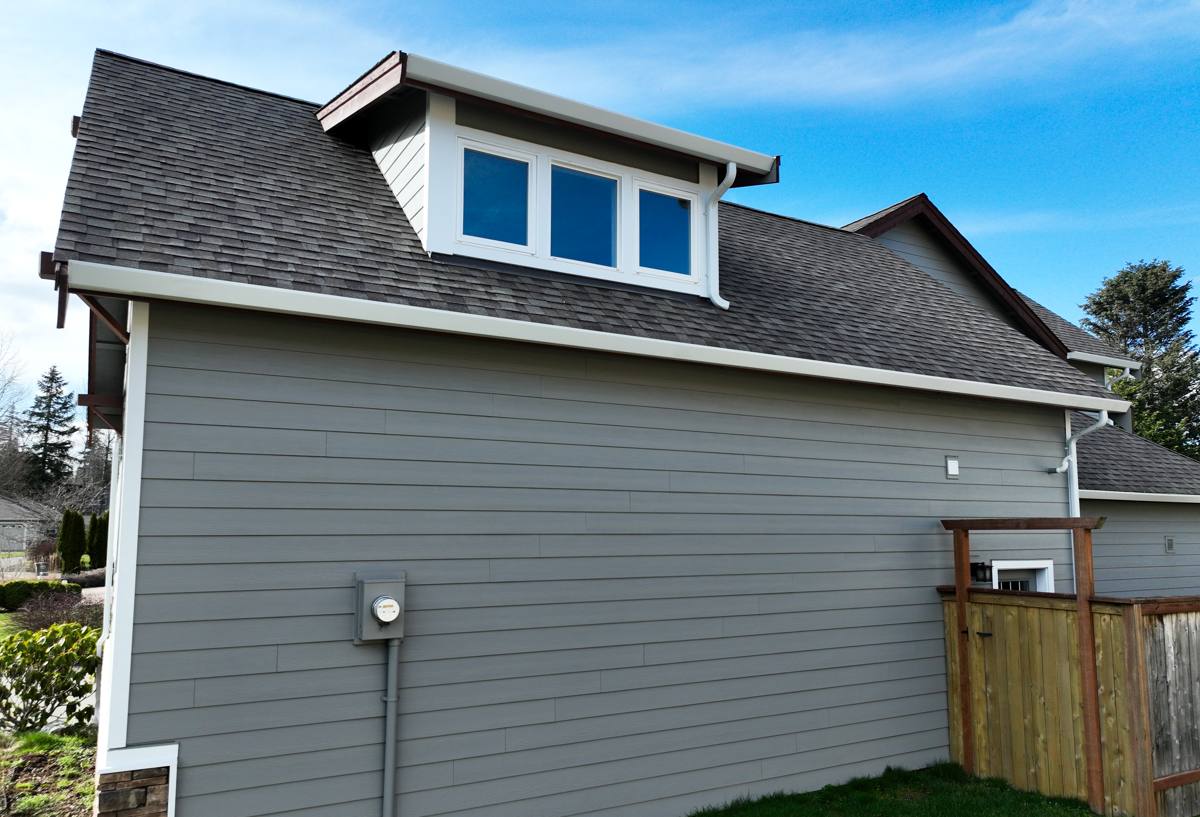
In a lot of the country, siding material choice is mostly an aesthetic and budget decision. In coastal Sarasota, it's also a durability decision with real consequences if you get it wrong. A siding product that performs fine in a drier, milder climate can struggle within a few years on a Southside Village home facing salt exposure, wind-driven rain, and constant sun. That's why we standardized on one product system rather than offering several options with different long-term outcomes.
Why We Install Only James Hardie Fiber Cement
We don't install vinyl, LP SmartSide, primed wood, cedar, or other fiber cement brands. That's a deliberate professional standard, not a sales pitch, and it comes down to how these materials actually perform under Gulf Coast conditions over the long run:
- Non-combustible material: fiber cement doesn't contribute fuel to a fire the way wood-based or vinyl products can.
- Dimensional stability: Hardie's fiber cement doesn't swell, warp, or rot the way engineered wood or solid wood siding can when it absorbs coastal humidity.
- Factory-cured ColorPlus finish: the color is baked on at the factory under controlled conditions, which holds up to intense UV far better than field-applied paint and doesn't require repainting on the same cycle.
- Climate-engineered HZ product line: Hardie's HZ5 formulation is specifically engineered for hot, humid, moisture-heavy climates like Florida's Gulf Coast — it's not a generic national product retrofitted for this region.
- Strong transferable warranty: when installed to Hardie's specification, the warranty backs the product for decades and can transfer to a future buyer, which matters for resale in a neighborhood like Southside Village.
Every one of those points only holds up if the installation is done correctly. A great product with a sloppy install will still fail early — which is why our process is built around getting the details right, not just hanging boards.
What a Correct Installation Actually Involves
Siding installation quality is decided by details most homeowners never see once the job is finished. On a coastal Sarasota home, these details are the difference between siding that performs for decades and siding that lets water in behind the wall within a few years.
Moisture Management First
Before any siding goes up, the wall needs a correctly installed weather-resistant barrier, properly lapped and sealed. Every window, door, and penetration needs correct flashing so wind-driven rain is directed out and away from the wall assembly, not trapped behind the cladding.
Fastening to Spec
James Hardie publishes specific fastener type, spacing, and placement requirements, and those requirements get more exacting in high-wind zones like coastal Sarasota County. Under-fastened or incorrectly placed nails are one of the most common causes of siding failure in a storm — the board itself may be rated for the wind load, but the installation has to deliver on that rating.
Proper Clearances and Gaps
Hardie siding needs the correct gap from grade, roof lines, decks, and other siding terminations, along with proper caulking at butt joints and trim. Get this wrong and you create a path for standing water and wind-driven rain to work behind the boards over time.
Trim, Corners, and Joint Detailing
Corners, joints, and trim transitions are where most long-term leaks originate on any siding job. These details need to be caulked, flashed, and fastened to manufacturer spec — not just made to look clean from the ground.
Our Process for Southside Village Homes
| Step | What Happens |
|---|---|
| Site Assessment | We inspect the existing siding, sheathing, and moisture barrier condition, and check for any storm or water damage already present. |
| Product & Color Selection | We walk through Hardie's HZ5 product lines, profiles, and ColorPlus color options suited to the home and neighborhood. |
| Prep & Moisture Barrier | Old siding is removed, the wall is inspected, and a correctly lapped weather-resistant barrier and flashing are installed before any new siding goes up. |
| Installation to Spec | Siding is fastened, gapped, and detailed per James Hardie's published installation requirements for our wind zone. |
| Final Inspection | We walk the finished job checking fastening, caulking, trim, and clearances before calling it complete. |
What This Costs to Get Right
Every home is different, so exact pricing depends on square footage, the condition of what's being removed, trim complexity, and access. In broad terms, cost is driven by a handful of factors:
| Factor | Why It Affects Cost |
|---|---|
| Existing siding removal | Tear-off and disposal of old material adds labor, especially if there's hidden water damage to address underneath. |
| Home size and wall complexity | More linear footage, more corners, dormers, and roof lines mean more material and more detail work. |
| Trim and profile choice | Board-and-batten, shake accents, and custom trim packages take more labor than a straightforward lap siding install. |
| Substrate repair | If sheathing or framing is compromised from prior moisture intrusion, that repair happens before new siding goes on. |
We give straightforward, itemized estimates so you know what's driving the number, not just a lump-sum figure.
Signs Your Southside Village Home May Need New Siding
- Visible warping, buckling, or soft spots in the current siding
- Paint that's chalking, peeling, or fading unevenly, especially on sun-exposed walls
- Soft or discolored trim around windows and doors, a sign moisture is getting behind the wall
- Siding that shifted, cracked, or loosened after a storm
- Rising cooling costs that may point to a compromised building envelope
- Visible gaps, cracked caulk joints, or separated seams at corners and trim
Why a Crew That Already Works This Neighborhood Matters
Southside Village's proximity to the bay and its mix of home styles and ages means the crew doing the work should already understand what coastal Sarasota installs demand — correct fastening for wind zone, correct flashing for wind-driven rain, and the moisture-management details that matter more here than in inland neighborhoods. A crew that regularly works this area also knows what local permitting and inspection expects, and won't be learning coastal-specific installation requirements on your home for the first time.
Ready to Talk About Your Home
If you're weighing a siding replacement in Southside Village, we're happy to take a look, walk you through James Hardie's product lines and colors, and give you a straightforward, no-pressure estimate. There's no obligation — just an honest assessment of what your home needs and what it would take to do the job right.