 Sarasota Siding
 Southside Village Roofs Work Harder Than Most
Southside Village sits close enough to the water that its homes catch the full range of what Sarasota County weather can throw at a roof: gusty squalls that roll in off the Gulf with little warning, the slow grind of tropical storms and hurricane season, and the kind of relentless UV exposure that Florida is known for. None of that is unique to this one neighborhood, but the combination of mature tree canopy, older roof stock in some of the original bungalows and cottages, and proximity to salt air adds up to a set of stresses that a roof in a newer inland subdivision doesn't see in the same way.
When we talk about storm damage roof repair here, we're not just talking about the aftermath of a named storm. Wind-driven rain during an ordinary summer thunderstorm can force water under lifted shingles just as easily as a tropical system can. Salt-laden air accelerates corrosion on fasteners, flashing, and metal roofing components year-round, quietly weakening a roof's ability to hold up the next time real wind shows up. Understanding that layered exposure is the starting point for doing this kind of repair correctly instead of just patching what's visible from the ground.
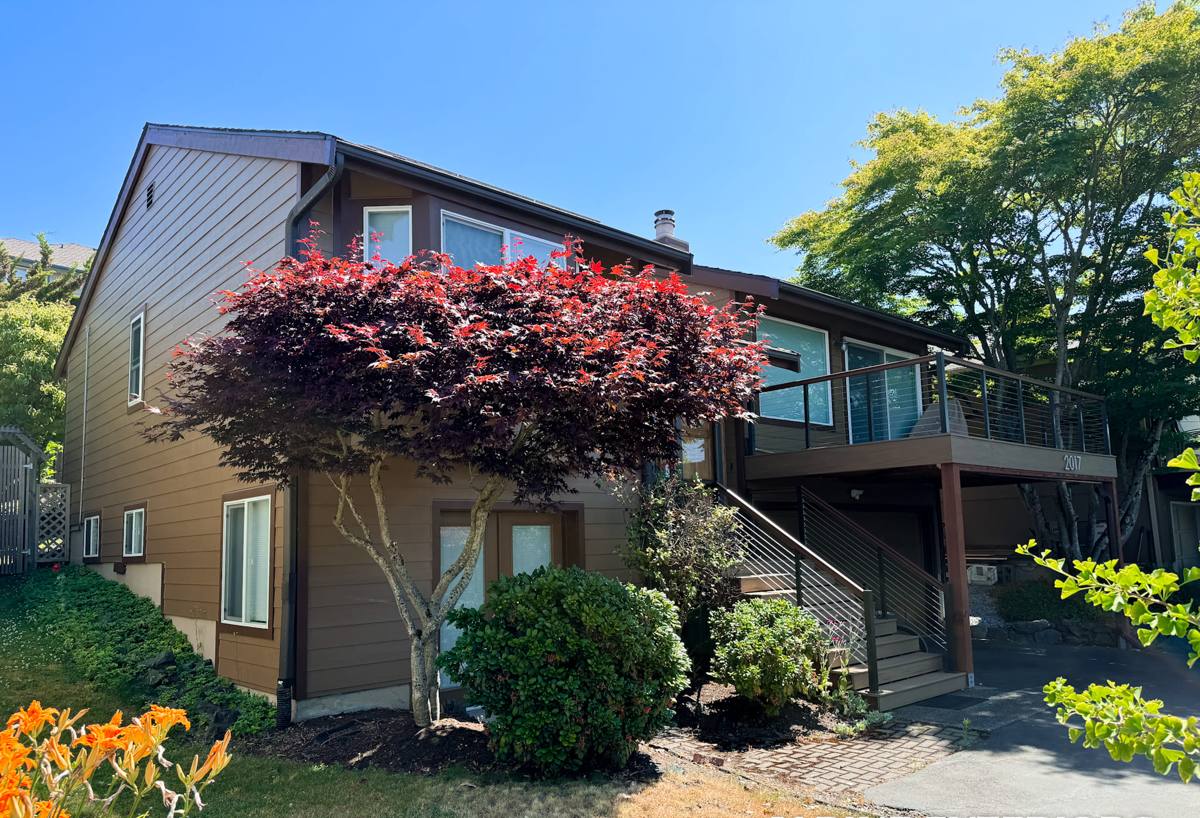
What Storm Damage Actually Looks Like on a Sarasota Roof
Homeowners usually call us after spotting an obvious problem — a missing shingle, a stain spreading across a ceiling, a piece of flashing lying in the yard. Those are real issues, but they're often the visible tip of damage that goes deeper.
Common damage types we see in this area
- Shingles or tiles lifted, cracked, or creased by wind uplift, even when they didn't blow off completely
- Wind-driven rain forced sideways under roof edges, ridge caps, and around penetrations like vents and skylights
- Corroded or loosened fasteners and flashing from ongoing salt air exposure, not a single storm event
- Granule loss on asphalt shingles from wind abrasion and UV breakdown, which shortens the material's remaining service life
- Soffit and fascia damage where wind gets underneath the roof edge and starts working panels loose
- Debris impact from tree limbs common to the neighborhood's mature landscaping
The tricky part is that several of these can exist without an active leak on the day we inspect. A roof can be structurally compromised and still be keeping water out for now. That's why a proper storm damage assessment isn't just "is it leaking" — it's a full look at the roof system's ability to keep doing its job through the next event.
Our Storm Damage Roof Repair Process
1. Inspection, not just a glance from the driveway
We get on the roof (weather permitting) or use a close visual and photographic inspection to check the field of the roof, flashing points, ridge and hip lines, and the attic space from below for signs of moisture intrusion. We're looking for both the damage that prompted the call and any secondary issues nearby.
2. A clear explanation of what we found
Before any work starts, we walk you through what's actually wrong, what's causing it, and what your realistic options are. If a repair will solve the problem, we say so. If the damage is extensive enough that a repair would just be a short-term fix on an aging roof, we tell you that too.
3. Repair scoped to the actual damage
We replace or re-secure only what's compromised — matching materials as closely as possible, resealing and re-flashing penetration points, and correcting any underlying issues (like inadequate fastening or worn underlayment) that made the roof vulnerable in the first place. A repair that just covers the hole without addressing why water got in isn't a repair we consider finished.
4. Final check and documentation
We confirm the repair holds under close inspection and provide documentation of the work performed, which matters both for your records and for any insurance claim tied to the damage.
Repair or Replace? How We Make the Call
Not every storm-damaged roof needs full replacement, and not every roof is a good candidate for another round of repairs. The honest answer depends on the roof's age, how much of it is affected, and what condition the rest of the system is in.
| Factor | Leans toward repair | Leans toward replacement |
|---|---|---|
| Roof age | Under roughly 10-12 years, materials still have life left | Nearing or past expected lifespan for the material |
| Extent of damage | Isolated to one section or a few penetration points | Spread across multiple areas or slopes |
| Underlying deck condition | Solid, no rot or soft spots found | Deck showing moisture damage or soft areas |
| Prior repair history | First significant issue on an otherwise sound roof | Repeated patches and repairs already on record |
| Granule loss / UV wear | Localized, surrounding material still intact | Widespread thinning across most of the roof |
We'll never push a full replacement when a repair genuinely solves the problem — but we'll also never talk you into "just patching it" when the roof is telling us it's done. Our job is to give you the facts and let you decide.
Materials That Make Sense for This Climate
Whatever we install or repair with has to hold up to the same three things every Sarasota-area roof faces: sustained wind loads, UV breakdown, and salt air corrosion. That shapes some practical decisions:
- Fasteners and flashing: We favor corrosion-resistant metals and proper fastening patterns rated for high-wind zones, since standard hardware degrades faster this close to the coast.
- Underlayment: A quality synthetic or self-adhering underlayment at vulnerable points (valleys, penetrations, eaves) gives a second line of defense if wind-driven rain gets past the primary roofing material.
- Shingle or tile selection: When replacement material is needed, we match wind-rating requirements appropriate for the area rather than defaulting to the cheapest available product.
- Sealants: UV-stable sealants at flashing and penetration points matter more here than in milder climates, since sun exposure breaks down lower-grade products faster.
None of this is about chasing the fanciest product on the market — it's about choosing materials and methods that are proven to hold up to the specific combination of wind, sun, and salt that Southside Village roofs deal with year-round.
Insurance and Documentation
Storm-related roof claims often hinge on documentation as much as the actual damage. We photograph and document what we find during the inspection, which gives you a clear, dated record if you're filing a claim. We're happy to walk through what we found with you or your adjuster, but we don't inflate scope of damage to pad a claim — our documentation reflects what's actually there, which holds up better under scrutiny than an exaggerated estimate.
If your policy has specific requirements for how damage needs to be reported or repaired, let us know early so we can make sure our documentation lines up with what your insurer needs.
After a Storm: What to Do (and Avoid) Before We Arrive
- Do photograph visible damage from the ground if it's safe to do so — don't get on the roof yourself
- Do note the date and approximate time of the storm event for your records
- Do address active interior leaks with a bucket or tarp over the interior side if accessible, to limit further water damage
- Don't climb onto a wet or wind-damaged roof to inspect it — that's a job for someone with the right equipment and experience
- Don't sign a contract or hand over a deposit to a contractor who showed up unsolicited immediately after the storm without being able to show local licensing and insurance
- Don't delay reporting visible damage to your insurer if you plan to file a claim — most policies have notice requirements
Why It Matters That We Already Work in This Neighborhood
A crew that regularly works Southside Village and the surrounding Sarasota area isn't guessing at what your roof is up against — they've seen how the local mix of coastal wind exposure, tree cover, and salt air plays out on homes with similar age and construction. That familiarity shows up in small but real ways: knowing which flashing details tend to fail first on older neighborhood homes, understanding realistic timelines around permitting and inspections in Sarasota County, and being able to spot damage patterns that an out-of-area crew unfamiliar with the local building stock might miss or misdiagnose.
It also means we're not disappearing after the storm-chasing season ends. If a repair needs a follow-up check after the next heavy rain, or if a warranty question comes up two years down the road, we're still a local business working in your neighborhood — not a name you can't reach once the checks have cleared.
Get an Honest Look at Your Roof
If your Southside Village home has visible storm damage, a slow leak you can't quite pin down, or you just want a professional opinion after a rough round of weather, we're glad to take a look. Reach out for a free, no-pressure estimate using the form below — we'll assess what's actually going on and give you a straight answer about what it takes to fix it right.