 Sarasota Siding
 Deck Repair Built for How University Park Actually Lives Outdoors
University Park homes are built around the outdoors — lanais, screened decks, and open platforms that connect the house to the golf course views and green space the community is known for. That connection is the whole point of living here, which is exactly why a failing deck is more than a cosmetic problem. It's the part of the home that gets the most exposure to Sarasota County's weather and the least attention until something gives way underfoot.
Sarasota's climate is hard on any exterior structure, but decks take it worse than most. They sit low, they collect moisture, and they're built from materials that move with heat and humidity. Add hurricane-force wind events, months of intense UV, and wind-driven rain that finds its way into every gap and fastener hole, and you get a structure that ages faster here than it would almost anywhere else in the country. Repair work in this climate isn't just about fixing what's broken — it's about fixing it in a way that survives the next storm season.
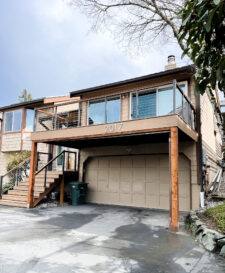
What Florida Weather Actually Does to a Deck
Most deck failures we see aren't sudden. They're the slow result of the same climate stresses working on the structure year after year:
- UV degradation — Florida sun bakes wood fibers and breaks down the surface layer of composite boards, leading to fading, splintering, and brittle decking that cracks under normal foot traffic.
- Moisture cycling — afternoon downpours followed by intense heat cause boards to swell and shrink repeatedly, which loosens fasteners, opens joints, and stresses the connections holding the deck together.
- Wind uplift and racking — gusty storms and tropical systems put lateral and uplift stress on railings, ledger boards, and framing connections that weren't hardened for those loads.
- Salt-laden air — Gulf Coast breezes carry salt further inland than most homeowners realize, and even communities set back from the water see accelerated corrosion on fasteners, brackets, and metal railings over time.
- Fungal and insect activity — humidity that rarely lets up creates ideal conditions for wood rot and termite activity, especially in shaded areas or where a lot backs up to a pond, preserve, or tree line, which is common throughout University Park.
None of this means a deck is a bad investment for the area — it means repairs need to account for these stresses specifically, not just patch the visible symptom.
Wood or Composite: How the Repair Approach Differs
What material your deck is built from changes both what fails first and how we approach the repair. Here's how the two most common decking types typically behave under Sarasota's climate conditions:
| Factor | Wood Decking | Composite Decking |
|---|---|---|
| Common failure point | Rot at fastener holes, joints, and ground contact points; UV graying and splintering | Surface flaking or fading on older, uncapped boards; swelling at cut ends if not sealed |
| Moisture response | Absorbs and releases moisture, causing cupping, warping, and loosened fasteners | Resists absorption but can trap moisture at unsealed edges and fastener penetrations |
| Repair approach | Sistering or replacing damaged boards and joists, treating exposed cuts, refastening with corrosion-resistant hardware | Board replacement matched to existing color/profile, resealing cut ends, checking for hidden substructure damage underneath |
| Maintenance after repair | Periodic sealing or staining, annual inspection of fasteners and framing | Lower ongoing maintenance, but framing and fasteners underneath still need inspection |
| Typical lifespan locally | Shorter without consistent sealing; extended significantly with proper maintenance | Longer surface life, but only as good as the wood or metal frame supporting it |
One thing both materials share: the framing underneath is almost always wood, even on a composite deck. A repair that only addresses the decking boards while ignoring joists, ledger connections, and footings is a repair that will need to be redone.
Our Standard on Products and Materials
We don't push a single decking product as the answer for every home. Pressure-treated wood, capped composite, and PVC decking each have their place, and each comes with trade-offs in cost, maintenance, and how they perform in coastal Florida humidity. When we recommend against a particular product or system, it's because of how it behaves in this specific climate — moisture retention, fastener compatibility, or long-term maintenance burden — not because of any claim about a manufacturer's quality. We'll walk you through the honest trade-offs so you can choose based on your budget and how much upkeep you want to do.
The Structural Side: What a Correct Repair Actually Involves
A deck repair that only replaces a few visibly damaged boards without checking the structure underneath is a cosmetic fix, not a real repair. In this climate, the components that fail first are often hidden:
- Ledger board attachment — where the deck connects to the house is the single most critical structural point and the most common source of hidden rot from trapped moisture.
- Joists and beams — check for soft spots, rot, or insect damage, especially near ground contact or shaded, poorly ventilated sections.
- Fasteners and hardware — corroded nails, screws, or brackets are a leading cause of deck failure in salt-influenced air and need to be replaced with corrosion-resistant hardware rated for coastal exposure.
- Footings and post bases — settling, cracking, or water pooling around footings undermines the entire structure regardless of how the surface boards look.
- Railing connections — railings take direct wind load and are a safety issue as much as a structural one; loose or corroded railing posts should never be left "good enough."
How Our Repair Process Works
- On-site assessment — we inspect the full structure, not just the surface, including framing, fasteners, and footings, and walk you through exactly what we find.
- Honest scope and options — we explain what's failing, why, and give you a clear range of repair options rather than a single one-size-fits-all fix.
- Material matching — for partial repairs, we match board profile and color as closely as possible so the repair blends rather than standing out.
- Structural correction first — any framing, fastener, or footing issues get addressed before cosmetic decking work, since that's the part that actually determines how long the repair lasts.
- Code-aware hardware and fastening — we use corrosion-resistant connectors and fastening methods appropriate for Sarasota County's wind and moisture conditions.
- Final walkthrough — we go over what was repaired, what to watch for going forward, and any maintenance steps that will extend the life of the work.
Signs Your University Park Deck Needs Attention
Most homeowners wait too long to call about deck issues, usually because the damage isn't obvious from a quick glance. Here's what to actually check for:
- Boards that feel spongy, bouncy, or soft underfoot, especially near the house or in shaded corners
- Visible gaps, splitting, or cupping in the decking boards
- Rust streaks around fasteners or visibly corroded screws and brackets
- A railing that wiggles or flexes when you lean on it
- Gaps or separation where the deck meets the house at the ledger board
- Standing water that doesn't drain after normal rainfall
- Discoloration, dark staining, or a musty smell suggesting hidden moisture or mold
- Popped or protruding fastener heads
If you're seeing more than one of these at once, it's usually a sign the issue has moved past the surface and into the structure — worth having it looked at before it becomes a safety issue rather than a maintenance item.
Repair or Replace? A Practical Way to Decide
Not every deck problem calls for a full rebuild, and not every deck is worth repairing indefinitely either. As a general guide: if the framing, footings, and ledger connection are sound and the damage is limited to a portion of the decking or railing, targeted repair is usually the more cost-effective route. If rot or corrosion has reached the structural framing in multiple areas, or the deck is old enough that repeated repairs are becoming routine, a partial or full rebuild often ends up costing less over time than chasing recurring failures. We'll always give you our honest read on which category your deck falls into rather than defaulting to the bigger job.
Keeping a Repaired Deck in Good Shape
Once a deck is repaired correctly, a little seasonal attention goes a long way in this climate:
- Rinse off pollen, salt residue, and organic debris that builds up between boards, particularly after storms
- Reseal or restain wood decking on a regular schedule rather than waiting for visible graying
- Keep gutters and downspouts clear so runoff isn't dumping directly onto or under the deck
- Trim back vegetation that keeps sections of the deck shaded and slow to dry
- Do a quick fastener and railing check each year, ideally before hurricane season
Why a Crew That Already Works in University Park Matters
Deck repair in this part of Sarasota County isn't generic exterior work. A crew that already works in University Park understands the moisture and shade conditions that come with lots bordering ponds, preserves, or the golf course, knows what corrosion-resistant hardware actually holds up here versus on paper, and is used to working within community architectural guidelines rather than treating them as an afterthought. That familiarity means fewer surprises during the job, a repair scoped correctly the first time, and materials chosen because they perform here — not just because they're standard elsewhere.
If you're noticing soft spots, loose railings, or a deck that's just starting to show its age, we're happy to take a look and give you a straightforward assessment. Reach out for a free, no-pressure estimate — fill out the form below and we'll walk through what your deck actually needs.