 Sarasota Siding
 University Park Sits Right in the Middle of Florida's Toughest Siding Climate
University Park is a well-established gated community along the University Parkway corridor, sitting close to the Sarasota-Manatee county line. It's an appealing address, with mature tree canopy, golf course frontage, and lakes that give the neighborhood its resort feel. But that same setting puts real stress on exterior siding. Sarasota County sits in a hurricane-prone stretch of the Gulf Coast, and University Park's mature landscaping means more windblown debris during storms, more shade-to-sun cycling on exterior walls, and more humidity trapped against the house from surrounding water features and irrigation systems that run year-round.
Add in the intense, near year-round UV exposure of West Central Florida, wind-driven rain that gets pushed sideways into walls during summer storms and tropical systems, and the salt air that reaches well inland from Sarasota Bay and the Gulf on a steady sea breeze, and you have a combination that few siding products are actually built to handle. Being several miles from open water doesn't exempt a home from salt exposure; airborne salt travels farther inland than most homeowners assume, and it's just as hard on unprotected fasteners and finishes here as it is closer to the coast. This isn't a page about siding in general — it's about what fiber cement siding needs to do, specifically, on a University Park home.
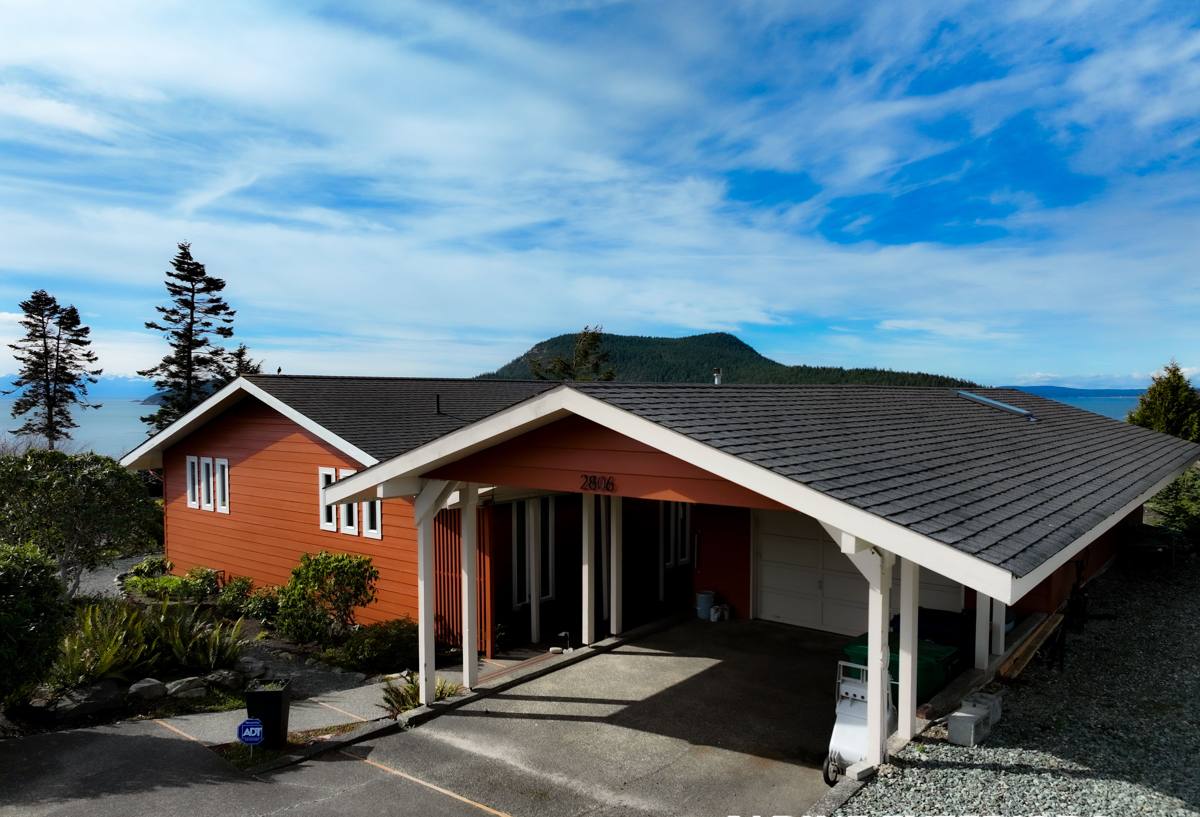
Why Fiber Cement Is the Right Material for This Address
What Fiber Cement Actually Is
Fiber cement siding is made from a mix of Portland cement, sand, and cellulose fiber, cured into dense, dimensionally stable boards and panels. Unlike vinyl, it doesn't soften or warp in high heat, and unlike wood-based products, it isn't a cellulose-and-glue product that swells when it takes on moisture. It's also non-combustible, which matters in a state where lightning strikes and brush fires are a real seasonal risk.
Why We Only Install James Hardie
We install James Hardie fiber cement exclusively — not LP SmartSide, not vinyl, not generic fiber cement brands like Cemplank or Allura, and not primed wood or cedar. Hardie's HZ5 product line is engineered specifically for climates like ours: high humidity, heavy rain, and coastal-adjacent salt exposure. The ColorPlus finish is baked on in a factory-controlled process, which holds up far better against Florida's UV load than field-applied paint, resists the fading and chalking that shows up fast on south- and west-facing walls, and comes with touch-up product matched to the exact factory color so repairs blend in rather than leaving a mismatched patch. It also comes with a transferable limited warranty that matters if the home changes hands. We standardized on one product line because it lets us install to spec every time, rather than juggling the quirks of five different manufacturers and their five different warranty structures.
What Correct Installation Actually Requires Here
Fiber cement siding fails less because of the material and more because of how it's installed. In a wind-driven-rain environment, the details that get skipped on a rushed job are exactly the details that let water behind the cladding.
- Weather-resistive barrier installed and lapped correctly behind every board, not just stapled on for show
- Rigid flashing at every window, door, and penetration — not caulk used as a substitute for flashing
- Manufacturer-specified nailing pattern and fastener type, adjusted for the wind zone the home sits in
- Proper clearance between siding and roof lines, decks, and grade, so water has somewhere to go
- Correctly sized gaps at butt joints and trim, caulked with a product rated for sustained UV and moisture exposure
Corner and Trim Detailing
Corners and trim deserve their own attention. These are the spots where two planes of siding meet, where caulk joints run longest, and where wind-driven rain hits at an angle rather than straight on. Using the right corner system, keeping fastener placement back from the edges per spec, and sealing those joints properly is often the difference between a corner that stays tight for decades and one that opens a hairline gap within a few storm seasons.
Skip any of this and the siding can still look fine from the street for a year or two while moisture works its way in behind it. That's the trap with a bad fiber cement install: the failure is invisible until it isn't.
Signs Your Siding Is Already Past Its Prime
Because University Park has a mix of home ages, we regularly get called out to look at siding that's showing its years. Some of it is fixable with maintenance; some of it means the wall assembly behind the siding needs attention, not just the surface.
- Visible fading or chalking, especially on south- and west-facing walls that take the most UV
- Soft spots, bubbling, or a spongy feel when you press on the siding near the bottom courses
- Cracking or splitting at butt joints and corners
- Peeling paint or finish that wasn't factory-applied
- Staining or dark streaking below windows and roof lines, which usually points to a flashing problem, not a siding problem
- Visible gaps opening up where boards meet trim
Any one of these is worth a look before it becomes a bigger repair. Wind-driven rain finds the smallest gap, and salt air accelerates corrosion on any exposed, unprotected fasteners once a finish has failed.
How We Approach a University Park Siding Job
The process is the same discipline on every home, adjusted for what we find once the old siding comes off.
- Assessment: We walk the exterior, check trouble spots (window heads, roof-wall intersections, lower courses), and talk through what the homeowner has noticed.
- Tear-off and inspection: Old siding comes off in sections so we can inspect the sheathing and framing underneath for rot or moisture damage before it's covered back up.
- Repair as needed: Any damaged sheathing or framing gets addressed before new material goes on — covering over a problem is how the next failure gets built in.
- Weather barrier and flashing: New house wrap and flashing go in at every penetration, lapped to shed water down and out.
- Hardie installation: Boards and panels are fastened to manufacturer spec for our wind zone, with correct clearances and joint treatment.
- Trim, caulk, and punch list: Final detailing, cleanup, and a walkthrough with the homeowner before we call it done.
| Factor | Why It Matters in University Park |
|---|---|
| Home size and story count | More surface area and higher elevations mean more wind load and longer scaffold or lift time |
| Existing siding removal | Tear-off exposes the sheathing so we can check for hidden moisture damage before closing the wall back up |
| Trim and architectural detail | Many homes in the community carry more trim, banding, and accent work than a basic elevation, which adds labor |
| HOA-approved color and profile | Community architectural guidelines may limit color and plank exposure choices, which we confirm before ordering material |
| Access and gate scheduling | Gated-community logistics affect crew scheduling, deliveries, and dumpster placement |
What Drives the Cost of a Fiber Cement Job
We don't publish flat prices because the honest answer is "it depends," but the variables above are consistent from house to house, and we give homeowners a real number after we've actually looked at the house — not a phone-quote guess.
| Cost Factor | Impact |
|---|---|
| Square footage of the home's exterior walls | The single biggest driver of material and labor cost |
| Condition of the substrate underneath | Rot or moisture damage found during tear-off adds repair scope |
| Siding profile (lap, panel, shingle-style) | More complex profiles and accent details take more labor per square foot |
| Trim, fascia, and soffit scope | Whether trim work is included alongside the field siding |
| Access and staging | Two-story sections, tight side yards, and gated-community logistics add time |
Why It Matters That We Already Work in University Park
A crew that hasn't worked in a gated, HOA-governed community will lose time — and sometimes cause friction — figuring out gate access rules, contractor registration, dumpster and material staging restrictions, and architectural review requirements for exterior changes. We've already worked through that process here, which means less back-and-forth before a job can even start, and the siding colors and profiles we bring to a homeowner are already ones we know tend to clear architectural review. That's not a small thing when a job's timeline depends on getting approval before material is even ordered.
It also means we've seen how this specific climate treats homes in this specific setting — closer to mature trees and water features than an open subdivision, with the debris and humidity that comes with that. On a street where every home shares a similar architectural character, getting the color, reveal, and trim profile right matters as much as getting the installation right, and that's easier to do consistently when it isn't the first time a crew has worked on this street. We're not applying generic Florida advice; we're applying what we've actually seen hold up, and fail, on homes like this one.
Maintenance and the Warranty Behind the Work
Correctly installed Hardie siding is genuinely low-maintenance, not maintenance-free. An annual rinse to clear salt residue and organic buildup, a yearly walk-around to check caulk lines and touch up any nicks near grade, and prompt attention to any landscaping that's grown in against the wall will keep the finish performing for the long haul. Caulk joints, in particular, are the one component that isn't factory-finished, and even a good sealant benefits from a fresh bead every several years at the highest-exposure joints. James Hardie backs its products with a transferable limited warranty, which is worth more than it sounds — it's one of the few exterior products where a future buyer inherits real coverage, not just a fresh coat of paint's worth of protection.
If your University Park home is due for new siding, showing early wear, or you just want a straight answer about what's really going on behind an aging exterior, we're happy to take a look. We offer free, no-pressure estimates — we'll walk the house with you, point out what we see, and give you a clear plan and a real number before anything is decided.