 Sarasota Siding
 Siding Built for What University Park Actually Deals With
University Park sits in the greater Sarasota area, close enough to the Gulf to feel its influence every day: heavy humidity, salt-laden air, intense sun, and the very real chance of a hurricane or tropical storm working through the region most years. Whatever is on the outside of a house here isn't just cosmetic — it's the first line of defense against wind, water, and UV exposure that never really lets up. That's a different job than siding does in most of the country, and it's why we treat siding decisions in this neighborhood differently than a generic replacement job.
We install James Hardie fiber cement exclusively, and University Park is a neighborhood where that decision matters in very concrete ways. Homes here are exposed to sustained coastal humidity, salt air drifting in off Sarasota Bay and the Gulf, and the kind of wind-driven rain that finds every gap in a poorly sealed or poorly flashed wall system. Add Florida's UV load — among the most intense in the continental U.S. — and you have a climate that is genuinely hard on exterior building materials over a 20-plus year ownership horizon.
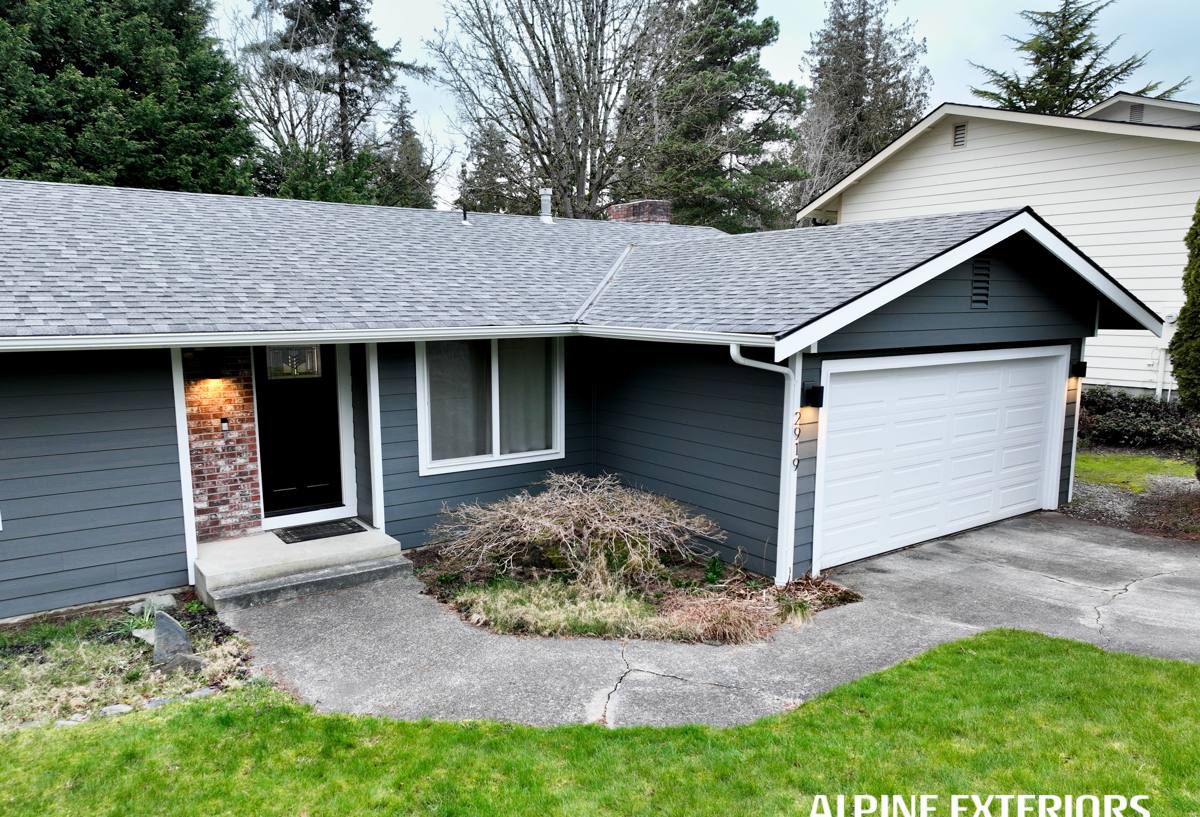
What Sarasota-Area Climate Does to Siding Over Time
It helps to understand the specific mechanisms at work, because they explain why product choice and installation quality both matter so much here.
Wind and wind-driven rain
Hurricane-force and near-hurricane wind events push rain sideways and pressurize wall cavities. Siding that isn't fastened, flashed, and lapped correctly for these conditions can let water past the surface even when the material itself is sound. The failure, in other words, is usually in the installation detailing, not the panel.
UV exposure
Year-round sun breaks down pigments and resins in lower-grade coatings, which is why faded, chalky siding is such a common sight on older Florida homes. Paint film that would last a decade in a milder climate can visibly fade or chalk in half that time here.
Salt air and humidity
Salt accelerates corrosion of fasteners and trim hardware and keeps moisture sitting against exterior surfaces longer than it would inland. Materials that swell, rot, or delaminate when wet are working against the odds in this environment, sometimes for months of the year.
Why We Standardized on James Hardie for Homes Like These
We used to get asked why we don't offer vinyl, LP SmartSide, or one of the other fiber cement alternatives on the market. The honest answer is that we looked at what actually holds up in a coastal Florida climate over decades of ownership, not just what looks good on install day, and James Hardie was the clear standard.
James Hardie fiber cement is non-combustible, dimensionally stable in humidity swings, and doesn't rot or delaminate from moisture exposure the way wood-based or engineered-wood siding products can. Its ColorPlus factory finish is baked on and warrantied against fading and chipping, which matters enormously under Sarasota's sun load. Vinyl, by contrast, can warp or become brittle under sustained UV and heat and offers little in the way of impact resistance during storm season. We're not interested in installing something that we expect to be re-explaining, patching, or defending in ten years — Hardie is the product we're comfortable standing behind on a University Park home for the long term.
Choosing the Right Hardie Line and Colors for This Neighborhood
Not every James Hardie product is identical, and part of doing this job correctly is matching the product line to the home and its exposure.
- HardiePlank lap siding — the most common choice for traditional and transitional home styles, available in smooth or cedar-textured finishes.
- HardieShingle — used for accent gables, dormers, or full-shingle facades on homes that call for more texture.
- HardieTrim and HardieSoffit — matched trim and soffit systems that close out the whole exterior in one coordinated material, rather than mixing fiber cement siding with wood trim that ages differently.
- HZ5 engineered formulation — Hardie's product line engineered specifically for high-humidity, high-moisture climates like ours, which is what we specify for this region rather than a formulation built for drier climates.
ColorPlus finishes also matter more here than in milder climates, because a factory-baked finish resists the fading and chalking that a field-applied paint job struggles with under constant Gulf Coast sun. We walk homeowners through the current ColorPlus palette and help pick a finish that suits both the home's architecture and the practical reality of UV exposure at this latitude.
What a Correct Installation Actually Involves
The material is only half the equation. Most siding failures we get called out to inspect — on any brand — trace back to installation shortcuts, not the product itself. In a wind and rain-driven climate, the details below are non-negotiable, not optional upgrades.
Water management first
A correctly installed weather-resistive barrier, properly lapped and taped, goes on before a single piece of siding. Every window, door, and penetration gets flashed so that water is directed out and down, never trapped behind the cladding.
Manufacturer clearances
James Hardie specifies minimum clearances from grade, roofing, and decks, along with specific fastener spacing and gapping at butt joints. Skipping these clearances is one of the most common ways installers void the warranty and set up long-term moisture problems, particularly at ground level and around porches.
Fastening for wind load
Fastener type, spacing, and embedment all affect how a wall system performs in sustained high wind. We fasten to the specifications that match the wind exposure category for this area, not a generic national default.
Caulking and sealant discipline
Every joint, seam, and trim intersection that's supposed to be sealed gets sealed with a product rated for exterior, high-UV use — and nothing gets sealed that Hardie's details say should be left to drain instead.
Our Process for University Park Homes
| Step | What Happens | Why It Matters Here |
|---|---|---|
| Assessment | On-site inspection of current siding, wall sheathing condition, and problem areas (window heads, deck ledgers, low-clearance zones) | Coastal humidity can cause hidden sheathing damage that needs addressing before new siding goes on |
| Proposal | Written scope covering product line, color, trim package, and any sheathing or flashing repairs needed | No guessing what's included — the water-management work is priced, not assumed |
| Prep and tear-off | Removal of old siding, inspection and repair of sheathing, house wrap installation | This stage is where most long-term water problems are prevented or created |
| Installation | Hardie siding, trim, and soffit installed to manufacturer clearance and fastening specs | Correct detailing is what actually delivers wind and moisture resistance |
| Final inspection and walkthrough | Site walkthrough with the homeowner, warranty paperwork provided | Confirms the finished product matches spec before we consider the job done |
Why a Crew That Already Works This Neighborhood Matters
There's a real difference between a contractor who occasionally works in the Sarasota area and one who already knows the practical realities of a neighborhood like University Park — lot setbacks, typical home ages and construction types, common HOA exterior-approval requirements, and the local permitting process through the applicable county building department. That familiarity shortens the timeline and avoids the back-and-forth that comes from a crew learning local requirements on the fly.
It also matters for something less obvious: knowing what problems tend to show up on homes of a certain age or construction style in this specific climate zone. A crew that's already seen how a particular era of construction handles humidity and wind exposure in this part of Florida can flag issues during the initial assessment instead of discovering them mid-project.
Signs a University Park Home May Need New Siding
- Visible warping, buckling, or separation at seams and corners
- Soft spots or give when pressing on siding near ground level or under windows
- Persistent chalking or fading that doesn't respond to washing
- Cracked or peeling caulk joints around windows, doors, or trim
- Water stains or discoloration on interior walls near exterior corners
- Visible fastener corrosion or rust streaking down the siding face
- Siding that flexes or rattles in strong wind
Any one of these on its own isn't necessarily an emergency, but a home showing several of them at once is usually past the point where spot repairs make sense, and a full assessment is worth scheduling before the next storm season.
What to Ask Before Hiring Anyone for This Job
Whoever you hire for siding work on a University Park home, a few questions separate a contractor who understands coastal installation from one who's just used to milder climates:
- What clearance and fastening spec are you installing to, and is it matched to this wind exposure zone?
- Who handles the water-resistive barrier and flashing detailing — is it part of the crew's standard scope or an add-on?
- What warranty applies to the material versus the labor, and what would void it?
- Are you a certified installer for the product you're proposing, and can you explain why you recommend it for this specific climate?
If those questions get vague answers, that's worth taking seriously before signing anything.
If your University Park home's siding is showing its age, or you're planning ahead of hurricane season and want an honest read on where things stand, we're happy to come take a look. The estimate is free, there's no pressure, and you'll get a straight answer about what your home actually needs.