 Sarasota Siding
 Downtown Sarasota's Climate Is Rough on Roofs
Downtown Sarasota sits close to the bay, which means every roof here deals with more than just sun. You've got salt-laden air drifting in off the water, intense UV exposure nearly every day of the year, sudden wind-driven rain squalls that can dump an inch of water in twenty minutes, and the very real threat of hurricane-force gusts during the June-to-November storm season. Add in the mature oak and banyan canopy that shades a lot of the older downtown streets, and you have a combination of constant debris, moisture retention, and heat cycling that most asphalt shingle roofs elsewhere never have to handle at the same intensity.
None of that means asphalt shingles are a poor fit for Downtown Sarasota — they're still one of the most cost-effective, widely available roofing materials on the market, and modern architectural shingles are engineered specifically for high-wind, high-UV climates like ours. But it does mean the installation has to be done correctly, with the right materials and the right attention to detail, or the roof will show its age fast. A shingle roof that's installed the same way you'd install one in a mild inland climate simply won't hold up the same way here.
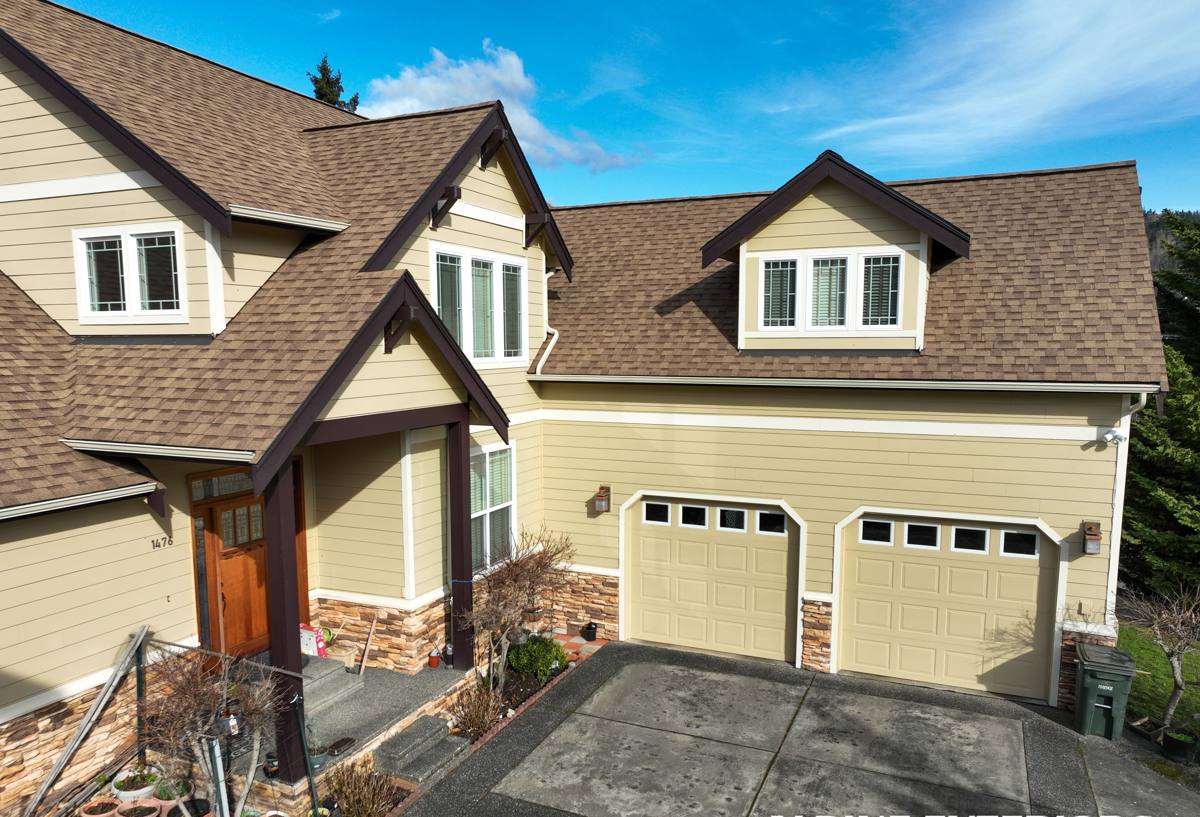
What a Roof Downtown Actually Needs to Handle
Wind
Sarasota County sits in a coastal wind zone, and local building codes reflect that. Shingles here need to carry a wind rating suited to the area, and the fastening pattern matters as much as the shingle itself — a six-nail pattern (rather than the standard four) is common practice on Sarasota-area re-roofs because it meaningfully increases uplift resistance in gusting wind. Starter strips at the eaves and rakes also need full sealant coverage; that first course is often where wind gets a foothold and starts peeling a roof from the edge inward.
UV and Heat
Year-round sun exposure breaks down the asphalt oils in a shingle over time, which is what eventually leads to granule loss, brittleness, and cracking. Downtown's mix of close-set homes and reflected heat off pavement and nearby buildings only adds to that thermal load. Shingle quality and proper attic ventilation both play a direct role in how long a roof holds up against this kind of sustained heat exposure.
Salt Air and Humidity
Being this close to Sarasota Bay means metal components — flashing, nails, vents — are exposed to a slow, constant corrosive element that inland roofs don't deal with. Humidity also keeps roof decks and underlayment damp longer after every rain, which is exactly the environment algae and mold need to take hold on a shingle's surface.
Wind-Driven Rain and Storm Debris
Rain that comes in sideways during a squall or tropical system doesn't behave like a normal vertical rain event. It gets pushed up under shingle tabs, into valleys, and around any flashing that isn't sealed correctly. Combine that with falling branches and leaf litter from the tree canopy common in older Downtown Sarasota neighborhoods, and you get valleys and gutters that clog faster and roofs that need more frequent inspection than they would in a drier, less wooded setting.
Tear-Off vs. Overlay: What We Recommend and Why
When a Downtown Sarasota home needs a new shingle roof, the homeowner usually has two options on the table: a full tear-off down to the deck, or an overlay (installing new shingles directly over the old layer). We recommend a full tear-off on almost every job in this climate, and here's the honest comparison of why:
| Factor | Full Tear-Off | Overlay |
|---|---|---|
| Deck inspection | Full visibility — rot, soft spots, and old flashing get caught and fixed | Deck condition stays hidden under both layers |
| Wind performance | New nailing directly into sound deck; consistent uplift resistance | Extra layer adds weight and inconsistent fastening depth |
| Underlayment | New synthetic underlayment installed fresh, sealed correctly | Old underlayment stays in place, already aged and possibly compromised |
| Lifespan | Full expected life of the new shingle | Shortened — heat from below and trapped moisture age the new layer faster |
| Upfront cost | Higher | Lower |
| Insurance / resale | Documented new roof, easier to insure and disclose | Often flagged or restricted by insurers; some won't cover a double-layer roof at all |
Overlays can make sense as a short-term, budget-driven patch on a roof that's structurally sound and close to move-out or resale — but in a climate that puts this much stress on a roof deck, we don't consider it a responsible long-term choice for a home you plan to keep.
How We Approach an Asphalt Shingle Roof Here
- Inspection and assessment: We check the existing roof, deck condition, flashing, ventilation, and any signs of past leaks before quoting anything.
- Tear-off: Old shingles, underlayment, and flashing are removed down to the deck so we can see exactly what we're working with.
- Deck repair: Any soft, rotted, or delaminated decking gets replaced — this is non-negotiable, since shingles can only perform as well as what they're nailed into.
- Underlayment: A synthetic underlayment goes down first, lapped and sealed to shed wind-driven rain even if a shingle is ever compromised.
- Flashing and edge metal: New drip edge, valley flashing, and pipe boots go in — this is where most leaks actually originate, not in the open field of the roof.
- Shingle installation: Starter strips fully sealed, correct nail count and placement for our wind zone, valleys and hips cut and sealed properly.
- Ventilation check: Ridge and soffit ventilation confirmed or corrected so the attic isn't trapping heat and moisture under the new roof.
- Final walk-through: We walk the roof and the site with you, clean up debris, and go over warranty paperwork.
The Details That Actually Prevent Leaks
Most shingle roof leaks in this area don't happen because the shingles themselves failed — they happen at the transitions: valleys, chimneys, skylights, wall intersections, and pipe penetrations. This is where a rushed or corner-cutting installation shows up years later as a water stain on a ceiling.
Valleys
Given how much rain and debris a valley channels during a Florida storm, we treat these as high-priority zones — properly lapped underlayment, correctly cut shingles, and sealed metal where called for.
Flashing
Step flashing at walls and chimneys, and continuous flashing at rooflines, need to be installed in the correct sequence with the shingle courses — not just caulked on afterward. Caulk is a maintenance item, not a substitute for proper flashing technique.
Pipe Boots and Penetrations
Rubber pipe boots are one of the first things to crack under sustained Sarasota sun. We use quality boots and check them on every service call, since a cracked boot is one of the most common sources of a slow, hard-to-trace leak.
Ventilation
A shingle roof with poor attic ventilation runs hotter, which accelerates shingle aging from underneath and can void some manufacturer warranties outright. Balanced intake (soffit) and exhaust (ridge) ventilation matters as much as the shingle brand you choose.
Permits and Local Code Requirements
Re-roofing a home in the City of Sarasota or unincorporated Sarasota County requires a permit, and inspections happen at defined stages of the job — not just at the end. Wind-rated shingle installation, correct fastening schedules, and proper underlayment are all things an inspector will check, and for good reason: this is the paperwork that protects you if a wind claim ever comes up with your insurer. We handle the permitting and inspection scheduling as part of the job so you're not left tracking down the county on your own.
If your home is old enough that a wind mitigation inspection could lower your insurance premium, a new shingle roof installed to current code is often the single biggest factor in that report. It's worth asking your insurance agent about this before or right after a re-roof.
Choosing the Right Shingle for a Downtown Sarasota Home
Not every architectural shingle on the market is built the same, and the differences matter more here than in a milder climate. When we walk a homeowner through options, we're looking at:
- Wind rating: Confirm the product is rated for our regional wind zone, not just a generic national minimum.
- Algae resistance: Look for shingles with algae-resistant granules — the humidity here makes dark streaking a real issue on standard shingles within a few years.
- Color and heat: Lighter shingle colors reflect more heat, which can help with attic temperatures and cooling costs on homes with less shade.
- Manufacturer warranty terms: Understand what's actually covered (materials only, or materials plus labor) and what voids it — improper ventilation is a common exclusion.
- Sealant strip quality: Ask specifically how the shingle performs in independent wind-uplift testing, not just the marketing wind rating on the package.
A Practical Pre-Installation Checklist
- Confirm the shingle's actual wind rating matches or exceeds what our area requires
- Verify synthetic (not felt) underlayment is included in the scope
- Ask whether a full tear-off or overlay is being proposed, and why
- Check that pipe boots, valley metal, and drip edge are itemized, not lumped as "flashing as needed"
- Confirm ridge and soffit ventilation will be inspected and corrected if inadequate
- Get the permit number and inspection schedule in writing before work starts
Maintenance That Extends the Life of the Roof
Even a well-installed shingle roof needs periodic attention in this climate. Twice-a-year visual checks — ideally before and after hurricane season — catch lifted shingles, cracked boots, and clogged valleys before they turn into interior damage. Clearing leaf litter and small branches out of valleys and gutters after storms matters more here than in less wooded parts of the county, since standing debris holds moisture against the shingle surface. If you notice dark streaking, granules collecting in gutters, or a shingle tab that's curled or missing after a windstorm, those are worth a prompt inspection rather than waiting for the next scheduled check.
Why Hire a Crew That Already Works Downtown Sarasota
A roofing crew that works this neighborhood regularly already knows which permitting office to call, what the local inspectors look for, and how the tree canopy and bay-side wind patterns actually affect a roof here — not in theory, but from being on these roofs. That local familiarity shows up in small but real ways: knowing to size ventilation for the shade patterns on a tree-covered lot, understanding how salt air affects fastener choice, and being available quickly after a storm rather than weeks out when every crew in the region is booked. We're not asking you to take our word for wind ratings or code requirements — we'll walk you through the actual specs on the materials and the permit requirements for your specific address.
If you're weighing a repair, a full re-roof, or just want a straight answer on what condition your current shingle roof is really in, we're happy to take a look. Fill out the form below for a free, no-pressure estimate — we'll assess the roof, explain what we find, and give you honest options with no obligation.