 Sarasota Siding
 Why Palmer Ranch Roofs Wear Differently Than Roofs Up North
Palmer Ranch sits close enough to the Gulf that salt-laden air reaches every roof in the community, even homes that aren't waterfront. Combine that with Sarasota County's intense, near year-round UV exposure, seasonal tropical systems capable of hurricane-force gusts, and the kind of wind-driven rain that finds every weak seam in a roof, and you get a climate that ages asphalt shingles faster than almost anywhere else in the country. A shingle roof that would last three decades in a milder climate can show real wear in half that time here if it wasn't installed with this specific environment in mind.
This isn't a reason to avoid asphalt shingles — it's a reason to be precise about how they're installed. Asphalt shingle roofing remains one of the most cost-effective, proven roofing systems available, and it performs well in Southwest Florida when the underlayment, fastening pattern, flashing, and ventilation are all matched to local conditions. The failures we see on Palmer Ranch roofs almost always trace back to shortcuts taken during installation, not a flaw in the shingle itself.
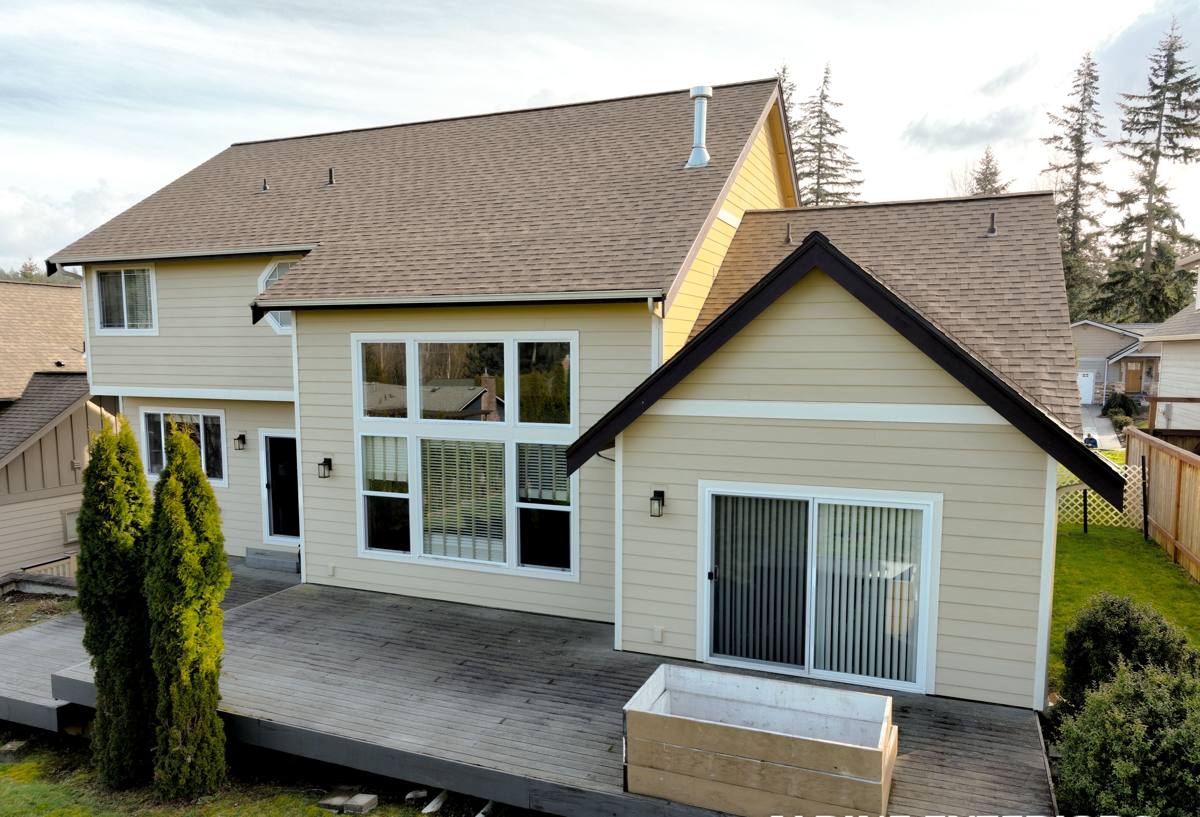
What Palmer Ranch Homes Actually Need From a Shingle Roof
Wind Resistance That Matches the Real Exposure
Palmer Ranch is inland enough to avoid direct wave and storm surge exposure in most of the community, but it is not sheltered from wind. Sustained tropical-storm and hurricane-force winds move across the whole Sarasota area during named storms, and even routine summer thunderstorms here can produce sharp, damaging gusts. A shingle roof needs a wind rating and installation method that accounts for this, not a bare-minimum product installed to the loosest code allowance.
UV Stability Over the Long Haul
Florida's UV index runs high most of the year. Constant sun exposure breaks down the asphalt binders in lower-grade shingles, leading to granule loss, brittleness, and premature cracking. Shingles rated for high UV exposure and installed with proper attic ventilation age noticeably slower than budget products left to bake without airflow underneath them.
Moisture Management, Not Just Water Shedding
Wind-driven rain during Sarasota's storm season doesn't just fall on a roof — it gets pushed sideways and upward under shingle edges, into valleys, and around penetrations like vents and chimneys. A correct installation assumes water will try to get underneath the shingles at some point and builds in a second line of defense with underlayment and flashing, rather than relying on the shingles alone.
What a Correctly Installed Shingle Roof Involves
A shingle roof is a system, not a single product. Every layer has a job, and skipping or shortcutting any one of them is where most premature failures on Sarasota-area roofs start.
- Deck inspection and repair: Old fasteners removed, soft or delaminated decking replaced before anything new goes down.
- Self-adhered or synthetic underlayment: A continuous secondary water barrier, with self-adhered membrane at eaves, valleys, and other vulnerable areas per Florida Building Code requirements for this region.
- Drip edge at eaves and rakes: Metal edging that directs water away from the fascia instead of letting it wick back under the roof edge.
- Starter strip shingles: A dedicated starter course, not cut field shingles, so the first row has full adhesive contact and wind resistance along the edge.
- Correct nailing pattern: Manufacturer-specified nail count and placement, driven flush and straight — overdriven or underdriven nails are one of the most common causes of blow-offs in wind events.
- Valley and flashing work: Properly woven, closed-cut, or metal-lined valleys and step flashing around walls, chimneys, and skylights, sealed correctly rather than caulked over as a substitute for proper flashing.
- Ridge venting: A continuous ridge vent paired with adequate intake ventilation at the soffits, sized to the attic's actual square footage.
Choosing the Right Shingle for This Area
Not every asphalt shingle sold in Florida is built the same, and the differences matter more here than in milder climates. We generally steer Palmer Ranch homeowners toward architectural (laminated) shingles over 3-tab shingles for the added wind performance and durability, though the right choice depends on budget, roof pitch, and how long you plan to stay in the home.
| Shingle Type | Typical Wind Rating | Best Fit | Trade-Offs |
|---|---|---|---|
| 3-tab shingles | Lower wind ratings, generally the entry-level option | Budget-conscious re-roofs, rental properties | Flatter profile, shorter realistic lifespan in coastal UV and wind exposure |
| Architectural / laminated shingles | Higher wind ratings available with proper installation | Most Palmer Ranch homes, especially owner-occupied | Higher material cost, but better wind and hail performance over the roof's life |
| Impact-resistant (Class 4) shingles | Highest wind and impact ratings in the asphalt category | Homeowners prioritizing storm resilience and possible insurance credits | Highest upfront cost; insurance discount availability varies by carrier |
Whichever product you choose, the wind rating on the shingle wrapper only applies if the roof is installed to that manufacturer's specific instructions, including nailing pattern and starter course details. A high-wind-rated shingle installed with a standard nailing pattern doesn't actually deliver that rating.
Our Process, From Estimate to Cleanup
1. On-Site Inspection and Honest Assessment
We walk the roof, check the decking condition where accessible, look at existing ventilation, and talk through what your roof actually needs — not a generic upsell. If a repair is a reasonable option instead of full replacement, we'll tell you that.
2. Clear, Itemized Estimate
You'll see what's included: tear-off, decking repair allowance, underlayment type, shingle product, flashing work, and ventilation — not a single lump-sum number with no detail behind it.
3. Tear-Off and Deck Prep
Old roofing is removed down to the deck so we can actually see what's underneath, rather than layering new shingles over old problems.
4. Installation to Manufacturer and Code Specification
Underlayment, drip edge, starter course, field shingles, valleys, flashing, and ridge vent are installed in sequence, following both the shingle manufacturer's requirements and current Florida Building Code wind provisions for this region.
5. Site Cleanup and Final Walkthrough
Magnetic sweep for stray nails, debris hauled off, and a walkthrough so you know exactly what was done and what to expect going forward.
Signs Your Palmer Ranch Roof May Need Attention
Asphalt shingle roofs rarely fail all at once — they show warning signs first. Worth checking for, especially after a windy or rainy stretch:
- Granules collecting in gutters or at downspout outlets
- Shingles that look curled, cupped, or lifted at the edges
- Cracked or missing shingles, especially after a storm
- Visible daylight or water stains in the attic near the roof deck
- Soft spots underfoot if you're ever on the roof (leave this to a professional)
- Streaking or dark staining across the shingle surface, often algae growth
- Nail heads visibly popping through the shingle surface
- Rising attic temperatures or energy bills, which can point to failing ventilation
Any one of these on its own isn't necessarily an emergency, but ignoring several at once usually turns a repair into a full replacement.
Ventilation and Attic Heat: An Often-Skipped Detail
Florida attics get hot, and a poorly ventilated attic works against your shingles from underneath while your air conditioning fights it from below. Balanced ventilation — intake at the soffits, exhaust at the ridge — lets heat and moisture escape instead of baking the underside of the deck and shingles. We size ventilation to the actual attic, not a one-size-fits-all vent count, because undersized ventilation is one of the more common reasons a shingle roof underperforms its expected lifespan in this climate even when the shingles themselves were a good product.
Permits, Wind Mitigation, and Insurance Considerations
Reroofing work in Sarasota County requires a permit, and the installation has to meet current Florida Building Code wind provisions for our wind zone. We handle the permitting process as part of the job rather than leaving it to the homeowner. A new roof installed to current code can also affect your wind mitigation inspection, which some insurance carriers use to adjust premiums — we can't promise a specific discount since that's between you and your carrier, but a properly documented, code-compliant installation puts you in the best position for that conversation.
Why Local Palmer Ranch Experience Matters
A roofing crew that regularly works in Palmer Ranch and the broader Sarasota area already understands the local wind zone requirements, the permitting process with Sarasota County, and how quickly UV and salt air affect roofing materials here. That familiarity shows up in the details — the right underlayment spec, the right fastening pattern, flashing that's sized for wind-driven rain rather than straight-down rain. It also means a crew that's around after the job is done, not a storm-chasing outfit that leaves town once the work is finished.
Caring for Your Shingle Roof After Installation
A correctly installed shingle roof still benefits from basic upkeep. Keep gutters clear so water doesn't back up under the eaves, trim overhanging branches that drop debris or scrape shingles in the wind, and have the roof looked at after any major storm rather than waiting for a leak to show up inside the house. A quick annual check catches small issues — a lifted shingle, a cracked pipe boot — while they're still a five-minute fix.
If you're weighing a shingle roof replacement or repair for your Palmer Ranch home, we're glad to take a look and give you a straight answer on what it needs. Reach out for a free, no-pressure estimate using the form below.