 Sarasota Siding
 Composite Decking Built for Bee Ridge's Climate, Not a Showroom
Bee Ridge sits inland enough to feel like a quiet, established part of Sarasota County, but it still takes the same beating every other neighborhood in this county takes: long stretches of direct sun, humidity that never really lets up, wind-driven rain that finds its way into anything not properly flashed, and salt-laden air drifting in off the Gulf that speeds up corrosion on fasteners and hardware even miles from the water. A deck built here has to survive all of that every year, not just look good the week it's finished.
Composite decking has become the go-to choice for a lot of Bee Ridge homeowners because it holds up to that combination better than most alternatives, provided it's actually installed the way the climate demands. That last part matters more than the brand of board you choose. We've seen composite decks that look tired and warped after a few Sarasota summers, and it almost never comes down to the material itself — it comes down to shortcuts in the substructure, fasteners, and drainage underneath it.
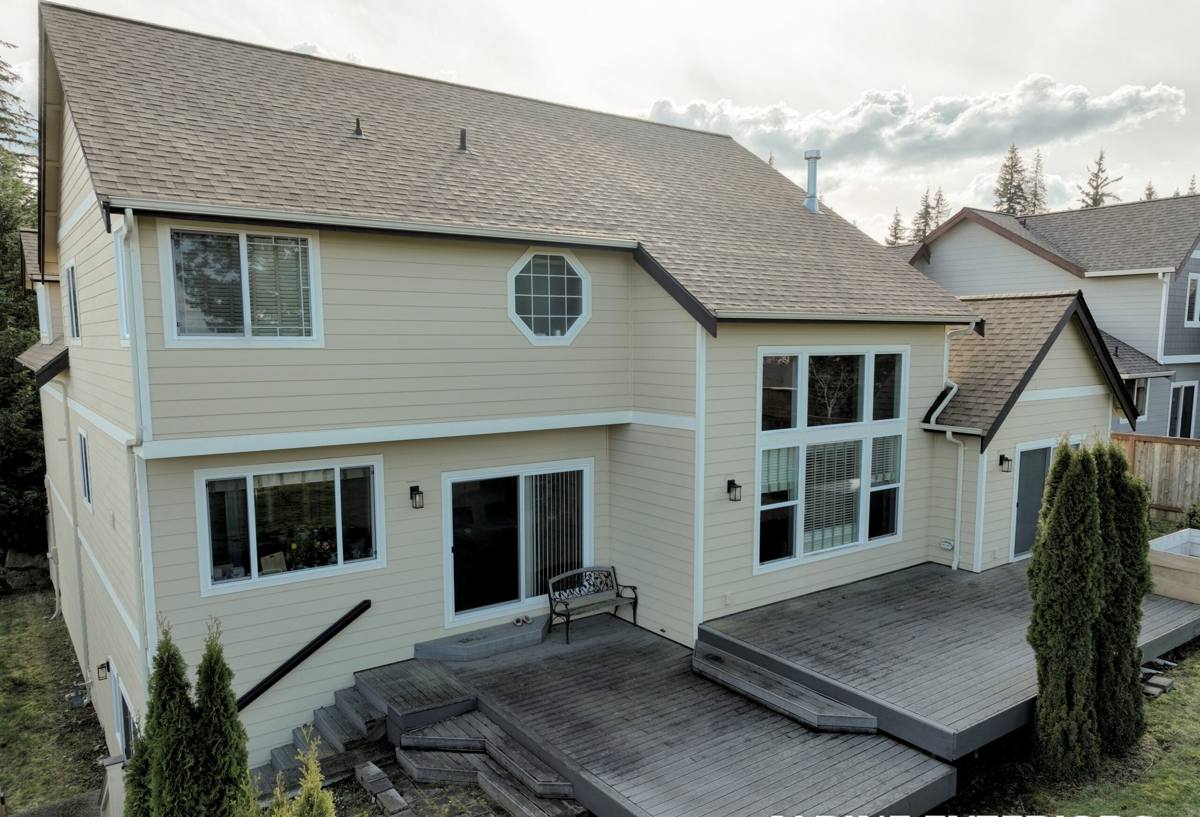
What Sarasota County's Climate Actually Demands From a Deck
UV Exposure, Day In and Day Out
Florida sun is more intense and more constant than in most of the country, and it's harder on decking than people expect. Uncapped or low-grade composite boards can fade unevenly, especially where furniture, planters, or shade patterns create inconsistent sun exposure across the deck surface. Capped composite boards with a real UV-resistant outer layer hold their color far better over years of full Bee Ridge sun.
Wind-Driven Rain and Standing Water
Afternoon storms here don't just fall straight down — wind pushes rain sideways and underneath structures, which means a deck's drainage and ventilation matter as much as the boards themselves. Water that gets trapped under a deck or pools against a house ledger doesn't dry quickly in our humidity, and that's where rot in the framing and corrosion in hidden hardware start, even under composite boards that never absorb water themselves.
Salt Air and Metal Fatigue
Bee Ridge isn't beachfront, but Sarasota's salt air still travels well inland and accelerates corrosion on anything less than fully rated hardware. Fasteners, joist hangers, and structural screws that aren't stainless or coated for coastal exposure can start failing years before the decking itself shows any wear — which is exactly the kind of hidden problem a homeowner doesn't see until a board starts feeling soft or loose.
Hurricane-Force Wind Loads
Sarasota County's building code reflects the real risk of hurricane-force wind, and decks — especially elevated ones, or those attached to the house — need framing, connections, and ledger attachment sized for uplift and lateral load, not just weight. This is a structural question long before it's a cosmetic one.
Composite vs. Wood in This Environment
Both materials can work in Sarasota County. The honest difference is in what each one asks of you over the life of the deck.
| Factor | Composite Decking | Pressure-Treated Wood |
|---|---|---|
| UV fading | Minimal with a quality capped board | Grays and roughens without regular refinishing |
| Moisture absorption | Very low; boards don't swell or cup | Absorbs wind-driven rain; prone to cupping and splitting |
| Salt air effect on the board itself | Negligible | Accelerates surface checking and fastener corrosion staining |
| Maintenance routine | Periodic cleaning, no sealing or staining | Annual or biannual sealing/staining to prevent decay |
| Upfront material cost | Higher | Lower |
| Cost over 10-15 years | Lower once refinishing labor is factored in | Adds up with repeated sealing, sanding, and board replacement |
| Installation sensitivity | Requires correct spacing and fastening for thermal movement | More forgiving of minor framing imperfections |
Our standard is capped composite for anything getting full Bee Ridge sun exposure and consistent Florida humidity. We'll still install wood decking when a homeowner wants that look and understands the maintenance commitment — it's a legitimate choice, just a different one.
What a Correctly Built Composite Deck Involves
Framing and Ledger Attachment
The substructure is where most deck failures actually start, composite boards or not. A ledger bolted to the house needs proper flashing to keep wind-driven rain from working its way behind it into the wall assembly, and joists need to be sized and spaced to the board manufacturer's specs — not stretched further apart to save material.
Fasteners and Hardware
Every hidden fastener, joist hanger, and structural screw should be rated for coastal or exterior exposure, full stop. This is the single most common corner cut on budget deck jobs, and it's invisible until the hardware starts failing years later underneath boards that still look brand new.
Board Spacing, Ventilation, and Drainage
Composite boards expand and contract with heat, so gapping has to account for that movement, especially with the wide daily temperature swings between a hot Sarasota afternoon and a cooler, humid evening. Airflow underneath the deck also needs to be maintained so moisture doesn't sit trapped against the framing after a storm.
Footings Sized for Local Soil and Wind Load
Post footings need to be sized and set to Sarasota County's wind and soil requirements, not a generic minimum. This matters more on elevated decks and anything attached to the home structurally.
Permitting in Bee Ridge and Sarasota County
Bee Ridge is unincorporated, so deck permits here go through Sarasota County rather than the City of Sarasota — different office, different inspection scheduling, and its own set of wind-load and attachment requirements for anything structural. A crew that pulls permits in this county regularly knows what the inspectors are actually going to check, which saves a homeowner from surprise delays or a failed inspection over a detail that could have been handled correctly the first time.
If your property has an HOA or deed restrictions common in some Bee Ridge neighborhoods, we also factor in board color and railing style approval before materials get ordered, so there's no scramble after the fact.
Our Process for a Bee Ridge Deck Project
- On-site assessment — we look at existing structure (if any), grade, drainage patterns, sun exposure, and tree canopy that affects moisture and debris.
- Design and material selection — board profile, color, and hardware spec matched to how the space will actually be used and how much direct sun it gets.
- Permit submission — handled through Sarasota County, including any structural documentation the ledger attachment or footing design requires.
- Framing and structural work — ledger flashing, joists, footings, and hardware installed to coastal-exposure standards before a single deck board goes down.
- Decking installation — proper gapping, fastening pattern, and edge detail per manufacturer spec.
- Final walkthrough — we go over the maintenance routine and answer questions before we consider the job done.
Maintaining a Composite Deck in Salt Air and Sarasota Humidity
Composite decking is genuinely low-maintenance compared to wood, but "low-maintenance" isn't "no-maintenance," especially with the pollen, salt air, and mildew-friendly humidity this part of Florida produces.
- Rinse and sweep off leaf debris and pollen regularly — trapped organic material holds moisture against the board surface
- Clean with soap and water (or a manufacturer-approved composite cleaner) a couple of times a year to prevent mildew film from taking hold in shaded areas
- Keep gutters and downspouts near the deck clear so runoff doesn't concentrate onto the same section of boards after every storm
- Check railing hardware and fastener heads periodically for early signs of corrosion, especially on decks closer to canals or open water
- Trim back overhanging branches where tree canopy keeps a section of the deck damp and shaded longer than the rest
- Avoid pressure-washing on high settings, which can damage the cap layer on composite boards over time
Why Hiring a Crew That Already Works Bee Ridge Matters
None of this is complicated in theory, but it's the kind of job where every skipped detail is invisible until it isn't — a fastener that wasn't rated for exposure, a ledger flashed just slightly wrong, footings sized for a calmer climate than this one. A crew that already works regularly in Bee Ridge and the surrounding Sarasota County neighborhoods has already dealt with the specific mix of older concrete block homes, mature tree canopy, retention pond and canal-adjacent lots, and county permitting quirks that come up here again and again. That familiarity shows up in fewer surprises during the build and a deck that's actually sized and fastened for what this specific area throws at it, not a generic national spec sheet.
Get a Straight Answer for Your Property
Every lot in Bee Ridge is a little different — sun exposure, tree cover, drainage, and what's already there all change what the right deck build looks like. If you're weighing composite decking for your home, we're happy to walk the property, look at what you're working with, and give you a straightforward, no-pressure estimate using the form below.