 Sarasota Siding
 Board & Batten in a Neighborhood That's Half Historic, Half New
Rosemary District sits in one of the more architecturally mixed pockets of Sarasota — early-1900s bungalows and cottages standing a few doors down from newer infill townhomes and modern builds. Board and batten siding shows up on both ends of that mix, and for good reason. On older homes it echoes the vertical wood siding that was common when the neighborhood was first built out. On newer construction it reads as clean, modern, and low-fuss. Whichever direction a homeowner is going, board and batten is one of the few siding styles that looks equally at home on a century-old cottage and a 2020s build, which is part of why we get asked about it so often in this part of Sarasota.
But board and batten is not a simple siding style to install well, and it is not forgiving of cut corners. The wide flat panels and narrow vertical battens create a lot of seams, a lot of exposed fastener opportunities, and a lot of surface area running straight up and down — which matters more in Sarasota County than almost anywhere else in the state.
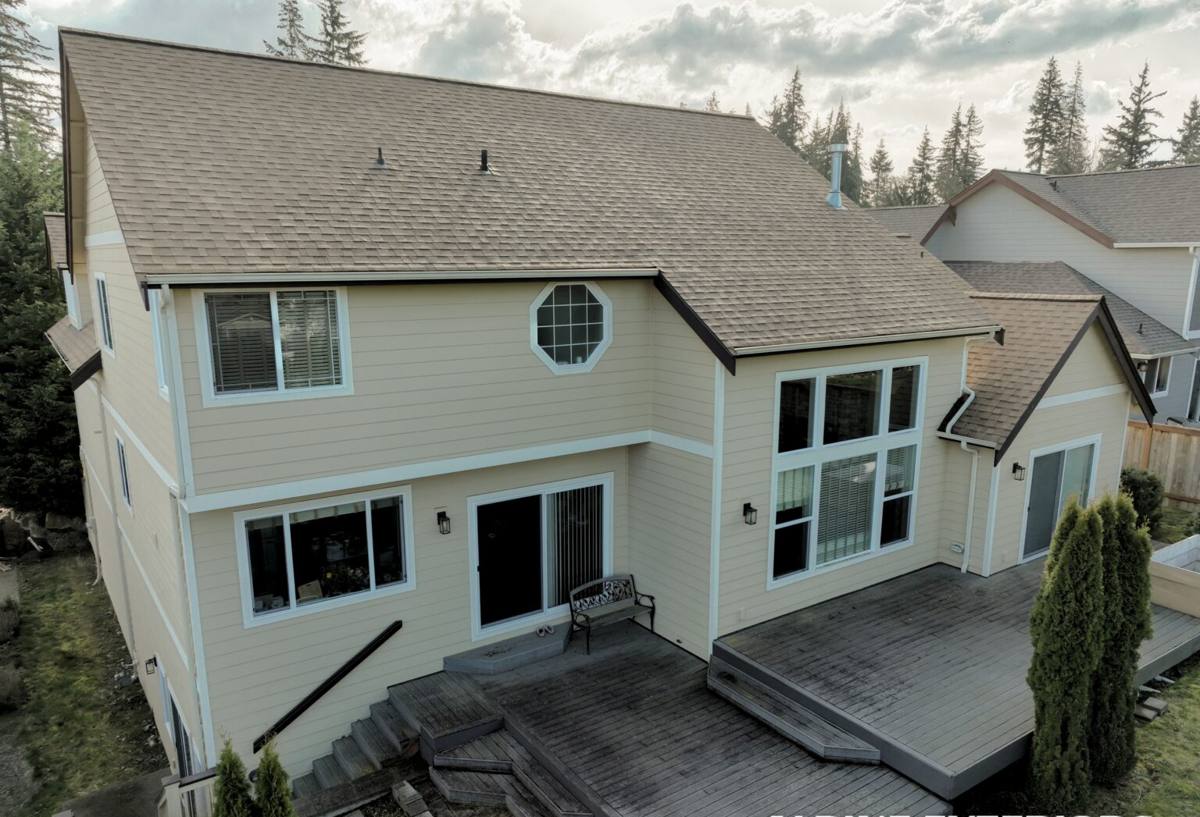
What Sarasota's Climate Actually Does to Vertical Siding
Rosemary District sits close to downtown Sarasota and Sarasota Bay, which means the siding on these homes is dealing with a specific combination of stresses year-round, not just during storm season.
Hurricane-Force Wind
Vertical siding profiles like board and batten present long, continuous panel runs. Under high wind loads, any panel that isn't fastened to spec or fully backed by proper furring can flutter, work loose at the edges, or pull away entirely. The battens themselves — the narrow strips covering the panel seams — are especially vulnerable if they're only tacked on rather than fastened into solid backing.
Intense, Year-Round UV
Sarasota doesn't get a real off-season for sun exposure. Vertical siding on south- and west-facing walls takes a near-constant UV load, which is what causes cheaper paint jobs and lower-grade materials to chalk, fade unevenly, and crack years before their rated lifespan.
Wind-Driven Rain
Board and batten has more vertical seams per square foot than horizontal lap siding. Every one of those seams is a potential water path if the panel isn't properly lapped, flashed, and backed with a drainable weather-resistant barrier. Wind-driven rain doesn't fall straight down — it gets pushed sideways and upward under panel edges, which is exactly where a poorly installed batten job fails first.
Salt Air
Rosemary District's proximity to Sarasota Bay means a steady low-level exposure to salt in the air. Salt accelerates corrosion on fasteners and metal flashing, and it degrades lower-quality paint films faster than inland exposure would. Materials and fasteners rated for coastal use aren't optional here — they're the baseline.
Why We Only Install James Hardie for This Application
Board and batten's biggest weakness is the material behind the boards. Wood board and batten is beautiful when new but requires disciplined repainting and caulking to survive Gulf Coast humidity and salt exposure — skip a maintenance cycle and moisture gets into end grain and seams fast. Engineered wood and vinyl board and batten profiles have their own trade-offs around moisture sensitivity, expansion, and how they hold up under direct coastal sun. We made the call to install James Hardie fiber cement exclusively because it removes those failure points: it's non-combustible, dimensionally stable in heat and humidity, and factory-finished so the color layer isn't dependent on field painting conditions.
For board and batten specifically, we use HardiePanel vertical siding paired with HardieTrim boards as the battens — both built in Hardie's HZ5 formulation, which is engineered for higher-humidity, high-moisture climates like the Gulf Coast rather than the freeze-thaw formulation used up north. That distinction matters more than most homeowners realize: siding engineered for a Midwest winter is solving a different problem than siding engineered for a Sarasota summer.
What ColorPlus Finish Adds Here
Hardie's ColorPlus finish is baked on in a factory-controlled process rather than sprayed on site, which gives it more consistent UV resistance than field-applied paint — a real advantage under Sarasota's sun load. It also means the color is consistent panel to panel and batten to batten, which shows on a style like board and batten where every seam and edge is visible.
What a Correct Board & Batten Installation Actually Involves
Board and batten looks simple from the street — wide boards, narrow battens — but the installation has more steps than horizontal lap siding, and skipping any of them is where problems start.
- A continuous, properly lapped weather-resistant barrier installed before any siding goes up, with no gaps at penetrations or transitions
- Furring strips or a rainscreen gap behind the panels so water that does get behind the siding can drain and the wall can dry
- Correct panel-to-panel spacing per manufacturer spec, not tight-butted, to allow for material movement
- Battens fastened into solid backing — not just into the panel joint — so wind uplift can't work them loose
- Corrosion-resistant, coastal-rated fasteners set to the correct depth (overdriven fasteners crack the board's face and create a water entry point)
- Proper flashing and sealant at every window, door, and roofline transition, since these are the highest-risk water points on any vertical siding job
- Factory-cut and factory-primed edges kept intact wherever possible, since field-cut edges need to be sealed to match the panel's factory protection
Every one of those steps takes more labor and more attention than a horizontal lap job of the same square footage, which is part of why board and batten pricing runs a bit higher than standard lap siding — the material cost difference is modest, but the installation time is not.
Board & Batten Compared to Other Siding Options
Homeowners in Rosemary District often ask how board and batten stacks up against the other siding styles and materials we get asked about. Here's an honest comparison focused on how each performs under Sarasota's specific conditions.
| Option | Coastal Wind/Moisture Performance | Maintenance | Where It Fits |
|---|---|---|---|
| James Hardie board & batten | Strong when installed to spec with HZ5 material and proper flashing | Occasional wash; ColorPlus finish extends repaint cycle well beyond wood | Historic-style cottages and modern infill alike |
| Wood board & batten | Moisture and salt exposure demand a disciplined maintenance schedule | Regular repainting and caulk inspection, especially on exposed elevations | Strict historic-accuracy projects where wood is required |
| Vinyl board & batten profile | Can deform or loosen under sustained high wind; seams less rigid than fiber cement | Low, but limited repair options if a panel is damaged | Budget-driven projects where appearance is a lower priority |
| Hardie horizontal lap siding | Fewer vertical seams than board & batten; slightly simpler water management | Comparable to board & batten in the Hardie system | Homes where a more traditional horizontal look is preferred |
Cost Factors for a Rosemary District Board & Batten Project
Every home is different, but the same handful of factors drive most of the cost variation we see on board and batten jobs in this neighborhood.
| Factor | Why It Moves the Price |
|---|---|
| Existing siding removal | Older bungalows with original wood siding often need full tear-off and substrate inspection before new panels go up |
| Wall complexity | Gables, dormers, and multiple roof transitions on Craftsman-style homes mean more cuts, more flashing, more labor |
| Batten spacing and width | Wider spacing means fewer battens but more exposed panel; tighter spacing looks different and takes more material and labor |
| Trim and corner detail | Matching a historic profile or a specific modern reveal takes more precise trim work than a standard corner |
| Access and site conditions | Narrow lots and close-set homes, common in this district, can slow staging and material handling |
Our Process on Rosemary District Homes
We start with an on-site walkthrough to look at the existing siding, wall substrate, and any moisture or rot issues before quoting anything — on the district's older homes, what's under the existing siding matters as much as what goes on top of it. From there we spec the panel width, batten spacing, and trim details to match the home's style, whether that's a historic-consistent look on an older cottage or a cleaner modern reveal on new construction. Installation follows Hardie's fastening and flashing specifications exactly, with a final walkthrough to confirm seams, corners, and trim before we call the job done.
Why It Matters That We Already Work This Neighborhood
Rosemary District has enough of its own quirks — narrow lots, a mix of home ages, proximity to the bay, and in some cases historic-character expectations from the neighborhood itself — that a crew unfamiliar with the area is more likely to miss something. Knowing which blocks sit closer to the water and take more salt exposure, how the older bungalow framing typically behaves once old siding comes off, and how to detail board and batten so it reads right next to both a 1920s cottage and a brand-new build isn't something a contractor picks up on their first job here. It's the difference between siding that looks right on install day and siding that still looks right five years into Sarasota's sun and salt.
If you're weighing board and batten for a home in Rosemary District, we're happy to walk the property, look at what's there now, and give you a straight, no-pressure estimate on what a correct James Hardie installation would involve — just fill out the form below to get started.