 Sarasota Siding
 Why Bradenton Decks Wear Out Faster Than the Brochures Admit
Bradenton sits right on the Gulf Coast, close enough to open water that salt air reaches yards well inland, and close enough to Sarasota that the two areas share the same weather pattern almost every week of the year. That combination is hard on outdoor structures. Intense, near-constant UV breaks down sealants and finishes faster than in most of the country. Wind-driven rain gets forced sideways into joints, fasteners, and ledger connections that were only ever designed to shed water falling straight down. And when a tropical system or hurricane-force gust event comes through, a deck's framing and attachment points take the brunt of the load, not just the surface boards.
A deck that looks fine from ten feet away can still be failing where it matters most: the ledger board bolted to the house, the posts sitting in ground contact, the joist hangers holding everything up. We see this pattern constantly in this market — cosmetic wear is obvious, but structural wear is what actually determines whether a deck is safe.
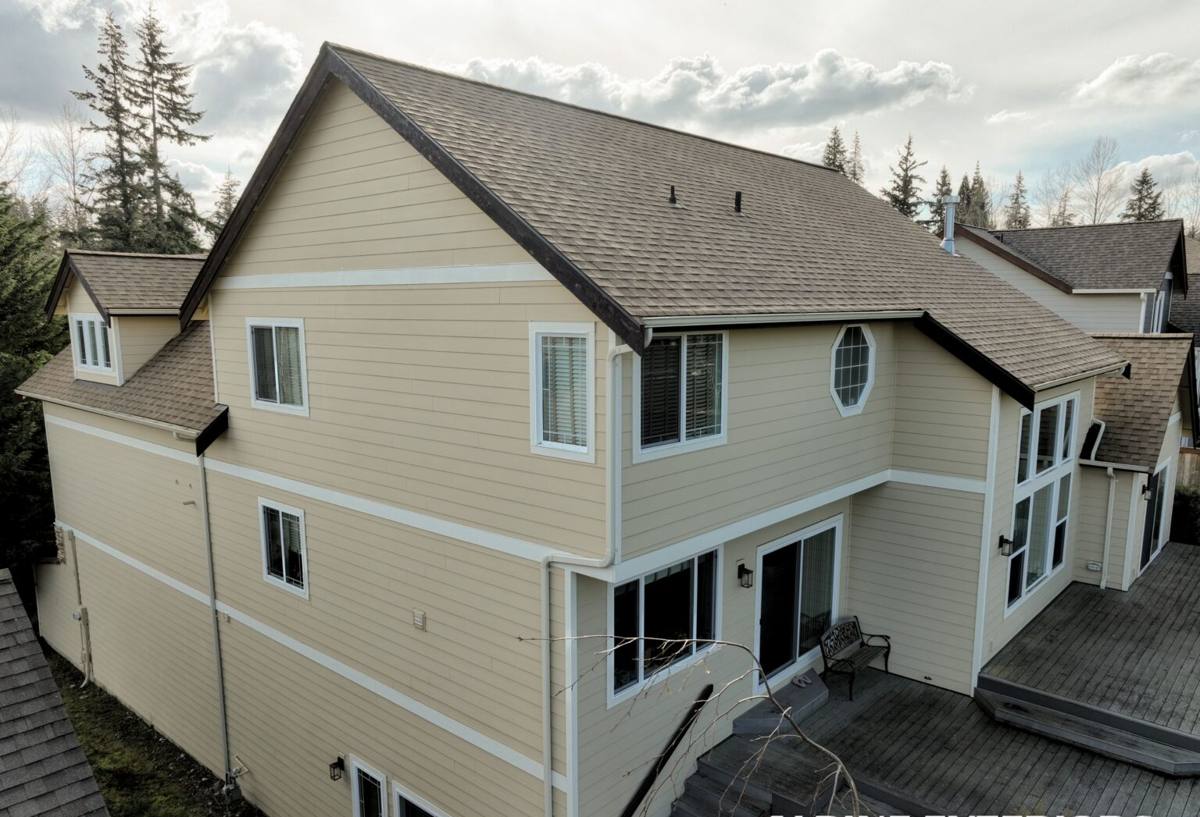
Repair or Replace? How We Tell the Difference
Not every tired deck needs to come out. But there's a point where patching individual boards or re-staining stops being a real fix and starts being a way to delay the inevitable. Here's what usually tips a deck from "repair" to "replace" territory:
- Soft, spongy, or discolored spots on more than a couple of boards, especially near the house
- Visible gaps, rust streaks, or movement at the ledger board connection to the house
- Posts or footings that wobble, have shifted, or show cracking at grade level
- Fasteners that are heavily corroded, backing out, or were never rated for coastal exposure
- A structure built before current wind-load and attachment code requirements were adopted locally
- Railings that flex noticeably under hand pressure — a safety issue, not a cosmetic one
If most of what's wrong is surface-level fading or a handful of loose boards, repair can make sense. If the framing, ledger, or footings are in question, replacement is the honest answer, and it's the safer one for anyone who's going to be standing on it.
Why We Don't Just Re-Deck Over Old Framing
It's common in this trade to see a "deck refresh" that's really just new boards laid over old, unverified framing. We don't do that. If the framing underneath hasn't been inspected and confirmed sound, new decking on top of it is a cosmetic fix hiding a structural question — and in a region that gets hit with real wind loads, that's not a shortcut we're willing to sell.
What a Correct Deck Replacement Actually Involves
A full replacement is more than tearing off boards and nailing down new ones. Done right, it touches every layer of the structure:
- Demo and inspection — removing the old decking and railing, then exposing the ledger, joists, beams, and posts to see what's really there.
- Ledger board correction — the connection to the house is the single most failure-prone point on any deck. It gets proper flashing and lag or through-bolt fasteners rated for the load, not just nails.
- Framing and footings — joists, beams, and posts are replaced or reinforced to current span and spacing standards, and footings are checked for depth and condition.
- Fastener selection — coastal environments call for corrosion-resistant, code-rated hardware throughout. This is not a place to save money with standard hardware.
- Decking and railing installation — whatever surface material is chosen, it's installed with proper spacing for drainage and expansion, since Florida heat moves materials more than people expect.
- Final inspection — confirming the finished structure meets local code before we consider the job done.
Choosing a Decking Material for Bradenton's Climate
There's no single "best" decking material — there's a best fit for how a homeowner uses the deck, what they want to maintain, and their budget. Here's how the common options compare under Gulf Coast sun, humidity, and salt exposure:
| Material | How It Handles This Climate | Maintenance | Trade-Offs |
|---|---|---|---|
| Pressure-treated wood | Affordable, but UV and humidity cycle it hard — expect graying, checking, and splintering over time | Regular sealing/staining needed to slow moisture damage | Lowest upfront cost, highest ongoing upkeep |
| Composite decking | Resists rot and insect damage well; color can fade somewhat under constant Florida UV depending on the product line | Occasional cleaning, no sealing or staining | Higher upfront cost, much lower long-term labor |
| PVC/capped polymer decking | Fully sealed surface handles moisture and salt air very well, minimal absorption | Low — mostly just washing off salt film and pollen | Highest material cost, but the least climate-sensitive option we install |
| Tropical hardwoods | Naturally dense and rot-resistant, but still needs UV protection to hold color | Periodic oiling to prevent graying and surface checking | Premium look and cost; more maintenance than composite or PVC |
We'll walk through which of these makes sense for a specific project rather than pushing one product line — it depends on how much upkeep a homeowner actually wants to commit to versus what they're comfortable spending up front.
Permits and Local Code in Manatee and Sarasota County
Bradenton falls under Manatee County's permitting and inspection process, while our home base of Sarasota sits just across the county line — we work both sides of that line regularly, so the code differences between them aren't a surprise mid-project. Deck replacements involving structural framing typically require a permit and inspection, and wind-load requirements in this part of the Gulf Coast are not the same as what you'd see inland. Attachment hardware, footing depth, and railing height all get checked. We handle the permitting process as part of the job rather than leaving a homeowner to sort it out, and we don't cut corners on inspections — a deck that passes because it was actually built to code is the only kind worth having.
Our Replacement Process, Start to Finish
We keep this straightforward:
- On-site assessment — we inspect the existing structure in person, not just from photos, since framing problems aren't always visible from the surface
- Honest scope and estimate — what needs to be replaced, what materials fit the budget and use case, and what the realistic cost range looks like
- Permitting — filed and tracked through Manatee or Sarasota County as applicable
- Demo and rebuild — framing first, then decking and railing, with fasteners and flashing matched to coastal exposure
- Inspection and walkthrough — confirming the finished deck meets code and walking the homeowner through it before we call it done
What Drives Cost on a Bradenton Deck Replacement
Every deck is different, so we won't quote a number without seeing the site, but a few factors consistently move the price up or down:
| Factor | Effect on Cost |
|---|---|
| Deck size and footprint | Larger square footage means more material and labor, scaling roughly linearly |
| Decking material chosen | Pressure-treated wood is the lowest upfront cost; PVC and premium composites run higher |
| Framing condition | If posts, footings, or beams need full replacement rather than reinforcement, cost rises |
| Height and stairs | Elevated decks with stairs or multiple levels add framing and railing complexity |
| Railing style | Basic wood or composite rail is simplest; cable or glass systems cost more |
| Permitting and inspection scope | Larger structural changes may require more inspection steps, adding time but ensuring it's done right |
Generally, a straightforward pressure-treated replacement sits at the lower end of the range, while a larger deck rebuilt in PVC or premium composite with upgraded railing sits at the higher end. We'll give a real number once we've seen the existing structure.
Keeping a New Deck in Good Shape Here Long-Term
Even a well-built replacement needs some ongoing attention in this climate. A few habits go a long way:
- Rinse off salt film and pollen buildup a few times a year, especially after storms
- Check railing and stair connections annually for looseness — hardware works itself loose faster under coastal wind cycling
- If wood decking, plan on resealing or restaining on the schedule the product calls for, not just when it looks faded
- Keep gutters and downspouts near the deck clear so runoff isn't concentrated onto framing or footings
- After any major storm, do a quick visual check of posts, footings, and the ledger connection before assuming everything's fine
Why Hiring a Crew That Already Works in Bradenton Matters
A deck built by someone unfamiliar with this coastline often looks fine the day it's finished and starts showing problems within a couple of seasons — wrong fastener grade, framing that wasn't sized for local wind loads, or a permitting shortcut that catches up with the homeowner later. We work Bradenton and the greater Sarasota area regularly, which means we already know what Manatee and Sarasota County inspectors look for, what hardware actually holds up against salt air, and how the wind-driven rain here finds its way into a poorly flashed ledger board. That local familiarity isn't a marketing line — it's the difference between a deck that needs attention again in three years and one that doesn't.
If a deck at your Bradenton property is showing its age, we're happy to take a look and give you a straight answer about whether it needs repair or full replacement. Reach out below for a free, no-pressure estimate — there's a form just below this page to get started.