 Sarasota Siding
 Building a Deck That Actually Belongs on Siesta Key
A deck on Siesta Key lives a harder life than a deck almost anywhere else in the country. It sits a short distance from the Gulf, under some of the most intense sun in the continental United States, and squarely in the path of tropical systems that move through Sarasota County most years. A deck built with generic, big-box specifications might look fine for a season or two, but the barrier island environment finds every weak point — the wrong fastener, the wrong board spacing, the wrong footing depth — usually within the first couple of years.
Custom deck work here isn't about fancy add-ons. It's about matching material choice, structural detail, and hardware to what this specific island actually does to outdoor structures. That's the whole focus of this page: what a deck built for Siesta Key needs to hold up, and how we build to that standard.
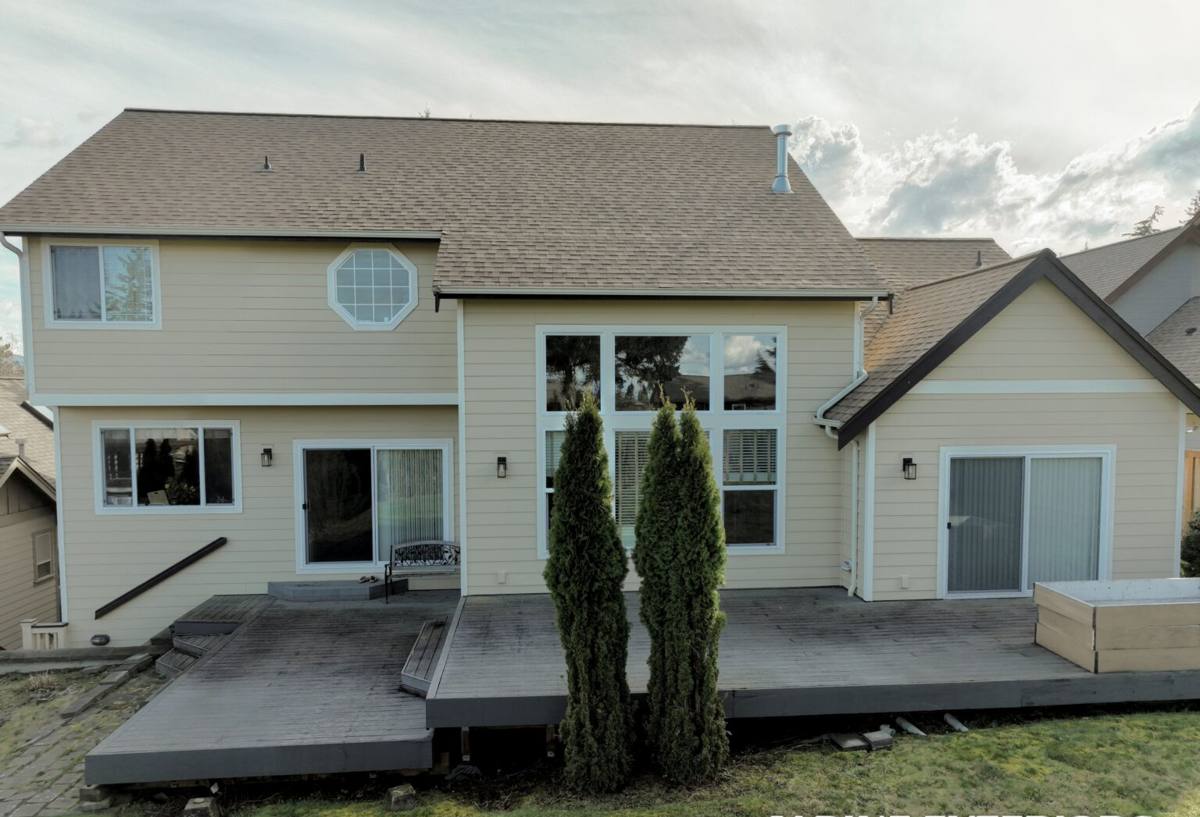
What Siesta Key's Environment Does to a Deck
Four conditions drive almost every deck failure we see on barrier islands and coastal neighborhoods around Sarasota:
Salt Air and Corrosion
Airborne salt doesn't stay at the water's edge. It travels on the wind and settles on everything, including framing hardware tucked underneath the deck boards where you can't see it. Standard hot-dip galvanized fasteners and connectors are rated for general exterior use, but they were never designed for sustained salt exposure. Over a few seasons, corrosion can weaken joist hangers, ledger bolts, and screws long before the visible decking shows any sign of trouble.
Year-Round UV Intensity
Sarasota gets strong, direct sun essentially twelve months a year, not just in summer. UV breaks down the surface fibers of wood, causes graying and checking, and degrades the resin binders in some composite products faster than manufacturers' climate models assume for northern states. A deck spec'd for a moderate climate ages differently — and faster — here.
Wind-Driven Rain
Rain on Siesta Key rarely falls straight down. Gulf breezes and storm systems push it sideways, which means water gets driven into gaps, fastener heads, and end grain that would stay relatively dry in a calmer climate. Any deck detail that assumes water sheds straight off the surface is incomplete here.
Hurricane-Force Wind Loads
Sarasota County sits in a high-wind design zone, and Siesta Key's exposure to open water pushes that further. A deck attached to a house isn't just a platform — it's a structure that has to transfer wind uplift and lateral load safely into the framing and foundation. Under-built connections are one of the more common findings we run into on older decks in this area.
Choosing the Right Decking Material for Siesta Key
There's no single "best" decking material for every home — it depends on budget, maintenance tolerance, and how close the home sits to open water. Here's how the common options actually perform under Siesta Key conditions:
| Material | Salt Air Performance | UV/Sun Performance | Maintenance | Typical Lifespan Here |
|---|---|---|---|---|
| Pressure-treated pine | Fair — needs stainless or coated fasteners | Fades and checks without regular sealing | Annual cleaning/sealing recommended | 10-15 years with upkeep |
| Tropical hardwood (e.g. ipe) | Very good, naturally dense | Grays over time unless oiled | Periodic oiling for color; low structural upkeep | 20-30+ years |
| Capped composite | Good — cap layer resists surface degradation | Good, but color retention varies by brand | Low — periodic washing | 20-25+ years |
| PVC decking | Very good — no organic material to degrade | Good, engineered for UV exposure | Low | 25+ years |
The honest trade-off: composite and PVC cost more up front but ask less of the homeowner over time, which matters on a barrier island where upkeep gets put off during busy seasons. Wood costs less initially but only performs as well as the maintenance schedule behind it. We'll walk through this against your budget and how you actually plan to use the deck before recommending a direction — there's no upsell agenda either way.
Structural Details That Matter More Here Than Inland
The decking surface is the part homeowners see, but the structure underneath is what determines whether the deck survives a storm season intact. On Siesta Key builds, we pay particular attention to:
- Ledger attachment — where the deck ties into the house, built and flashed to shed wind-driven rain away from the band board, not toward it.
- Post-to-footing and post-to-beam connections — engineered hardware rated for the uplift and lateral loads required under Sarasota County's wind design criteria, not just standard construction brackets.
- Footing depth and bearing — sized to local soil conditions and code, not a one-size assumption carried over from a different climate.
- Joist spacing — tightened where needed to support the specific decking material chosen, since composite and PVC products often have different span ratings than wood.
- Ventilation underneath — enough airflow beneath the deck to let framing dry out between rain events instead of staying damp against salt-laden air.
None of this is visible once the deck is finished, which is exactly why it has to be right the first time.
Fasteners and Hardware: The Part Nobody Sees Until It Fails
If there's one place we won't cut a corner on a coastal deck, it's hardware. Standard exterior-grade screws and connectors are built for general weather exposure, not sustained salt air. For Siesta Key builds we spec corrosion-resistant fastener systems — typically stainless steel or coated hardware rated specifically for coastal/marine exposure — for anything structural or anything in regular contact with moisture. It costs more than a standard hardware package. It's also the difference between a deck that's still solid in fifteen years and one where the framing quietly corrodes from the inside while the boards on top still look fine.
Railings, Fasteners, and Finish Details
Railings take direct wind load and constant handling, so connection points matter as much here as anywhere else on the structure. We use fastening systems and post connections rated for the same wind exposure as the deck framing itself, and we match railing material to the same salt-air logic as decking — aluminum, coated cable systems, and PVC/composite railing components generally hold up better near the Gulf than untreated wood balusters, which take on moisture and UV damage from both sides.
Our Process for a Siesta Key Custom Deck
- On-site assessment — we look at sun exposure, drainage, distance from open water, and how the deck ties into the existing structure before recommending anything.
- Material and layout discussion — honest trade-offs between wood, composite, and PVC based on your budget and maintenance preference, not a default upsell.
- Permitting — Sarasota County and local permitting requirements handled as part of the job, including the structural details required for wind-load compliance.
- Framing and structural work — footings, ledger, framing, and hardware installed to coastal-grade specifications.
- Decking, railing, and finish work — installed with attention to fastener placement, drainage, and ventilation, not just surface appearance.
- Final walkthrough — we go over the finished deck and what maintenance (if any) it needs going forward.
Maintaining a Deck on Siesta Key
Even a well-built deck needs some seasonal attention in this environment. A simple maintenance rhythm goes a long way:
- Rinse salt residue and debris off the surface periodically, especially after storms with onshore wind.
- Check railing posts and stair connections annually for any looseness — wind load works these joints over time.
- For wood decking, plan on resealing or oiling on the schedule the material actually needs, not just when it looks faded.
- Keep gutters and nearby drainage clear so water isn't sheeting onto or pooling near the deck structure.
- After a named storm, do a quick visual check of fasteners, railings, and stair connections before heavy use resumes.
Why a Crew That Already Works Siesta Key Matters
A contractor who mostly builds decks in inland neighborhoods can still build a structurally sound deck — but they're often working from general specifications rather than what a specific barrier island actually demands. Knowing which fastener grades hold up here, how Sarasota County's wind provisions apply to deck attachment, and how quickly untreated hardware corrodes this close to the Gulf isn't something you learn from a manual. It's something you learn from building and maintaining decks in this exact environment, year after year. That local pattern recognition is what keeps a deck from becoming a five-year problem instead of a twenty-year asset.
Get a Straightforward Estimate
If you're planning a new deck or replacing one that didn't hold up to Siesta Key's conditions, we're glad to take a look and give you an honest read on materials, structure, and cost — no pressure, no obligation. Use the form below to request a free estimate.