 Sarasota Siding
 Composite Decking on Longboat Key: What the Island Demands
Longboat Key sits right on the Gulf, which means every deck here lives in a harsher environment than a deck ten miles inland in Sarasota. Salt-laden air corrodes hardware, intense year-round UV bakes and fades unprotected materials, wind-driven rain finds its way into any gap in the building envelope, and hurricane-force gusts put real uplift and racking stress on the structure underneath. A deck built for a subdivision in Ohio is not built for Longboat Key. A deck built for Longboat Key, on the other hand, holds up almost anywhere in Sarasota County.
Composite decking earns its place here because it doesn't rely on a paint or stain film to survive. Wood decking on a barrier island has a rough go of it — salt air accelerates checking and splintering, and the humidity swings between soaking wet and sun-baked keep wood in a constant state of expansion and contraction. Composite boards are engineered to shrug off moisture and UV without the annual maintenance cycle wood demands. That said, "composite" isn't a single product — the boards, the fasteners, and the structure underneath all matter, and getting any one of them wrong on an island property shows up fast.
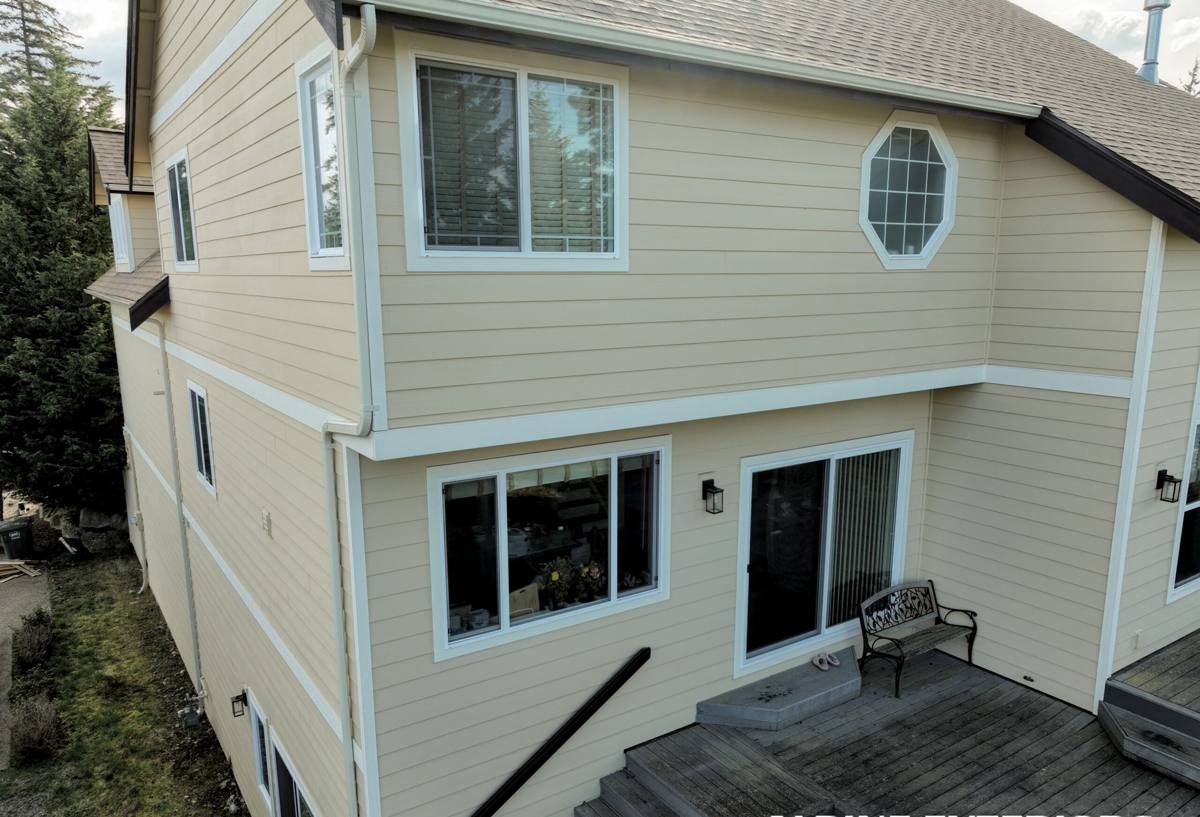
Why Standard Decking Specs Fall Short Here
Most decking installation guides are written for a generic climate. Longboat Key isn't generic. A few things we account for on every island job that get skipped on a lot of mainland installs:
- Fastener corrosion: standard coated screws and hidden-fastener clips start rusting within a couple of seasons this close to saltwater. We spec stainless steel or marine-grade coated fasteners rated for coastal exposure.
- Substructure ventilation: composite boards need airflow underneath to shed the moisture that blows in sideways during a squall. Tight, unventilated framing traps humidity against the joists and accelerates rot in whatever the deck is built on top of.
- Ledger and flashing details: where the deck ties into the house is the single most common failure point in wind-driven rain. Flashing has to shed water away from the structure, not just sit there for looks.
- Uplift resistance: Florida building code in wind zones like this one requires specific joist hanger, post base, and railing attachment hardware rated for hurricane-force loads — not the lightest hardware that happens to fit.
Choosing the Right Composite Board
Composite decking has come a long way from the early generation of boards that faded, stained, and occasionally warped. Modern boards, particularly capped composites with a protective polymer shell wrapped around a wood-fiber core, resist fading, staining, scratching, and moisture intrusion far better than their uncapped predecessors. For a Longboat Key property, we steer homeowners toward capped composite almost every time, because the cap is what stands between the board and the salt air and UV load this location sees all year.
Capped vs. Uncapped Composite
Uncapped composite boards are less expensive up front, but the exposed wood-fiber surface absorbs moisture and is more prone to mold and mildew growth in a humid coastal environment. Capped boards cost more but hold their color and resist staining significantly longer, which matters when salt spray and sunscreen residue are a routine part of deck life on the island. We'll walk through both honestly — capped composite is the better long-term investment for this location in nearly every case we see.
Color and Heat Considerations
Darker composite boards look great in photos but run noticeably hotter underfoot in direct Florida sun — a real consideration for a pool deck or a barefoot-friendly outdoor living space. Lighter and mid-tone colors stay more comfortable through the hottest months and tend to show less fading over time since there's less pigment saturation to lose.
What a Correct Composite Deck Installation Involves
A composite deck is only as good as the frame underneath it. We don't treat the substructure as an afterthought — it's the part of the job nobody sees and the part that determines whether the deck is still solid in ten years.
- Site and structural assessment: we evaluate existing footings, ledger connections, and drainage before proposing a plan — repair or replacement of anything undersized or corroded.
- Framing and hardware: pressure-treated or coastal-rated framing lumber, stainless or coated coastal-grade fasteners, and joist hangers rated for the local wind zone.
- Ledger flashing: proper flashing and waterproofing where the deck attaches to the house, so wind-driven rain doesn't migrate into the wall assembly.
- Ventilated substructure: joist spacing and clearance that lets air move underneath the boards instead of trapping humidity.
- Composite board installation: hidden fastener systems or approved face-screw patterns per manufacturer spec, with proper board spacing for thermal expansion.
- Railing and stair hardware: code-compliant railing systems attached with hardware rated for the same wind and corrosion exposure as the deck itself.
- Final inspection: we check fastener seating, board alignment, and drainage before calling the job done.
Composite vs. Other Decking Materials for This Location
| Material | Salt Air / Moisture Resistance | UV / Fade Resistance | Maintenance |
|---|---|---|---|
| Capped Composite | Strong — sealed cap resists moisture intrusion | Strong — engineered to resist fading | Low — periodic cleaning, no staining |
| Uncapped Composite | Moderate — exposed core can absorb moisture | Moderate — more prone to fading over time | Low-moderate — occasional cleaning |
| Pressure-Treated Wood | Weak without diligent upkeep — salt accelerates checking/splitting | Weak — fades and grays quickly in this sun | High — annual sealing or staining |
| Tropical Hardwood | Good natural resistance but still needs oiling | Moderate — grays without maintenance | High — regular oiling to maintain appearance |
None of these is a bad material in the abstract. The real question for a Longboat Key homeowner is how much maintenance you're willing to commit to versus how much you'd rather hand to a properly installed, low-maintenance product. That's a legitimate trade-off, and we'll lay it out plainly rather than push whatever's easiest for us to install.
Cost Factors on an Island Property
Every deck project is different, and we don't publish blanket pricing because square footage, framing condition, height off grade, railing style, and board selection all move the number. What tends to drive cost specifically on Longboat Key and similar barrier-island properties:
| Factor | Why It Matters Here |
|---|---|
| Existing structure condition | Salt air corrosion or wood rot in old framing often means partial or full substructure replacement, not just a board swap |
| Access and staging | Narrow island lots and limited staging space can affect labor time and material delivery logistics |
| Board tier | Capped composite costs more per square foot than uncapped, but reduces long-term maintenance cost |
| Height and railing complexity | Elevated decks and code-required railing systems add engineering and hardware cost |
| Permitting | Sarasota County and local jurisdiction permitting requirements apply to most deck replacements and new builds |
Permitting and Code on Longboat Key
Deck work on Longboat Key typically requires permitting through the appropriate local building department, and Florida's wind-load requirements in this coastal zone are stricter than in a lot of the country. That's not a hurdle we treat as optional paperwork — proper permitting means the structural work is actually inspected against the code written for hurricane-force wind exposure, which is exactly the protection you want on an island deck. We handle the permitting process as part of the job rather than leaving homeowners to sort it out.
Why Local Experience Matters for This Job
A contractor who mostly works inland properties doesn't necessarily think about hardware corrosion, ledger flashing in wind-driven rain, or ventilation the same way a crew that works Longboat Key and the surrounding barrier islands does. We've seen what happens when standard-grade fasteners get used on a Gulf-front property, and we've seen decks that were built right hold up through storm seasons without issue. That experience shapes the specs we default to — not as an upsell, but because building it any other way on this island means callbacks and premature failure.
We also know the practical side of working on Longboat Key: limited staging areas on many lots, HOA or community association requirements that can affect material staging and work hours, and the general logistics of getting crews and materials to and from the island efficiently. That's the kind of thing that doesn't show up in a spec sheet but affects how smoothly a project runs.
What to Check Before Hiring Anyone for Deck Work Here
- Do they pull permits and reference Florida's coastal wind-load code, or do they treat it as optional?
- Do they spec stainless or coastal-rated fasteners, or standard hardware not built for salt exposure?
- Can they explain ledger flashing and substructure ventilation without prompting?
- Do they carry general liability and workers' comp coverage appropriate for the job?
- Will they give you a written scope that specifies board brand, fastening method, and framing materials — not just a square-footage price?
- Do they have experience specifically with barrier-island or coastal Sarasota County properties?
Maintaining a Composite Deck on Longboat Key
Even low-maintenance composite decking benefits from periodic care in this environment. Rinsing off salt spray and sunscreen residue every so often, keeping debris out of gaps between boards so water drains properly, and doing a seasonal check of railing hardware and fastener condition after storm season all go a long way toward getting the full service life out of the material. None of this is heavy upkeep — it's the difference between a deck that looks new for years and one that starts showing its age early because salt and grit were left to sit.
If you're planning a new deck or replacing an aging one on Longboat Key, we're happy to walk the property, look at what you're working with, and put together a straightforward plan and estimate — no pressure, no pushy upsells, just an honest look at what the job actually needs. Use the form below to request a free estimate.