 Sarasota Siding
 Why Decks in the Ellenton Area Wear Out Faster
A deck on the Gulf Coast doesn't age the way one does inland. Between the intense year-round sun, the wind-driven rain that comes with our summer storm season, and the salt-laden air blowing in off the coast, outdoor structures here take a steady beating that most manufacturers' warranties and generic maintenance advice weren't written with in mind. If your deck is a few years old and starting to feel soft in spots, squeak more than it used to, or show rust streaks around the fasteners, that's not bad luck — it's just what this climate does to wood and hardware over time.
Sun and Heat Break Down Wood and Fasteners
Florida sun is relentless. UV exposure dries out and breaks down the lignin in wood fibers, which is why untreated or unsealed boards go gray, splinter, and crack faster here than in milder climates. Heat cycling also causes boards to expand and contract daily, which works fasteners loose over time — a slow process that eventually shows up as popped nail heads, wobbly boards, or squeaks underfoot.
Wind-Driven Rain Finds Every Gap
Our storms don't just drop rain straight down — hurricane-force winds push it sideways and up, driving moisture into joints, under flashing, and behind ledger boards where it wouldn't normally reach. That's how rot gets started in places a homeowner never sees until a board finally gives way underfoot.
Salt Air Speeds Up Corrosion
Even a few miles inland from the coast, salt in the air accelerates corrosion on anything metal — nails, screws, joist hangers, railing brackets. Standard hardware corrodes faster here, and once a fastener starts rusting, it loses grip strength long before it looks obviously bad.
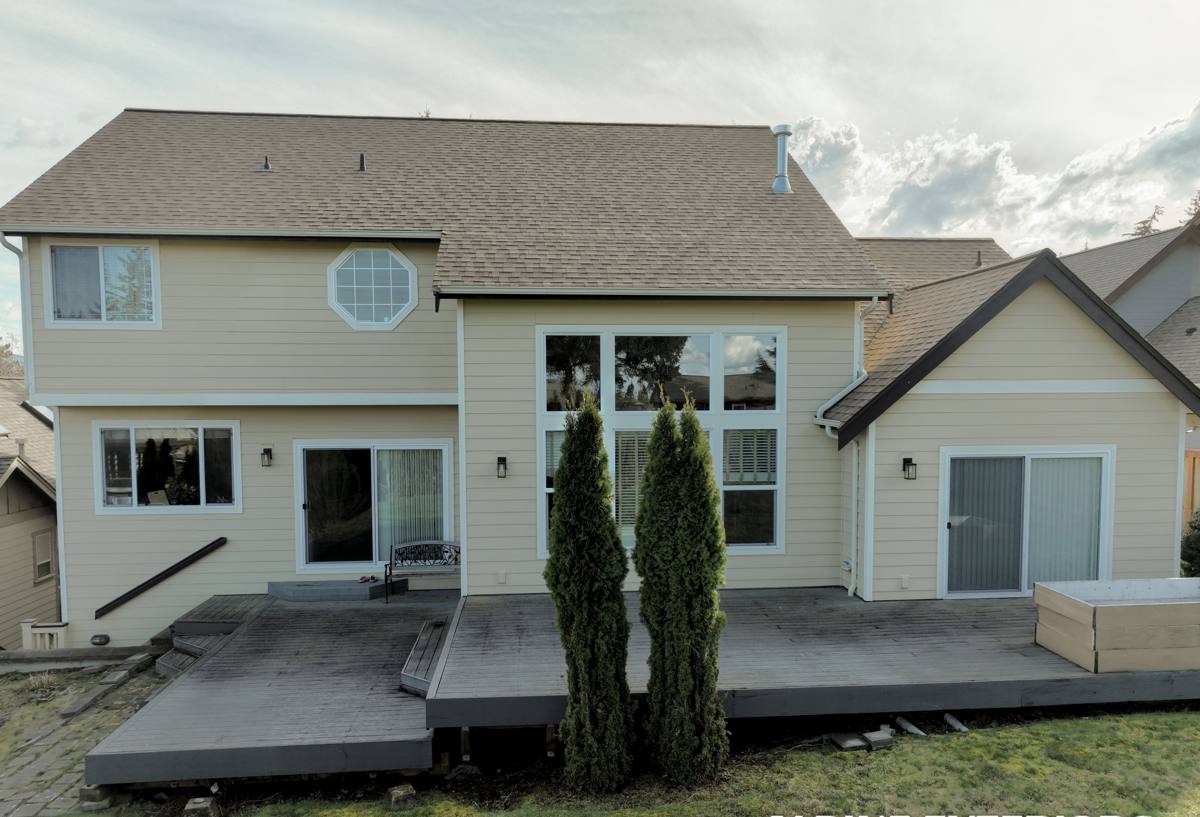
Signs Your Deck Needs Repair
Most deck problems don't happen all at once. They show up as small warning signs first, and catching them early is what keeps a repair from turning into a full rebuild. Walk your deck and check for:
- Boards that feel soft, spongy, or flex noticeably when you step on them
- Gaps or dark staining where the deck meets the house (the ledger board area)
- Rust streaks bleeding out from screw or nail heads
- Railings or stair posts that wobble or shift when pushed
- Nails or screw heads that have popped up above the board surface
- Persistent mold, mildew, or algae in shaded or low-airflow sections
- Cracked, split, or cupped boards, especially near board ends
Any one of these on its own might be minor. Several showing up together, or anything near the ledger board or main support posts, is worth a proper inspection before it becomes a safety issue.
Repair or Replace? How We Make the Call
What Usually Can Be Repaired
Isolated problems — a handful of damaged boards, a loose railing section, corroded fasteners, or surface weathering — are typically straightforward repairs. If the framing underneath is sound, there's no reason to replace the whole deck to fix a localized issue.
What Usually Points Toward Replacement
Rot at the ledger board connection, soft or compromised support posts, widespread failure across most of the decking surface, or a structure that was undersized or poorly fastened to begin with are different situations. Patching around structural rot doesn't solve the underlying problem — it just delays it, and it can create a liability issue if the deck isn't actually safe to load. We'll tell you plainly which situation you're in and why, not just recommend the bigger job.
What a Correct Deck Repair Actually Involves
Structural Framing Comes First
Before anything cosmetic happens, we check the ledger board attachment, joists, beams, and support posts. This is the part of the deck holding everyone's weight, and it's also the part most prone to hidden rot from wind-driven rain intrusion. Any repair that skips this step and goes straight to replacing surface boards is only addressing what's visible, not what matters most.
Fasteners and Hardware
Given how fast standard hardware corrodes in salt air, repairs here should use fasteners and connectors rated for coastal or high-corrosion-resistance use, not whatever matches what's already on the deck if what's already there is what failed in the first place. Joist hangers, structural screws, and railing hardware all get evaluated as part of the job, not treated as an afterthought.
Decking Boards and Surface
Damaged boards get replaced with matching or compatible material where possible. On older wood decks this sometimes means the new boards won't perfectly match weathered ones in color right away — that evens out over a season or two as the new wood ages, and we'll let you know upfront if that's the case rather than let it surprise you later.
Wood vs. Composite: Repair Considerations
The material your deck is built from changes what a repair looks like and how it holds up afterward in this climate.
| Factor | Wood Decking | Composite Decking |
|---|---|---|
| Repair approach | Individual boards can usually be replaced and blended in | Depends on the product line; discontinued colors or profiles can be harder to match |
| Moisture behavior | Absorbs water; needs sealing and dries out between rains | Doesn't absorb moisture the way wood does, but can trap moisture underneath if airflow is blocked |
| UV exposure | Grays and dries out; needs periodic sealing or staining | Fade-resistant coatings vary by product and age |
| Ongoing maintenance | Higher — sealing, occasional sanding, fastener checks | Lower surface maintenance, but structural framing beneath still needs the same attention |
| Fastener sensitivity | Standard structural fasteners, corrosion-resistant grade recommended here | Often requires specific hidden-fastener systems matched to the product |
One thing worth being direct about: no decking material is maintenance-free in a coastal climate like ours. Composite reduces surface upkeep, but the framing underneath — the part exposed to wind-driven rain and salt air — needs the same inspection regardless of what's on top.
Our Deck Repair Process
- Inspection. We check framing, ledger connection, fasteners, and surface boards before writing up anything, so we're diagnosing the actual problem rather than guessing.
- Written scope. You get a clear explanation of what's damaged, what's causing it, and what we recommend — repair or replace — in plain language.
- Structural repairs first. Any framing, ledger, or post issues get addressed before surface work begins.
- Fastener and hardware replacement. Corroded or failing hardware is swapped for corrosion-resistant fasteners suited to coastal exposure.
- Decking board repair or replacement. Damaged boards are removed and replaced, matched as closely as possible to existing material.
- Railings and stairs. Checked and secured or repaired as part of the same visit, since a deck isn't safe if the railing isn't.
- Final walkthrough. We go over the finished work with you before we consider the job done.
Cost Factors for Deck Repair
Every deck repair is different, but the price generally comes down to a handful of factors:
| Factor | Why It Matters |
|---|---|
| Extent of rot or damage | Isolated board replacement costs far less than repairs involving structural framing |
| Decking material | Composite and specialty wood species generally cost more per board than standard pressure-treated lumber |
| Access and deck height | Elevated decks or those with limited underneath access take more labor to inspect and repair |
| Hardware condition | Widespread fastener corrosion means more hardware replacement, not just board replacement |
| Railing and stair condition | Code-compliant railing repairs add scope if the existing railing isn't structurally sound |
We give a written estimate after inspecting the deck in person — not a phone quote — because guessing at scope before seeing the framing underneath tends to lead to surprises later, and we'd rather avoid that.
Maintaining Your Deck After Repair
A repair holds up much longer with a little regular attention, especially given what our climate does to outdoor structures. After a repair, plan on:
- Rinsing off salt residue and debris periodically, especially after storms
- Checking fasteners and railings for looseness once or twice a year
- Resealing or restaining wood decking on a regular schedule to protect against UV and moisture
- Keeping gutters and drainage clear so water isn't funneling onto or under the deck
- Trimming back vegetation that traps moisture against the deck surface
- Watching the area near the house-to-deck connection, since that's where wind-driven rain does the most hidden damage
Why Hiring a Crew That Already Works in the Ellenton Area Matters
Deck problems here aren't generic — they're shaped by this specific combination of sun, storms, humidity, and salt air along the Gulf Coast. A crew that regularly works decks in and around the Ellenton area already knows which failure points show up first in this climate, what hardware actually holds up, and how local conditions affect timelines during storm season. That familiarity means less guesswork, a more accurate inspection, and a repair built for how this deck will actually be used and exposed, not a one-size-fits-all approach.
If your deck has soft spots, loose railings, rust stains, or you just want an honest opinion on whether it needs repair or replacement, we're happy to take a look. Reach out for a free, no-pressure estimate using the form below.