 Sarasota Siding
 Siesta Key's Barrier-Island Climate Is Hard on Siding
Siesta Key sits out on a barrier island, which means homes here take a harder hit from the weather than houses just a few miles inland in Sarasota. Salt air moves through the neighborhood constantly, not just during storms, and it works on anything with exposed metal, seams, or untreated joints year-round. Add in Florida's intense year-round UV load, wind-driven rain that gets pushed sideways into wall assemblies during summer storms, and the very real chance of hurricane-force wind at some point in a home's life, and you have a combination that punishes cheap materials and sloppy installation fast.
Most siding failures we see on the Key aren't sudden. They're slow: a fastener that rusted and streaked the wall, a butt joint that was never properly sealed and let water track behind the panel, or paint that chalked and faded years ahead of schedule because the coating wasn't rated for this kind of sun exposure. None of that shows up in year one. It shows up in year five or six, right when a homeowner assumed the siding was a finished, done-with-it item.
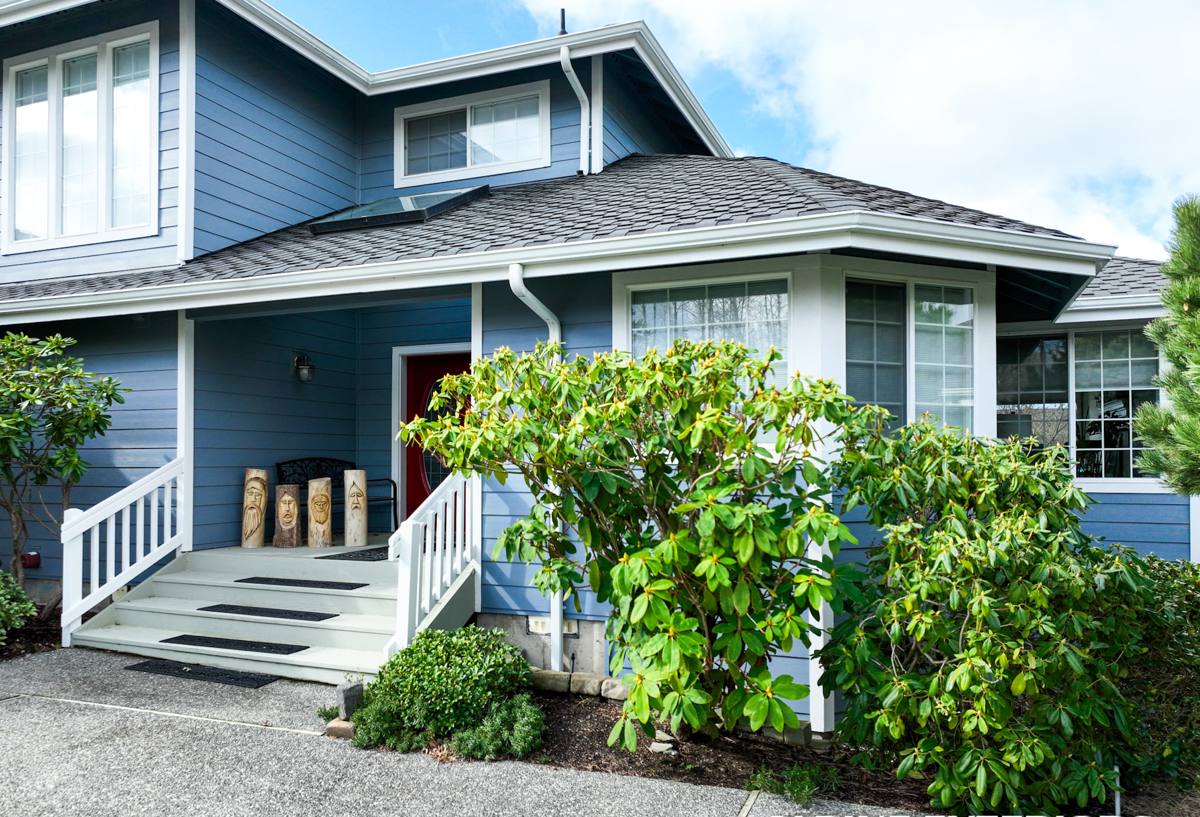
Why We Only Install James Hardie Here
We install James Hardie fiber cement siding exclusively, and Siesta Key is a good example of why. Vinyl siding softens and can warp under sustained heat and direct sun, and its seams are a weak point for wind-driven rain in a coastal wind zone. Wood-based products, including primed spruce and cedar, are organic material in a humid, salt-laden environment — they need real maintenance discipline to avoid rot, and salt air accelerates the breakdown of paint film and caulking on wood far faster than it does inland. We also don't install LP SmartSide, Cemplank, or Allura. Each has its use case somewhere, but for the specific combination of salt exposure, UV, and storm risk that a Siesta Key home deals with every single year, we've standardized on one system rather than mixing products based on price point.
Non-Combustible Core
James Hardie siding is fiber cement — primarily sand, cement, and cellulose fiber. It doesn't burn, it doesn't feed a fire, and it doesn't provide the fuel source that wood siding or some engineered wood products can. That's a real consideration anywhere, but it's also just a solid baseline material property that doesn't degrade with age the way organic siding materials can.
ColorPlus Factory Finish
Rather than field-painted siding that relies on a contractor getting even coverage and cure time right on-site, Hardie's ColorPlus finish is baked on in a controlled factory process before the boards ever reach the job site. That finish is engineered to resist fading and chalking under UV exposure — a meaningful advantage in Sarasota County, where the sun is a bigger factor in coating breakdown than it is in most of the country. It also comes with its own finish warranty, separate from the product warranty on the substrate itself.
HZ5 Climate-Engineered Product Line
Hardie makes region-specific formulations, and the HZ5 line is engineered for humid, high-moisture climates like Florida's — different moisture and durability performance than the HZ10 formulation sold in drier, colder parts of the country. Installing the correct climate zone product isn't optional here; it's the difference between a board engineered for Gulf Coast humidity and one that isn't.
What a Correct James Hardie Installation Actually Involves
Fiber cement siding is only as good as the installation behind it. The board itself resists moisture and impact well, but nearly every real-world failure we get called out to inspect traces back to installation shortcuts, not the material. On a barrier island where wind-driven rain is a near-annual event, these details matter more than they would somewhere drier.
| Detail | Correct Approach | Common Shortcut We See |
|---|---|---|
| Flashing at windows and doors | Properly lapped, integrated with a weather-resistant barrier so water sheds outward | Reused old flashing or caulk substituted for actual flashing |
| Fastener type | Corrosion-resistant fasteners rated for the coastal environment, set to Hardie's specified pattern | Standard fasteners that streak and corrode from salt air within a few years |
| Board clearance | Proper gap above roof lines, decks, and grade per manufacturer spec | Boards installed tight to a surface, trapping moisture against the bottom edge |
| Joint treatment | Butt joints sealed or flashed per Hardie's published details | Caulk-only joints that fail once the caulk ages and cracks |
| Nailing pattern | Fastener spacing and blind/face-nail method matched to exposure and wind zone | Inconsistent spacing that leaves boards under-fastened for local wind load |
Every one of those "shortcut" columns is something we've found on homes we've been called to repair — not hypothetical failure modes. A siding job can look identical to a correct one from the curb and still be years away from leaking, rusting, or coming loose in a storm.
Our Process on a Siesta Key Home
- On-site assessment. We look at the existing siding or sheathing, check for water damage or rot underneath, and confirm what the substrate actually needs before quoting anything.
- Weather-resistant barrier and flashing details. Before a single Hardie board goes up, the water management layer underneath — house wrap, window and door flashing, and any transition details — gets addressed. This is the part that's invisible once the job is done and the part that determines whether it holds up.
- Installation to manufacturer spec. Correct HZ5 product for the climate zone, correct fastener type and pattern, correct clearances at grade, roofline, and decks, correct joint treatment.
- Final inspection and walkthrough. We check fastener lines, caulking, and trim details before calling the job finished, and walk the homeowner through what was done.
- Cleanup. Job site cleared of debris and old material, consistent with how we'd want a crew to leave our own property.
Why It Matters That We Already Work on Siesta Key
Working the island regularly isn't just familiarity — it changes practical decisions on the job. Material and equipment access on Siesta Key means routing over the bridge and working within the traffic and parking realities of a narrow barrier-island community, which affects scheduling and staging in a way that inland Sarasota jobs don't deal with. Permitting runs through Sarasota County, and wind zone requirements for this part of the coast are stricter than what's required a few miles inland — a crew that pulls these permits regularly knows what inspectors are going to check before they show up, not after a job fails inspection. Some Siesta Key communities also carry their own architectural or HOA guidelines on exterior appearance, which is worth confirming before material selection, not after delivery.
None of that is exotic knowledge, but it's the kind of thing that either gets handled smoothly because a crew has done it before, or turns into delays and change orders because it didn't.
What Drives Cost on a Siesta Key Siding Job
| Factor | Why It Matters Here |
|---|---|
| Home size and wall complexity | More corners, dormers, and trim details mean more cutting, flashing, and labor time |
| Substrate condition | Rot or water damage found once old siding comes off adds repair work before new siding can go on |
| Board profile and color | Lap, shingle, and panel profiles price differently; ColorPlus finishes vary in cost by color line |
| Access and staging | Barrier-island access, tight lots, and limited parking can affect crew logistics and timeline |
| Trim and accessory work | Corner boards, soffit, and fascia work done alongside siding affects total scope |
We won't quote a number without seeing the home, but these are the honest variables that move a bid up or down, and we'll walk through each one that applies to your specific house.
Keeping Hardie Siding Performing Long-Term in a Salt-Air Environment
James Hardie siding is low-maintenance compared to wood or vinyl, but "low-maintenance" doesn't mean "no maintenance," especially this close to the Gulf. A little attention once or twice a year keeps it performing the way it's supposed to for decades.
- Rinse salt residue off exterior walls periodically, especially on sides facing prevailing wind and water
- Inspect caulking at joints, trim, and penetrations annually and re-caulk where it's cracked or pulled away
- Keep an eye on fastener heads for early rust staining, which can signal a fastener that wasn't rated for coastal exposure
- Trim landscaping back from siding so moisture and debris don't sit against the bottom edge of boards
- Check clearance at grade, decks, and roof lines periodically, since settling or added mulch/landscaping can reduce it over time
- After any major storm, walk the exterior for loose boards, displaced trim, or new gaps at joints
Signs Your Current Siding May Already Be Failing
If your home still has an older siding material, or Hardie that wasn't installed to spec, a few signs are worth taking seriously rather than waiting on: soft spots when you press on siding near the bottom edge, visible streaking below fastener heads, caulk that's cracked or missing at joints, or paint that's chalking heavily when you run a hand across it. Any of these can mean water is already getting behind the siding, and on a barrier island, that kind of moisture intrusion doesn't slow down on its own.
Get a Straight Answer on Your Siesta Key Home
If you're weighing a siding replacement or repair on Siesta Key, we're happy to come take a look, tell you honestly what condition your current siding is in, and walk you through what a correct James Hardie installation would involve for your specific home. There's no pressure and no obligation — just a straightforward estimate from a crew that already knows this island.