 Sarasota Siding
 Windows Work Harder in Rosemary District Than Almost Anywhere Else
Rosemary District sits close to downtown Sarasota and the bay, which means its homes take on a specific mix of stress that inland Florida neighborhoods don't deal with in the same way. You've got salt-laden air drifting in off the water, intense UV exposure nearly every day of the year, wind-driven rain that finds its way into any gap a window has, and the occasional hurricane-force wind event that tests every seal and fastener at once. A window that's merely "good" in a mild climate can underperform fast here. Energy-efficient windows in this setting aren't a luxury upgrade — they're a practical response to what the local climate actually does to a home, year after year.
This page is specifically about window replacement and upgrades for homes in Rosemary District. We're not going to talk in generalities about Florida windows — we're going to talk about what this particular pocket of Sarasota County needs, what a correct installation looks like, and how our process works when we're on your block.
The Housing Mix in Rosemary District Changes the Job
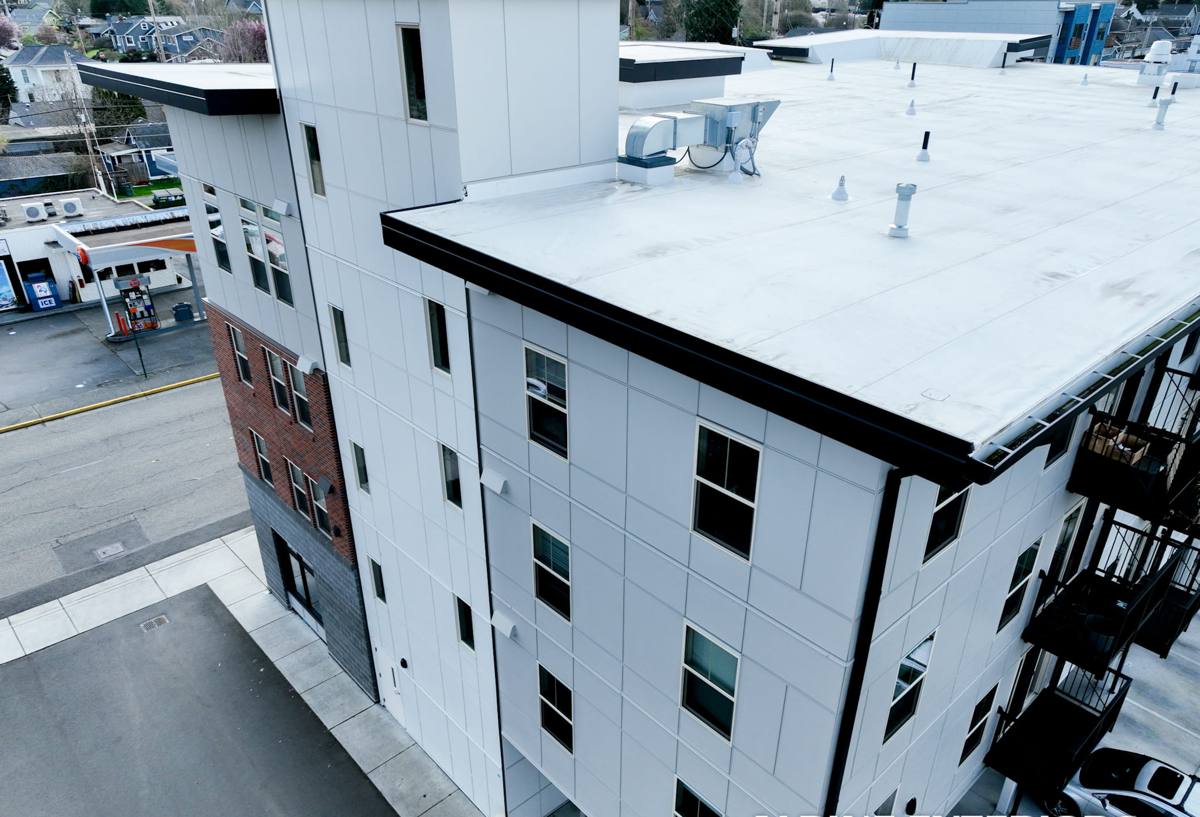
Rosemary District has an unusual housing profile for the area. It's a neighborhood in transition — you'll find older Florida-style bungalows and cottages, some dating back decades, standing near newer townhomes and low-rise construction from the ongoing redevelopment that's reshaped the district over the past several years. That mix matters for window work:
- Older homes often have original wood-frame openings, settled or slightly out-of-square rough openings, and window units that were never rated for today's wind and moisture standards.
- Newer construction is more likely to already have impact-rated glazing, but not always installed or flashed to the standard we'd choose, and not always matched to the home's actual sun exposure.
- Mixed-use proximity — being this close to downtown and the water means more reflected heat, more airborne salt, and in some cases more ambient noise, all of which factor into glass and frame selection.
We treat every Rosemary District job as its own assessment. A 1950s cottage and a recently built townhome three doors down need genuinely different window strategies, even though they're dealing with the same weather.
What "Energy-Efficient" Actually Means Here
"Energy-efficient" gets used loosely in this industry. In Sarasota's climate, it comes down to a few measurable properties, all listed on the NFRC label that should be on every window you're quoted:
| Rating | What It Measures | Why It Matters in Sarasota County |
|---|---|---|
| U-Factor | How much heat transfers through the window | Lower U-factor keeps conditioned air inside — critical when AC runs nearly year-round |
| SHGC (Solar Heat Gain Coefficient) | How much solar heat passes through the glass | Low SHGC glass matters more here than almost any climate factor — direct sun load is constant |
| Air Infiltration | How much air leaks through the assembly, not just the glass | Poor sealing lets in humid air and salt-laden moisture, driving mold and hardware corrosion |
| Condensation Resistance | How well the unit resists interior condensation | High humidity swings make this a real issue on lower-end frames |
Glass coatings (low-E) and frame material both influence these numbers, but so does installation quality — a well-rated window installed with poor flashing or a gapped rough opening will underperform its own label. That's the piece that gets skipped most often, and it's the piece that actually determines how the window performs in a coastal wind event or a summer downpour.
Frame Material Trade-Offs
We get asked to compare frame materials constantly, so here's the honest version, not the sales version:
| Frame Type | Strength | Trade-Off in This Climate |
|---|---|---|
| Vinyl | Good insulation value, low maintenance, competitive cost | Can expand/contract with heat cycling; quality varies a lot between manufacturers |
| Aluminum | Strong, slim sightlines, holds up structurally | Conducts heat more than other materials unless thermally broken |
| Fiberglass | Very stable in heat/humidity swings, strong, low expansion | Higher upfront cost |
| Wood/Wood-clad | Traditional look, works well on older cottages | Needs more upkeep near salt air; we're selective about where we recommend it |
For a home this close to the water, we lean toward frame options with strong moisture and corrosion resistance and steer clients away from hardware and finishes that are known to struggle with salt exposure — not because any one product is "bad," but because some choices simply demand more maintenance than a homeowner should have to sign up for in this environment.
What a Correct Installation Actually Involves
The window unit itself is maybe half the equation. The other half is installation, and it's where most underperformance and future leaks actually originate.
Assessment and Opening Prep
We check the rough opening for square, level, and soundness before anything goes in. On older Rosemary District homes, this step often reveals settled framing or old moisture damage around the original opening that needs to be addressed before a new window goes in — installing a good window into a bad opening just relocates the problem.
Flashing and Water Management
Proper flashing directs any water that gets past the window itself back out, rather than into the wall cavity. Given how much wind-driven rain this area sees during storms, this is not an optional step — it's the difference between a window that survives a decade of Sarasota weather and one that causes a hidden leak two years in.
Sealing and Fastening
We use sealants and fastening schedules rated for the wind exposure category of your specific home and location, not a generic approach. This includes attention to how the unit is anchored to the structure, since fastener pull-out is a common failure point in high-wind events.
Final Check
Every install gets a functional check — smooth operation, tight seal, proper drainage — plus a walk-through with you before we consider the job done.
Wind, Impact Ratings, and What Sarasota County Requires
Sarasota County enforces Florida Building Code wind provisions that vary by a home's specific wind exposure and location relative to the coast. Rosemary District's proximity to the bay puts many homes in a category where impact-rated or protected glazing is either required or strongly worth the investment, even where it isn't strictly mandated for your specific structure. We pull the actual wind requirements for your address before recommending a product — we don't guess, and we don't upsell based on a blanket assumption about what the code requires everywhere in the county.
Impact-rated glass carries a real side benefit beyond storm protection: it typically improves noise dampening and adds a layer of security, both of which matter more in a denser, more walkable neighborhood like this one.
Signs Your Current Windows Are Working Against You
- Visible condensation between panes (a failed seal on a double-pane unit)
- Rooms near windows that feel noticeably hotter in the afternoon sun
- Chalky, pitted, or corroded frame hardware
- Drafts or a whistling sound during windy conditions
- Difficulty opening, closing, or locking a window that used to operate smoothly
- Visible gaps, cracked caulk, or soft trim around the window frame
- A noticeable jump in cooling costs without a clear cause
Any one of these on its own isn't necessarily an emergency, but a few together usually mean the window assembly — not just the glass — has started to fail.
Our Process, Start to Finish
- On-site assessment: We look at existing window condition, opening structure, sun exposure by elevation, and your home's specific wind requirements.
- Product selection: We walk through frame, glass, and rating options honestly, including trade-offs, so you're choosing based on how you'll actually live in the home.
- Written estimate: Clear scope, clear pricing, no vague allowances.
- Installation: Proper opening prep, flashing, sealing, and fastening — not just dropping a new unit into an old hole.
- Walkthrough and cleanup: We confirm operation and seal quality with you before we call it finished, and we clean up the job site.
Why It Matters to Hire a Crew That Already Works This Neighborhood
A crew that's worked in Rosemary District knows the practical realities most out-of-area contractors have to relearn on your job: the mix of older and newer construction on the same block, the wind exposure that comes with being close to the bay, and the way salt air and UV combine to age materials faster than they would a few miles inland. That familiarity shows up in small but real ways — knowing what to check for on an older cottage's framing before quoting a price, or not over-specifying a product that doesn't match a newer build's existing performance.
It also means accountability. A local crew has a reputation in the neighborhood to maintain, which tends to show up in how carefully the work gets done and how issues get handled if something needs a follow-up visit.
Get a Straightforward Estimate
If your Rosemary District home has windows that are drafty, foggy, hard to operate, or just old enough that you're wondering whether it's time, we're happy to take a look. We'll give you an honest read on condition, what your home actually needs given its exposure and construction, and a clear written estimate — no pressure, no upselling past what makes sense for your house. Reach out using the form below to schedule a free estimate.