 Sarasota Siding
 Bradenton's Climate Is Hard on Siding — Here's What That Means for Your Home
Bradenton sits on the Gulf Coast in Manatee County, right next door to Sarasota, and it takes the same weather beating the rest of our service area does: tropical storms and hurricane-force wind gusts, sun exposure that runs close to year-round, wind-driven rain that gets pushed sideways into wall assemblies, and salt-laden air rolling in off the water. Any one of those would be a reasonable design challenge for an exterior wall covering. Together, they're the reason so many Bradenton homes show siding problems years before they should — cracked or bowed panels, faded finishes, soft spots around windows, and paint that won't hold.
Fiber cement siding, installed correctly, is built to take this kind of punishment. But "fiber cement" isn't one product — installation quality and the specific product line matter enormously in a climate like this one. This page covers what a Bradenton home actually needs from its siding, what correct fiber cement installation looks like on the coast, and how our process is built around this specific climate rather than a generic national playbook.
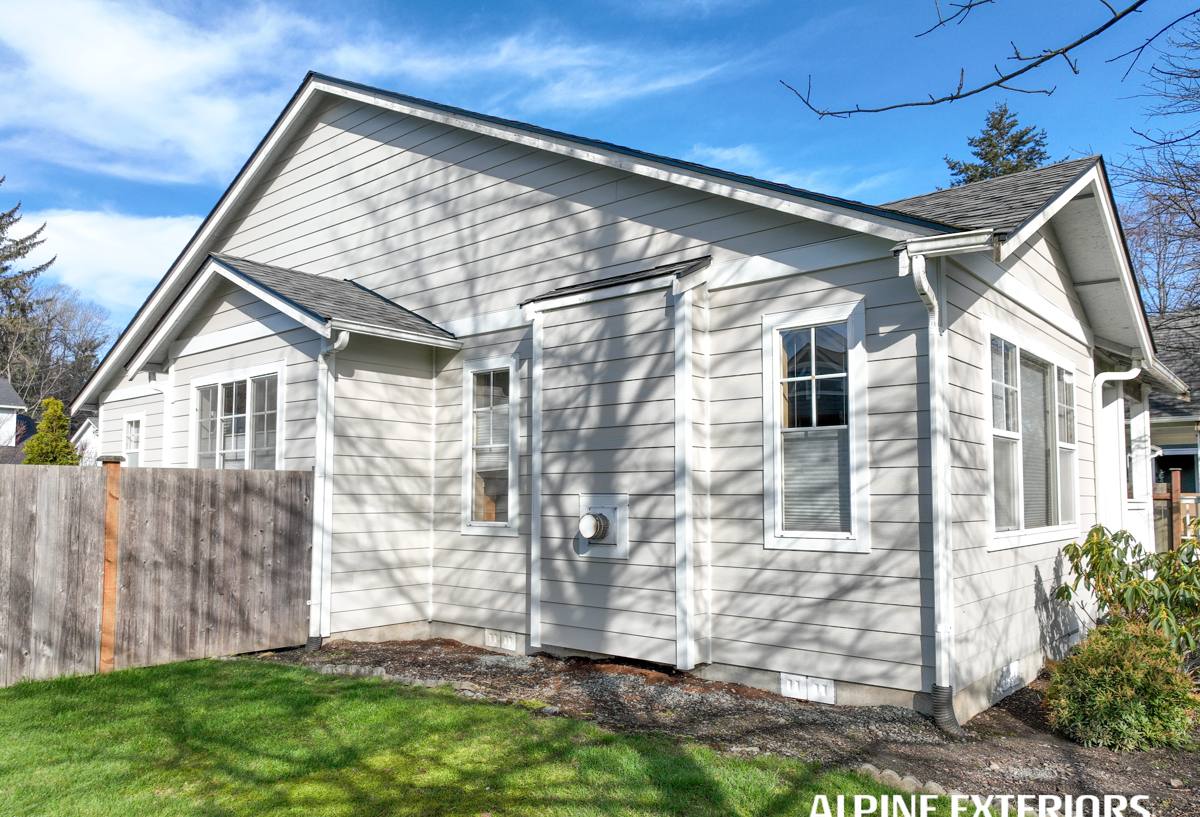
What Wind-Driven Rain and Salt Air Do to the Wrong Siding — or a Bad Install
Most siding failures on the Gulf Coast aren't really about the siding material in isolation — they're about water finding a way behind it. Wind-driven rain during a tropical system doesn't fall straight down; it gets pushed horizontally and upward under laps, around trim, and into any gap that wasn't properly flashed or caulked. Once moisture gets behind a wall covering, what happens next depends heavily on the material:
- Wood-based products (including engineered wood) can swell, delaminate, or rot if moisture sits against them repeatedly.
- Vinyl doesn't rot, but it deforms and becomes brittle under intense UV and can pull loose or crack in high wind, opening new gaps for water to enter.
- Poorly installed fiber cement — wrong fastener pattern, missing flashing, panels butted too tight with no expansion gap — can trap moisture at the seams regardless of how good the base material is.
Salt air adds a second layer of stress: it accelerates corrosion on fasteners and metal flashing, and it degrades paint and caulk faster than inland exposure does. A siding system for Bradenton has to handle three things at once — shrug off wind and impact, shed water even when it's coming in sideways, and hold its finish under relentless UV and salt exposure. That's a short list of materials, and it's why we don't install everything on the market.
Why This Isn't Just a Coastal Concern
It's tempting to think siding issues driven by wind and rain only matter for homes directly on the water. In practice, Bradenton and the wider Sarasota-Manatee area get enough tropical moisture and enough sustained wind events that inland homes see real exposure too — just on a slightly longer timeline. We build every installation to the same standard regardless of how close a property sits to the Gulf.
Why We Install Only James Hardie Fiber Cement
We standardized on James Hardie fiber cement siding and don't install LP SmartSide, vinyl, Cemplank, Allura, or primed wood species like spruce or cedar. That's not a marketing position — it's a decision built around what holds up in exactly the conditions Bradenton deals with every storm season.
James Hardie's fiber cement is non-combustible, which matters on its own, but the bigger factor for this climate is how the material behaves with moisture over time compared to wood-based composites, and how its factory-applied ColorPlus Technology finish holds color and adhesion under UV and salt exposure compared to field-applied paint systems. Hardie also engineers specific product formulations for different climate zones — more on that below — rather than shipping one version everywhere. Combined with a strong transferable warranty, that combination is why it's the only fiber cement brand we put on homes.
HZ5 Engineering: Built for the Southeast, Not Adapted to It
James Hardie manufactures its siding in different "HardieZone" formulations engineered for different regional climates. Florida, including Bradenton and Sarasota, falls in the HZ5 zone — the formulation built for hot, humid, high-moisture Southeastern and Gulf Coast conditions, as opposed to the HZ10 formulation built for colder, freeze-thaw climates farther north. That distinction matters: a siding product engineered around freeze-thaw cycling isn't solving the problems that actually threaten a home here, which are heat, humidity, and wind-driven moisture.
| Factor | What Bradenton's Climate Demands | How HZ5 Fiber Cement Addresses It |
|---|---|---|
| Humidity & moisture exposure | Resistance to swelling, softening, and moisture-driven damage | Formulated for consistent high-humidity performance, not freeze-thaw cycling |
| UV intensity | Finish that won't chalk, fade, or peel under near-daily sun | Factory-baked ColorPlus finish, not a field-applied paint layer |
| Wind-driven rain | A wall assembly that sheds water at laps and penetrations | Correct lap, flashing, and fastening details engineered into the install spec |
| Hurricane-force wind | Panels that stay fastened and don't crack on impact | Dense, rigid fiber cement board rated for high wind exposure when installed to spec |
| Salt air | Corrosion resistance at fasteners, trim, and seams | Correct fastener spec plus a finish system that isn't degraded by salt exposure the way bare paint is |
What a Correct Fiber Cement Installation Actually Involves
The material only performs as well as the installation. On a coastal property, the details most crews treat as an afterthought are usually the ones that determine whether the siding is still doing its job in ten years. A correct install includes:
Moisture Management Behind the Siding
A weather-resistant barrier goes on the wall sheathing before any siding, with all seams and penetrations properly taped and sealed. Every window, door, and utility penetration gets flashed so that any water that does get past the siding face has somewhere to go — down and out, not into the wall cavity.
Fastening and Clearances
Fiber cement has a specific fastening pattern — fastener type, spacing, and placement relative to panel edges — that's engineered for wind uplift resistance. It also needs proper clearance from grade, roof lines, and decks so water doesn't wick up into the bottom edge of the panel. Skipping either of these is one of the most common ways an otherwise good product fails early.
Joints, Caulking, and Finish Integrity
Butt joints need to be treated correctly — not just butted tight and caulked — and any field-cut edges need to be sealed per manufacturer spec so the cut edge isn't left exposed to moisture. Where ColorPlus panels are field-cut or touched up, using the matched touch-up system keeps the finish (and the warranty) intact.
Our Process on a Bradenton Project
- On-site assessment — we look at existing siding, sheathing condition, and any trouble spots (window returns, roof-wall intersections, low-clearance areas) before quoting anything.
- Tear-off and sheathing check — old siding comes off and we inspect the wall beneath it for hidden moisture damage before anything new goes up.
- Weather barrier and flashing — the moisture management layer goes in first, sealed at every seam and penetration.
- Hardie panel installation — installed to manufacturer spec for fastening, clearance, and joint treatment, sized and detailed for this climate zone.
- Trim, caulk, and finish detail — including matched touch-up on any field-cut ColorPlus edges.
- Final walk-through — so you know exactly what was done and what maintenance, if any, it needs going forward.
What Fiber Cement Siding Costs — and What Drives the Price
Every Bradenton home is different, so a real number only comes from an on-site look. What we can tell you honestly is what moves the price up or down:
| Cost Factor | Why It Matters |
|---|---|
| Home size & wall complexity | More corners, gables, and dormers mean more cuts, trim, and labor hours |
| Current siding removal | Tear-off and disposal of existing material adds cost versus new construction |
| Sheathing repairs needed | Hidden rot or moisture damage found during tear-off has to be fixed before new siding goes on |
| Panel profile & trim package | Lap width, trim detail, and accent choices affect material cost |
| Access & site conditions | Multi-story sections, tight lot lines, or landscaping can add labor time |
Why Hiring a Crew That Already Works Bradenton Matters
Fiber cement installation done to spec inland is different from fiber cement installation done to spec on the Gulf Coast in a meaningful way: the margin for error is smaller here. A crew that mainly works drier, calmer climates may not default to the flashing and fastening discipline this coastline requires — not because they're careless, but because it simply hasn't been tested the same way where they usually work.
A crew that already works Bradenton and the greater Sarasota area knows the local permitting process, understands the wind exposure categories that apply to this part of the coast, and has already seen what happens when moisture management gets skipped on a house like yours. That local track record isn't a guarantee, but it's a meaningful difference between a crew learning the climate on your home and one that's already accounted for it in how they build.
A Practical Checklist Before You Hire Anyone for Siding Work in Bradenton
- Ask what siding brand and product line they install — and why they chose it
- Confirm they carry current licensing and insurance for exterior work in Florida
- Ask how they handle flashing and weather barriers, not just the finished siding face
- Ask what happens if they find moisture or rot damage during tear-off
- Get the fastening and clearance details in writing, not just a verbal assurance
- Ask about their experience with wind-rated installation specific to this coast
Living With Fiber Cement Siding in a Salt-Air Climate
One of the practical advantages of correctly installed James Hardie siding here is how little upkeep it asks for compared to materials that need repainting or are more sensitive to moisture. It's not maintenance-free, but the routine is straightforward:
- Rinse off salt residue and grime periodically, especially on sides facing prevailing wind and water
- Keep an eye on caulking at trim and joints and have any cracked sections resealed
- Trim back landscaping that holds moisture against the siding face
- Have flashing and clearance points checked after major storms
Done right the first time, that's the extent of it — no repainting cycle, no soft spots creeping in from behind.
If you're weighing siding options for a home in Bradenton, we're happy to take a look and give you a straight, no-pressure assessment of what your home actually needs. Use the form below to request a free estimate.