 Sarasota Siding
 Decking Built for How Fruitville Actually Lives Outdoors
Fruitville sits along the Fruitville Road corridor in unincorporated Sarasota County, wedged between the city of Sarasota and the inland growth pushing east. It's a mix of established ranch homes, newer construction, and everything in between, and most of it shares one thing in common: people use their outdoor space year-round. A deck here isn't a three-season feature like it might be up north. It gets full sun exposure most of the year, regular afternoon thunderstorms in summer, and the occasional direct hit from tropical weather. That combination is hard on decking materials that weren't built for it, and it's why we treat every composite deck we install in this area as a system, not just a set of boards.
The short version: heat and UV break down cheap or aging materials from the top, moisture and poor drainage rot the structure from underneath, and wind uplift during storms tests whatever fastening and framing decisions got made on installation day. A deck that looks fine in the showroom can fail in any of those three ways within a few years if it wasn't specified and built for Sarasota conditions.
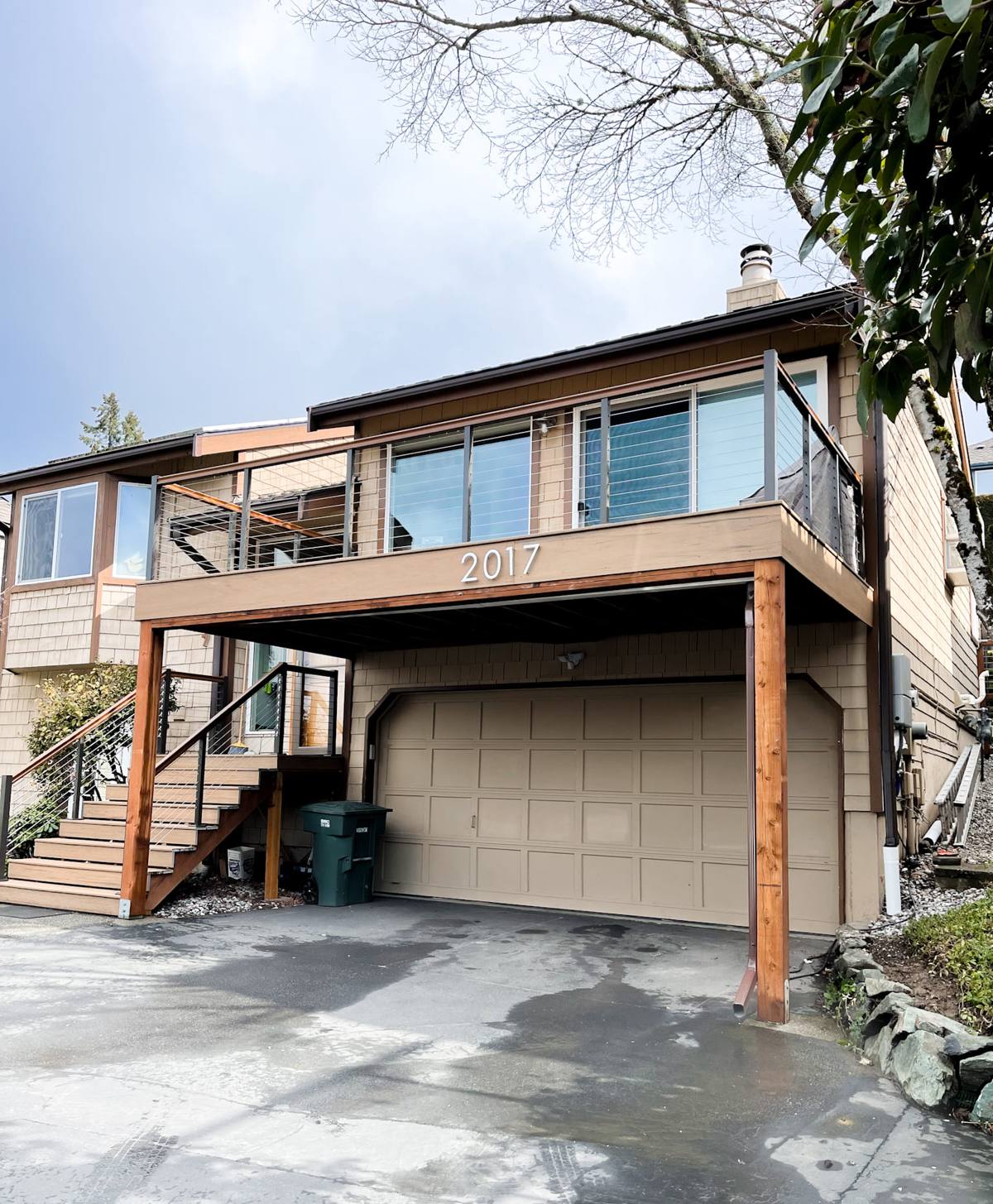
What Sarasota County's Climate Does to a Deck
UV and Heat
Central Florida gets some of the most intense year-round sun exposure in the continental U.S. On unshaded decks, surface temperatures can get uncomfortably hot underfoot by early afternoon, and constant UV load is what causes fading, chalking, and surface degradation in lower-grade composite and PVC products over time. Cap-stock quality and color choice both matter more here than they would in a milder climate.
Humidity and Wind-Driven Rain
Sarasota County sees heavy, frequent rainfall, much of it wind-driven during summer storms that can push water sideways into ledger connections, fastener points, and any gap in flashing. Combined with the area's humidity, a deck with poor drainage or trapped moisture stays wet longer than it should, which is where rot, mold, and fastener corrosion start — usually in framing and hardware you can't see from the surface.
Wind and Storm Exposure
Hurricane season runs June through November, and even when a storm doesn't make a direct hit, this area regularly sees strong straight-line winds and gusts. Decking that's face-screwed with the wrong fasteners, ledger boards that aren't properly through-bolted and flashed, or railing that wasn't rated for local wind loads are the kinds of shortcuts that show up as damage after the next big blow.
Salt Air
Fruitville isn't waterfront, but Sarasota County as a whole sits close enough to the Gulf that salt-laden air still reaches inland properties, especially with onshore winds. Salt exposure accelerates corrosion in fasteners, brackets, and any exposed metal hardware, which is one more reason we don't cut corners on the hardware spec just because a lot in Fruitville is a few miles from the water.
What a Correctly Built Composite Deck Actually Involves
Composite decking gets marketed on its surface — low maintenance, no painting, consistent color. All of that is true, but the board is only as good as what's underneath it. Most of the deck problems we get called out to inspect trace back to the substructure or the connections, not the decking material itself.
- Ledger attachment: Where the deck ties into the house, the ledger board needs proper through-bolting (not just lag screws in many cases) and correct flashing to keep wind-driven rain from getting behind it and into the house structure.
- Joist spacing: Composite boards need tighter joist spacing than solid wood in most cases — usually 16 inches on center, sometimes less for angled or picture-frame layouts. Spacing that's too wide leads to bounce and long-term sagging.
- Fasteners and hardware: Stainless steel or coated, corrosion-rated fasteners and connectors, not standard hot-dip galvanized, given the salt air and humidity in this area.
- Hidden fastening systems: Most composite lines are designed for hidden clip systems rather than face screws, which keeps water from pooling in screw heads and gives a cleaner surface — but the clip system has to be installed exactly per the manufacturer's spec to hold under wind load.
- Ventilation and drainage under the deck: Low, tight-to-the-ground decks trap moisture underneath if there's no airflow. We build in ventilation gaps and grade the ground below to shed water rather than pool it.
- Railing and post attachment: Structural post connections rated for local wind exposure, not just aesthetic railing bolted on as an afterthought.
- Permitting and code compliance: Sarasota County requires permits for most deck construction and re-decking work that involves structural changes. We pull the right permits and build to current Florida Building Code wind and structural requirements, not the minimum that gets by an inspector on a technicality.
Composite, Wood, and PVC — An Honest Comparison
We get asked regularly why we lean toward composite for most Fruitville homeowners. Here's the straightforward comparison, including the trade-offs of each option — no product is perfect for every situation.
| Material | Maintenance | Heat/UV Behavior | Moisture Behavior | Typical Lifespan Here |
|---|---|---|---|---|
| Wood (pressure-treated) | Annual sealing/staining required | Fades, cracks, splinters under constant sun | Prone to rot and warping without upkeep | 8-15 years with regular maintenance |
| Composite | Occasional soap-and-water cleaning | Cap-stock resists fading better than wood | Won't rot; correct substructure still critical | 25-30+ years, manufacturer-dependent |
| PVC (cellular) | Very low | Can run hotter underfoot in direct sun | Fully moisture-resistant surface | 25-30+ years |
Wood costs less upfront but the maintenance burden in this climate is real — sealing and staining on a schedule, not just when it looks bad. PVC performs well against moisture but tends to run hotter underfoot and can look more synthetic depending on the line. For most Fruitville homeowners who want a deck they'll actually use without a maintenance schedule hanging over them, a quality composite line hits the best balance of appearance, comfort, and long-term cost. We'll walk through real product samples and give you our honest read on which fits your specific deck, budget, and how you plan to use the space.
Our Process for a Fruitville Composite Deck Project
- On-site assessment: We look at your existing structure (if there is one), grading, drainage, sun exposure, and how you actually use the space before recommending anything.
- Honest scope and estimate: New build, full tear-out and rebuild, or re-decking an existing sound frame — we tell you which one your project actually needs, not the most expensive option available.
- Permitting: We handle the Sarasota County permit process for you, including any structural drawings required.
- Substructure work: Framing, ledger attachment, joist layout, and hardware selection built to current code and local wind/moisture conditions, not just what's fastest.
- Composite installation: Hidden-fastener installation per manufacturer spec, correct board spacing for thermal expansion, and clean, code-correct railing and stair work.
- Final walkthrough: We go over care, warranty coverage, and what to watch for over the coming seasons before we consider the job done.
What We See Go Wrong on Older or DIY Decks in This Area
When we're called out to inspect an existing deck in Fruitville — whether for a repair, a re-decking, or a pre-sale inspection — the same handful of issues come up repeatedly:
- Ledger boards attached with lag screws and no flashing, allowing water intrusion behind the siding over time
- Joist spacing built for wood but left unchanged when composite decking was added later, leading to bounce and premature sagging
- Standard galvanized hardware showing rust and corrosion within a few years due to humidity and salt air exposure
- Face-screwed composite boards with visible screw pops and water pooling in the fastener holes
- No ventilation gap under low decks, trapping moisture and encouraging mold growth on the underside
- Railing posts that aren't structurally tied into the frame, relying on surface-mounted brackets alone
None of these are things you can see from a quick look at the deck surface, which is exactly why they go unnoticed until there's a problem — soft spots, visible corrosion, or a railing that shouldn't move but does.
What Drives the Cost of a Composite Deck Project
| Factor | Why It Matters |
|---|---|
| Square footage and shape | Complex layouts, angles, and multi-level decks require more framing and cutting labor |
| Existing structure condition | A sound, code-compliant frame can sometimes be re-decked; a compromised one needs full rebuild |
| Composite product tier | Entry-level, mid-range, and premium composite lines vary in cap-stock quality, color retention, and warranty length |
| Railing and stair complexity | Custom railing, multiple stair sets, and code-required guarding add material and labor |
| Site access and grading | Elevated decks, poor drainage, or tight access can add site prep work |
| Permitting requirements | Structural scope and deck height/attachment type affect what Sarasota County requires for permitting |
We don't quote off square footage alone — the on-site assessment is what lets us give you a number that holds up once the work starts, not a low estimate that grows once we open things up.
Living With a Composite Deck in Sarasota County
One of the real advantages of composite decking here is how little upkeep it needs compared to wood, but "low maintenance" doesn't mean "no maintenance." A few habits keep a Fruitville composite deck performing well for its full service life:
- Rinse or sweep off pollen, dirt, and organic debris regularly — buildup that sits in humidity can lead to surface mildew even on composite
- Clean with mild soap and water a few times a year; avoid pressure washing at close range, which can damage the cap-stock finish
- Keep gutters and downspouts near the deck clear so runoff isn't dumping extra water onto or under the deck surface
- Check railing and stair connections periodically, especially after a significant storm
- Trim back vegetation that's shading and holding moisture against the deck surface or framing
Why It Matters That We Already Work in This Area
A crew that already builds and repairs decks in Fruitville and the surrounding Sarasota County communities isn't guessing at what holds up here — we've seen which fastener grades corrode too fast, which substructure shortcuts cause callbacks, and what the county actually wants to see on a permit application. That local knowledge shows up in decisions you won't always notice on installation day but will notice five or ten years down the road, when the deck is still solid instead of showing the wear that starts on decks built for a milder, drier climate than this one.
If you're planning a new composite deck, replacing tired boards on a sound frame, or want a second opinion on a deck that's showing early signs of trouble, we're happy to take a look and give you a straight answer. Reach out for a free, no-pressure estimate — we'll walk the site with you, explain what we find, and lay out your real options before you decide on anything.