 Sarasota Siding
 Why Decks in Fruitville Wear Out Faster Than People Expect
Homeowners in the Fruitville area of Sarasota County often assume a deck should last as long as it would up north — twenty, twenty-five years with basic upkeep. That's not how it works here. Between intense year-round UV, wind-driven rain during summer storms, salt-laden air moving in off the Gulf, and the occasional direct hit from hurricane-force winds, a deck built with the wrong materials or shortcuts in the framing can start failing structurally in half that time, even if the surface boards still look fine.
The tricky part is that decay in this climate usually starts where you can't see it — at the ledger board connection to the house, in fasteners buried under decking, or in a support post sitting in ground that stays damp longer after every storm. By the time boards are visibly cupping or the deck feels spongy underfoot, the structure underneath has often been compromised for a while.
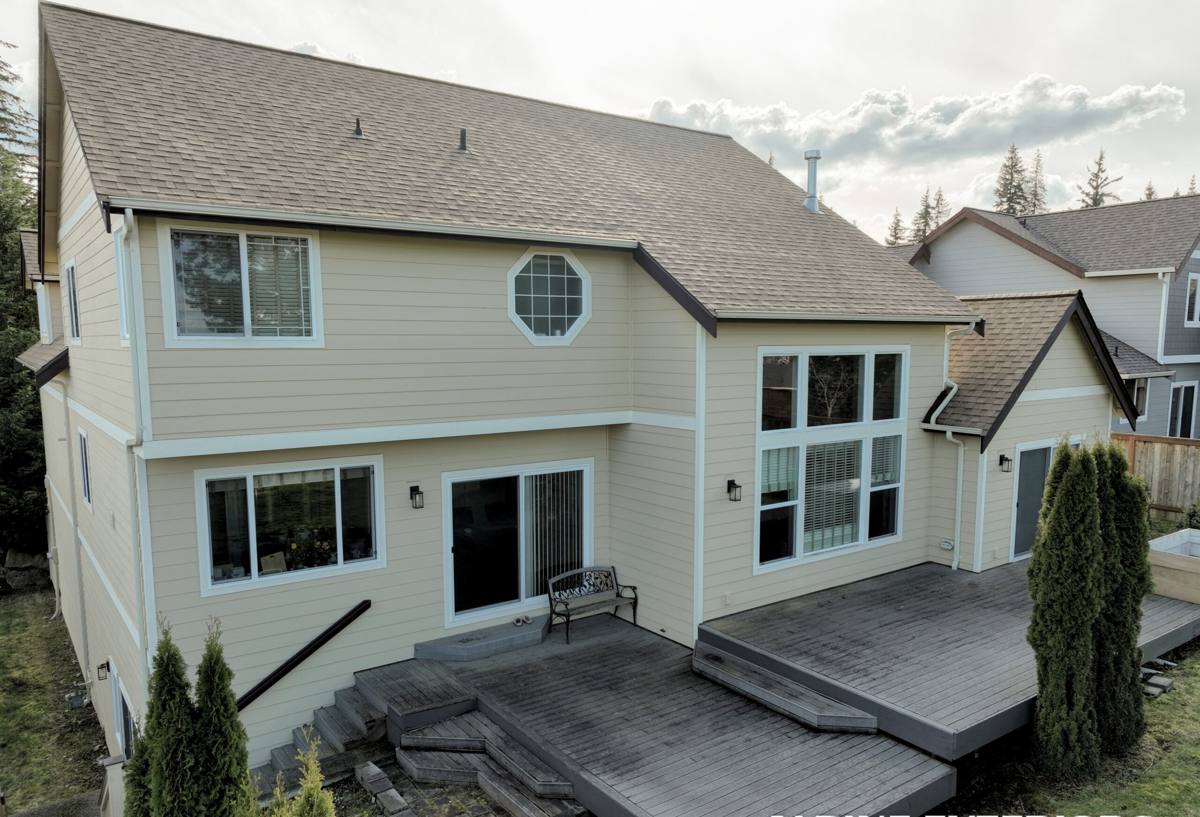
Signs a Fruitville Deck Needs Replacement, Not Just Repair
Not every issue means starting over. But there's a point where patching individual boards is just delaying a bigger, more expensive problem. Some signs point clearly toward full replacement rather than spot repair:
- Soft, spongy, or bouncy sections of decking, especially near the house or stairs
- Visible rot, splitting, or crumbling wood at posts, beams, or the ledger board
- Rust streaks running down from fasteners or hardware, which usually means corrosion has already started inside the wood
- Railings or stair stringers that flex or wobble under normal weight
- A ledger board pulling away from the house, or gaps opening up where it meets the siding
- Multiple past repairs to the same area that keep failing again within a year or two
- A deck built more than 15-20 years ago with untreated hardware or undersized framing by today's code standards
If you're only seeing one of these, a repair might genuinely make sense. If you're seeing two or three together, that's usually a sign the whole structure has been compromised by moisture cycling through the frame for years, and replacement is the more honest recommendation.
What a Correct Deck Replacement Actually Involves
A deck replacement isn't just pulling up old boards and screwing down new ones. Done right, it's a rebuild of the entire system — framing, connections, and surface — with attention to the parts that fail first in this climate.
Substructure and Framing
The posts, beams, and joists are the part of the deck doing the actual structural work, and they're also the part most exposed to standing moisture and ground contact. We size and space framing to current code requirements, not just to whatever the original builder used, and we pay close attention to post footings so they're set deep enough and drain properly rather than sitting in a pocket of wet soil after every heavy rain.
Ledger Board and Flashing
The ledger board — where the deck attaches to the house — is the single most common failure point on decks in this region, and it's almost always a moisture problem. Without proper flashing to direct water away from that connection, rain gets trapped between the ledger and the house siding and rots both from the inside out. Correct flashing detail here is not optional; it's the difference between a deck that lasts and one that fails quietly behind the scenes.
Fasteners and Hardware
Salt air along the Gulf Coast accelerates corrosion in standard fasteners and connectors far faster than it would inland. We use corrosion-resistant, coated fasteners and structural hardware rated for coastal exposure — hangers, post bases, and structural screws that are built to hold up against salt exposure, not just meet a minimum building code spec.
Choosing a Decking Material That Actually Holds Up Here
The decking surface itself gets the most attention because it's what you see and walk on, but the right choice depends on how much sun exposure, foot traffic, and maintenance tolerance a household actually has. There's no single "best" material — there's a best fit for your situation.
| Material | How It Handles This Climate | Maintenance |
|---|---|---|
| Pressure-treated wood | Affordable and strong when framing is done right, but needs regular sealing to resist UV fading, splitting, and moisture absorption | Annual cleaning and resealing recommended |
| Composite decking | Resists rot and doesn't need staining; quality varies by brand and how the boards handle heat and UV over time | Occasional cleaning, no sealing/staining |
| PVC/capped decking | Fully synthetic cap resists moisture and salt exposure well; tends to run warmer underfoot in direct sun | Low — mostly rinsing and cleaning |
| Tropical hardwoods | Naturally dense and rot-resistant, holds up well to sun and moisture, but is a heavier upfront investment | Periodic oiling to maintain appearance |
Whichever surface material a homeowner chooses, we're honest about the trade-offs up front — expected maintenance, how it behaves in direct sun, and what its warranty actually covers versus what it doesn't. A deck surface is only as good as the framing underneath it, so we never let the choice of decking material distract from getting the structural side right.
Our Deck Replacement Process
Every replacement follows the same disciplined sequence, whether it's a small back porch deck or a larger multi-level structure:
- On-site assessment of the existing deck, including checking framing, ledger condition, and footings before quoting anything
- Honest recommendation on repair versus full replacement, with the reasoning explained plainly
- Material selection walkthrough covering cost, appearance, and long-term maintenance for your situation
- Permit filing with Sarasota County or the applicable local jurisdiction before any demolition begins
- Careful removal of the old deck, including inspection of the house connection point once the ledger is exposed
- Framing rebuild with coastal-rated fasteners and correctly flashed ledger connection
- Decking installation, railings, and stairs to code
- Final walkthrough and inspection sign-off before we consider the job finished
Permits and Sarasota County Code Requirements
Deck replacement in Sarasota County requires a permit in almost all cases, and for good reason — this is a structure people stand on, and the building codes here reflect the real wind loads and moisture exposure this region deals with. Skipping the permit process might save a little time up front, but it creates real problems later: an unpermitted deck can complicate a home sale, cause issues with insurance claims after storm damage, and in some cases has to be torn out and redone if it's discovered during an inspection. We handle the permitting and inspection process as a standard part of the job, not an upsell.
Why Hiring a Crew That Already Works in Fruitville Matters
A deck replacement is only as good as the details nobody sees once it's finished — flashing behind the ledger, the grade of fastener buried in the frame, the depth of a footing. A crew that regularly works decks in and around Fruitville and the greater Sarasota area already knows what tends to fail first in this specific environment, because we've opened up enough old decks to see exactly where the moisture gets in and where corrosion starts. That's different from following a generic national spec sheet written for a drier, cooler climate. It also means faster, more accurate quoting, because we're not guessing at local permit requirements or relearning the region's wind and flood considerations on your job.
What Affects the Cost of a Deck Replacement
Every deck is different, so we don't quote real numbers without seeing the site, but the main cost drivers are consistent from job to job:
- Size and number of levels of the deck
- Decking material chosen — treated wood, composite, PVC, or hardwood
- Condition of the substructure and whether footings need to be redone or relocated
- Railing style and stair complexity
- Height off the ground, which affects code requirements for railings and structural support
- Site access for equipment and material delivery
Simple, single-level deck replacements with standard materials tend to run toward the lower end of the typical range for the region, while larger multi-level decks, premium decking materials, or difficult site access push costs higher. We'll walk through where your project falls and why during the on-site estimate.
If your deck in Fruitville is showing signs of wear, feels less solid than it used to, or you're just planning ahead before the next storm season, we're happy to take a look and give you a straight answer — no pressure, no obligation. Fill out the form below to schedule a free estimate.