 Sarasota Siding
 Fiber Cement Siding for Fruitville Homes
Fruitville sits inland from the coast, but it doesn't sit outside Sarasota County's weather. Homes here still take the full brunt of a Gulf Coast climate: long stretches of intense UV that bake exterior surfaces nearly year-round, sudden downpours that drive rain sideways into wall assemblies, tropical humidity that never really lets siding dry out completely, and, during storm season, wind gusts strong enough to strip weak or poorly fastened siding off a house in minutes. Salt-laden air moves further inland than most homeowners assume, especially with onshore flow, which means even properties well away from the water deal with corrosion-accelerating moisture in the air.
Siding in Fruitville isn't cosmetic — it's the first line of defense for the wall assembly behind it. When we talk about "fiber cement siding services" for this neighborhood, we mean a system chosen and installed specifically to hold up to those conditions, not a generic product dropped onto a Florida house and hoped for the best.
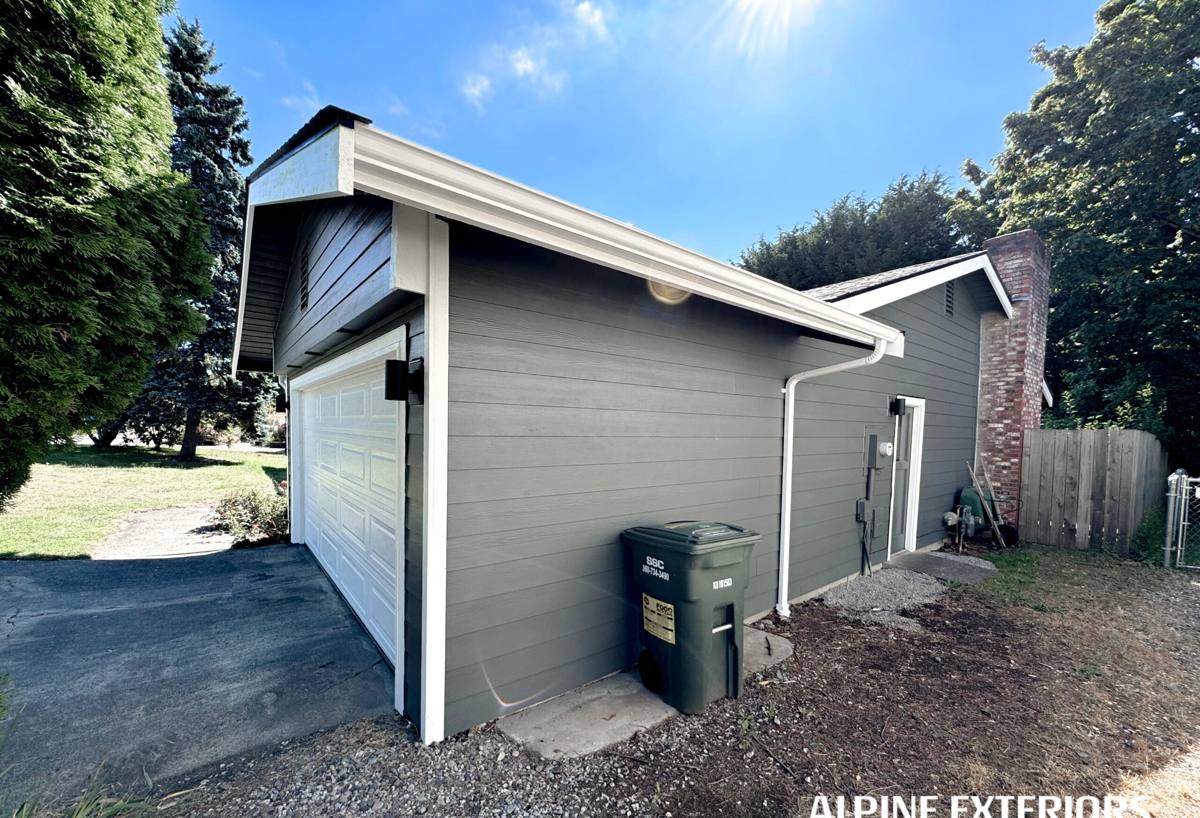
What Local Homes Actually Need From Their Siding
Not every siding material handles Sarasota County's climate the same way, and not every installation crew treats moisture management with the seriousness this region demands. A siding system that's going to last on a Fruitville home needs to manage several things at once:
- Resist swelling, softening, or rot when repeatedly saturated by wind-driven rain
- Hold paint and color under constant, intense UV exposure without excessive fading or chalking
- Stay dimensionally stable through Sarasota's daily humidity swings and summer heat
- Withstand sustained high winds and wind-borne debris without popping loose or cracking
- Resist termite and pest damage, which is a real concern for wood-based products in this region
- Tolerate salt air without the fastener corrosion and finish breakdown that shortens siding life near the coast
Fiber cement, when it's the right formulation and it's installed correctly, checks every one of those boxes. That's not a small qualifier — a lot of fiber cement problems homeowners hear about trace back to installation mistakes, not the material itself.
Why We Only Install James Hardie Fiber Cement
We don't install every brand of fiber cement siding on the market, and we don't install LP SmartSide, vinyl, primed wood, or cedar at all. That's a deliberate standard, not a sales preference. James Hardie is the fiber cement manufacturer whose products, engineering, and factory finish system we trust enough to put on a customer's home and stand behind.
A few specifics behind that decision:
Climate-Engineered Product Lines
James Hardie builds HZ5 formulations specifically engineered for hot, humid climates like ours — a meaningful difference from a one-size-fits-all fiber cement board. That matters in a county where siding faces salt air, heavy rain, and sustained heat for most of the year.
Non-Combustible Material
Fiber cement is cement-based, not wood-based, which means it won't feed a fire the way wood siding or wood-based composite panels can. That's a real difference in fire performance, not a marketing footnote.
ColorPlus Factory Finish
Rather than relying entirely on a field-applied paint job, Hardie's ColorPlus finish is baked on at the factory under controlled conditions, which gives it better UV and fade resistance than most site-applied paint — a meaningful advantage under Florida sun.
A Warranty Structure Worth Something
Hardie backs its siding with a strong, transferable limited warranty. That transferability matters to homeowners planning to sell, and it reflects a manufacturer confident enough in long-term performance to stand behind it in writing.
We're not going to tell you every alternative product is worthless — vinyl, LP SmartSide, and untreated wood siding all have legitimate uses and loyal customers. But when we weigh moisture behavior, fire performance, finish durability, and long-term maintenance burden against what Fruitville's climate demands, Hardie fiber cement is what we're willing to install and warranty.
What a Correct Fiber Cement Installation Involves
Fiber cement is unforgiving of shortcuts. A rushed or undertrained crew can turn a premium product into a problem within a few years. A correct installation on a Fruitville home involves:
Moisture Management Behind the Siding
Proper weather-resistive barrier installation, correctly lapped and sealed housewrap, and flashing at every window, door, and penetration. This is the layer that actually keeps wind-driven rain out of the wall cavity — the siding itself is the second line of defense, not the only one.
Manufacturer-Spec Fastening and Clearances
Hardie specifies fastener type, spacing, and pattern for a reason — get it wrong and you risk buckling, cracking, or reduced wind resistance. Correct ground clearance and gaps at trim and butt joints prevent moisture wicking, which is one of the most common causes of premature siding failure in humid climates.
Caulking and Joint Treatment Done Right
Every joint, seam, and penetration needs the correct sealant, applied correctly — not just wherever a gap happens to look open. Over-caulking traps moisture; under-caulking lets it in. Both are common installer mistakes.
Field-Cut Edge Sealing
Any board cut on site needs its exposed edge sealed per manufacturer instructions. Skipping this step is a small shortcut that leads to a big moisture problem down the line.
Our Process for a Fruitville Fiber Cement Project
- On-site assessment — we look at your home's current siding condition, wall assembly, exposure to wind and sun, and any existing moisture or rot issues before recommending anything.
- Product and profile selection — plank width, texture, and color are chosen for your home's style and Sarasota County's climate demands, not just visual preference.
- Tear-off and substrate inspection — old siding comes off and we check the sheathing underneath for hidden damage before it's covered up again.
- Weather barrier and flashing installation — this hidden layer gets as much attention as the visible siding, because it's what actually keeps water out.
- Installation to Hardie specification — correct fastening, clearances, joint treatment, and edge sealing throughout.
- Final walkthrough — we review the completed work with you before calling the job done.
Fiber Cement vs. Other Siding Options
| Factor | James Hardie Fiber Cement | Vinyl | Wood / LP SmartSide |
|---|---|---|---|
| Wind-driven rain resistance | Strong when installed to spec | Moderate; prone to gapping in high wind | Vulnerable if finish or edges fail |
| UV / fade resistance | Strong with factory ColorPlus finish | Fades and chalks over time | Depends heavily on repaint schedule |
| Fire performance | Non-combustible | Can melt or deform under heat | Combustible, wood-based material |
| Pest / rot resistance | Not a food source for pests, resists rot | Resistant but can hide moisture damage behind it | Vulnerable to rot and pests without diligent maintenance |
| Salt air durability | Strong when correctly fastened and finished | Generally durable but can become brittle | Finish breaks down faster near salt exposure |
| Maintenance burden | Low; periodic cleaning and caulk checks | Low but limited to washing | Higher; repainting and edge sealing over time |
Signs a Fruitville Home's Siding Needs Attention
Sarasota County's climate wears siding down faster than a lot of homeowners expect. Watch for:
- Visible cracking, warping, or buckling in siding panels
- Soft or spongy spots when pressed, which usually indicate moisture intrusion
- Paint that's chalking, peeling, or fading unevenly across the wall
- Gaps opening at seams, corners, or trim boards
- Staining or discoloration near the base of walls or below windows
- Rising energy bills that could point to a compromised moisture or air barrier
- Visible rust streaking from fasteners
Catching these early usually means a targeted repair. Ignoring them usually means a full replacement becomes necessary sooner than it should.
Maintenance After Installation
Correctly installed Hardie fiber cement is genuinely low-maintenance, but "low" isn't "none." A rinse-down once or twice a year removes salt residue, pollen, and grime before it builds up. It's worth a walk around the home after major storms to check for impact damage, and caulked joints are worth a visual check every year or two, since sealant is the one component that ages faster than the siding itself. None of this requires a specialist visit — it's the kind of upkeep any homeowner can do in an afternoon.
Cost Factors for a Fruitville Siding Project
Every home is different, so we're not going to throw out a number that doesn't mean anything until we've actually looked at your house. What generally moves the price on a project like this:
| Factor | Why It Matters |
|---|---|
| Home size and wall complexity | More square footage and more corners, dormers, or architectural detail means more material and labor |
| Current siding condition | Tear-off, disposal, and any sheathing repair add scope beyond the visible siding |
| Plank profile and finish selection | Different Hardie profiles and ColorPlus finishes carry different material costs |
| Access and site conditions | Landscaping, fencing, or multi-story sections can affect labor time |
| Trim and detail work | Window and door trim, fascia, and accent details add to scope |
Why Local Experience in Fruitville Matters
A crew that already works in and around Fruitville understands what this specific stretch of Sarasota County throws at a house — the sun exposure, the storm patterns, the humidity that never fully lets up, and the salt air that reaches further inland than people expect. That local familiarity shows up in the details: how flashing gets handled, how fastener spacing is adjusted for known wind exposure, and which trouble spots to check first on an older home. It's the difference between a crew installing siding correctly in general and a crew installing siding correctly for this neighborhood, on this coast, in this climate.
If your Fruitville home needs new siding, a repair, or you're just not sure what condition your current siding is really in, we're happy to take a look. Reach out for a free, no-pressure estimate using the form below.