 Sarasota Siding
 Why Fruitville Siding Wears Differently Than Siding Inland
Fruitville sits close enough to Sarasota Bay and the Gulf that homes here deal with a combination of stresses that inland Florida properties simply don't face at the same intensity. Hurricane-force winds during storm season drive rain sideways into wall assemblies at angles siding was never designed to shed. Between storms, the sun is working just as hard — Sarasota County gets some of the most consistent year-round UV exposure in the country, and that constant heat cycling is what causes panels, trim, and caulk joints to expand, contract, and eventually crack or pull away. Add in salt-laden air moving off the water and the humidity that never fully lets up, and you have a climate that finds every weak point in a siding installation faster than almost anywhere else in the state.
None of that means siding repair in Fruitville is a lost cause. It means repairs have to be diagnosed and executed with that climate in mind, not treated like a generic patch job. A repair that looks fine on the day it's finished but doesn't account for how water moves through a wall assembly here will fail again within a year or two — often in the same spot.
Signs Fruitville Homeowners Should Watch For
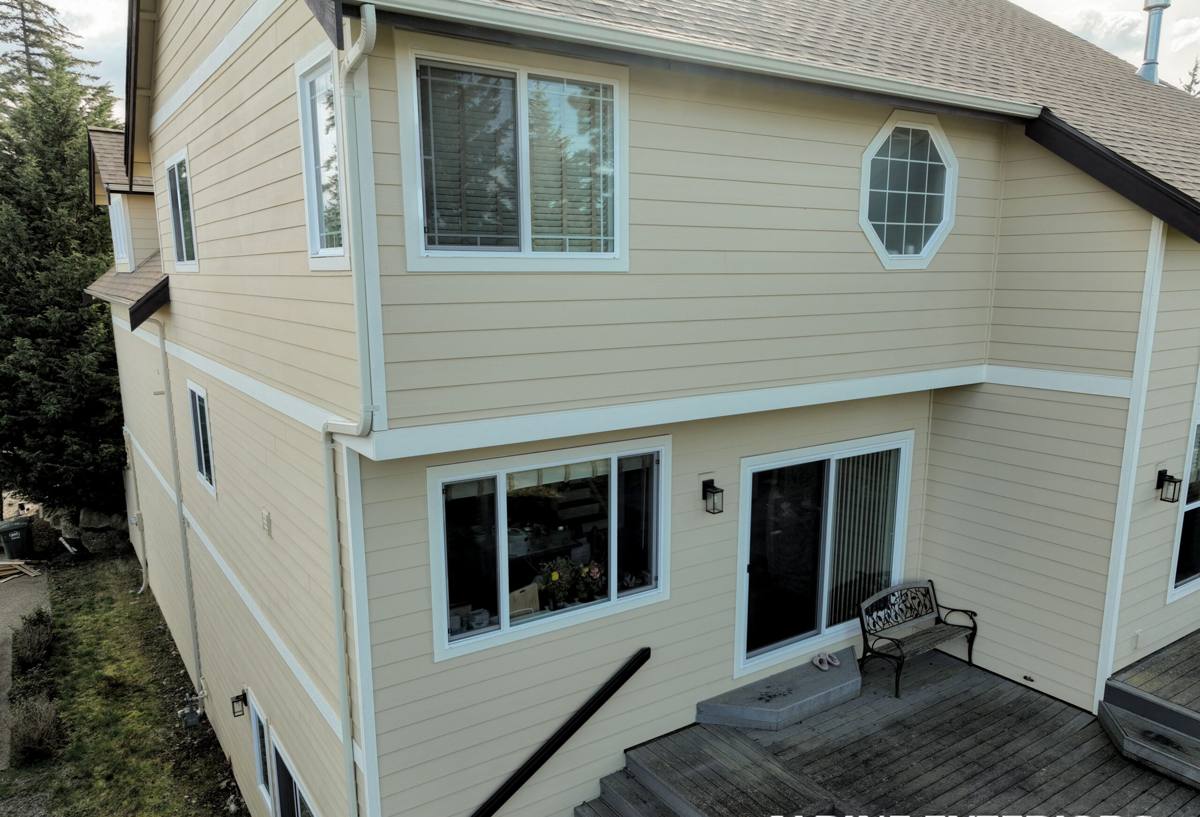
Siding damage in this climate doesn't always announce itself with a hole or a missing panel. A lot of the damage that matters most is quiet at first. Here's what we tell Fruitville homeowners to check twice a year, ideally before and after hurricane season:
- Cracked, buckled, or warped panels — often from heat cycling or a hard wind event
- Soft or spongy spots when you press on the siding, especially near the bottom courses
- Peeling, bubbling, or chalky paint, which usually points to moisture getting underneath rather than just a cosmetic finish problem
- Gaps or separation at seams, corners, and around windows and doors
- Visible fastener heads, rust streaks, or nails backing out
- Discoloration or staining that keeps coming back even after cleaning — a sign water is tracking behind the siding, not just sitting on top of it
- Increased pest activity (especially in older wood or engineered wood siding) at the base of walls
Any one of these on its own might be minor. Several of them together, or any of them near a window, door, or roofline, usually means water has already found a way in and the damage is larger than what's visible from the driveway.
Why Small Damage Doesn't Stay Small Here
In a drier, milder climate, a small crack or gap can sit for a season without doing much harm. In Sarasota County, with wind-driven rain during tropical systems and near-constant humidity the rest of the year, an opening in the siding is an invitation. Water gets behind the panel, the sheathing underneath stays wet longer than it should, and you start looking at rot, mold, or insulation damage that costs far more to fix than the original siding repair would have. Timing matters as much as workmanship.
What a Correct Siding Repair Actually Involves
A proper repair is not just swapping a damaged panel for a new one and caulking the edges. Done right, it involves a few steps that are easy to skip if a crew is trying to move fast:
1. Find the Real Cause, Not Just the Visible Damage
Cracked or missing siding is usually a symptom. We look at what's behind and around it — flashing, house wrap, fastening pattern, drainage plane — to understand why that spot failed. Replacing the panel without addressing the cause just buys time before the same repair is needed again.
2. Check the Substrate Before Closing It Back Up
If water has been getting behind the siding, the sheathing or framing underneath needs to be inspected while it's exposed. Covering wet or damaged substrate with new siding is one of the most common ways a repair looks good for a year and then fails from the inside out.
3. Match the Product Correctly
Color, profile, and reveal all need to match the surrounding siding, or the repair will stand out and, worse, may not shed water the same way the rest of the wall does. This is one of the reasons repair work on mixed or discontinued siding products gets complicated — and one of the reasons a consistent, well-documented product line matters.
4. Reseal and Flash Properly
Every seam, joint, and penetration point needs the right sealant and flashing detail for this climate — not a generic bead of caulk. Sealant that isn't rated for constant UV and salt air exposure breaks down faster here than it would inland.
5. Fasten to Manufacturer and Code Specification
Florida's wind-load requirements aren't optional, and Sarasota County inspects to them. Fastener type, spacing, and placement all affect how well a repaired section holds up in the next major wind event.
Common Siding Problems We See on Fruitville Homes
| Siding Type | Common Failure in This Climate | Typical Repair Challenge |
|---|---|---|
| Vinyl | Cracking and warping from UV/heat cycling; wind can tear panels loose | Older colors fade unevenly, making patch repairs visibly mismatched |
| Wood or engineered wood | Moisture absorption, swelling, rot at seams and bottom edges | Damage often extends further under the surface than it appears |
| Older fiber cement (non-Hardie or early-generation) | Coating failure, edge deterioration if not factory-primed correctly | Matching discontinued colors or profiles can be difficult |
| James Hardie fiber cement | Generally holds up well; issues are usually installation-related (caulking, flashing) rather than product failure | Straightforward to source matching product and ColorPlus finish for repairs |
That last row is a big part of why we standardized on one product line rather than working across several. When a repair is needed years down the road, being able to match the exact product and finish makes the difference between a seamless fix and a visible patch.
Repair or Replace? An Honest Look
Not every damaged section needs a full re-side, and we won't tell you it does. But there's a point where patch repairs stop making financial sense. Here's how we walk Fruitville homeowners through that decision:
| Factor | Repair Usually Makes Sense | Replacement Usually Makes Sense |
|---|---|---|
| Extent of damage | Isolated to one or two areas | Spread across multiple walls or elevations |
| Underlying substrate | Dry, sound sheathing found on inspection | Rot, mold, or repeated moisture intrusion found |
| Age of existing siding | Siding is well within its expected service life | Siding is near or past the end of its practical lifespan |
| Product match | Matching material and finish is readily available | Product is discontinued or heavily faded, making a seamless patch impossible |
| Storm history | Damage from a single, identifiable event | Repeated storm damage suggesting a systemic vulnerability |
If a home has had two or three repair calls in the same area over a few years, that's usually a sign of a deeper installation or drainage issue, and it's worth having an honest conversation about whether continued patching is the right long-term investment.
Why We Repair and Install Only James Hardie Fiber Cement
We made the decision to work exclusively with James Hardie fiber cement siding, and we don't install vinyl, LP SmartSide, Cemplank, Allura, or primed wood products. That's not a knock on every homeowner who has one of those materials on their home now — plenty of them perform reasonably well when installed and maintained correctly, and we still repair siding of all types. But when it comes to what we recommend and install, Hardie is what we stand behind for this specific climate:
- Non-combustible — a real advantage in a state where wildfire and structural fire risk are part of insurance conversations
- Engineered for this climate specifically — Hardie's HZ product lines are formulated for high-humidity, storm-prone regions like ours
- Factory-applied ColorPlus finish — a baked-on finish that resists the UV fading and chalking that raw or field-painted products struggle with under Sarasota's sun
- Dimensionally stable — fiber cement doesn't swell, warp, or rot the way wood-based products can when they take on moisture
- Strong, transferable warranty — backed by a large, established manufacturer with a long track record, not a warranty that becomes difficult to honor years later
Vinyl can crack and distort in extreme heat and high wind. Engineered wood products are more moisture-sensitive than fiber cement by nature of the material. Other fiber cement brands may perform acceptably, but we don't have the same depth of installation experience, warranty backing, or long-term product consistency with them that we have with Hardie. When we repair a Hardie home, we're usually repairing an installation detail, not a product failure — and that's exactly the outcome we want to be able to offer.
Our Siding Repair Process
- On-site inspection — we look at the visible damage and check surrounding areas, flashing, and penetrations for related issues
- Honest assessment — we tell you plainly whether this is a repair, a larger repair, or something that points toward replacement, and why
- Substrate check — before closing anything up, we confirm what's underneath is dry and sound
- Matched materials — for Hardie siding, we source the correct profile and ColorPlus color so the repair blends in
- Proper fastening and sealing — installed to manufacturer spec and Sarasota County wind-load code, not just "good enough to hold"
- Final walkthrough — we show you what was done and what to watch for going forward
Why a Crew That Already Works in Fruitville Matters
Siding repair in this part of Sarasota County isn't the same job as siding repair somewhere without salt air and hurricane exposure. A crew that regularly works Fruitville and the surrounding Sarasota area already knows what wind-driven rain does to poorly flashed corners, how fast UV degrades unrated sealant here, and what the local permitting and wind-load requirements actually call for on a repair. That familiarity shows up in fewer callbacks and repairs that are built to handle next year's storm season, not just this year's inspection.
If you're seeing cracked panels, soft spots, staining, or gaps in your siding, it's worth having it looked at before the next round of Gulf humidity or the next storm makes the problem bigger. We offer a free, no-pressure estimate — we'll tell you honestly whether you're looking at a straightforward repair or something more, with no obligation either way.