 Sarasota Siding
 Siding Repair Built for Gulf Gate Estates Homes
Gulf Gate Estates is one of the older established residential neighborhoods in Sarasota County, and that history shows up in the siding on its homes. Many houses here have gone through multiple re-sidings, patch jobs, and paint cycles over the decades, and the siding on a given block can range from original material that's held up surprisingly well to a section replaced years ago that's already failing again. When a homeowner calls us about a soft spot, a cracked panel, or paint that won't stop peeling, the first question isn't just "what's wrong" — it's "why did it happen here, and will fixing it the same way just mean doing it again in a few years."
This page is about siding repair specifically for Gulf Gate Estates: what the local climate does to siding over time, what an honest repair actually involves, how we approach a repair call versus a full replacement, and why it matters that the crew doing the work already knows this neighborhood.
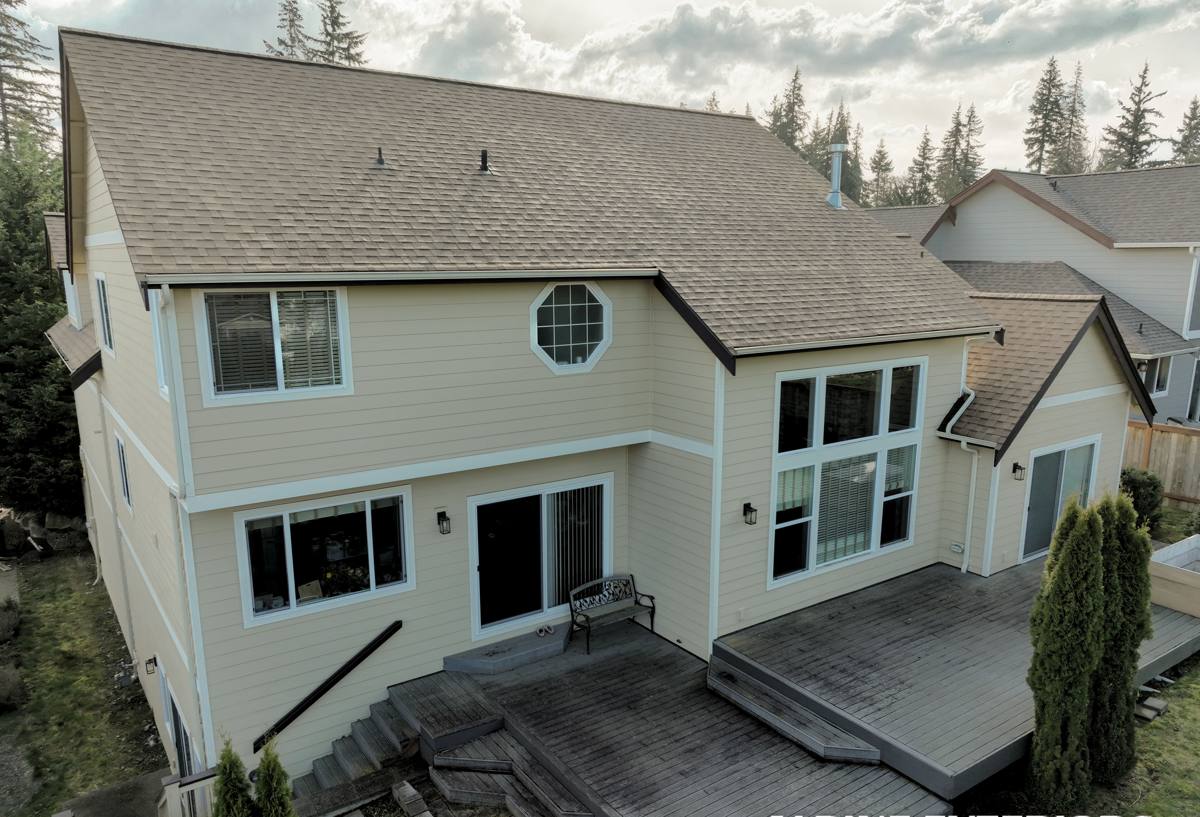
What Sarasota's Climate Does to Siding Over Time
Sarasota sits in a part of Florida where siding takes a beating from several directions at once, and Gulf Gate Estates isn't exempt just because it's not directly on the water.
Hurricane-Force Wind
Wind is the most obvious threat, but the damage it causes isn't always dramatic. A gust strong enough to lift or flex a panel doesn't have to tear it off to cause a problem — it can crack a fastening point, loosen a seam, or work a panel just far enough out of alignment that water starts getting behind it. That kind of damage is easy to miss during a quick look from the ground, which is why storm-season inspections matter even when nothing looks obviously wrong.
Intense, Year-Round UV
Florida's sun load is among the highest in the country, and it doesn't ease up seasonally the way it does farther north. UV breaks down paint film, dries out caulk and sealants, and over years can make certain siding materials brittle at the surface. South- and west-facing walls typically show wear first, and it's common for one side of a house to need repair well before the others simply because of sun exposure.
Wind-Driven Rain
Straight-down rain and wind-driven rain behave very differently on a wall. Wind pushes water up and under laps, into seams, and around trim and penetrations that were never designed to handle water moving sideways or upward. This is usually where the real damage happens — not from the storm itself, but from moisture that got behind the siding during it and stayed there.
Salt Air
Gulf Gate Estates isn't a beachfront neighborhood, but it's close enough to the coast that salt-laden air still reaches it, especially with onshore winds. Salt accelerates corrosion in exposed fasteners and metal trim, and it settles on surfaces gradually rather than all at once, which means its effects tend to show up as a slow decline rather than a sudden failure.
Common Siding Problems We See in Gulf Gate Estates
Because the neighborhood has a mix of home ages and past renovation work, the repair calls we get here tend to fall into a few recurring categories:
- Soft or spongy spots where moisture has been trapped behind siding for an extended period, often around window and door trim
- Cracked, warped, or buckled panels following storm season, sometimes from wind alone and sometimes from a fastener that failed first
- Paint that's peeling or bubbling in a pattern that points to moisture underneath rather than just an old paint job
- Gaps or separation at seams and corners where caulking has dried out and shrunk under constant UV exposure
- Mismatched or visibly different repair patches from prior work, where a past fix used a different material or profile than what's original
- Corrosion staining running down from fasteners or trim, a sign that the metal underneath is degrading
Some of these are cosmetic annoyances. Others are early signs of moisture that's already reached the wall sheathing or framing behind the siding, which is a very different — and more expensive — problem if it's left alone.
What a Correct Siding Repair Actually Involves
A repair that just covers up the visible symptom tends to fail again within a season or two, especially given how demanding this climate is on exterior walls. A repair done right starts with figuring out why the damage happened in the first place, not just patching what's visible. That typically means:
- Removing enough surrounding material to see the actual extent of the damage, not just the section that looks bad
- Checking the wall sheathing and any house wrap or moisture barrier behind the damaged area for water intrusion
- Identifying and correcting the underlying cause — a flashing gap, a failed seal, a fastening pattern that wasn't right to begin with — before closing the wall back up
- Using fasteners and trim details appropriate for this climate, not just whatever matches visually
- Matching the repair material and finish as closely as possible so the fix doesn't stand out as an obvious patch
- Resealing and recaulking with products rated for sustained UV and moisture exposure, not a generic caulk that will fail again in a year or two
Skipping the diagnostic step is the single most common reason a "repaired" section of siding fails again. A new panel over rotted sheathing looks fine for a while and then fails the same way, usually faster the second time.
Repair vs. Replacement: How to Tell Which Your Home Needs
Not every siding problem calls for full replacement, and not every problem should be patched. The honest answer usually comes down to how widespread the damage is and what's causing it.
| Situation | Repair Usually Makes Sense | Replacement Usually Makes More Sense |
|---|---|---|
| Damage extent | Isolated to one or two localized areas | Recurring across multiple walls or sides of the house |
| Underlying cause | A single identifiable issue, like one failed seal or flashing point | A systemic issue — wrong material for the climate, widespread moisture history, or age |
| Material condition | Surrounding siding is still structurally sound | Surrounding siding is brittle, warped, or has repeated repair history |
| Cost over time | One-time fix likely to hold for years | Repeated repair calls already adding up to a meaningful portion of replacement cost |
| Appearance | Repaired section can be matched closely enough to blend in | Existing material or color is discontinued or won't match regardless of repair quality |
We'll always give a straight answer on which category a given home falls into. There's no benefit to us in talking a homeowner into a full replacement when a targeted repair will genuinely hold up, and there's no benefit to anyone in patching a wall that's going to keep failing.
What We Repair With, and Why That Sometimes Means a Bigger Conversation
Our company installs James Hardie fiber cement siding exclusively — we don't install vinyl, LP SmartSide, or other engineered wood products. When we're called out to repair a home that already has one of those materials, we'll still assess the damage honestly and, where a like-kind patch is the right call, we'll tell you that plainly. But if the damage on a vinyl or engineered wood section is tied to how that material handles Florida's UV and moisture rather than a one-off event, a patch is often a short-term fix for a longer-term material problem.
In those cases, we'll walk through the option of transitioning the repaired section — or eventually the whole exterior — to James Hardie fiber cement. It's non-combustible, factory-finished with a ColorPlus finish designed to resist Florida's UV fade, and built in HZ product lines engineered for high-humidity, storm-prone climates like ours. That's not an upsell we lead with on every repair call; it's a conversation we have when the numbers and the damage pattern actually point that direction.
Our Siding Repair Process in Gulf Gate Estates
We start with an on-site look at the damaged area and the surrounding siding, not just a photo estimate. That includes checking for moisture behind the visible damage, looking at how the rest of the exterior has held up, and asking what's already been tried, since a lot of Gulf Gate Estates homes have some repair history worth knowing about before we start.
From there we give a straightforward assessment: what caused the damage, whether a repair or a larger fix makes sense, and what it will take to do the job so it actually holds. If it's a repair, we handle removal, any needed sheathing or moisture-barrier correction, matching the material and finish, and proper resealing — all sized to Sarasota County's wind and moisture requirements, not a generic patch job. We'll also flag anything else we notice during the work, like an aging seal elsewhere on the house, so small issues don't turn into the next repair call.
Why It Matters That We Already Work in Gulf Gate Estates
A contractor who only occasionally works this neighborhood is starting from scratch on every call — guessing at what typically causes damage on homes of a certain age and construction style here, and not necessarily aware of the repair patterns particular to this part of Sarasota County. Working here regularly means we've already seen how homes of different eras in Gulf Gate Estates hold up, which sides of a house tend to show wear first, and what past repair work in this area often looks like when we open a wall up.
That familiarity shows up in practical ways: a faster, more accurate read on whether something is a quick fix or the first sign of a bigger issue, and straight talk about which one you're actually looking at.
Get a Straight Answer on Your Siding
Whether it's a single damaged section or a pattern of repairs that's starting to add up, we're glad to take a look and give you an honest read on what your home actually needs. Reach out below for a free, no-pressure estimate.