 Sarasota Siding
 Venice Sits Right on the Line Where Siding Either Holds Up or Doesn't
Venice is barrier-island and mainland living at once — Gulf-facing neighborhoods a few blocks from open water, canal-front lots, and inland streets that still catch salt-laden air on an onshore breeze. That combination is hard on exterior building materials in ways homeowners further from the coast rarely have to think about. Siding here isn't just cosmetic; it's the first line of defense against wind-driven rain, direct UV exposure nearly year-round, and a salt atmosphere that accelerates corrosion and finish breakdown on anything not built for it.
We install James Hardie fiber cement exclusively — not as one option among several, but because it's the only siding system we're willing to put our name behind in a Sarasota County coastal environment. This page is specifically about what that means for a James Hardie project in Venice: what the climate demands, what correct installation looks like, and what to expect if you're planning a siding replacement or new install here.
What Venice's Climate Actually Does to Siding
Hurricane-Force Wind
Venice sits in a wind zone where storm gusts can drive rain sideways and turn loose siding panels into projectiles. Wind doesn't just tear siding off in a named storm — over years, sustained coastal breeze works at fastener points and butt joints, gradually loosening panels that weren't installed to the manufacturer's fastening schedule in the first place. Siding that isn't fastened correctly for local wind exposure will fail faster here than the same product installed inland.
Wind-Driven Rain and Moisture
Florida's rain doesn't fall straight down during a squall — it drives horizontally against west- and south-facing walls. That means flashing, house wrap integration, and butt-joint detailing matter more in Venice than they would in a drier, calmer climate. Water that gets behind siding and can't escape leads to sheathing rot and mold, regardless of how good the siding material itself is.
Intense, Near-Constant UV
Sarasota County sees strong sun exposure across most of the year. UV breaks down pigments and resins in lower-grade siding finishes, leading to fading, chalking, and eventually cracking. A factory-applied finish engineered for UV resistance holds color and integrity far longer than field-applied paint.
Salt Air
Even homes that aren't waterfront in Venice get periodic salt exposure from onshore wind. Salt accelerates corrosion of fasteners and trim metal and can degrade certain siding substrates and coatings faster than inland weathering alone would.
Why We Standardized on James Hardie for This Environment
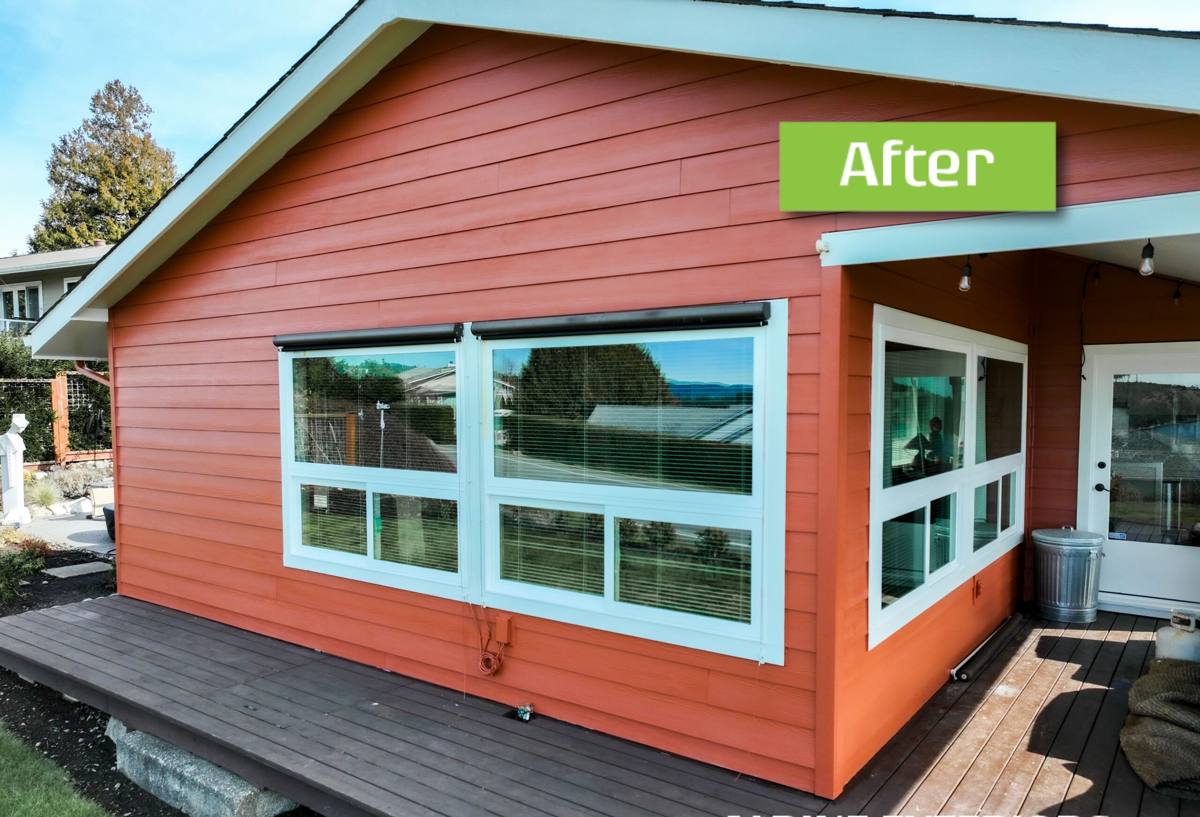
James Hardie fiber cement is engineered specifically for climate zones like ours. The HZ5 product line is formulated for hot, humid regions with real moisture and pest exposure — which describes Venice precisely. A few reasons it holds up where other materials struggle:
- Non-combustible — fiber cement doesn't feed a fire, which matters for insurance consideration and general peace of mind.
- Dimensionally stable in humidity — it doesn't swell, warp, or rot the way wood-based products can when repeatedly wetted and dried in a coastal cycle.
- ColorPlus factory-applied finish — baked-on coating engineered to resist UV fade and hold color far longer than field-painted siding, which matters given how much sun Venice gets.
- Resists pest damage — termites and wood-boring insects are a real concern in Southwest Florida, and fiber cement gives them nothing to eat.
- Built for wind-driven rain — the product system, installed with proper flashing and clearances, is designed to shed water rather than trap it.
We don't install LP SmartSide, vinyl, Cemplank, Allura, or wood siding. Each has a place in the market, but for the specific combination of wind, salt, humidity, and UV that Venice properties face, we've made James Hardie our standard — and we'd rather turn down a job than install something we don't think will hold up here.
What a Correct James Hardie Installation Actually Involves
The product is only half the equation. Fiber cement siding fails prematurely almost exclusively because of installation shortcuts, not material defects. In a wind- and rain-exposed area like Venice, these details aren't optional:
- Proper weather-resistive barrier and flashing integration at every window, door, and penetration before a single plank goes up
- Correct fastener type, spacing, and embedment depth — under-fastened siding is one of the most common causes of wind-related failure
- Minimum clearances maintained from grade, roofline, and other flatwork so panels aren't sitting in standing moisture
- Properly caulked and sealed butt joints, sized for the product and this climate's thermal movement
- Factory-cut and field-cut edges sealed per manufacturer specification to protect the fiber cement core
- Trim and fastener hardware rated for coastal corrosion resistance, not standard interior-grade hardware
Skipping any one of these doesn't show up immediately — it shows up in three to five years as staining, loosening panels, or moisture intrusion at joints. That's part of why James Hardie ties its stronger warranty terms to installation by a qualified contractor: the manufacturer knows the product performs to spec only when the install does too.
Local Considerations Specific to Venice
A few things come up repeatedly on Venice projects that don't apply the same way further inland:
- Wind zone and code requirements: Sarasota County enforces wind-load and fastening requirements tied to your specific location, and homes closer to the coast or in higher-velocity hurricane zones may have stricter fastening schedules than homes a few miles inland.
- HOA and deed-restricted communities: Many Venice neighborhoods have architectural review boards with specific rules on siding profile, color, and trim. We factor that into planning so approval isn't a late surprise.
- Flood zone and elevation considerations: Homes near canals or closer to the Gulf may have specific elevation or material considerations near grade level that affect how low siding can run and what clearance details matter most.
- Salt exposure gradient: A home a block from the water and a home a mile inland in Venice can have meaningfully different corrosion exposure — we adjust hardware and detailing accordingly rather than treating every project identically.
James Hardie vs. Other Siding Materials in a Venice Environment
| Factor | James Hardie Fiber Cement | Vinyl | Wood / Engineered Wood |
|---|---|---|---|
| Wind resistance (properly installed) | Engineered and rated for high-wind zones | Can deform or blow off in sustained high wind | Depends heavily on fastening; prone to warping over time |
| Moisture / humidity behavior | Dimensionally stable, resists swelling | Doesn't rot, but can trap moisture behind panels | Vulnerable to swelling, rot, and moisture-driven decay |
| UV / fade resistance | Factory-baked ColorPlus finish resists fading | Can fade, chalk, and become brittle over time | Field-applied paint fades and needs repainting |
| Salt air / corrosion exposure | Fiber cement core unaffected; use coastal-rated hardware | Generally tolerant, but seams and fasteners can corrode | Vulnerable to accelerated weathering near salt air |
| Fire performance | Non-combustible | Combustible | Combustible |
| Pest resistance | Not a food source for termites/wood borers | Not a food source, but trim/backing may be | Vulnerable without ongoing treatment |
Cost Factors on a Venice Siding Project
Every home is different, but the line items that most affect price on a Venice job are consistent:
| Factor | Why It Matters Here |
|---|---|
| Home size and wall complexity | More corners, gables, and cutouts mean more labor and trim detail |
| Existing siding removal / sheathing condition | Coastal moisture exposure sometimes means sheathing repair is needed before new siding goes on |
| Product line and profile | Lap width, textured vs. smooth finish, and color selection affect material cost |
| Wind zone fastening requirements | Higher-velocity zones near the coast may require tighter fastening schedules and more labor time |
| Trim, soffit, and accessory scope | A full exterior refresh (trim, fascia) costs more than siding alone but avoids mismatched materials aging at different rates |
We'll always walk your specific property before quoting — broad estimate ranges without seeing the home, its current siding condition, and its wall complexity aren't useful to you.
What to Check Before Hiring a Siding Contractor in Venice
- Are they actively licensed and insured to work in Sarasota County?
- Do they install to the wind zone and fastening schedule required for your specific location, not a generic standard?
- Will they show you the flashing and moisture-barrier plan before siding goes up, not just after?
- Do they work with your HOA's architectural review process if one applies?
- Can they explain, specifically, why they chose the product they're recommending for a coastal Florida home?
- Do they stand behind both the manufacturer's product warranty and their own installation workmanship?
Our Process on a Venice Project
We start with an on-site inspection of your current siding, sheathing, and any moisture or pest damage that needs to be addressed before new siding goes on. From there we walk you through product line, profile, and color selection, confirm any HOA requirements, and detail the fastening and flashing approach specific to your home's wind exposure. Installation follows James Hardie's fastening and clearance specifications throughout — not a generalized approach applied the same way regardless of where the home sits relative to the Gulf. We inspect our own work before calling a job finished, because in this climate, the details that get skipped are the ones that show up in a few years, not a few weeks.
If your Venice home needs new siding or you're evaluating options before a storm season, we're happy to walk the property and give you a straight, no-pressure assessment of what it needs. Use the form below to request a free estimate.