 Sarasota Siding
 Roofing in Laurel Park Has to Work Harder Than the National Average
Laurel Park sits close enough to Sarasota Bay and the Gulf that every roof in the neighborhood is doing more work than a shingle roof in most of the country. The wind loads are higher, the UV exposure is near constant, and the air itself carries salt that slowly attacks metal fasteners, flashing, and vent components. Add in Sarasota County's wind-driven rain events during hurricane season, and you have a combination that ages an asphalt shingle roof faster here than it would almost anywhere else. That doesn't mean asphalt shingles are the wrong choice for Laurel Park — they remain one of the most practical, cost-effective roofing systems available when they're specified and installed correctly for this climate. It does mean the margin for error is smaller than it is inland.
A roof that was built to a generic spec, or installed by a crew that doesn't regularly work in coastal Sarasota County, tends to show it early: curling shingle edges, granule loss in valleys, nail pops around ridge lines, and soft spots where wind-driven rain found its way under a poorly sealed flashing detail. None of that is inevitable. It's a function of materials selection and installation quality, both of which are things a homeowner can actually control by asking the right questions before signing a contract.
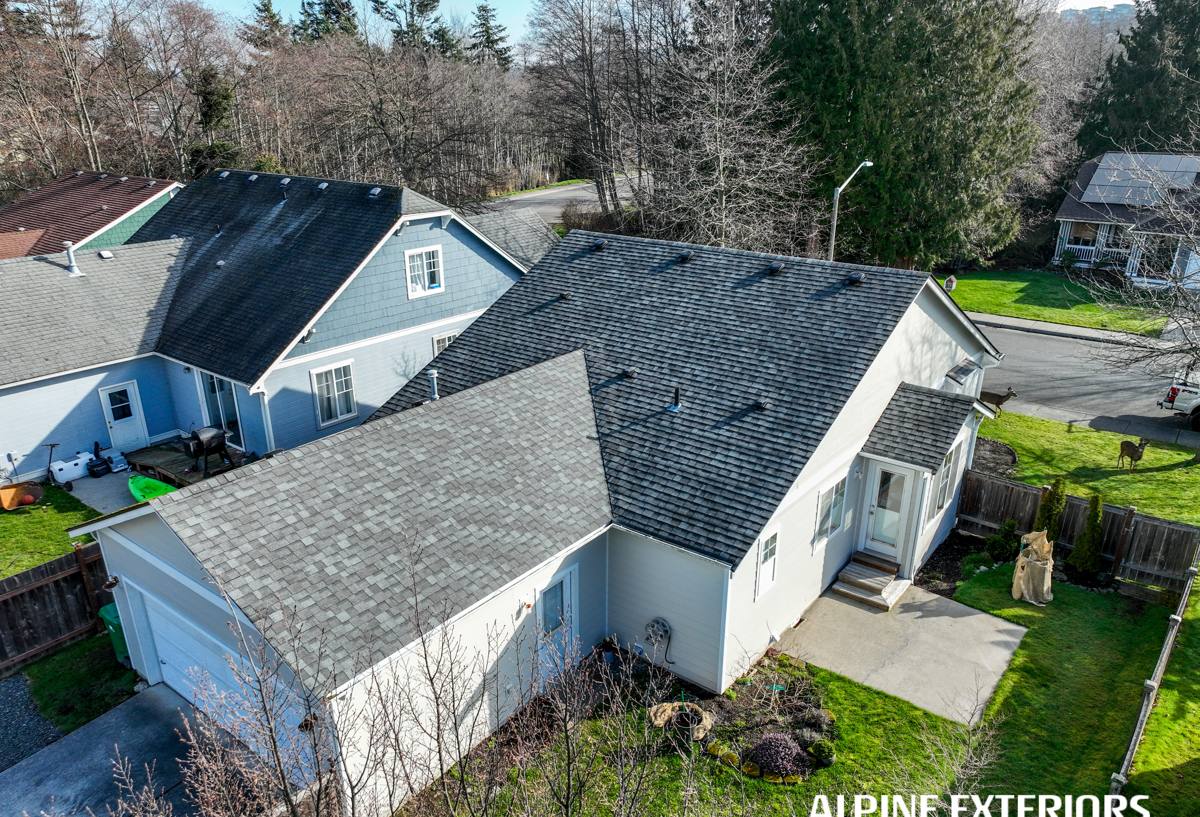
What Laurel Park's Climate Actually Demands From a Shingle Roof
Wind Resistance
Florida Building Code requires roofing assemblies in this part of the state to meet specific wind-uplift ratings, and Sarasota County enforces those requirements through permitting and inspection. For asphalt shingles, that means using products rated for high-wind zones, installed with the correct nailing pattern (not just nail count, but placement), and paired with starter strip and hip/ridge products designed to resist wind uplift at the edges and ridges — the areas that fail first in a storm.
UV and Heat
Central Florida sun degrades the asphalt and granule bond in shingles faster than in northern climates. Shingle quality matters here — cheaper mats and thinner granule coats lose their protective layer sooner, which accelerates cracking and leaves the underlying asphalt exposed to further UV breakdown.
Wind-Driven Rain
Straight-down rain is not the main threat to a Laurel Park roof. Wind-driven rain that gets pushed sideways and upward under shingle edges, around penetrations, and along flashing details is what actually causes leaks. That's an underlayment and flashing detailing issue as much as a shingle issue.
Salt Air Corrosion
Proximity to the bay means metal components — nails, flashing, vent boots, drip edge — corrode faster than they would further inland. Using corrosion-resistant fasteners and flashing is not an upgrade in this neighborhood; it's a baseline requirement for the roof to last its expected service life.
Signs a Laurel Park Roof Needs Attention
Laurel Park's mature tree canopy is one of the neighborhood's best features, but it also means roofs here deal with more constant shade, debris, and organic buildup than roofs in newer, more open subdivisions. That combination shows up in specific ways:
- Dark streaking or algae growth, especially on north-facing slopes that stay shaded longer
- Granules collecting in gutters or at the base of downspouts
- Curling, cupping, or lifted shingle edges, particularly along ridges and hips
- Soft or discolored ceiling spots after heavy wind-driven rain events
- Visible nail heads (pops) working their way through the shingle surface
- Moss or debris buildup in valleys where tree litter collects and holds moisture
Any one of these on its own might be minor. Several together, especially on a roof more than 12-15 years old, usually means it's time for a professional inspection rather than a patch job.
How We Approach an Asphalt Shingle Job in Laurel Park
Inspection and Deck Assessment
Every job starts with a full inspection of the existing roof and, on replacements, the roof deck itself. Coastal humidity and past leaks can soften plywood decking in ways that aren't visible from the attic. Any compromised decking gets replaced before a single shingle goes down — installing new roofing over a weak deck just moves the problem down the road.
Underlayment Built for This Climate
We use synthetic or self-adhering underlayment appropriate for wind-driven rain exposure, with extra attention to valleys, eaves, and any low-slope transitions where water is most likely to be forced backward under normal shingle lap.
Flashing Detail Work
Chimneys, skylights, wall-to-roof transitions, and vent penetrations are where the majority of leaks originate on shingle roofs — not the open field of the roof itself. We install new flashing at every penetration rather than reusing old flashing, and we use corrosion-resistant materials given the salt air exposure this close to the water.
Ventilation
Proper attic ventilation keeps shingle temperatures down and extends shingle life, while also reducing moisture buildup that can rot decking from underneath. We evaluate intake and exhaust balance as part of every installation rather than assuming the existing vent setup is adequate.
Shingle Installation to Wind-Rated Spec
Nailing pattern, starter strip placement, and hip/ridge cap installation are done to the manufacturer's high-wind specification and Florida Building Code requirements, not a generic national standard. This is the difference between a roof that holds up in a summer squall and one that doesn't.
Shingle Options for Laurel Park Homes
| Shingle Type | Typical Wind Rating | Best Fit | Trade-Offs |
|---|---|---|---|
| 3-Tab | Lower end of rated range | Budget-conscious replacements on lower-exposure roof planes | Shorter service life in coastal wind and UV; least expensive upfront |
| Architectural (Laminated) | Mid-to-high, depending on product line | Most Laurel Park homes; balances cost, durability, and appearance | Higher upfront cost than 3-tab, but noticeably longer service life here |
| Impact-Rated / High-Wind Line | Highest available for asphalt shingles | Homes wanting maximum storm resistance, or where insurance credits apply | Highest material cost; may qualify for wind mitigation insurance discounts |
We don't push homeowners toward the most expensive option by default. The right choice depends on the roof's exposure, the home's insurance situation, and how long the homeowner plans to stay in the house. We'll walk through the honest trade-offs for your specific roof rather than a one-size answer.
Repair or Full Replacement?
Not every issue on a Laurel Park roof means a full tear-off. Isolated flashing failures, a handful of wind-lifted shingles after a storm, or a single damaged valley can often be repaired properly without replacing the whole roof — provided the shingle field around the repair is still in reasonably sound condition and can still be matched or blended acceptably.
Full replacement makes more sense when the shingles themselves are past their effective service life (granule loss, widespread curling, brittle mat), when there's evidence of decking damage in multiple areas, or when a homeowner is trying to qualify for updated wind mitigation insurance credits that older roofs typically don't meet. We'll give you a straight answer on which category your roof falls into — we don't have any incentive to sell a replacement when a repair will genuinely hold up.
Why Local Experience in Laurel Park Matters
A roofing crew that regularly works in and around Sarasota, including established neighborhoods like Laurel Park, already understands the permitting process through Sarasota County, the wind-uplift requirements that apply to this coastal zone, and the practical realities of working on homes with mature landscaping and tighter lot setbacks. That translates into fewer surprises during the job — correct permits pulled up front, realistic protection plans for landscaping and walkways, and a crew that isn't learning the local code requirements on your roof.
It also matters after the job is done. A local crew is reachable if a question comes up during the next storm season, and stands behind workmanship on a roof they can actually come back and look at in person.
Questions Worth Asking Before You Hire
- Are you licensed and insured to work in Sarasota County, and can you provide proof?
- What shingle wind rating do you install as standard for this area, and why?
- Will you pull the required permit, or is that left to the homeowner?
- What underlayment and flashing materials do you use, and are they corrosion-resistant for coastal exposure?
- How do you handle attic ventilation as part of a shingle roof installation?
- What's your process if hidden deck damage is found once the old roof comes off?
A contractor who answers these clearly and specifically, without vague reassurances, is generally one worth trusting with the job.
Maintaining a Shingle Roof in Laurel Park
Between installations, a few simple habits extend a shingle roof's life in this climate significantly. Keep gutters and valleys clear of leaf litter and debris from the neighborhood's tree canopy, since trapped organic matter holds moisture against the shingles longer than normal rainfall would. Have the roof visually inspected after any significant wind event, even if no interior leak shows up right away — wind damage doesn't always announce itself immediately. And keep an eye on algae streaking, which is common in shaded, humid conditions and is more of a cosmetic and granule-protection issue than a structural one, but worth addressing before it spreads.
If you're in Laurel Park and want a straight answer on the condition of your roof, or you're planning ahead for a replacement before the next storm season, we're happy to take a look. Reach out for a free, no-pressure estimate using the form below — we'll assess your roof honestly and explain your options in plain terms.