 Sarasota Siding
 New Construction in a Coastal Downtown
Downtown Sarasota is one of the more active pockets of new residential construction on the Gulf Coast. Teardown-rebuilds, ground-up infill homes near the bayfront, condo renovations, and additions to older properties are all common within a few blocks of Main Street and the waterfront. Every one of those projects has the same moment where the window package either gets installed correctly the first time, or becomes a callback and a warranty headache a few years down the road.
New-construction window installation is a different job than swapping out an old window in an existing wall. It happens before the exterior finish goes on, it has to integrate with the house wrap and flashing system, and it has to be coordinated with a general contractor's schedule. Get that sequence wrong and the window itself can be perfect while the wall around it still leaks. Get it right and the window becomes part of a weathertight building envelope built for Sarasota County's climate, not just a box installed in an opening.
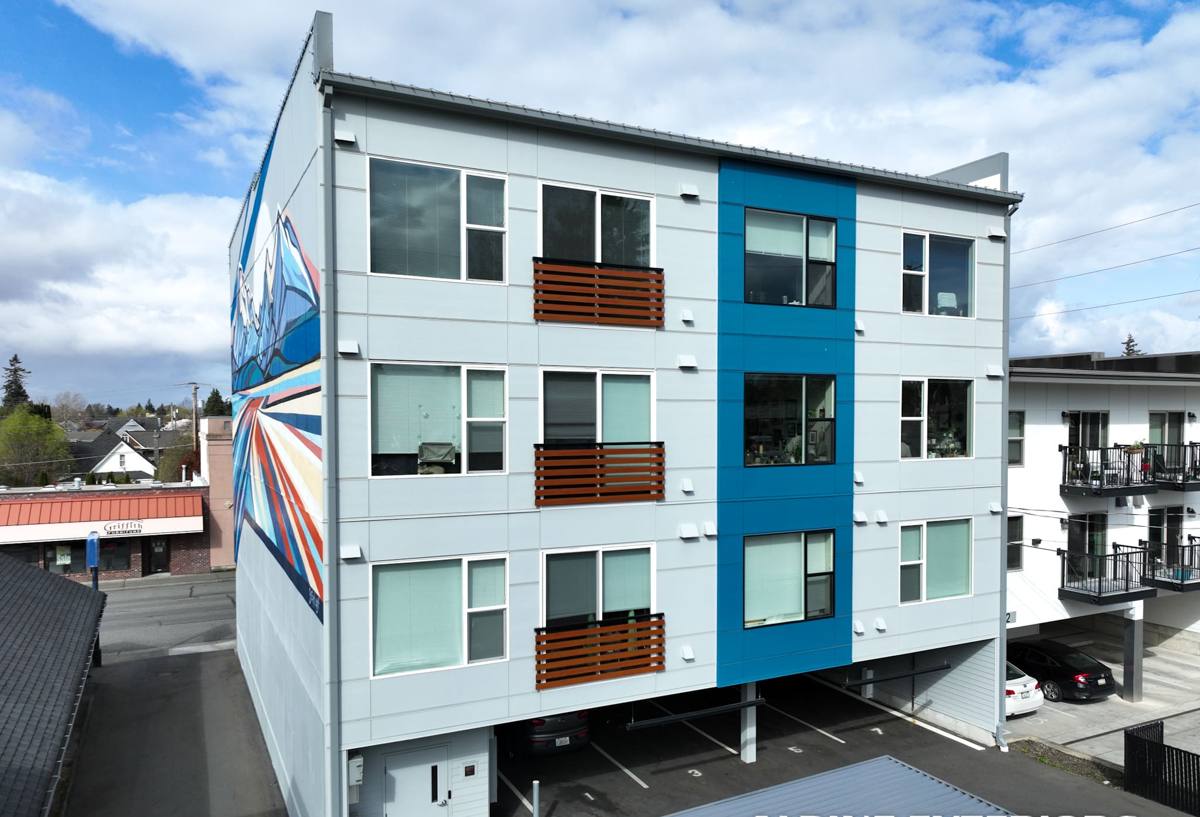
What Downtown Sarasota's Climate Demands from New Windows
Sarasota sits in Florida's wind-borne debris region, and homes here deal with hurricane-force wind events, intense year-round UV exposure, wind-driven rain, and salt air moving in off the Gulf and the bay. New-construction windows have to be selected and installed with all four of those in mind from day one — not retrofitted later.
Wind and Wind-Borne Debris
Florida Building Code requires openings in this region to either be impact-rated or protected by approved shutters, and the window's design pressure (DP) rating has to match the home's exposure category, height, and location. A window that's fine three blocks inland can be under-rated for a more exposed lot closer to the water.
UV and Heat
Year-round Florida sun breaks down vinyl, degrades sealants, and fades interior finishes faster than in most parts of the country. Frame material and glass coatings both matter more here than in a milder climate.
Wind-Driven Rain
Sarasota's storms don't just drop rain straight down — wind pushes it sideways and up under trim and flashing. A window can carry a perfect impact rating and still leak if the flashing detail around it is wrong.
Salt Air
Being close to Sarasota Bay and the Gulf means airborne salt is a constant, low-grade threat to hardware, fasteners, and untreated metal. Corrosion-resistant components aren't optional upgrades here — they're standard practice.
New-Construction Installation vs. Replacement: Why the Method Matters
New-construction windows use a nailing flange (fin) that fastens directly to the wall sheathing and integrates into the building's water-resistive barrier before siding, stucco, or brick veneer goes over it. This is different from a pocket or "insert" replacement window, which fits inside an existing frame in a wall that's already finished.
Because the flange method ties directly into the wall's flashing system, it has to happen in the right order:
- Rough openings are framed to the window manufacturer's exact specifications, including allowance for shim space.
- House wrap or a comparable water-resistive barrier is installed and lapped correctly at the opening.
- A sloped sill pan is installed at the bottom of the opening so any water that gets past the window drains back out, not into the wall cavity.
- The window is set, leveled, and fastened through the nailing fin per the manufacturer's approved fastening schedule.
- Flashing tape or flashing membrane is applied over the fin at the jambs and head, shingle-style, so water always sheds outward and downward.
- The exterior finish — stucco, siding, or veneer — is installed over that flashing assembly, and interior sealant and insulation close out the opening.
Skip or reorder any of those steps and the window can look installed correctly from the outside while the wall behind it is set up to trap water. That's the failure mode we see most often when we're called in to diagnose a leak in a relatively new Downtown Sarasota home — it's rarely the window itself, it's almost always a flashing or sequencing mistake made during the original install.
Choosing the Right Window for a Coastal New Build
For a Downtown Sarasota project, the window selection conversation usually comes down to three things: impact protection, the design pressure rating for that specific opening and elevation, and frame material.
Impact Glazing and Design Pressure
Florida Building Code requires openings in this wind-borne debris region to have impact-rated glazing or approved protection. Impact-rated windows are tested against large and small missile impact and cyclic pressure to simulate a hurricane event, and they carry a Florida Product Approval number tied to their tested design pressure. That DP number needs to match what the structural plans call for at each specific opening — a large picture window on an exposed second-floor wall typically needs a higher rating than a small bathroom window on a protected elevation.
Frame Material
| Frame Material | Salt Air / Corrosion Resistance | UV / Heat Performance | Typical Maintenance |
|---|---|---|---|
| Vinyl | Very good — won't corrode, but hardware quality varies | Good with UV-stabilized formulations; lower-grade vinyl can yellow or warp over time | Low — occasional cleaning |
| Aluminum | Fair — needs marine-grade or coated hardware and finishes near the coast | Very good structurally; can conduct heat without a thermal break | Moderate — watch for coating wear and corrosion at fasteners |
| Fiberglass | Excellent — dimensionally stable, resists salt and moisture well | Excellent — very low expansion/contraction under sun exposure | Low, but carries a higher upfront cost |
There's no single "correct" answer for every home — a lot of it depends on architectural style, budget, and how exposed the specific elevation is. What matters is that the choice is made deliberately, with Sarasota's coastal conditions factored in, rather than defaulting to whatever's cheapest at the supply house.
Our New-Construction Window Installation Process
Here's how we approach a new-construction window package on a Downtown Sarasota project:
- Plan review. We review architectural and structural plans with the builder to confirm window schedules, DP ratings, and rough opening sizes before anything is ordered.
- Rough opening verification. We check every opening on site against the window schedule for square, plumb, and correct dimensions before install day, so we catch framing issues while they're still cheap to fix.
- Sill pan and flashing installation. Sloped sill pans and flashing membrane go in first, tied into the house wrap or WRB per the manufacturer's approved details.
- Window setting. Units are set, shimmed level and plumb, and fastened through the nailing fin using the fastening schedule required to meet the window's rated design pressure.
- Jamb and head flashing. Flashing is layered shingle-style over the fin so water always drains outward, never behind the barrier.
- Interior and exterior seal. Low-expansion foam or backer rod and sealant close the gap around the frame without bowing it, and interior trim and sill details are finished out.
- Walkthrough with the GC. We document the install and flag anything the exterior finish crew needs to know before stucco or siding closes it in.
That last step matters more than it sounds like it should. Once stucco or siding covers a window's flashing, nobody can verify it was done right without cutting into a finished wall. We treat that walkthrough as the last chance to catch a problem while it's still fixable for free.
Working With Your Builder, Architect, and Local Permitting
Most new-construction window jobs Downtown aren't standalone projects — they're one piece of a larger build managed by a general contractor, and often reviewed by an architect and, for condo or platted infill lots, a homeowners' or architectural review board. We coordinate directly with the GC's schedule so window delivery and install line up with framing and dry-in, instead of holding up the exterior finish crew or getting installed before the opening is truly ready.
Permitting in Sarasota County and the City of Sarasota requires window installations to be tied to approved product data — the Florida Product Approval or equivalent documentation for the specific unit and its rated design pressure — matched to the wind zone and exposure category for that address. We handle that documentation as part of the job so it's ready for inspection, not scrambled together after the fact.
What New-Construction Windows Cost to Get Right
Pricing on a new-construction window package depends on more variables than most homeowners expect, and it's rarely useful to quote a single number without knowing the specifics of the project. In general, expect the total to run from several hundred to well over a thousand dollars per opening installed, with whole-house new-construction packages varying widely based on the factors below.
| Cost Factor | Why It Moves the Price |
|---|---|
| Design pressure rating required | Higher-DP impact units for exposed elevations cost more than standard-rated units |
| Frame material | Vinyl is typically the most economical; fiberglass carries a premium for its durability |
| Glass package | Low-E coatings, tinting, and laminated impact glass all add cost over basic clear glass |
| Size and configuration | Large picture windows, sliders, and custom shapes cost more than standard operable units |
| Number of openings | Whole-house new construction pricing benefits from volume compared to a handful of openings |
| Site access and schedule | Multi-story installs or tight downtown lots with limited staging space can add labor time |
We'd rather walk a specific project and give an honest number than guess in the abstract — the range above is meant to set expectations, not replace an actual estimate.
Keeping New-Construction Windows Performing in Sarasota's Climate
A correctly installed window still needs some basic upkeep to hold up against year-round Gulf Coast conditions. A quick seasonal checklist:
- Inspect exterior caulk and sealant joints annually for cracking or separation, especially after a busy storm season.
- Rinse frames and hardware periodically to clear salt residue, particularly on homes within a few blocks of the water.
- Check that weep holes at the base of the frame stay clear of dirt, paint overspray, and debris so water can drain out properly.
- Test locks and hardware operation each season — salt air can stiffen or corrode moving parts faster than in inland climates.
- Watch for any staining or soft spots on interior trim or drywall near windows after heavy rain, which can signal a flashing issue worth catching early.
Why Hire a Crew That Already Works Downtown Sarasota
New-construction window work rewards familiarity with the specific area it's happening in. A crew that regularly works Downtown Sarasota already understands the wind zone and exposure requirements for different parts of the neighborhood, knows what Sarasota County and City of Sarasota inspectors are looking for at rough-in and final, and is used to coordinating around tight urban lots, condo association requirements, and active job sites shared with other trades. That familiarity shows up as fewer surprises, fewer schedule delays, and fewer callbacks after the exterior finish is closed in.
If you're planning a new build, addition, or full-frame window package for a Downtown Sarasota property, we're glad to walk the plans or the site with you and put together a straightforward, no-pressure estimate using the form below.