 Sarasota Siding
 Nokomis Sits Right at the Edge of Sarasota's Toughest Weather
Nokomis is one of those Sarasota County communities where the Gulf isn't an abstract idea — it's close enough that the weather it produces shapes how a house needs to be built. Homes here take a steady beating from four things at once: hurricane-force wind events, wind-driven rain that finds its way through anything less than a properly sealed assembly, intense year-round UV that breaks down seals and finishes faster than it would inland, and salt-laden air that accelerates corrosion on hardware and fasteners. Any one of those on its own is manageable. All four, over years, is what separates a window that lasts two decades from one that starts failing in five.
Custom windows for a Nokomis home aren't a luxury upgrade — they're the correct response to a specific set of conditions. "Custom" here doesn't mean ornamental. It means sized, engineered, and installed to match your home's actual openings, your actual wind exposure, and Sarasota County's actual code requirements, rather than forcing a stock size into a rough opening and calling it done.
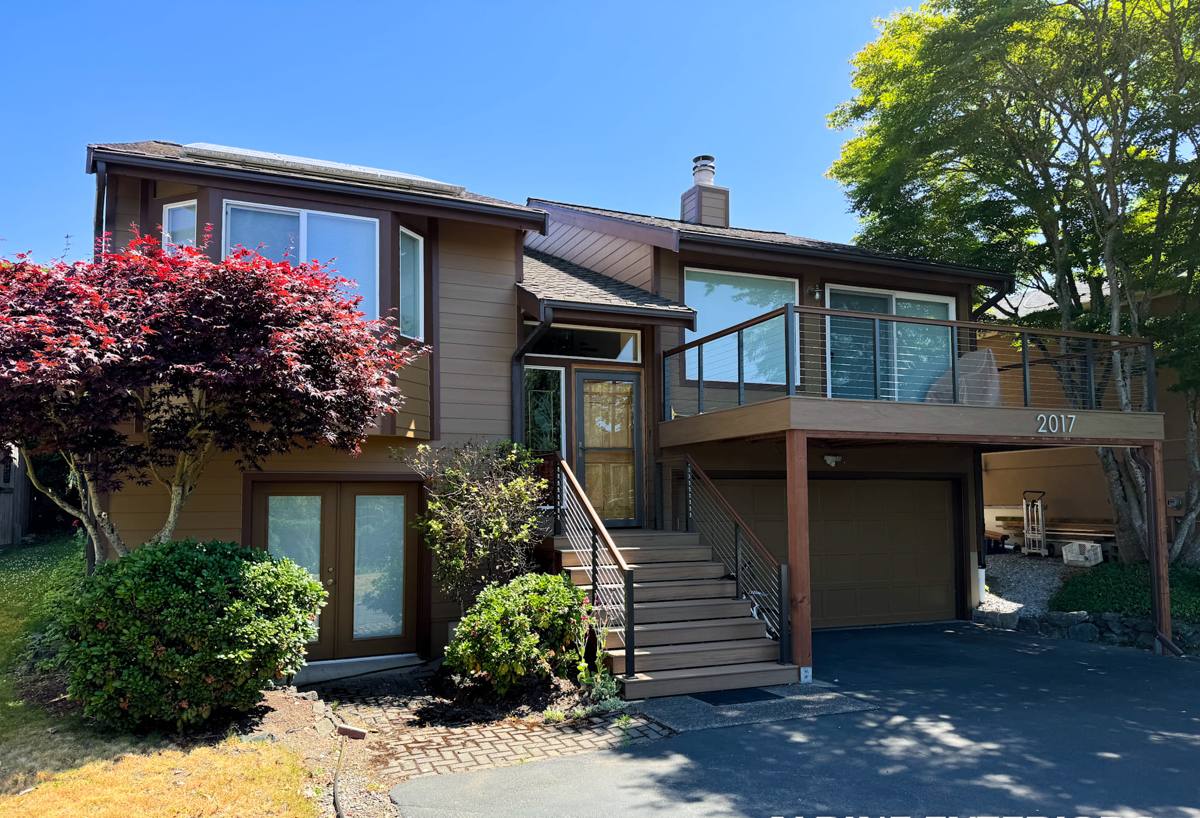
What "Custom" Actually Means on a Job Like This
A lot of homeowners hear "custom windows" and assume it's about style — grid patterns, tinted glass, a particular frame color. Those things matter for curb appeal, but the real value of a custom approach shows up in the parts you don't see once the job is finished.
Exact Opening Measurements
Older Nokomis homes, especially anything built in stages or renovated over the years, rarely have perfectly square, perfectly consistent openings. A stock window forced into an out-of-square opening gets shimmed and caulked to fit — and that gap-filling is exactly where wind-driven rain gets in during a storm. Custom-sized units are built to the opening as it actually exists, not as it was supposed to be.
Engineered for Your Specific Wind Exposure
Wind load isn't the same for every wall of every house. A window on an exposed second-story gable faces different pressure than one tucked under a covered lanai. Custom specification means each opening gets glass and framing rated for what that specific location will see, not a single generic spec applied everywhere.
Matched to the Home's Structure
Frame depth, mounting method, and anchoring all have to match the wall assembly behind them — block, wood frame, or a mix, which shows up often in homes that have been added onto over time. Getting this wrong doesn't just look bad; it compromises the water and wind seal at exactly the point where failure matters most.
The Climate Factors, One at a Time
Hurricane-Force Wind
Wind load is the most obvious factor and the one Florida Building Code addresses most directly. Windows have to resist both direct pressure and, in many cases, windborne debris impact without the frame twisting, the glass failing, or the unit pulling loose from the opening.
Wind-Driven Rain
This is the one that causes the most quiet, expensive damage. Rain during a tropical storm or hurricane doesn't fall straight down — it's driven sideways under pressure, and it will find any weak point in a sill pan, a sealant joint, or a poorly integrated flashing detail. Most window "failures" homeowners discover after a storm aren't broken glass — they're water stains on drywall from a leak that had nothing to do with the glass itself and everything to do with installation.
Year-Round UV
Sarasota County gets strong sun exposure for most of the year, not just in summer. UV breaks down vinyl, degrades sealants, and fades interior finishes near windows faster than in less sunny climates. Frame material and glass coating both need to account for this, or you're looking at premature yellowing, brittleness, and seal failure well before a window's expected lifespan.
Salt Air
Proximity to the Gulf means airborne salt settles on everything, including window hardware. Locks, cranks, hinges, and fasteners that aren't rated for coastal exposure corrode faster here than they would twenty miles inland. This is one of the most overlooked factors in window selection — the glass and frame can be perfect, and the job still fails early because of the wrong hardware.
Frame Material: What Actually Holds Up Here
| Material | Wind/Impact Performance | UV & Salt Air Behavior | Maintenance |
|---|---|---|---|
| Impact-rated vinyl | Strong when properly reinforced | Good UV-stabilized formulations resist fading; low corrosion risk | Low — no painting, occasional cleaning |
| Aluminum (coastal-rated) | Very strong, good for larger openings | Needs marine-grade coatings and hardware to resist salt corrosion | Moderate — check fasteners and finish periodically |
| Fiberglass | Excellent strength-to-weight, stable in heat | Excellent UV and corrosion resistance | Low — very stable, higher upfront cost |
| Wood-clad | Depends on cladding and impact glass used | Interior wood needs protection from humidity and UV at the sill | Higher — periodic sealing and inspection |
There isn't a single "correct" material for every Nokomis home — it depends on the opening size, the look you want, and your budget. What matters is that whichever material you choose is specified in a coastal-rated configuration, not a standard inland version of the same product.
What Correct Installation Looks Like
The window itself is only part of the equation. A properly rated window installed incorrectly will still leak, still rack in high wind, and still void its own warranty. A correct Nokomis installation includes:
- A sill pan or flashing system that directs any water that does get past the frame back outside, rather than into the wall cavity
- Fastening patterns that match the manufacturer's tested and approved installation instructions — not a generalized pattern used on every job
- Sealant and backer rod appropriate for both wind and moisture, applied in the correct sequence relative to flashing, not just caulked over the gap afterward
- Proper shimming so the frame stays square and doesn't rely on the sealant to hold shape under wind load
- Hardware upgraded or confirmed to be rated for coastal salt exposure
Our Process for a Nokomis Job
1. On-Site Assessment
We start by measuring every opening individually and looking at wall construction, current window condition, and any signs of past water intrusion. This is also where we talk through your priorities — energy performance, noise reduction, appearance, or simply matching what's required for wind resistance.
2. Product Selection and Specification
We match glass and frame ratings to each opening's actual exposure, not a single blanket spec for the whole house. Where an opening needs a higher wind or impact rating because of its location or size, we spec it accordingly.
3. Permitting
Window replacement in Sarasota County requires a permit, and inspections are part of the process. We handle the permit application and schedule inspections so the work is documented and code-compliant — this matters for insurance and for resale down the road.
4. Removal and Prep
Old units are removed carefully to protect the opening and surrounding finishes. We check the substrate underneath for any hidden moisture damage before a new window goes in — installing over an already-compromised opening just locks the problem inside the wall.
5. Installation
Flashing, fastening, and sealing are done to manufacturer specification and local code, in the correct order, not compressed to save time.
6. Final Inspection and Walkthrough
We walk the job with you, confirm operation on every unit, and make sure the county inspection is scheduled and passed before we consider the job finished.
Signs Your Current Windows Are Already Losing the Fight
- Fogging or condensation between panes (seal failure in the insulated glass unit)
- Difficulty opening, closing, or locking — often a sign the frame has racked out of square
- Visible frame chalking, yellowing, or brittleness from UV exposure
- Corroded or stiff hardware, especially locks and cranks
- Water staining on interior walls or sills after storms
- Drafts or noticeable outside noise that wasn't there when the windows were newer
- Visible daylight or gaps around the frame
Any one of these is worth having looked at. Several together usually means the windows are past the point where sealant and adjustment will fix the underlying problem.
Cost Factors to Understand Before You Get Quotes
| Factor | Why It Moves the Price |
|---|---|
| Number and size of openings | More glass area and more units means more material and labor |
| Wind/impact rating required | Higher-rated glass and reinforced frames cost more than standard units |
| Frame material | Fiberglass and coastal-rated aluminum typically run higher than standard vinyl |
| Existing wall condition | Hidden moisture damage found during removal adds repair work before installation |
| Access and second-story work | Upper-floor openings require more labor and equipment |
| Custom shapes or sizes | Non-standard openings cost more than stock sizes even in a custom line |
We'll give you an honest range once we've actually looked at your openings — broad ballpark numbers without seeing the house aren't useful to you, and we'd rather not guess.
Why Local Experience in This Specific Area Matters
A crew that works Nokomis and the surrounding Sarasota County area regularly already knows the practical realities that don't show up in a spec sheet: how the local permitting office wants documentation submitted, what inspectors here actually check for, and how homes in this area were typically built depending on when they went up. That familiarity shortens the permitting timeline and reduces the odds of a failed inspection or a change order mid-project.
It also means we're not guessing about how Gulf-adjacent exposure behaves over time — we see the corrosion patterns, the UV fade, and the water intrusion points that show up in this specific area, and we specify and install accordingly rather than applying a generic approach built for a different climate.
Maintaining Custom Windows in a Coastal Climate
Even a correctly specified and installed window benefits from basic upkeep in this environment:
- Rinse frames and hardware periodically to remove salt buildup, especially after long dry spells followed by storms
- Inspect exterior sealant annually for cracking or separation, particularly after hurricane season
- Operate locks and cranks regularly rather than leaving windows untouched for months at a time, so corrosion or stiffness is caught early
- Have any fogging, drafts, or operational issues checked promptly rather than waiting — small seal failures get worse, not better
If you're weighing whether your current windows need attention or you're ready to plan a replacement, we're glad to walk your property, look at each opening, and give you a straight, no-pressure estimate — no guesswork, no upsell, just an honest read on what your Nokomis home actually needs.