 Sarasota Siding
 Deck Building in Nokomis: Built for the Way This Coast Actually Wears Materials
Nokomis sits close enough to the Gulf that salt air, humidity, and sun exposure shape everything about how an outdoor structure ages. A deck built with inland specs — standard fasteners, the wrong wood treatment, a framing plan that ignores wind uplift — will show problems within a few years here, not decades. We build decks in Nokomis and across Sarasota County with that reality in mind from the first stake in the ground, not as an afterthought once the boards are already down.
This page covers what a properly built Nokomis deck actually requires, how our process works from first call to final walkthrough, and why local experience matters more with decks than with almost any other exterior project.
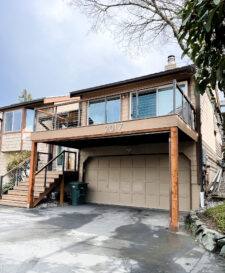
What Nokomis's Climate Does to a Deck
Four conditions drive almost every deck failure we get called out to inspect or repair in this area:
- Hurricane-force wind: A deck attached to the house needs a ledger connection and post bracing rated for real uplift and lateral loads, not just gravity support for foot traffic.
- Intense year-round UV: Florida sun breaks down composite surface layers, dries out and checks natural wood, and fades finishes faster than most homeowners expect coming from other regions.
- Wind-driven rain: Rain here doesn't just fall — it drives sideways into ledger boards, joist hangers, and post bases where standing water and trapped moisture start rot and corrosion.
- Salt air: Even set back from the water, Nokomis gets enough salt-laden air to accelerate corrosion on standard fasteners and connectors within a handful of years.
None of these are exotic problems. They're the ordinary operating conditions for any deck in this part of Sarasota County, and they're why a deck spec that works fine in a drier, calmer climate can fail early here.
Where We See Deck Failures Start
In our repair and inspection work around the area, the same failure points come up repeatedly: ledger boards bolted with standard hardware instead of corrosion-resistant fasteners, joist hangers that were never properly flashed and started rusting from the inside out, post bases sitting in standing water because the surrounding grade wasn't sloped away, and surface boards that were installed without gaps sized for Florida's humidity swings. Almost every one of these is a build-phase decision, not a material defect — which is why we treat the build phase as the place to get it right the first time.
What Correct Deck Construction Looks Like Here
Framing and Structure
The framing is the part of a deck nobody sees once it's finished, and it's the part that determines whether the deck is still solid in ten years. For Nokomis conditions, that means pressure-treated framing rated for ground contact where it touches soil or sits low, joist spacing sized to the actual decking product (composite and PVC generally need tighter spacing than wood), and a ledger attachment engineered for wind uplift rather than just weight-bearing loads — this is one of the most commonly under-built parts of a deck and one of the most consequential in a storm.
Fasteners and Connectors
This is where a lot of decks quietly fail years before the surface shows it. We use stainless steel or heavy hot-dip galvanized fasteners and connectors rated for coastal exposure — standard electro-galvanized hardware corrodes noticeably faster in salt air and humidity, and once a joist hanger or post connector weakens, the failure isn't cosmetic, it's structural.
Post Bases and Footings
Posts need to be set on footings sized for local soil and code, with post bases that keep wood off standing water rather than embedded in concrete or sitting flush with wet grade. Proper drainage grading around footings prevents the pooling that causes slow rot nobody notices until a post starts to give.
Decking Surface Choices
Whether the homeowner chooses wood, composite, or PVC decking, the installation details matter as much as the product: correct gapping for expansion and drainage, hidden fastener systems where appropriate, and finish or coating applied to manufacturer spec rather than skipped to save a step.
Decking Material Comparison for Nokomis Conditions
| Material | UV/Sun Performance | Moisture Handling | Maintenance |
|---|---|---|---|
| Pressure-treated wood | Fades and grays without regular refinishing | Good if sealed and maintained; vulnerable if not | Highest — sealing/staining every 1-2 years in this sun |
| Composite decking | Fade-resistant, but quality varies by product line | Handles humidity well; core matters more than surface | Low — occasional cleaning |
| PVC/capped decking | Strongest UV resistance of the common options | Fully moisture-resistant, no organic core to absorb water | Lowest — cleaning only |
| Tropical hardwoods | Naturally UV-tolerant but will gray without oiling | Naturally moisture-resistant if properly installed | Moderate to high depending on species and finish |
There's no single "right" answer for every homeowner — budget, maintenance appetite, and the look you want all factor in. Our job is to walk through those trade-offs honestly rather than push whatever has the best margin, and to make sure whichever material you choose is installed the way its manufacturer actually specifies for Florida exposure.
How We Approach a Nokomis Deck Project
1. On-Site Assessment
We walk the property, look at grade and drainage around the planned footprint, check the house structure where the deck will attach, and talk through how the space will actually be used — entertaining, grilling, a quiet spot off a bedroom — because that shapes size and layout decisions as much as the lot does.
2. Design and Material Selection
We lay out framing and decking material options with honest cost and maintenance trade-offs, sized to your budget and the structural requirements for this climate — not a one-size-fits-all package.
3. Permitting
Deck construction in Sarasota County typically requires a building permit, and in wind-exposed and coastal areas the structural requirements are stricter than in many inland jurisdictions. We handle the permitting process and build to the load and connection standards it requires, so you're not left guessing whether the work will pass inspection.
4. Construction
Footings and framing go in first, inspected before decking covers them up, followed by the decking surface, railings, and any stairs or finish details.
5. Final Walkthrough
We walk the finished deck with you, check railing security, surface fastening, and finish details, and answer maintenance questions specific to the material you chose.
Railings, Stairs, and Code Requirements
Railings and stairs aren't optional add-ons — they're code-governed safety components, and Florida's building code sets specific height, spacing, and load requirements for them. Baluster spacing has to prevent a small child from passing through, railing height has to meet minimum code thresholds, and stair stringers need to be sized for the actual run and rise rather than eyeballed. We build these to code as a baseline, not as an upgrade option, because a deck that fails a railing inspection is a deck that isn't finished.
Maintenance Reality for Nokomis Homeowners
Every deck material needs some upkeep in this climate — the question is how much and how often. Wood decks need the most attention: regular cleaning, periodic sealing or staining, and inspection of fasteners for corrosion. Composite and PVC decking need far less — mainly periodic washing to keep salt residue and organic buildup from dulling the surface — but "low maintenance" doesn't mean "no maintenance," and skipping even basic cleaning shortens the life of any surface exposed to Gulf Coast air.
A Simple Seasonal Checklist
- Rinse salt residue and debris off the surface every few weeks, more often close to the water
- Check railing posts and connections for looseness after any major storm
- Look underneath at joist hangers and post bases once or twice a year for rust or standing water
- Reseal or restain wood surfaces on the schedule the product actually requires — don't stretch it to save time
- Keep gutters and downspouts near the deck clear so runoff isn't draining directly onto footings
Repairing or Replacing an Existing Deck
Not every project in Nokomis is new construction. A lot of our calls are for decks that were built years ago, sometimes before current wind and connection standards, and are now showing soft spots, rusted hardware, or railing that's gone loose. We inspect the framing underneath before recommending anything — sometimes a deck just needs new fasteners and a resurfaced top, and sometimes the framing itself has degraded enough that a full rebuild is the honest recommendation. We'll tell you which one it actually is rather than defaulting to the bigger job.
Why Local Experience Matters for This Project
Deck building looks straightforward from the outside, but the details that make a deck last in Nokomis are specific to this coastline: the fastener grade that holds up to salt air, the ledger connection that accounts for real storm wind, the drainage grading that keeps footings dry through a wet season. A crew that's built and repaired decks throughout Sarasota County has already seen which shortcuts fail first here, and builds to avoid them from the start rather than learning it on your project. That's the difference between a deck that needs attention every year and one that quietly holds up through hurricane season after hurricane season.
If you're planning a new deck or need an honest look at one that's already showing its age, we're happy to come out, walk the site, and give you a straightforward, no-pressure estimate — just fill out the form below to get started.