 Sarasota Siding
 Why Nokomis Decks Wear Out Faster Than Homeowners Expect
A deck in Nokomis lives a harder life than the same deck would in most parts of the country. Sarasota County sits on the Gulf, and that proximity to salt water means airborne salt settles on every exposed surface, including your deck boards, railings, and every fastener holding the structure together. Add in near-constant UV exposure, long stretches of high humidity, and the wind-driven rain that comes with our storm season, and you have a combination that breaks down decking materials from multiple directions at once. Wood fibers dry out and crack under the sun, then swell again when rain gets driven into open grain by hurricane-force gusts. Metal fasteners corrode faster near the coast than manufacturers' general lifespan estimates assume. None of this means a deck can't last in Nokomis — it means it has to be built and replaced with these specific stresses in mind, not with a generic approach borrowed from a cooler, drier climate.
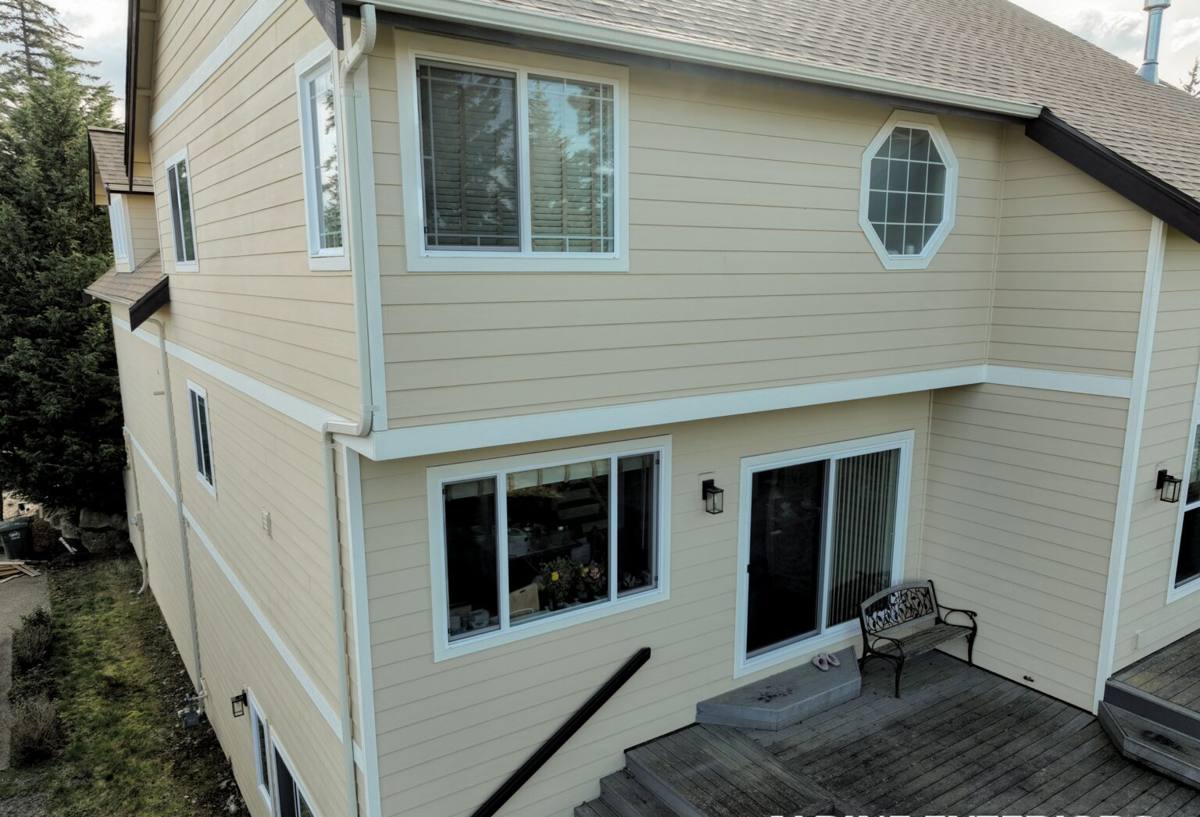
Signs a Deck Has Crossed From "Fixable" to "Replace It"
Not every problem deck needs a full teardown. But there's a point where patching boards or sistering a joist stops being a real fix and starts being a way to delay the inevitable while spending money that doesn't buy you much extra life. Some signs point clearly toward replacement rather than repair:
- Soft or spongy spots in decking boards, especially near the house or around posts, which usually means moisture has been sitting in the wood
- Rust staining or visible corrosion around fastener heads, a common issue in salt-air environments even on decks that look structurally fine from a distance
- A ledger board (where the deck attaches to the house) that shows gaps, water staining, or movement when the deck is loaded
- Posts or footings that have shifted, are undersized for current code, or were never properly set below grade
- Boards that have cupped, split, or delaminated across a large percentage of the deck surface rather than in isolated spots
- A railing system that flexes or feels loose, which is a safety issue, not a cosmetic one
If more than one or two of these show up, or if the deck is old enough that the framing underneath hasn't been inspected in years, replacement is usually the more honest recommendation than another round of spot repairs.
Choosing Decking Material for Nokomis's Salt Air and Sun
There's no single "best" decking material for every homeowner — it depends on budget, how much upkeep you're willing to do, and how the deck will be used. What matters is understanding the honest trade-offs of each option under Sarasota County conditions before you commit.
| Material | How It Handles UV & Salt Air | Maintenance | Trade-Offs |
|---|---|---|---|
| Pressure-treated wood | Needs consistent sealing to resist UV drying and salt exposure | Annual cleaning and resealing recommended | Lowest upfront cost, shortest realistic lifespan without upkeep |
| Composite decking | Resists UV fading and moisture well when properly installed | Periodic washing, no sealing or staining | Higher upfront cost, performance varies significantly by product line and installation quality |
| PVC/capped polymer decking | Strong resistance to moisture and salt; doesn't absorb water like wood-based composites | Low — mainly rinsing off salt residue and debris | Highest upfront cost, can run hotter underfoot in direct sun |
| Tropical hardwoods (e.g., ipe) | Naturally dense and rot-resistant, but still needs oiling to prevent graying and surface checking | Regular oiling to maintain color and prevent splitting | Premium cost, heavier, requires stainless fasteners due to density and coastal exposure |
Whatever material you choose, we walk you through the real maintenance commitment before installation — not just the sales pitch. A deck that looks great on day one but gets neglected because the upkeep was underestimated isn't a win for anyone.
What a Correct Deck Replacement Actually Involves
Framing and Fasteners That Hold Up to Salt Air
The framing underneath is what determines whether a deck lasts fifteen years or fails at seven. In a coastal environment, that means using fasteners and structural connectors rated for the corrosion exposure — typically hot-dip galvanized or stainless steel, not standard coated screws that were never intended for salt-air conditions. Joists, beams, and posts need to be sized for the actual load and span, not just whatever matches the old framing, since older decks are frequently undersized by today's standards.
Ledger Attachment and Waterproofing
The ledger board — where the deck ties into your house — is the single most common point of failure on decks nationwide, and it's an even bigger risk in a climate with heavy wind-driven rain. A correct replacement includes proper flashing behind the ledger to keep water out of your home's structure, along with lag bolts or through-bolts sized and spaced to code, not just nailed on. This is the part of a deck job that's invisible once it's finished, which is exactly why it matters that it's done right the first time.
Footings Set for Florida Soil and Wind Uplift
Footings need to be set to the proper depth and diameter for the soil conditions and the wind uplift requirements in our area. Undersized or shallow footings are a common shortcut on older decks, and they're one of the first things we check before recommending a full or partial rebuild.
Permits, Wind Load, and Sarasota County Code
Deck replacement in Sarasota County generally requires a permit, and for good reason — the structural and railing requirements exist because decks fail in ways that put people at real risk, especially under hurricane-force wind loads. Depending on the scope of the project, this can involve engineered plans for framing and connections, inspections at key stages of construction, and railing height and baluster spacing that meet current code, which is often stricter than what was required when an older deck was originally built. We handle the permitting process as part of the job rather than leaving it to the homeowner to sort out, and we build to pass inspection the first time, not to scrape by.
Our Deck Replacement Process in Nokomis
- On-site evaluation — we inspect the existing deck, ledger, footings, and framing to determine what's salvageable, if anything, and what a full replacement should look like
- Material and design discussion — we go over decking, railing, and fastener options with honest trade-offs for your budget and how you use the space
- Written estimate — scope, materials, and timeline laid out clearly before any work starts
- Permitting — plans submitted and approved through Sarasota County before demolition begins
- Demolition and disposal — old decking, framing, and hardware removed and hauled off
- Framing and structural work — ledger, footings, posts, beams, and joists built or replaced to current code
- Decking and railing installation — surface material and railing system installed per manufacturer specs
- Final inspection and walkthrough — county sign-off, then a walkthrough with you before we consider the job done
Keeping a New Deck Looking Right Through Hurricane Season and Beyond
A new deck's lifespan depends as much on upkeep as on installation quality. Salt residue from Gulf air should be rinsed off periodically rather than left to sit on the surface. Wood and some composite products need periodic cleaning and, for wood, resealing on a schedule rather than "whenever it starts looking bad." Fastener heads and metal railing components are worth a visual check once or twice a year for early signs of corrosion, since catching that early is far cheaper than dealing with a failed connection later. Before hurricane season, it's worth confirming that railings are solid and that nothing has loosened over the year — a five-minute check that matters more here than almost anywhere else in the country.
Why Hiring a Crew That Already Works in Nokomis Matters
A deck replacement in Nokomis isn't the same job as a deck replacement inland or in a different climate zone, and it shouldn't be treated that way. A crew that regularly works Sarasota County properties already knows the permitting process, the wind-load and railing requirements local inspectors check for, and which fastener and material choices actually hold up against salt air rather than just looking good on a spec sheet. That familiarity shows up in fewer surprises during the permit process, fewer callbacks for corrosion or water intrusion down the line, and a deck that's genuinely built for where it sits — not a generic build dropped into a coastal environment it wasn't designed for.
If your deck in Nokomis is showing its age or you're planning a full replacement, we're glad to take a look and give you a straightforward, no-pressure estimate. Use the form below to get started — there's no obligation, just an honest read on what your deck needs.