 Sarasota Siding
 Why Bee Ridge Roofs Take a Beating
Bee Ridge sits inland from the coast but still gets the full Sarasota County weather package: long stretches of intense UV, sudden wind-driven downpours in summer, salt-laden air that drifts in on the breeze off the Gulf, and the real chance of hurricane-force wind during storm season. None of that is unique to one street or subdivision in the area, but it adds up differently depending on how old a roof is, what it's made of, and how it was originally installed.
A roof that was fine five years ago can develop weak points that only show themselves during the next hard rain or wind event. Repair work in this climate isn't just patching a leak — it's figuring out why that spot failed while the rest of the roof held, and fixing the actual cause instead of just the symptom.
The Repeat Offenders We See
- UV-brittled shingles or underlayment that crack instead of flex when wind lifts them
- Flashing around chimneys, skylights, and roof-to-wall transitions that has worked loose over time
- Clogged or undersized gutters and valleys that back water up under the roof edge
- Nail pops and fastener corrosion from humidity cycling
- Wind-lifted tabs or tiles that let water in during the next storm, even if nothing looks obviously "broken" from the ground
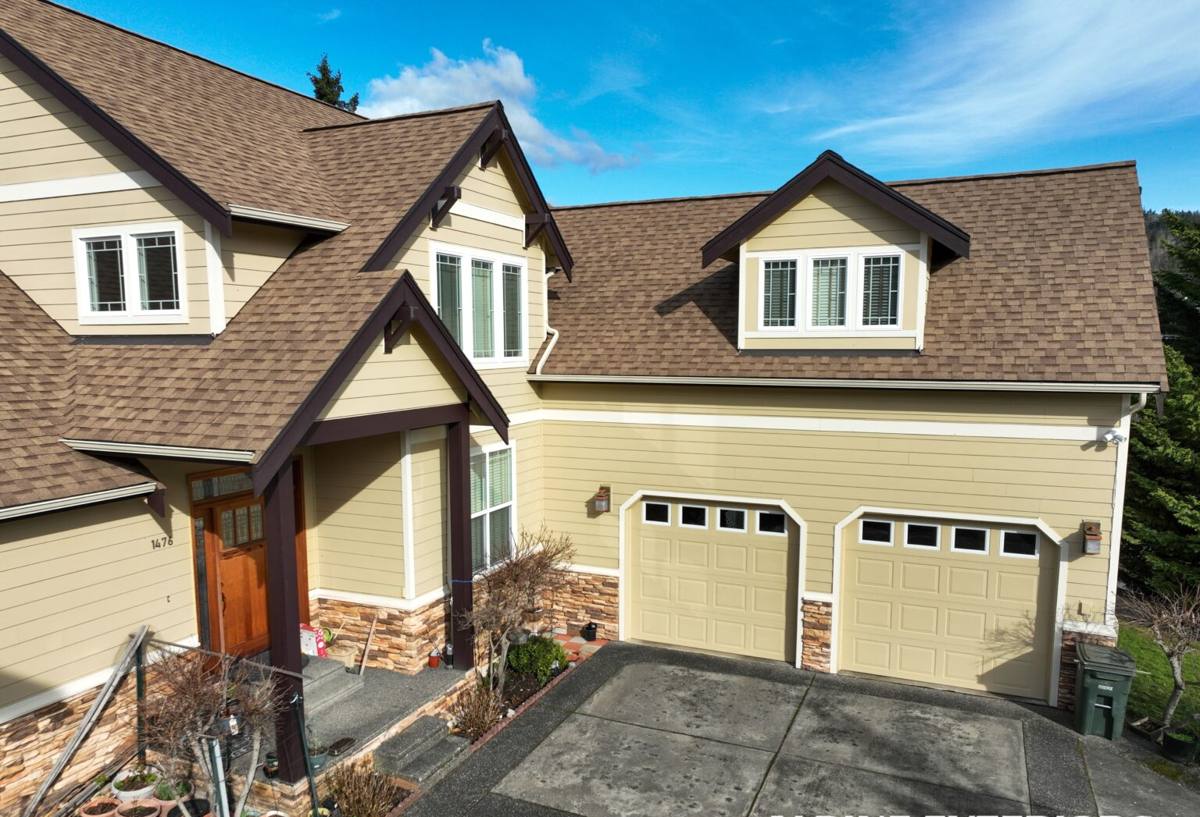
Signs Your Bee Ridge Roof Needs Repair, Not Replacement
Most homeowners call us after they've already spotted a problem — a stain on a ceiling, a missing shingle after a windy afternoon, a damp spot in the attic. The good news is that a lot of roof damage in this area is legitimately repairable if it's caught before it spreads. The key is telling the difference between an isolated, fixable issue and a sign that the roof's overall condition is failing.
| What You See | Likely Cause | Usually Repairable? |
|---|---|---|
| One or two missing/lifted shingles | Wind uplift, aging adhesive strip | Yes, if surrounding shingles are still sound |
| Small ceiling stain, no growth | Localized flashing or nail-hole leak | Yes, usually a targeted fix |
| Granules collecting in gutters | Normal shingle aging, accelerated by UV | Depends on how much granule loss and age |
| Soft or spongy roof deck underfoot | Sustained moisture intrusion, rot | Sometimes — depends on how far it's spread |
| Widespread curling or brittle shingles | UV degradation across the whole roof | Often a sign repair is a short-term fix only |
When we come out to look, we'll tell you honestly which category your roof falls into. If a repair will genuinely hold up, we recommend the repair. If the underlying material is at the end of its life, we'll say so rather than patch something that's going to keep failing.
What a Proper Roof Repair Actually Involves
A repair done right isn't just swapping the shingle or tile that's obviously damaged. Water rarely enters exactly where the stain or missing piece is — it travels along the deck or underlayment before it shows up inside. A repair crew that only replaces what's visible from the ground is likely to leave the actual entry point untouched.
The Steps We Follow
- Find the real entry point — tracing water intrusion back from the interior sign to where it's actually getting in, which is often several feet away
- Check the decking — soft or delaminated decking under the damaged area needs to be addressed before new material goes down, or the repair won't hold
- Replace underlayment in the affected section — not just the top layer of shingles or tile
- Re-flash properly — around any penetrations (vents, chimneys, skylights) in the repair area, since flashing failure is one of the most common reasons a "fixed" leak comes back
- Match and blend materials — using shingles or tile as close to the existing roof as reasonably available so the repair doesn't stand out
- Confirm drainage — making sure the surrounding valleys and gutters are actually moving water away from the repaired section
Repair Considerations by Roofing Material
Bee Ridge has a mix of roofing types, and the right repair approach depends heavily on what's up there. Here's how we approach the most common ones in the area:
| Material | Common Repair Issue | What Matters Most |
|---|---|---|
| Asphalt shingle | UV curling, wind-lifted tabs, granule loss | Matching shingle age/color and checking adhesive seal on surrounding tabs |
| Tile (concrete or clay) | Cracked or slipped tiles, failed underlayment beneath sound tile | Careful handling to avoid breaking adjacent tile, and not ignoring underlayment just because tile looks fine |
| Metal roofing | Fastener backout, sealant failure at seams and penetrations | Using compatible fasteners and sealants — mismatched metals can cause corrosion over time |
| Flat or low-slope sections | Membrane seam failure, ponding water | Confirming slope and drainage, not just resealing the seam |
How We Handle a Bee Ridge Roof Repair Call
Our process is straightforward because it doesn't need to be complicated. We come out, get on the roof (not just a look from the driveway), and give you a clear picture of what's actually going on.
What to Expect
- An on-roof inspection, not a guess from ground level
- A plain explanation of what's damaged, why, and whether it's isolated or spreading
- An honest recommendation — repair if repair makes sense, and a straight answer if it doesn't
- A written scope of the repair before work starts, so there's no ambiguity about what's being done
- Cleanup of the work area, including magnetic sweep for stray fasteners around the house and yard
We don't upsell a full replacement to a homeowner who needs a repair, and we don't pretend a repair will last if the roof's condition says otherwise. That honesty matters more in a climate like this one, where a bad repair doesn't just fail eventually — it can fail during the next named storm.
What Affects Roof Repair Cost
We won't quote a number without seeing the roof, but the factors that drive repair cost are consistent enough to lay out plainly:
| Factor | Why It Matters |
|---|---|
| Size of the damaged area | A single-shingle fix costs far less than a section with underlying deck damage |
| Roof material | Tile and metal repairs generally take more labor time and specialized material than asphalt shingle |
| Deck condition | If decking underneath is soft or rotted, that has to be replaced before new roofing goes down |
| Roof pitch and access | Steeper roofs and multi-story sections take longer and require more safety setup |
| Age and availability of matching material | Older roofs may need close-match material rather than an exact match, especially with weathered shingles or discontinued tile profiles |
In general, isolated repairs are a modest cost measured in a few hundred to low thousands of dollars, while repairs involving deck replacement or larger sections of tile or metal run higher. We'll break down exactly what's driving your quote so you're not left guessing.
Why a Crew That Already Works Bee Ridge Matters
Roofing code requirements, wind-rating expectations, and typical construction styles vary from one part of Florida to another, and even from one neighborhood to the next depending on when homes were built. A crew that regularly works in and around Sarasota and Sarasota County already has a working sense of what's common in Bee Ridge — the typical roof ages, the material mixes, and the kind of storm exposure the area actually sees, as opposed to a generic statewide assumption.
That familiarity shortens the diagnostic process. We're not learning the neighborhood on your dime — we already have a baseline for what a Bee Ridge roof at a given age typically looks like underneath, which means less guesswork and a faster, more accurate repair.
Local presence also matters for something more basic: being reachable. A roof leak found during or right after a storm isn't something you want to wait weeks on. A crew based in and around the area can typically get eyes on the roof faster than one dispatching from farther away.
Homeowner Checklist: Before You Call for a Repair
A little information up front helps us diagnose faster once we're on site. Before you call, it helps to know:
- When you first noticed the issue (after a storm, gradually, etc.)
- Roughly how old the roof is, if known
- Whether the stain or damage has grown or stayed the same size
- Whether you've had any prior roof repairs or replacement, and roughly when
- Any areas of the attic or ceiling you can safely check for dampness
- Whether you've noticed granules in gutters, downspouts, or on the ground near downspouts
You don't need to diagnose the problem yourself — that's our job once we're on the roof — but this kind of detail helps us come prepared with the right materials on the first visit.
Get a Straight Answer on Your Roof
If you're dealing with a leak, storm damage, or just want a second opinion on a repair someone else recommended, we're happy to take a look. The estimate is free, there's no pressure to sign anything on the spot, and you'll get a plain explanation of what we find — use the form below to get started.