 Sarasota Siding
 Siding Installation in Rosemary District
Rosemary District sits just north of downtown Sarasota, one of the older urban neighborhoods in the city and one that's changed a lot in the last two decades. Walk a few blocks here and you'll see it: modest single-story homes from the mid-20th century standing near newer townhomes and infill construction, all packed into an urban grid close to the bay. That mix matters when it's time to talk about siding, because the right installation approach for a 1950s frame house isn't always the same as for a newer build, even though both are fighting the same Sarasota County climate.
And that climate is not gentle on exterior walls. Hurricane-force wind events, sustained high humidity, intense UV exposure nearly year-round, wind-driven rain that gets pushed sideways into wall assemblies, and salt-laden air rolling in off Sarasota Bay all combine to shorten the life of siding materials that aren't built for it. This page covers what siding installation actually requires to hold up in Rosemary District specifically, what a correct job looks like, and why we install James Hardie fiber cement exclusively rather than the wider menu of products other contractors offer.
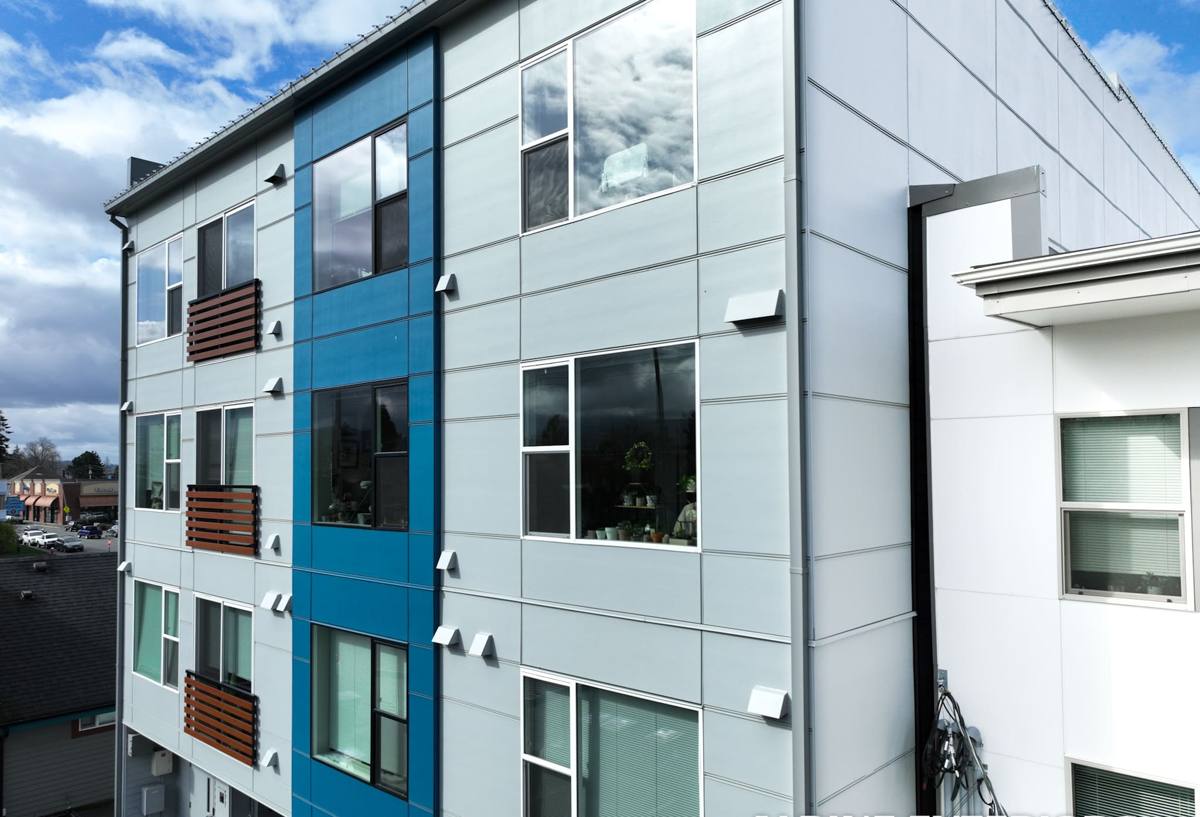
What Rosemary District Homes Need From Their Siding
Close to downtown and close to the water, Rosemary District homes deal with a combination of stressors that inland Sarasota County properties see less of:
- Wind-driven rain intrusion — storms off the Gulf don't just drop rain, they drive it horizontally into wall surfaces and seams, which means the water-management layer behind the siding matters as much as the siding itself.
- UV degradation — Florida's sun bleaches and breaks down paint film and lower-grade siding substrates faster than almost anywhere else in the country. South- and west-facing walls take the worst of it.
- Salt air corrosion — proximity to the bay means airborne salt settles on exterior surfaces and accelerates the breakdown of unprotected wood fiber, fasteners, and paint.
- Wind load — Sarasota County falls within Florida's wind-borne debris region under the Florida Building Code, which means siding, fastening schedules, and attachment methods all have to meet a higher structural bar than in a low-wind-zone state.
- Humidity and moisture cycling — constant swings between saturated air and intense heat stress any siding material that isn't dimensionally stable, causing warping, cupping, or seam failure over time.
None of this is unique to Rosemary District — it's true across coastal Sarasota — but the neighborhood's dense lot layout and mix of older wood-frame construction with newer builds means water management and correct flashing details carry extra weight here. Older homes often have wall assemblies that were never designed for today's wind and moisture expectations, so an installation has to correct for that, not just cover it up.
What a Correct Siding Installation Actually Involves
Siding failures in this climate are rarely about the siding material looking bad on day one. They show up two, five, or ten years later — as buckling, rot at the bottom plate, streaking, or moisture behind the wall that nobody sees until it's a real problem. Almost all of that traces back to installation shortcuts, not the product itself. A correct job includes:
Substrate and Water Management
Before a single piece of siding goes up, the wall needs a continuous weather-resistive barrier, properly lapped and taped at seams, with flashing integrated at every window, door, and penetration so water is directed out and down, never trapped behind the cladding.
Fastening to Florida Building Code Wind Requirements
Fastener spacing, type, and embedment have to match both the manufacturer's specification and the wind zone requirement for the address — not a generic "close enough" pattern. This is where a lot of underbid installations quietly cut corners, and it's invisible until a storm tests it.
Clearances and Ventilation
Siding needs proper clearance from grade, roofing, decks, and hardscape — generally a minimum of a few inches — so it isn't sitting in standing water or trapping moisture against the bottom edge. Rainscreen or drainage gap details matter more in humid coastal climates than in drier regions.
Trim, Caulking, and Sealant Details
Every joint, corner, and penetration is a potential water entry point. Correct caulking with the right sealant for the substrate, plus factory-mitered or properly field-cut trim, is what keeps water out at the details — not just the field of the wall.
Finish Integrity
A factory-applied finish that's baked on and warrantied against UV and moisture holds up dramatically better than field-applied paint in this climate, where sun exposure alone can shorten a paint job's life by years compared to a milder climate.
Why We Install James Hardie Only — Not Vinyl, Not LP SmartSide, Not Cedar
We get asked why we don't offer the full range of siding products other contractors carry. The honest answer: we looked at how each of those materials actually performs under Gulf Coast conditions over the long run, and we didn't want to keep installing products we knew would create callbacks and disappointment for homeowners a few years down the road.
- Vinyl siding can look fine initially and costs less upfront, but it softens, warps, and can pull away from fastening in sustained high heat, and it isn't rated for the wind speeds this region regularly sees without heavier-gauge, more expensive versions. It also isn't fire-resistant.
- LP SmartSide is an engineered wood product — a reasonable option in drier, more moderate climates, but wood-based substrates are inherently more vulnerable to the moisture cycling and humidity Sarasota County deals with year-round, especially at cut edges and seams if installation isn't flawless.
- Primed spruce or cedar board siding requires far more ongoing maintenance — repainting, sealing, and monitoring for rot — than most homeowners want to sign up for in a climate this demanding on wood.
- Other fiber cement brands (Cemplank, Allura) are legitimate fiber cement products, but we standardized on James Hardie specifically because of its climate-engineered HZ5 product line (Hardie's harshest-climate rating, built for exactly this kind of hot, humid, hurricane-exposed region), its ColorPlus factory finish, and the strength of its transferable warranty.
None of this means those products are junk — they all have a place. It means that for homes exposed to hurricane-force wind, wind-driven rain, and salt air the way Rosemary District properties are, we think fiber cement engineered specifically for this climate zone is the more responsible recommendation, and James Hardie is the version of that product we trust enough to put our name behind.
How Our Process Works
Every project starts the same way, whether it's a small bungalow or a larger infill build:
- On-site assessment — we walk the exterior, check the current wall assembly, look for existing moisture damage or rot, and evaluate what the substrate needs before new siding goes on.
- Tear-off vs. overlay decision — older Rosemary District homes with existing wood or aging siding usually need a full tear-off so we can inspect and correct the water-resistive barrier underneath. We don't recommend covering over a compromised wall.
- Product and profile selection — HardiePlank lap siding, board-and-batten, or panel systems, matched to the home's style and the ColorPlus finish or field-paint option that fits the project.
- Installation to spec — fastening, flashing, and clearances installed to both James Hardie's published specifications and Florida Building Code wind requirements for this address.
- Final walkthrough — we go over trim, seams, and caulking details with the homeowner before calling the job complete.
Why a Crew That Already Works Rosemary District Matters
Urban infill neighborhoods like this one come with logistics that suburban lots don't: tight setbacks between houses, limited staging space for material and equipment, closer coordination with neighbors during the work, and in some cases layered permitting requirements given the neighborhood's ongoing redevelopment. A crew that's worked this part of Sarasota knows how to plan a job around those realities instead of discovering them mid-project.
There's also a practical value in local knowledge of how older Rosemary District wall construction tends to be built, versus newer infill framing — it changes what we look for once the old siding comes off, and it affects how we sequence the tear-off and dry-in so the home isn't left exposed to a Gulf Coast storm system longer than necessary.
Cost Factors for Rosemary District Siding Projects
Every home is different, but the line items that actually move the price are consistent. We avoid quoting numbers we can't stand behind, so treat this as a guide to what drives cost up or down rather than a fixed price list.
| Factor | Why It Matters |
|---|---|
| Tear-off vs. overlay | Full removal costs more upfront but is usually necessary on older homes to fix hidden moisture or rot issues |
| Substrate condition | Rotted sheathing or framing found during tear-off adds repair work before new siding can go on |
| Home size and wall complexity | More corners, dormers, and trim details mean more labor and material cuts |
| Siding profile | Lap siding, board-and-batten, and panel systems carry different material and labor costs |
| Finish choice | Factory ColorPlus finish costs more than primed material but eliminates a future field-paint job |
| Access and staging | Tight urban lots with limited staging space can add labor time compared to open suburban lots |
| Permitting | Local permitting requirements affect both timeline and cost of the project |
Signs Your Rosemary District Home May Need New Siding
- Visible warping, buckling, or gaps between siding boards
- Soft spots or discoloration near the bottom edge of exterior walls, especially close to grade
- Paint that's peeling, bubbling, or fading unevenly across a wall
- Cracks or holes that let moisture behind the siding
- Musty odors or visible mold/mildew on interior walls that share an exterior wall
- Rising energy bills that suggest a compromised thermal envelope
- Siding that's more than 20-25 years old, especially wood-based products in this climate
Maintenance and Warranty Expectations
One reason we point homeowners toward James Hardie fiber cement is what happens after installation, not just on install day. Correctly installed HardiePlank with a factory ColorPlus finish needs periodic rinsing and inspection of caulked joints, but it doesn't require the repainting cycle that wood siding demands in this climate. James Hardie backs its products with a strong transferable warranty, which also matters if a Rosemary District home changes hands — a real consideration in a neighborhood seeing this much turnover and reinvestment.
If you're weighing new siding for a home in Rosemary District, we're glad to walk the property, take an honest look at what condition the current siding and substrate are in, and put together a straightforward estimate — no pressure, no inflated claims, just what the job actually needs. Use the form below to get started.