 Sarasota Siding
 Siding Repair for Laurel Park Homes
Laurel Park is one of Sarasota's older, close-in neighborhoods — a mix of bungalows and cottages, many built decades before today's fiber cement and impact codes existed, sitting on tight lots just a short walk from downtown. Homes here have a different repair profile than newer construction farther out: older wall assemblies, decades of prior paint and patch work, and siding that has been through more hurricane seasons than a house built in the last ten years. When something on that siding fails — a cracked panel, a soft spot near a window, a strip of caulk that's given up — it needs to be diagnosed and repaired with that history in mind, not just patched over.
This page covers siding repair specifically for Laurel Park: what the climate does to siding in this part of Sarasota County, what a correct repair actually involves, and why it matters that the crew doing the work already understands this neighborhood's housing stock.
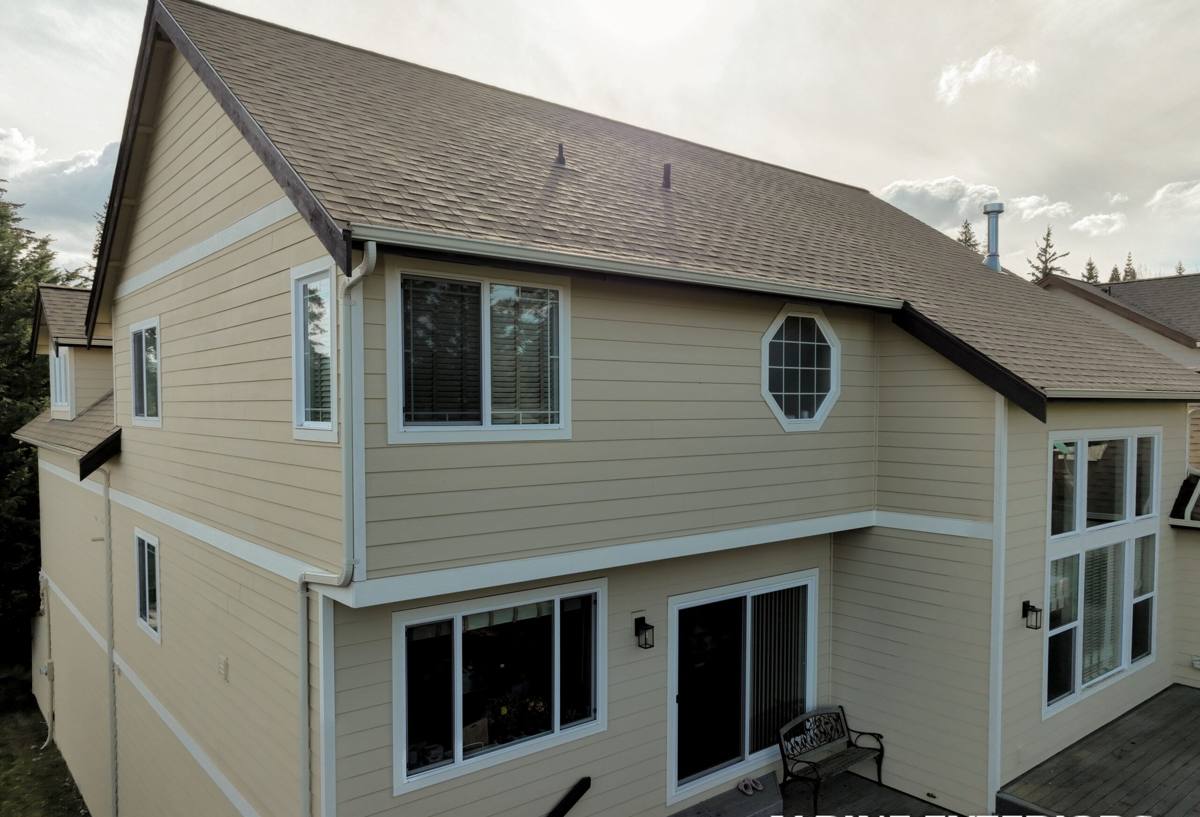
What Sarasota's Climate Does to Siding
Every siding repair call in this area traces back to the same handful of stressors, and Laurel Park gets all of them:
- Hurricane-force wind: Gusts can work siding panels loose at the fastener, crack corners, or drive debris straight into a wall. Wind doesn't need to be a named storm to do damage — a bad squall line can be enough.
- Wind-driven rain: Sarasota's storms rarely fall straight down. Rain gets pushed sideways under laps, around trim, and into any gap a normal rainstorm would never reach — which is why water damage often shows up far from where the actual opening in the siding is.
- Year-round intense UV: Constant sun bakes caulk, breaks down old paint films, and accelerates wear on any siding material that isn't factory-finished to handle it.
- Salt air: Even set back from the water, Sarasota's coastal air corrodes exposed steel fasteners over time. A rusting nail head is often the first visible sign that water has been getting behind a panel.
None of these are dramatic on their own. The damage they cause is usually slow and cumulative — which is exactly why a repair that only addresses what's visible on the surface tends to fail again within a year or two.
Common Repair Issues in Laurel Park's Older Housing Stock
Because so many Laurel Park homes predate current siding and fastening standards, we see a fairly consistent set of problems when we're called out for repair work:
Moisture behind older siding
Homes with decades of paint layers or older siding materials often have wall sheathing that's been slowly absorbing moisture for years without any obvious exterior sign. By the time a soft spot or bulge shows up on the surface, there's usually more damage behind it than the visible symptom suggests.
Storm-cracked or lifted panels
Wind events crack panel corners, pop fasteners, and lift butt joints just enough to let water in. On a smaller lot with mature trees nearby — common throughout Laurel Park — falling limbs and wind-thrown debris add another layer of impact damage on top of straight wind stress.
Failed caulk and trim joints
UV exposure breaks caulk down faster in Florida than almost anywhere else. Once it cracks or shrinks at a window, corner, or trim joint, that gap becomes a direct path for wind-driven rain.
Mismatched prior repairs
It's common to find a patch from a previous repair that doesn't match the surrounding siding in profile, reveal, or finish — a sign the work was done fast rather than done right. On an older home where the original siding may no longer be available, matching a repair takes more care.
Repair or Replace? How We Decide
Not every problem on an older Laurel Park home needs a full re-side, and not every "small" issue is actually small. We look at the extent of the damage, what's behind it, and how much of the wall is affected before recommending either option.
| Factor | Usually Points to Repair | Usually Points to Replacement |
|---|---|---|
| Extent of damage | Isolated panels or a single wall section | Damage spread across multiple elevations |
| Underlying sheathing | Dry, sound wood behind the siding | Soft, rotted, or water-stained sheathing |
| Age and condition of remaining siding | Siding is otherwise sound and holding up well | Siding elsewhere is already failing or near end of life |
| Material match | Matching material or acceptable transition is available | Original material is discontinued with no clean match |
| Cause of damage | One-time event (impact, isolated flashing failure) | Systemic issue (chronic moisture, widespread fastener corrosion) |
We'll always tell you honestly which category your situation falls into. A repair that's really a stopgap on a wall that's failing underneath isn't a favor to you — it just delays a bigger bill.
What a Correct Siding Repair Involves
A repair that actually holds up in Sarasota's climate takes more steps than swapping a damaged panel for a new one:
- Diagnose past the surface. We check what's behind the visible damage — sheathing, house wrap, and framing — before deciding on scope.
- Remove damaged material fully. Cutting out only the visibly cracked or stained portion often leaves compromised material in the wall.
- Address the water path, not just the hole. If wind-driven rain got in through a flashing or caulk failure, that entry point gets corrected — otherwise the repair fails again in the next storm season.
- Let any wet framing or sheathing dry and get replaced as needed. Closing a wall back up over damp material just restarts the clock on rot.
- Match reveal, profile, and fastening pattern. A patch that's slightly off in reveal or nail spacing stands out and can create its own new water path.
- Reseal and refinish to blend in. Caulk joints and touch-up finish are done to hold up under Sarasota's UV load, not just to look right on install day.
What We Repair With
We install and repair primarily in James Hardie fiber cement — it's the product line we standardize on for full installations, and it's also what we most often use for patch and repair work because it's non-combustible, holds its factory ColorPlus finish under intense Florida sun, and is engineered in HZ product lines built for humid, storm-prone climates like ours. When a repair calls for matching existing Hardie siding, we can typically source a close match in profile and color.
If your Laurel Park home has an older siding material — wood, an older fiber cement product, or something else no longer manufactured — we'll tell you plainly what your matching options are, including where a clean transition or a broader replacement makes more sense than chasing an exact match that doesn't exist anymore.
Our Repair Process
- Inspection and diagnosis: We walk the affected area, check behind the siding where needed, and identify the actual cause of the damage — not just its symptom.
- Written scope and honest recommendation: You get a clear explanation of what's needed, whether that's a targeted repair or something bigger, before any work starts.
- Removal and prep: Damaged siding and any compromised sheathing come out; the area is dried and prepped properly.
- Repair and fastening to spec: New material goes in matched to the existing siding, fastened correctly for wind resistance, with attention to flashing and water management at every joint.
- Finish and cleanup: Caulking, touch-up, and a final check to confirm the repair blends in and the water path that caused the original damage is closed off.
Why a Sarasota Crew That Knows Laurel Park Matters
Laurel Park's homes, lot sizes, and age range are different from the newer subdivisions elsewhere in Sarasota County, and a repair crew that already works this neighborhood brings a few real advantages:
- Familiarity with the kind of wall assemblies and older siding conditions common to homes of this era, so diagnosis is faster and more accurate.
- An understanding of tight lot access and close-set homes, which affects how a repair job is staged and how much care is taken around neighboring property.
- Local knowledge of how Sarasota's storm patterns — wind direction, typical rain intensity — tend to expose the same weak points on similar homes, which helps target the inspection.
- A track record built on repairs that hold up through actual hurricane seasons in this county, not just on paper.
None of that replaces a careful inspection of your specific home, but it does mean less guesswork and fewer surprises once we open up a wall.
Signs You Need a Siding Repair
If you're not sure whether what you're seeing is cosmetic or something more, this is a reasonable starting checklist for a Laurel Park home:
- Cracked, split, or visibly bowed siding panels
- Soft or spongy spots when you press gently on the siding
- Rust streaks running down from fastener heads
- Cracked or missing caulk at trim, windows, or corners
- Peeling or bubbling paint or finish in one concentrated area
- A musty smell or visible staining on an interior wall that backs up to exterior siding
- Visible daylight or gaps at panel joints or corners
- Siding that moves or flexes more than it should when pushed by hand
If any of these sound familiar, it's worth having someone look before the next storm season rather than after.
Get an Honest Look at Your Siding
Whether it's a single storm-damaged section or something you're not quite sure about yet, we're happy to come take a look, tell you honestly what we find, and walk you through the repair options for your Laurel Park home. Request a free, no-pressure estimate using the form below.